
国土绿化

Search documents
习近平在参加首都义务植树活动时强调 为山川大地增添锦绣 让中国式现代化底色更加亮丽
国家能源局· 2026-03-30 10:18
Core Viewpoint - The article emphasizes the importance of ecological construction and the collective effort required for afforestation, highlighting that a beautiful China is essential for modern Chinese development [2]. Group 1: Afforestation Activities - Xi Jinping participated in a tree-planting event in Beijing, engaging with local officials and citizens to promote community involvement in ecological initiatives [3]. - During the event, Xi planted various tree species, including oil pines and Beijing peonies, while encouraging youth to develop aspirations and a love for nature [3]. Group 2: Ecological Achievements - Since the 18th National Congress, China has seen continuous growth in forest area and volume, while desertification and land degradation have been significantly reduced, making it the fastest-growing country in terms of greening [4]. - The recent enactment of the ecological environment code strengthens the legal foundation for building a beautiful China [4]. Group 3: Future Directions for Greening - This year marks the beginning of the 14th Five-Year Plan and the 45th anniversary of the national voluntary tree-planting campaign, emphasizing the need for quality improvement in land greening efforts [4]. - The focus will be on integrating ecological and economic benefits, enhancing forest management, and increasing green spaces in urban and rural areas to improve residents' access to nature [5].


续写“人均一百棵树”的绿色奇迹
Zhong Guo Huan Jing Bao· 2026-02-27 00:39
Group 1 - The core achievement of China’s afforestation efforts is the impressive statistic of approximately 1.426 trillion trees, equating to about 100 trees per person in China, reflecting a significant increase in the country's green assets [1][2] - During the 14th Five-Year Plan period, China has completed 5.49 million acres of land greening and rehabilitated 1.52 million acres of desertified land, showcasing a commitment to both quantity and quality in ecological restoration [2][3] - The integration of advanced technologies and scientific principles in land greening efforts has led to improved efficiency and precision in afforestation, moving from mere planting to scientific management [2][3] Group 2 - The "Three-North Shelter Forest Program" has successfully completed over 20 million acres, significantly reducing sediment input into the Yellow River and enhancing ecological resilience [3][4] - Urban green coverage in China has reached 43.49%, with an average of 15.91 square meters of park green space per person, contributing to improved living conditions and public well-being [3][4] - The annual carbon sink from forests and grasslands exceeds 1.2 billion tons of CO2 equivalent, positioning China as a leader in carbon neutrality efforts and contributing to a projected forestry industry output value of nearly 11 trillion yuan by 2025 [3][4] Group 3 - The initiative of "100 trees per person" symbolizes a collective national effort and institutional advantage in promoting ecological sustainability, supported by over 1.7 million forest rangers and innovative collaboration mechanisms [4] - The ongoing commitment to afforestation is not only a current achievement but also a foundation for future ecological endeavors, with goals set for 2035 to reach a forest stock of over 24 billion cubic meters [4]
高质量发展的生态底色更加鲜明
Jing Ji Ri Bao· 2026-02-24 22:08
Group 1: Green Transformation and Achievements - By 2025, China aims to complete land greening tasks covering 12.7 million hectares, including afforestation of 5.345 million hectares and restoration of 7.39 million hectares of degraded grasslands, with a current forest coverage rate of 25.09% and a forest stock volume of 20.988 billion cubic meters [2][3] - China has become the fastest-growing country in terms of greening, supported by planning, technology, engineering, and social participation, as highlighted by the National Forestry and Grassland Administration [2][3] - The ecological benefits are increasingly translating into economic and social benefits, with the forestry industry expected to generate nearly 11 trillion yuan in total output value by 2025, and direct employment for over 60 million people [3] Group 2: Clean Energy Development - By the end of 2025, the world's first commercial supercritical carbon dioxide power generation unit will be operational in Guizhou, achieving over 85% efficiency improvement compared to existing technologies [4] - China has established the world's largest clean power supply system, with renewable energy generation capacity exceeding 600 million kilowatts, accounting for over 60% of total power generation [4][5] - Energy investments are projected to exceed 3.5 trillion yuan in 2025, with a year-on-year growth of nearly 11%, driven by green transition investments and private sector participation [5] Group 3: Traditional Industry Transformation - The textile industry has made significant strides in green transformation, with companies like Shandong Jifa Group achieving waterless dyeing processes that reduce carbon emissions by approximately 50% [5] - Major energy-consuming industries, including construction materials and steel, have seen a notable decrease in energy consumption per unit of added value compared to 2024 [5][6] - The manufacturing sector is experiencing a surge in demand for energy-efficient and environmentally friendly equipment, driven by policy support and market needs [6] Group 4: Circular Economy and Resource Recovery - The circular economy is being promoted as a key strategy for reducing emissions, with projects like the electronic waste recycling facility in Guangdong processing approximately 39 tons of e-waste in 2025 [6] - The focus on transforming waste into valuable resources is a significant aspect of China's industrial system's shift towards sustainability [6]
让绿色扎下根、可持续——我国成为全球增绿最多最快的国家
Ren Min Ri Bao· 2026-02-24 08:18
Core Viewpoint - During the "14th Five-Year Plan" period, China has made significant achievements in land greening, establishing a solid ecological foundation for high-quality development [1] Group 1: Achievements in Land Greening - A total of 5.49 million acres of land have been greened, and 1.52 million acres of desertified land have been treated [1] - The national forest coverage rate has exceeded 25%, making China the fastest-growing country in terms of greening globally [1] - By 2025, the total output value of the national forestry and grass industry is expected to reach nearly 11 trillion yuan [1] Group 2: Future Directions - The focus will shift from merely increasing the quantity of greening to enhancing the quality and sustainability of green initiatives [1] - Future efforts will include innovating mechanisms for realizing the value of ecological products and improving the total quantity and quality of forest and grass resources [1] - The aim is to strengthen and enhance the carbon sink capacity of ecosystems, moving towards higher quality, more efficient, and sustainable land greening efforts [1]
“人均100棵树”,我国成全球增绿最多最快的国家
Ren Min Ri Bao· 2026-02-24 03:06
Group 1 - China's total forest area has reached 36.14 billion mu, with 1.85 million mu of afforestation during the 14th Five-Year Plan, making it the fastest-growing country in terms of greening globally [1] - As of 2020, there are approximately 142.6 billion trees in China, equating to 100 trees per person, showcasing the country's "green assets" [1][2] - The country has effectively protected 25.78 billion mu of natural forest resources and has planted over 1.1 billion mu of trees since 2012, contributing about 25% of the world's new greening area [2] Group 2 - The "Three North" project has preserved 48 million mu of afforestation, equivalent to half of the Loess Plateau, demonstrating significant ecological engineering efforts [2] - The average annual increase in forest area in China from 2015 to 2025 is 1.69 million hectares, making it the country with the highest net increase in forest area [3] - By 2030, China aims to achieve peak carbon emissions and plans to increase forest stock to over 24 billion cubic meters by 2035, reinforcing its commitment to global green development [3]
创造全球增绿最多最快的绿色奇迹 我国人均“拥有”100棵树
Ren Min Ri Bao· 2026-02-24 00:22
Core Insights - China's total forest area has reached 36.14 billion mu, with 1.85 million mu of afforestation during the "14th Five-Year Plan" period, making it the fastest-growing country in terms of greening globally [1][2] - As of 2020, there are approximately 142.6 billion trees in China, equating to 100 trees per person, showcasing the country's "green assets" [1] - The "14th Five-Year Plan" emphasizes the protection of 5.0819 million ancient trees and effective conservation of 2.578 billion mu of natural forest resources [2] Group 1 - The average annual increase in forest area in China from 2015 to 2025 is 1.69 million hectares, making it the country with the highest net increase [3] - The total output value of the forestry and grass industry is expected to reach nearly 11 trillion yuan by 2025, creating employment for over 60 million people [3] - The "15th Five-Year Plan" suggests large-scale national greening actions, aiming for carbon peak by 2030 and a forest stock of over 24 billion cubic meters by 2035 [3] Group 2 - The "Three North" project has achieved a cumulative afforestation area of 48 million mu, equivalent to half of the Loess Plateau [2] - The introduction of cold-resistant tree species in Tibet's Naqu has successfully overcome high-altitude afforestation challenges, transforming it from a tree-less city to one with greenery [2] - The integration of ecological protection and systematic governance is a key strategy in China's approach to land greening [2]
中国“含绿量”持续转化为“含金量”
Ren Min Wang· 2026-02-16 06:20
Group 1 - The core viewpoint of the articles emphasizes the significant progress in national land greening efforts in China, with a target of completing 12.7 million acres of land greening by 2025, including afforestation of 5.345 million acres and restoration of 7.39 million acres of degraded grasslands [1] - The national forest coverage rate has reached 25.09%, with a forest stock volume of 20.988 billion cubic meters, indicating a strong commitment to ecological civilization and sustainable development [1] - China's annual carbon sink from forests exceeds 1.2 billion tons, playing a crucial role in achieving carbon neutrality goals and addressing climate change [1] Group 2 - The total output value of the forestry and grassland industry is projected to approach 11 trillion yuan by 2025, with total import and export trade of forest products exceeding 180 billion USD [1] - The annual production of forest food is over 240 million tons, making it the third most important agricultural product after grains and vegetables [1] - The integration of "green ecology + innovative industries" is driving economic benefits, with the forestry and grassland industry directly supporting over 60 million jobs [1] Group 3 - The articles highlight the shift in greening efforts from quantity-focused to a balanced approach of quantity and quality, encouraging community participation in greening activities [2] - The introduction of "Internet + public voluntary tree planting" has diversified participation methods, making greening a part of daily life for more people [2] - The growth of new greenery is seen as a driving force for high-quality development and a source of ecological well-being for the population [2]
绘就生态新图景 建设宜居新兰州 今年兰州市将全力打好“三北”工程攻坚战
Xin Lang Cai Jing· 2026-02-11 01:13
Core Insights - The city of Lanzhou is committed to enhancing its ecological landscape and livability through the "Three North" project, aiming to complete over 800,000 acres of construction in its sixth phase this year [1][2] - The city has set ambitious targets for the "15th Five-Year Plan," including increasing forest coverage to 13.12% and maintaining grassland vegetation coverage above 57.5% [2] Group 1: Current Achievements - The forest coverage rate in Lanzhou has increased from 8.35% to 10.63%, while grassland vegetation coverage has risen from 55.02% to 57.33% [1] - A total of 75 small parks have been newly built or renovated, and urban green space has been increased by 389.1 hectares [1] - The total value of ecosystem services provided by the forest and grassland ecosystem in the city is estimated at 45.173 billion yuan, with a total carbon sequestration of 7.9631 million tons valued at 8.496 billion yuan [1] Group 2: Future Goals and Plans - The city aims to plant over 1.5 million trees as part of the "Green Full Longyuan: Ten Thousand Trees in Every Village" initiative [2] - Key tasks for 2026 include high-quality land greening, ensuring grassland vegetation coverage remains above 57.3%, and enhancing the quality of urban parks [2] - The expected annual output value of the forestry and grassland industry is projected to reach 1.55 billion yuan, with the ecosystem service value targeted at 45.6 billion yuan [2]
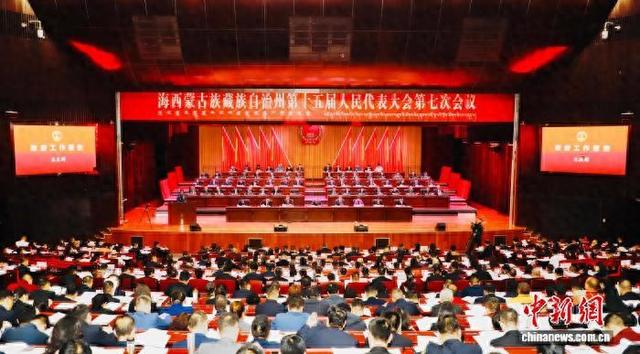
青海省海西州五年增绿225.88万亩
Xin Lang Cai Jing· 2026-02-07 13:34
Group 1 - The core viewpoint of the article highlights the significant ecological improvements in Haixi Prefecture, Qinghai Province, with an increase of 2.2588 million acres in land greening during the 14th Five-Year Plan period [1] - Haixi Prefecture is located in the Qaidam Basin, characterized by a typical arid climate, extensive deserts, and significant issues related to wind and sand erosion, making it a key area for desertification control in China [3] - The local government has reported a steady increase in the snow leopard population and the first sighting of the endangered species, the Asiatic wild dog, indicating positive ecological changes [3] Group 2 - By 2025, Haixi Prefecture aims to complete afforestation of 733,900 acres, restore 1,030,100 acres of degraded grassland, and manage 2,346,900 acres of desertified land [3] - All 13 monitored surface water quality sections in the region are expected to meet or exceed Class III standards, while energy consumption per unit of industrial added value is projected to decrease by 7.3% year-on-year [3]
坚定不移当好“中华水塔”守护人
Xin Lang Cai Jing· 2026-01-27 22:08
Group 1 - Qinghai Province adheres to the concept of "lucid waters and lush mountains are invaluable assets," actively exploring the transformation paths of ecological advantages into economic wealth [1] - The "Xining Eye" landmark attracted 200,000 visitors within six months of its opening, achieving significant public engagement and becoming a model for developing under-forest industries [1] - Qinghai has initiated national park pilot programs, including Qilian Mountain and Qinghai Lake, to leverage unique ecological endowments for economic development through differentiated service models [1] Group 2 - The Qilian Mountain National Park Ecological Science Museum has conducted 1,500 educational activities since its opening in 2023, attracting 170,000 visitors from various sectors [2] - Qinghai Province has implemented an "one household, one post" mechanism to promote community involvement in ecological conservation, with over 80,000 ecological forest rangers earning an average annual income increase of nearly 20,000 yuan [2] - By the end of 2025, the number of ecological management public posts in the Sanjiangyuan National Park will increase from 17,211 to 20,843, with a monthly subsidy of 1,800 yuan per person [2] Group 3 - In 2025, Qinghai will focus on key ecological areas to advance natural forest protection, grassland restoration, desertification control, and wetland monitoring, achieving a total afforestation area of 6.934 million acres [3] - The Sanjiangyuan National Park construction is progressing well, with the Qilian Mountain National Park candidate area prepared for establishment and the Qinghai Lake National Park candidate area completing evaluation and acceptance [3] - A total of 39,600 farmers and herders participated in ecological projects, receiving labor remuneration of 344 million yuan throughout the year [3]