胎心监护仪

Search documents
万物皆可租,这届年轻人医疗设备也靠租
3 6 Ke· 2025-10-20 12:32
Core Insights - The rental economy is gaining traction among young consumers, who are increasingly opting for a "light asset, high experience" lifestyle, leading to a surge in the rental of various products, including medical devices [1][2]. Group 1: Rental Market Growth - The portable oxygen machine rental business has seen significant growth, with a company in Tibet renting over 300 units daily during peak times, indicating strong demand [1][3]. - The new rental market in China is projected to exceed 700 billion yuan by 2025 and approach 1 trillion yuan by 2030, with users primarily being those born after 1995, who account for over 60% of the market [2]. Group 2: Young Consumers' Preferences - Young consumers prefer renting high-cost, low-frequency-use products that enhance their quality of life, such as portable oxygen machines, which are priced around 10,000 yuan for purchase but can be rented for as low as 80 yuan per day [2][3]. - The rental of medical devices has become integrated into the daily lives of young people, with platforms like Alipay's Sesame Rental channel offering a variety of health and beauty devices [4][5]. Group 3: Quality and Reliability Concerns - The rental market for medical devices faces challenges regarding quality and reliability, as many products lack standardization and regulatory oversight, leading to varying levels of service and safety [9][10]. - A case study highlighted the potential risks of renting medical devices, where a faulty jaundice meter led to misdiagnosis, raising concerns about the accuracy and reliability of rented medical equipment [8][9]. Group 4: Elderly Market Potential - The acceptance of rental services among young consumers is expected to influence the health consumption patterns of their families, particularly in the elderly segment, which has traditionally been resistant to renting [11][12]. - The long-term care insurance system in China is beginning to cover medical device rentals, which could enhance the market potential for elderly care products [13][14].
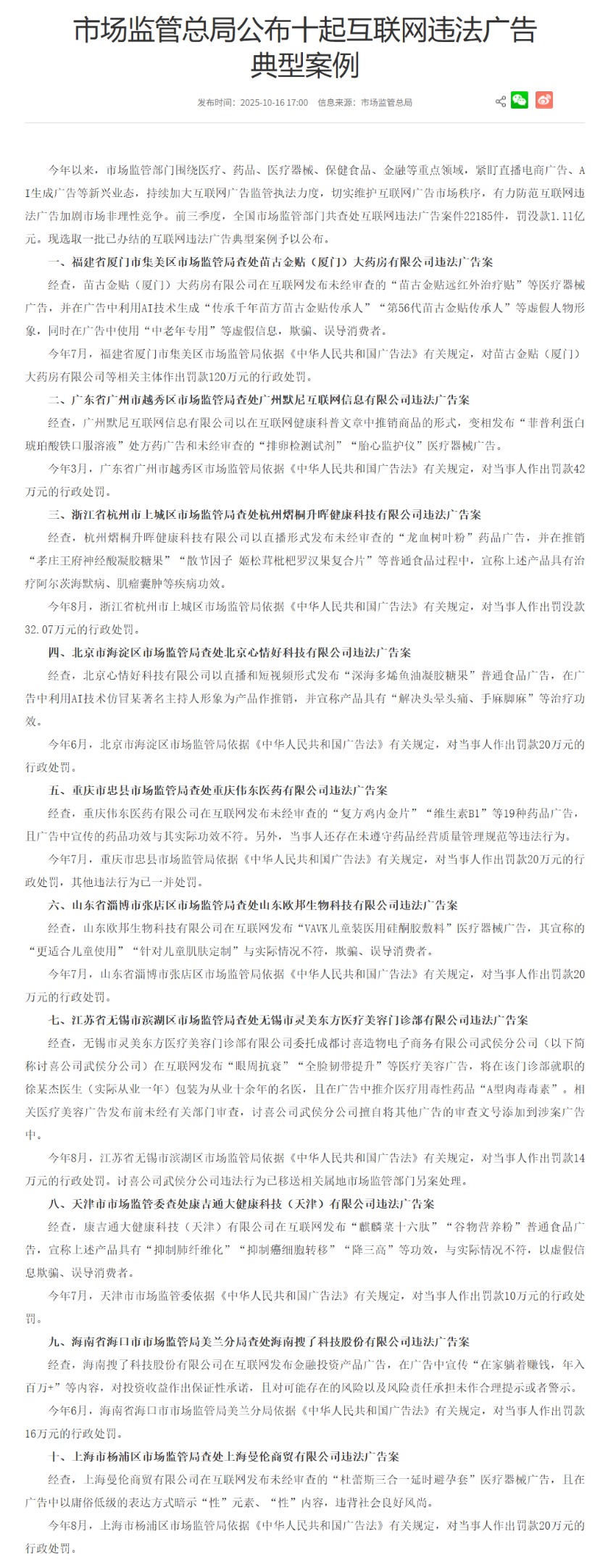
市场监管总局公布十起互联网违法广告典型案例
Di Yi Cai Jing· 2025-10-16 09:16
Core Points - The market regulatory authority has intensified its enforcement of internet advertising regulations, particularly in sectors such as healthcare, pharmaceuticals, medical devices, health foods, and finance, to prevent irrational competition in the market [1][3] - In the first three quarters of the year, a total of 22,185 cases of illegal internet advertising were investigated, resulting in fines totaling 111 million yuan [1][3] Summary by Category Regulatory Actions - The regulatory body has focused on new business models like live-streaming e-commerce and AI-generated advertisements to maintain order in the internet advertising market [1][3] - A series of typical cases of illegal internet advertising have been published to highlight enforcement actions taken [1][3] Case Examples 1. **Xiamen City Case**: A pharmacy was fined 1.2 million yuan for publishing unapproved medical device advertisements using AI-generated false personas [4] 2. **Guangzhou Case**: An internet information company was fined 420,000 yuan for disguised advertising of prescription drugs and unapproved medical devices [5] 3. **Hangzhou Case**: A health technology company was fined 320,700 yuan for promoting unapproved drug advertisements through live streaming [5] 4. **Beijing Case**: A technology company was fined 200,000 yuan for using AI to impersonate a famous host in food advertisements claiming therapeutic effects [5] 5. **Chongqing Case**: A pharmaceutical company was fined 200,000 yuan for advertising drugs with misleading efficacy claims [6] 6. **Shandong Case**: A biotechnology company was fined 200,000 yuan for misleading advertisements regarding children's medical products [7] 7. **Jiangsu Case**: A medical beauty clinic was fined 140,000 yuan for unauthorized advertising and misrepresenting a doctor's experience [8] 8. **Tianjin Case**: A health technology company was fined 100,000 yuan for false claims about food products [9] 9. **Hainan Case**: A technology company was fined 160,000 yuan for misleading financial investment product advertisements [10] 10. **Shanghai Case**: A trading company was fined 200,000 yuan for publishing unapproved medical device advertisements with inappropriate content [11]