船舶战争险

Search documents
战争险对中东航运意味着什么
2026-03-20 02:27
Summary of Key Points from Conference Call on Maritime Insurance and the Situation in the Strait of Hormuz Industry Overview - The conference call focuses on the maritime insurance industry, particularly in relation to the ongoing tensions in the Strait of Hormuz, a critical shipping route for global oil and gas trade [1][2][3]. Core Insights and Arguments - **Traffic Disruption**: The volume of vessels passing through the Strait of Hormuz has plummeted by approximately 97% to 98%, with over 1,000 ships currently stranded, of which more than 40% are oil tankers [1][2]. - **Impact on Oil Prices**: The blockade has led to a significant increase in global oil prices and supply chain costs, with potential ripple effects on other commodity prices [2]. - **High-Risk Area Designation**: The Joint War Committee (JWC) has expanded the high-risk area to include regions extending to longitude 59-60 degrees, covering Oman and parts of the Indian Ocean and Red Sea [1][3][4]. - **Insurance Adjustments**: War risk insurance rates for Chinese vessels have decreased from 3% to around 0.5% as tensions eased, while vessels associated with the U.S. and Israel face high risks and are largely uninsurable [1][14]. - **Mandatory Security Measures**: Ships navigating high-risk areas must have three armed security personnel or purchase a $5 million Kidnap and Ransom insurance policy, and must report to UKMTO and MSCHOA [1][12][13]. Additional Important Content - **Insurance Market Dynamics**: The insurance market is heavily reliant on Lloyd's for reinsurance, and there is a push for domestic insurers in China to achieve greater independence in this sector [1][14]. - **Risk Assessment Procedures**: The JWC employs a four-stage process for assessing and updating high-risk areas, including intelligence gathering, risk modeling, market consultation, and final publication of the updated list [10]. - **Historical Context of War Risk Insurance**: The evolution of war risk insurance has been shaped by historical conflicts, leading to the establishment of specific clauses that separate war risks from standard marine insurance [5][7]. - **Current Risk Levels for Chinese Vessels**: Chinese vessels are perceived to have a lower risk profile due to diplomatic channels and identification practices that indicate a Chinese crew, which helps mitigate risks in high-risk areas [18][19]. Conclusion - The ongoing situation in the Strait of Hormuz has profound implications for maritime insurance, global oil prices, and shipping operations. The JWC's role in defining high-risk areas and the dynamic nature of insurance rates reflect the complexities of navigating these geopolitical tensions [1][2][3][4][10].
地缘冲突冲击全球航运,美国政府推200亿美元海上再保险计划
21世纪经济报道· 2026-03-08 15:24
Core Viewpoint - The article discusses the significant impact of the recent military actions by the US and Israel against Iran, leading to the cancellation of war insurance for vessels operating in the Gulf region, which has resulted in increased operational costs for shipping companies and a surge in oil prices [1][3]. Group 1: Military Actions and Insurance Impact - The US and Israel launched a large-scale military operation against Iran, causing a sharp deterioration in regional security and prompting several maritime insurers to cancel war insurance for vessels operating in the Gulf starting March 5 [1]. - The cancellation of war insurance has led to a substantial increase in operational costs for shipping companies that frequently navigate the Gulf region, particularly affecting oil tanker operations in the Strait of Hormuz, a critical route for global oil transport [1][3]. - Following the military actions, Brent crude oil prices surged by 9.26% and NYMEX crude oil prices increased by 12.67% on March 6, both surpassing the $90 per barrel mark, with forecasts suggesting potential rises to $100 or even $150 per barrel if the situation does not stabilize [1][3]. Group 2: Reinsurance Plan - In response to the escalating situation, the Trump administration announced a $20 billion reinsurance plan aimed at ensuring the safe passage of oil tankers and other maritime vessels through the Strait of Hormuz [1][3]. - The reinsurance plan, approved by President Trump, will provide rolling reinsurance coverage for losses up to $20 billion, focusing initially on hull, machinery, and cargo insurance for eligible vessels [3]. - The US International Development Finance Corporation (DFC) has identified preferred insurance partners and is coordinating closely with the Treasury Department and Central Command to implement the reinsurance plan [3]. Group 3: Importance of Reinsurance Mechanism - The article highlights the critical role of reinsurance in the maritime insurance market, particularly for high-risk and high-coverage war insurance, as insurers typically rely on the reinsurance market to enhance their underwriting capacity and diversify risks [4]. - The introduction of the reinsurance plan is expected to improve insurers' willingness to underwrite war risks, which have become increasingly challenging to price due to the nature of correlated risks associated with conflict escalation [4]. - Insurers may raise premiums in response to increased war risks, and if they find it impossible to quantify these risks, they may suspend coverage altogether, indicating a significant challenge to traditional risk management mechanisms [4].


伊朗关闭霍尔木兹海峡,现在怎样了?
凤凰网财经· 2026-03-01 12:08
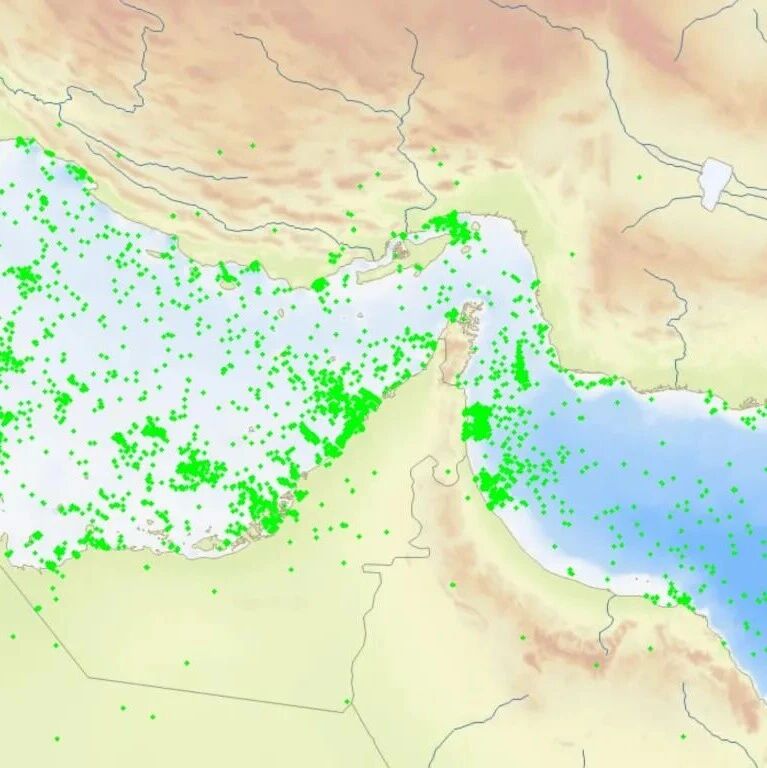
Core Viewpoint - The article discusses the escalating tensions in the Middle East, particularly the closure of the Strait of Hormuz by Iran, which has significant implications for global shipping and oil prices [2][13]. Group 1: Impact on Shipping and Insurance - Iran's Islamic Revolutionary Guard Corps announced the closure of the Strait of Hormuz, leading to a potential 50% increase in insurance premiums for vessels passing through this critical oil passage [2][6][7]. - Following the announcement, the number of vessels transiting the Strait dropped by approximately 70%, with many ships turning back or waiting in nearby waters [3][4]. - Insurance companies are preparing to cancel policies for vessels transporting commodities like oil and grain, anticipating higher re-negotiation costs for coverage [9][10]. Group 2: Oil Price Reactions - Brent crude oil prices surged by 13% to around $80 per barrel following military actions by the U.S. and Israel against Iran, with fears of supply disruptions driving market volatility [14]. - If the Strait remains blocked, it could threaten about 20% of global oil supply, potentially pushing prices above $100 per barrel, with extreme scenarios predicting prices could reach $120-150 per barrel [14][24]. Group 3: Strategic Importance of the Strait - The Strait of Hormuz is a vital shipping route, with approximately 15-20% of the world's oil and a significant portion of liquefied natural gas passing through it [16]. - Historical precedents indicate that while Iran has threatened to close the Strait, it has never fully executed such a closure due to the potential for severe economic repercussions on its own oil exports [22][25]. - The U.S. Department of Energy has acknowledged that even a temporary closure could lead to significant supply delays and increased transportation costs, impacting global energy prices [16]. Group 4: Military and Geopolitical Considerations - Iran possesses various means to disrupt shipping in the Strait, including harassment of vessels and potential missile attacks, but a complete closure would require sustained military presence, which could limit its operational capabilities elsewhere [23][29]. - The article notes that historical patterns suggest Iran is more likely to engage in selective attacks or harassment rather than a total blockade of the Strait [30].