花样滑冰

Search documents
“我们仍是追赶者,这个判断没有变”
Xin Lang Cai Jing· 2026-02-23 12:31
Core Viewpoint - The Milan Winter Olympics marked a significant turning point for China's winter sports, showcasing a shift from a historically "ice strong, snow weak" paradigm to a more balanced performance, particularly in snow sports, where China secured 11 out of 15 medals in various disciplines [3][6]. Group 1: Performance Overview - Chinese athletes achieved a total of 15 medals, including 5 gold, 4 silver, and 6 bronze, which is the best performance for China in winter Olympics held outside the country [3]. - Snow sports, particularly freestyle skiing and snowboarding, have become dominant, with athletes like Su Yiming and Gu Ailing contributing to the medal tally [3][6]. - In contrast, ice sports showed mixed results, with speed skating achieving notable success, while short track speed skating and figure skating faced challenges [3][6]. Group 2: Development and Strategy - China's winter sports development strategy involves both addressing weaknesses and building a comprehensive system, leading to improved talent and technical capabilities [6][7]. - The Chinese team recorded 49 top-eight finishes, an increase of 12 from the previous Olympics, indicating a broader competitive depth across 18 events [6]. - The ongoing evolution of global winter sports standards necessitates continuous improvement for China to remain competitive, particularly in rapidly advancing disciplines like snowboarding and freestyle skiing [6][7]. Group 3: Future Outlook - The dual focus on both ice and snow sports is essential for establishing a robust foundation for China's winter sports, aiming to transition from a winter sports power to a winter sports stronghold [7][8]. - The importance of grassroots engagement in winter sports is emphasized, as a broader public interest will solidify the country's standing in the global arena [7][8].

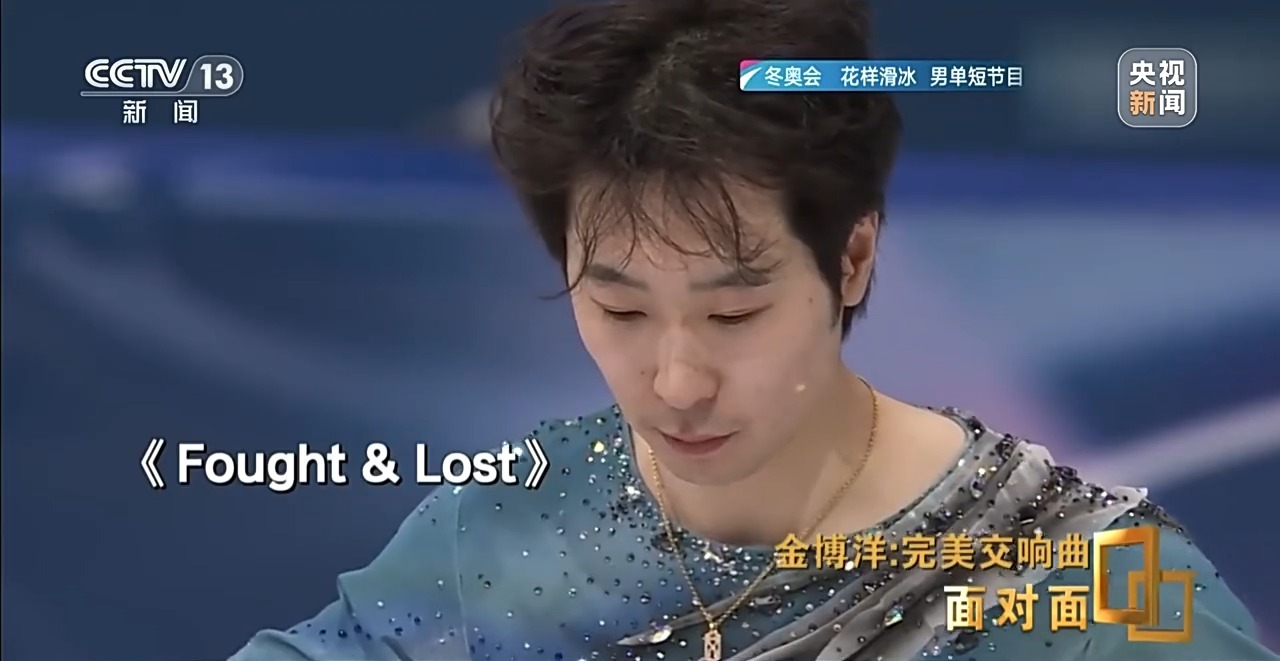
面对面丨完成“最后一舞” 金博洋:“享受”冬奥无遗憾
Yang Shi Xin Wen· 2026-02-22 23:26
Core Viewpoint - The article highlights the journey of Jin Boyang, a prominent figure in men's figure skating, who, despite not winning a medal at the Milan Winter Olympics, expresses a sense of fulfillment and enjoyment in his performance, marking the end of his Olympic career at the age of 28 [1][54]. Group 1: Career Highlights - Jin Boyang is recognized as a pioneer of the quadruple jump era in men's figure skating and holds the best Olympic performance record for Chinese male skaters [1]. - He participated in the team event, men's short program, and free skate at the Milan Winter Olympics, where he chose a song that reflects resilience in the face of failure [3][44]. - Jin achieved a significant milestone at the age of 15 by successfully landing a quadruple jump in training, and later became the first male skater to complete four quadruple jumps in an international competition [12][14]. Group 2: Personal Reflections - Jin emphasizes the importance of mental state over physical ability, noting that his best performances came from a place of psychological readiness rather than just physical prowess [5][18]. - He reflects on the challenges faced after the 2018 PyeongChang Olympics, including injuries and changes in scoring rules that affected his performance [23][35]. - Jin's approach to competition evolved through a structured method that helped him manage his mental state and expectations, allowing him to find balance and enjoyment in his performances [38][49]. Group 3: Future Aspirations - Despite contemplating retirement, Jin expresses a desire to continue competing and contributing to the growth of Chinese figure skating [45][54]. - He aims to inspire the next generation of skaters and elevate the sport in China, focusing on the process of training rather than just the outcomes [54].
(米兰冬奥会)冬奥新生代展现锐气与志气
Xin Lang Cai Jing· 2026-02-20 10:20
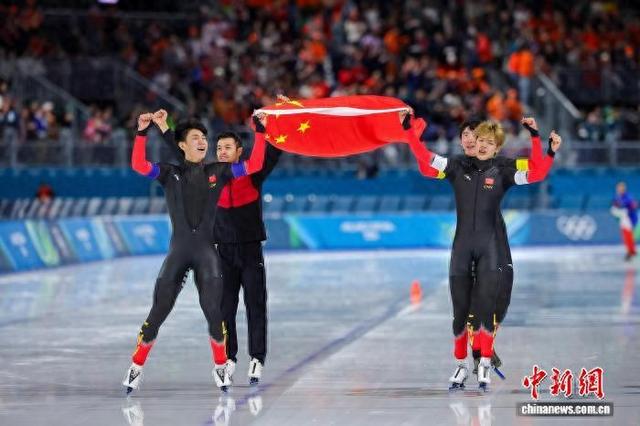
Core Insights - The article highlights the impressive performances of young athletes at the Milan Winter Olympics, showcasing their determination and spirit in various events [1]. Group 1: Notable Achievements - Swiss athlete Marco Almann, at 24 years old, won three gold medals in men's downhill, men's team all-around, and men's super-G, becoming the first "triple gold medalist" of the Milan Winter Olympics [2]. - Chinese speed skater Liu Hanbin, at 19, achieved a personal best by finishing 17th in the men's 5000m and won a bronze medal in the men's team pursuit, marking China's first medal in this event at the Winter Olympics [2][4]. - Kazakh skater Mikhail Sadolov, at 21, won his country's first gold medal in figure skating with a career-high score of 291.58 points [4]. Group 2: Overcoming Challenges - Chinese ski jumper Zeng Ping, despite facing injuries, achieved 15th and 21st places in her events, setting new bests for China in those categories [5]. - 22-year-old Pang Chuyuan also battled injuries but secured Olympic qualification and achieved a 26th place finish in women's snowboard cross, the best result for China in this event [5]. - Young athletes like Ren Zhongshuo and Yang Ya expressed their determination to improve and learn from their experiences, despite not advancing in their respective competitions [6]. Group 3: Future Aspirations - Athletes like Yang Jingru, at 19, demonstrated resilience despite not qualifying for the semifinals, expressing confidence in future competitions [6]. - The article emphasizes the potential of these young athletes, suggesting that their experiences at the Olympics will contribute to their growth and future successes in sports [6].
冬奥会|短评:意料之外的突破,意义深远
Xin Lang Cai Jing· 2026-02-20 02:10
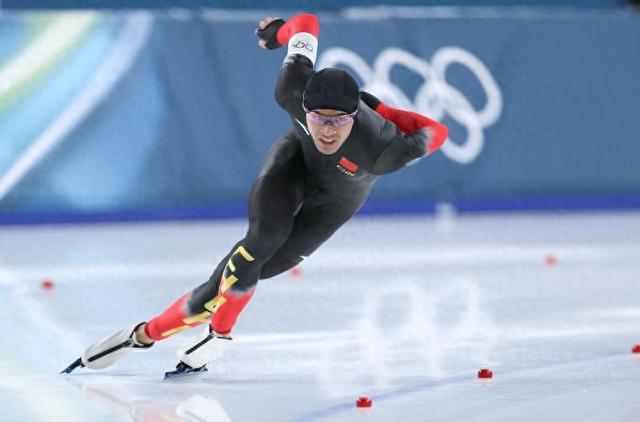
Group 1 - The core achievement of Ning Zhongyan winning the gold medal in the men's 1500m speed skating event at the Winter Olympics is significant as it marks the first gold medal for China in men's middle-distance speed skating at the Olympics, overcoming strong competition from American athlete Stoltz [1][3] - This victory is seen as a breakthrough for Chinese speed skating, especially as traditional strengths in short track and figure skating faced challenges during the Olympics, making this gold medal particularly valuable [3] - The success of Ning Zhongyan is attributed to his growth and maturity over the past four years, as well as the supportive training environment provided by the Chinese speed skating team, which includes diverse coaching methods and international training collaborations [3][4] Group 2 - The Chinese speed skating team has achieved notable results with one gold and two bronze medals, demonstrating the effectiveness of a flexible coaching approach and the incorporation of international training styles [4] - Despite recent successes, there is an acknowledgment that the number of elite athletes in Chinese speed skating still lags behind countries like the Netherlands and Canada, indicating a need for continued development to maintain competitive performance in future Olympics [4]
隋文静/韩聪:燃尽自己,照亮未来
Xin Lang Cai Jing· 2026-02-17 00:44
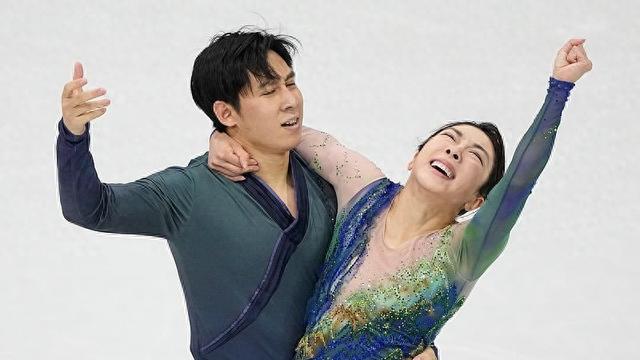
Core Viewpoint - The performance of Sui Wenjing and Han Cong at the Milan Winter Olympics marks a significant moment in their careers, showcasing their dedication to figure skating despite challenges such as injuries and age [2][3][4]. Group 1: Performance and Achievements - Sui Wenjing and Han Cong delivered a captivating performance during the pairs free skating event, which was their farewell to competitive skating [2]. - They achieved a commendable fifth place finish at the Milan Winter Olympics, which is notable given their return to competition after a hiatus of over six months [2]. - The audience responded with enthusiastic applause, indicating the emotional impact of their performance [2]. Group 2: Challenges and Resilience - Sui Wenjing faced significant challenges due to an ankle injury that worsened prior to the Olympics, leading to doubts about her ability to compete [3]. - Both athletes have had to confront the physical limitations associated with aging and the demands of high-intensity training [3]. - Han Cong expressed a sense of responsibility to uphold the legacy of Chinese figure skating, emphasizing the importance of passing on their experiences to younger athletes [3][4]. Group 3: Future of Chinese Figure Skating - The return of Sui Wenjing and Han Cong is seen as a crucial step in addressing the talent gap in Chinese pairs skating, which has become increasingly evident since the 2022 Beijing Winter Olympics [4]. - Their commitment to training and performance serves as an inspiration for younger skaters, encouraging them to persevere in the sport [4].
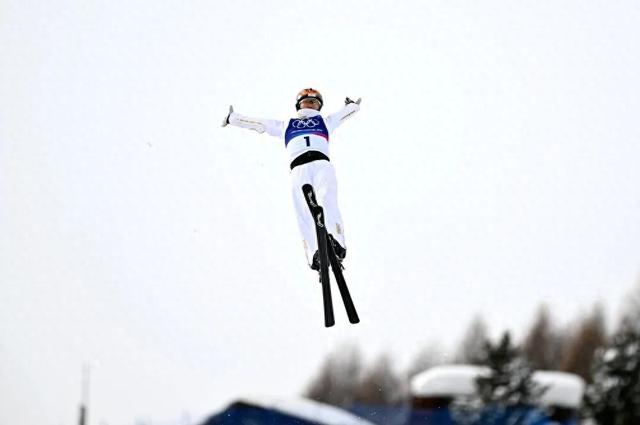
冬奥赛程过半首金何时来?中国健儿米兰战未央
Xin Lang Cai Jing· 2026-02-16 03:37
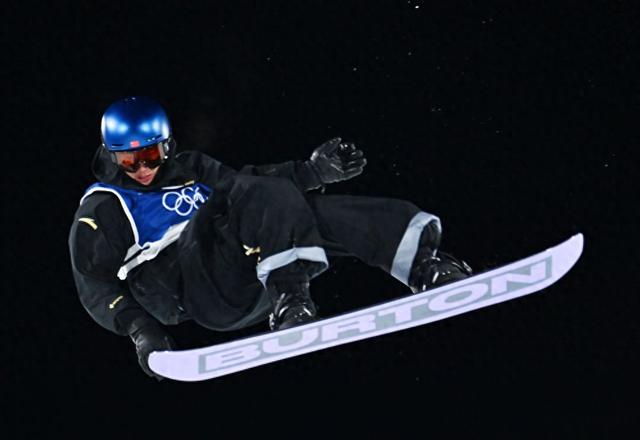
Core Insights - The Milan-Cortina Winter Olympics is showcasing the determination and spirit of athletes from around the world, with Chinese athletes making a significant impact [1][3] Group 1: Achievements of Chinese Athletes - Su Yiming, the defending champion, won a bronze medal in men's snowboard big air, reflecting his hard work over the past four years despite injuries and fierce competition [1][3] - Gu Ailing secured a silver medal in women's freestyle skiing slope style, emphasizing her pride in executing her best performance rather than focusing solely on the medal [4][7] - Ning Zhongyan won a bronze medal in men's speed skating 1000m, marking his first Olympic medal and China's first in this event [9][12] - Liu Hanbin became the first Chinese athlete to compete in men's speed skating 5000m in 20 years, achieving a record-breaking 17th place [12][15] - The Chinese bobsleigh team achieved historic results, with multiple events setting new bests for the country [15] Group 2: Resilience and Dedication - Athletes like Liu Jiayu and Cai Xuetong, who have participated in multiple Olympics, continue to compete despite injuries and challenges, showcasing their enduring passion for the sport [18][21] - The overall participation of 286 athletes in 91 events at this Winter Olympics highlights the growth and development of China's winter sports since the Beijing Olympics [16][21] - The narrative of perseverance is evident as athletes face setbacks yet continue to strive for excellence, embodying the spirit of sportsmanship [9][20]
奥运会没有剧本,但总有新的主角
Xin Lang Cai Jing· 2026-02-14 03:01
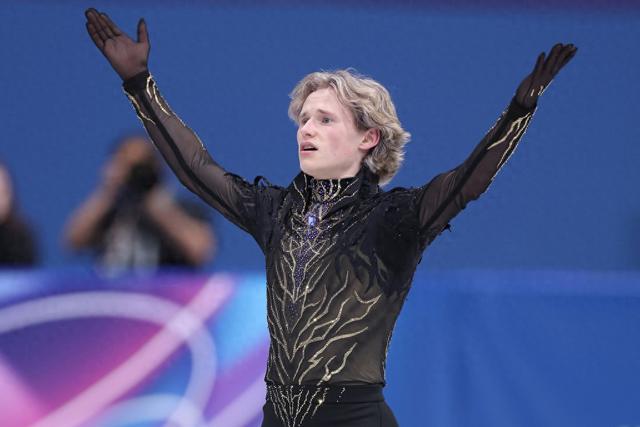
Group 1 - The core narrative revolves around the unexpected outcomes in the men's figure skating event at the Milan Olympics, highlighting the unpredictability of competitive sports [2][5] - The favored athlete, Marin, who was expected to win gold, faced significant performance issues, finishing eighth after a series of mistakes during his free skate [2][3] - The event showcased the emergence of unexpected champions, with Sadolov winning Kazakhstan's first Olympic gold in figure skating, emphasizing that the Olympics often feature surprising new stars [5][6] Group 2 - Marin's performance was marred by pressure and expectations, leading to a disappointing result despite his previous dominance in the sport [2][3] - Competitors like Yamazaki and Sato also struggled, with Yamazaki finishing sixth and Sato unexpectedly standing on the podium, illustrating the high stakes and tension of Olympic competition [2][5] - The event underscored the theme that the essence of the Olympics lies in its lack of a script, where the outcome is determined by who can withstand the pressure [5][6]
中国体育代表团在多个比赛项目中继续勇创佳绩
Yang Guang Wang· 2026-02-14 01:08
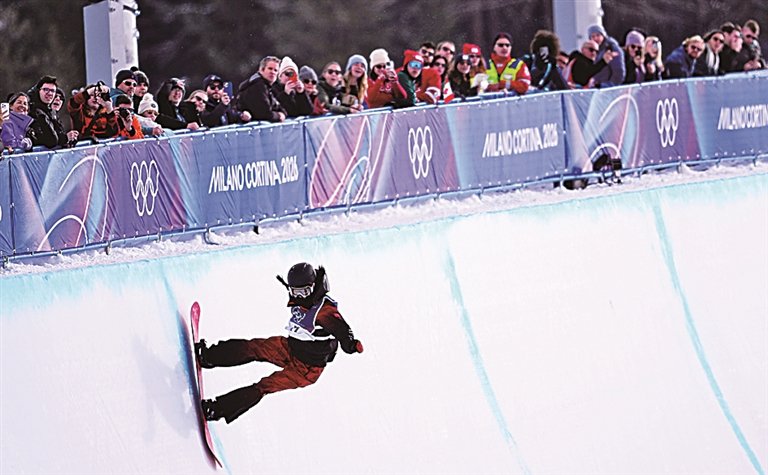
Group 1 - The Milan-Cortina Winter Olympics has seen Chinese athletes achieving breakthroughs in various events as of the seventh competition day [1] - Chinese athlete Jin Boyang completed his final performance at the Olympics with a score of 229.08 points, expressing satisfaction with his performance [1] - In the men's skeleton event, Chinese athlete Chen Wenhao finished fourth, while teammates Yin Zheng and Lin Qinwei placed seventh and eighth respectively [1] Group 2 - Chinese athlete Wang Ziyang ranked ninth in the men's snowboard halfpipe competition with a score of 76 [2] - In the women's snowboard cross final, Chinese athlete Tang Chuyuan achieved a 26th place finish, marking the best performance for the Chinese delegation in this event at the Winter Olympics [2] - Another Chinese athlete, Yong Qinglam, finished in 27th place in the same event [2]
坚守,源于热爱——致敬米兰冬奥会的老将们
Xin Lang Cai Jing· 2026-02-11 19:49
Group 1 - The Milan Winter Olympics has entered its fifth competition day, with notable Chinese athletes such as Cai Xuetong, Liu Jiayu, and Ning Zhongyan competing again [1] - The women's snowboard U-pipe preliminary event commenced, featuring veteran athletes Cai Xuetong and Liu Jiayu, who are key contenders for medals [2] - Cai Xuetong, a seven-time FIS World Cup champion, aims to overcome her previous fourth-place finish at the Beijing Olympics and secure a medal this time [2] - Liu Jiayu, the silver medalist from the 2018 Pyeongchang Olympics, made a comeback after a brief retirement, driven by her passion for snowboarding [2] Group 2 - Chinese short track speed skater Fan Kexin expressed her emotional commitment to the sport after her preliminary race, highlighting the dedication of athletes [2] - Jin Boyang, a figure skater, emphasized the strong spirit of his teammates, showcasing their resilience despite physical challenges [2] - Xu Xiaoming, the oldest participant from the Chinese delegation at 41, aims to achieve his long-desired Olympic medal after competing in multiple Winter Olympics [4]
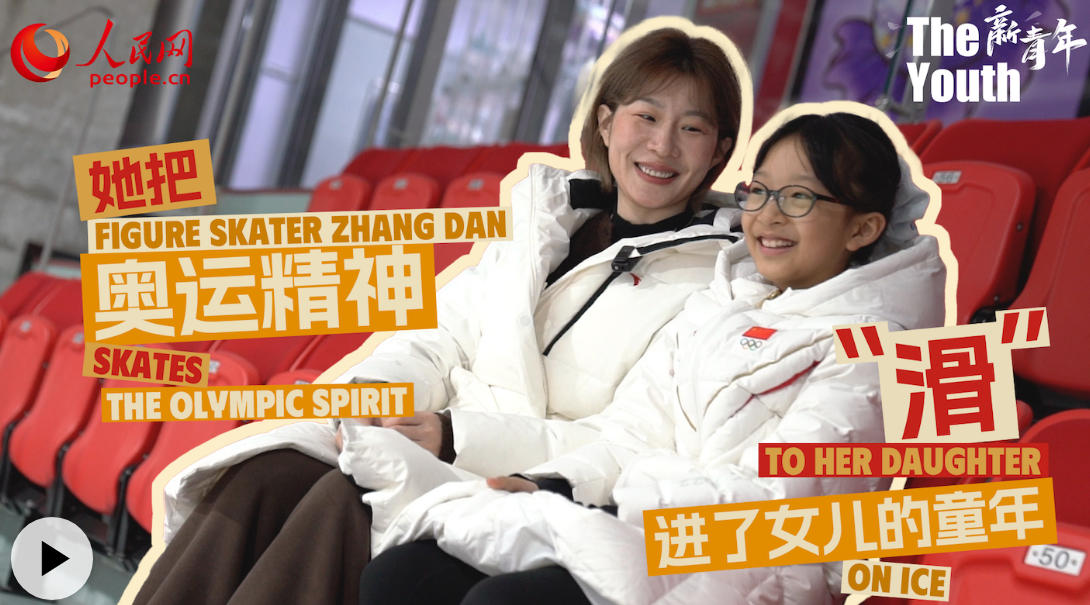
新青年 | “奥运精神让我们更勇敢、更坚强、更从容”
Ren Min Wang· 2026-02-10 07:23
Core Viewpoint - The article highlights the journey of Zhang Dan, a former Chinese figure skater, who transitioned from an athlete to a promoter of ice sports, reflecting on her experiences and the impact of the Winter Olympics on her life and career [2][3]. Group 1: Zhang Dan's Athletic Journey - Zhang Dan's memorable experience at the 2006 Turin Winter Olympics, where she won a silver medal despite a fall during her performance, is a significant highlight of her career [2]. - The emotional complexity of winning a silver medal, where she felt both pride and frustration, illustrates the pressures athletes face [2]. - Zhang Dan emphasizes that injuries are part of an athlete's journey, contributing to resilience and strength in her post-retirement life [2]. Group 2: Transition to Coaching and Promotion - After retiring, Zhang Dan founded a figure skating training base and became involved in promoting ice sports, showcasing her commitment to giving back to the sport [2]. - The Beijing 2022 Winter Olympics sparked increased interest in ice sports among children, leading to a rise in participation in figure skating [2]. - Zhang Dan's initial struggles with her post-retirement identity reflect the challenges athletes face when transitioning to new roles [2]. Group 3: Family and Legacy - Zhang Dan's daughter, Qiqi, has inherited her mother's talent for figure skating and aspires to become an Olympic champion, highlighting the generational passion for the sport [3]. - As a coach and mother, Zhang Dan aims to instill values of resilience and courage in her daughter, emphasizing that success is not solely defined by winning [3]. - The upcoming 2026 Winter Olympics in Italy evokes a sense of nostalgia for Zhang Dan, connecting her past as an athlete with her current role in the sport [3].