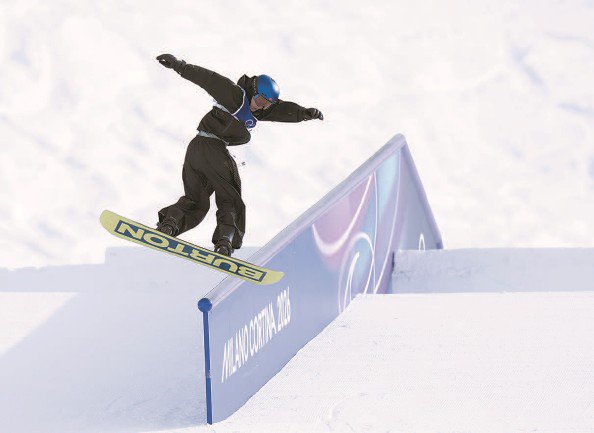
单板滑雪

Search documents
谌贻琴在调研米兰冬残奥会备战工作时强调 牢记为国争光使命 全力完成参赛任务
Xin Hua She· 2026-02-27 12:31
Core Viewpoint - The Chinese government emphasizes the importance of preparing for the Milan Winter Paralympics, encouraging athletes to strive for excellence and embody the spirit of national pride and resilience [1] Group 1: Government Support and Encouragement - The State Councilor and Director of the National Working Committee on Disability, Chen Yiqin, visited the China Disabled Sports Management Center to inspect the preparations for the Milan Winter Paralympics and motivate the Chinese sports delegation [1] - Chen Yiqin highlighted the need for athletes to remember their mission of representing the country and to promote the spirit of Chinese sports, the Beijing Winter Olympics, and the Paralympics [1] Group 2: Athlete Preparation and Training - During the visit, Chen Yiqin observed training sessions for ice hockey and engaged with athletes from various winter sports, inquiring about their training, injury prevention, and logistical support [1] - Athletes were encouraged to give their best efforts and to be well-prepared, with a focus on achieving optimal performance [1] Group 3: Values and Goals - The Chinese sports delegation is urged to pursue not only athletic achievements but also moral and ethical standards, aiming for a dual success in sports performance and spiritual civilization [1] - There is a call for broader communication and friendship-building, with an emphasis on sharing the stories of China and its disabled athletes to contribute to a shared human destiny [1]
谌贻琴在调研米兰冬残奥会备战工作时强调:牢记为国争光使命 全力完成参赛任务
Xin Hua She· 2026-02-27 11:56
Core Viewpoint - The Chinese delegation for the Milan Winter Paralympics is being encouraged to prepare thoroughly and strive for excellence, embodying the spirit of national pride and sportsmanship [2]. Group 1: Preparation and Training - The Chinese delegation is undergoing training in various winter sports, including ice hockey, alpine skiing, snowboarding, cross-country skiing, and biathlon [2]. - The focus is on ensuring athletes are well-prepared, with attention to training, injury prevention, and logistical support [2]. Group 2: National Pride and Sportsmanship - The mission of the athletes is emphasized as representing the country and striving for glory, reflecting the values of Chinese sportsmanship and the spirit of the Winter Olympics and Paralympics [2]. - The aim is to achieve both athletic success and moral integrity, promoting a positive image of disabled athletes in China [2].
苏翊鸣:雪上凌云志 赛场铸荣光
Xin Lang Cai Jing· 2026-02-25 05:38
Core Insights - Su Yiming's performance at the Milan Winter Olympics exemplifies the spirit of Chinese snowboarding, emphasizing that the significance of winning transcends mere medals, with national pride being paramount [1][4]. Group 1: Achievements and Milestones - Su Yiming won the first gold medal for the Chinese sports delegation at the Milan Winter Olympics on February 18, coinciding with his 22nd birthday, marking a significant personal and national achievement [3][4]. - His journey from the Beijing Winter Olympics, where he secured 1 gold and 1 silver, to the Milan Olympics, where he achieved 1 gold and 1 bronze, showcases his growth and maturity as an athlete [4][6]. Group 2: Personal Journey and Challenges - Su Yiming faced significant challenges, including injuries and periods of self-doubt, which he overcame through perseverance and dedication to his sport [6][9]. - His early passion for snowboarding began at the age of 4, and he has been inspired by predecessors in the sport, aiming to be a role model for future athletes [5][6]. Group 3: Training and Preparation - The preparation for the Milan Olympics involved rigorous training, where Su Yiming demonstrated resilience by competing through injuries and achieving technical breakthroughs, such as the world's first "back-to-back 1980" maneuver [9]. - His commitment to continuous improvement and pushing the limits of the sport reflects the evolving nature of competitive snowboarding [7][9].

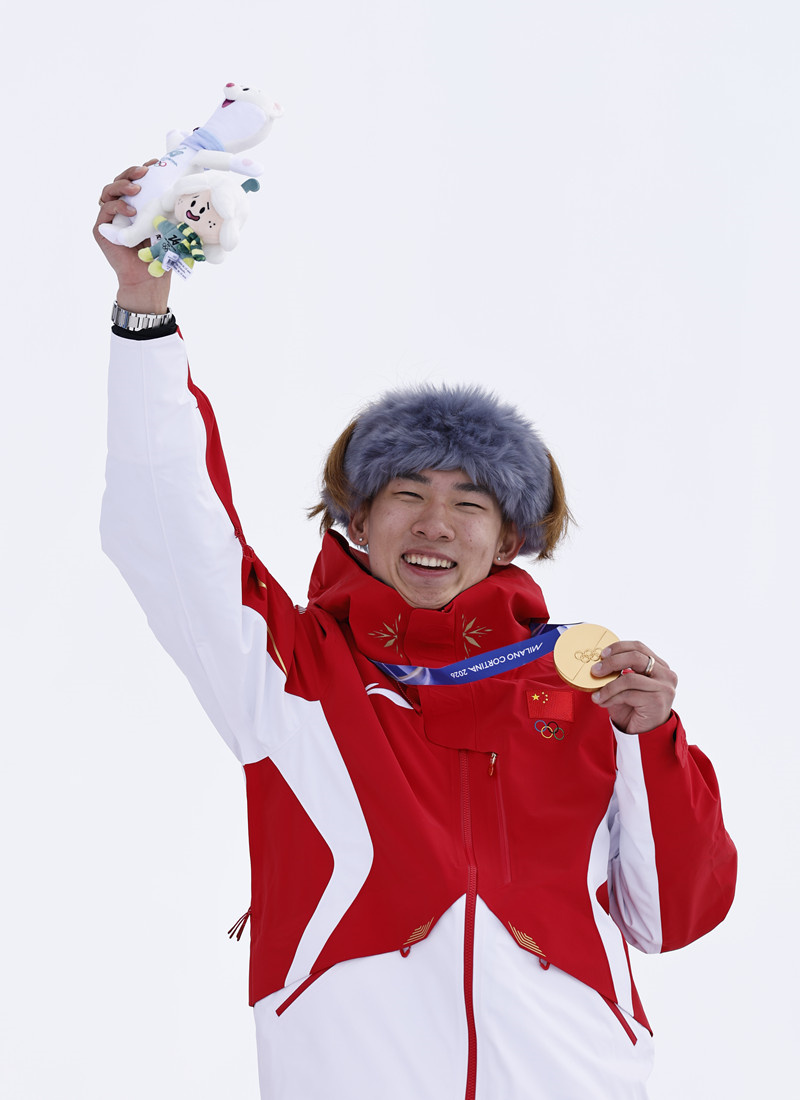
“我们仍是追赶者,这个判断没有变”
Xin Lang Cai Jing· 2026-02-23 12:31
Core Viewpoint - The Milan Winter Olympics marked a significant turning point for China's winter sports, showcasing a shift from a historically "ice strong, snow weak" paradigm to a more balanced performance, particularly in snow sports, where China secured 11 out of 15 medals in various disciplines [3][6]. Group 1: Performance Overview - Chinese athletes achieved a total of 15 medals, including 5 gold, 4 silver, and 6 bronze, which is the best performance for China in winter Olympics held outside the country [3]. - Snow sports, particularly freestyle skiing and snowboarding, have become dominant, with athletes like Su Yiming and Gu Ailing contributing to the medal tally [3][6]. - In contrast, ice sports showed mixed results, with speed skating achieving notable success, while short track speed skating and figure skating faced challenges [3][6]. Group 2: Development and Strategy - China's winter sports development strategy involves both addressing weaknesses and building a comprehensive system, leading to improved talent and technical capabilities [6][7]. - The Chinese team recorded 49 top-eight finishes, an increase of 12 from the previous Olympics, indicating a broader competitive depth across 18 events [6]. - The ongoing evolution of global winter sports standards necessitates continuous improvement for China to remain competitive, particularly in rapidly advancing disciplines like snowboarding and freestyle skiing [6][7]. Group 3: Future Outlook - The dual focus on both ice and snow sports is essential for establishing a robust foundation for China's winter sports, aiming to transition from a winter sports power to a winter sports stronghold [7][8]. - The importance of grassroots engagement in winter sports is emphasized, as a broader public interest will solidify the country's standing in the global arena [7][8].
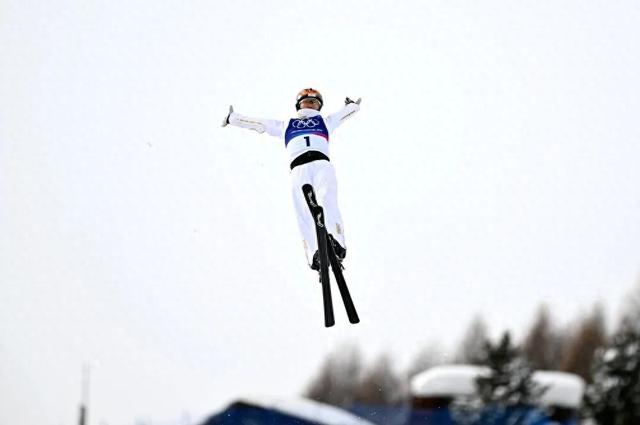
山重水复 柳暗花明——佟立新评中国代表团米兰冬奥会征程
Xin Lang Cai Jing· 2026-02-22 23:05
Core Viewpoint - The Chinese sports delegation achieved its best performance in Winter Olympics history with a total of 15 medals, including 5 gold, 4 silver, and 6 bronze, despite facing significant pressure and challenges in the early stages of the competition [1][3][12]. Group 1: Performance Overview - The delegation initially struggled, securing only 4 medals in the first ten days, leading to increased pressure and negative sentiments online [1][3]. - After the Lunar New Year, the situation improved dramatically, with athletes like Su Yiming winning the first gold medal, followed by a series of victories in various events [3][5]. - The final medal tally equaled the performance at the Beijing Winter Olympics, reinforcing the competitive landscape established previously [5][10]. Group 2: Characteristics of Performance - The delegation maintained a strong presence in key events, winning medals in 8 different categories, thus solidifying the competitive structure established during the Beijing Olympics [5][10]. - Overall performance improved, with 49 top-eight finishes, a 32.4% increase from the 37 achieved in Beijing, indicating a rise in competitive strength across various disciplines [5][10]. - The depth of talent increased, with multiple athletes competing in events that previously had only one representative, showcasing a shift from individual to team-based success [7][10]. Group 3: Project Performance Insights - Athletes demonstrated a strong patriotic spirit and a commitment to excellence, with notable breakthroughs in speed skating, particularly in the men's middle-distance events [8][10]. - Key projects like freestyle skiing and snowboarding maintained their competitive edge, with multiple medals won, including a historic achievement by Xu Mengtao [10][11]. - Emerging talents were highlighted, with younger athletes stepping up and showing potential for future competitions, indicating a positive trend in athlete development [7][10]. Group 4: Areas for Improvement - The delegation acknowledged shortcomings in certain events like short track speed skating and curling, citing insufficient preparation and understanding of the competitive landscape [12][14]. - There is a recognition of the need to enhance training methodologies and competitive strategies to keep pace with the evolving standards in winter sports globally [14][15]. - The overall competitive status of Chinese winter sports remains as a "follower," with a need for significant improvement to match the performance levels of leading nations [17].
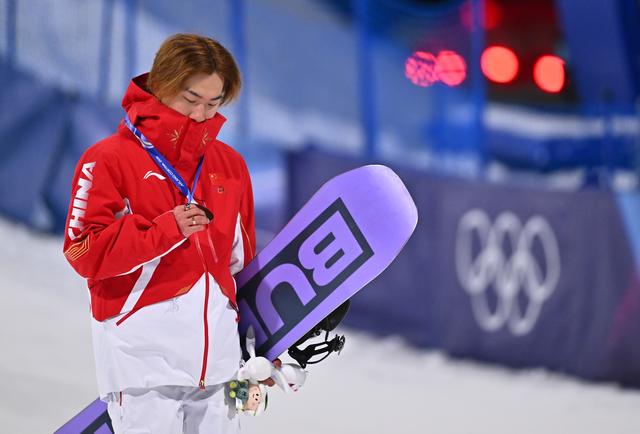
5金4银6铜!
Xin Lang Cai Jing· 2026-02-22 16:55
Group 1 - The Chinese delegation has achieved a record performance at the Winter Olympics, winning a total of 15 medals, including 5 gold, 4 silver, and 6 bronze, surpassing their previous best of 5 gold, 2 silver, and 4 bronze at the 2010 Vancouver Winter Olympics [1][2] - In snow sports, notable achievements include Su Yiming winning a bronze medal in men's snowboard big air and a gold medal in men's slopestyle on his 22nd birthday, as well as Gu Ailing and Li Fanghui securing gold and silver in women's freestyle skiing halfpipe [1] - In ice sports, Ning Zhongyan won a gold medal in men's speed skating 1500 meters, breaking the Olympic record and ending a century-long dominance of European and American athletes in this event [1]
冬奥会∣5金4银6铜!中国冬奥军团刷新境外参赛历史最好成绩
Xin Hua She· 2026-02-22 13:19
Core Viewpoint - The Chinese delegation has achieved its best performance in Winter Olympics history outside of China, winning a total of 15 medals, including 5 gold, 4 silver, and 6 bronze, surpassing the previous record of 5 gold, 2 silver, and 4 bronze set at the 2010 Vancouver Winter Olympics [1] Summary by Categories Achievements in Snow Events - The Chinese team has excelled in snow events, with notable performances including Su Yiming winning a bronze medal in men's snowboard big air on the 7th, marking the first medal for the delegation in this event [1] - On his 22nd birthday, Su Yiming secured the gold medal in men's snowboard slopestyle on the 18th, which was the first gold for the Chinese delegation in this event [1] - Veteran athlete Xu Mengtao won the gold in women's freestyle skiing aerials, becoming the first athlete to successfully defend this title [1] - Wang Xindi achieved gold in men's freestyle skiing aerials with a perfect jump, and on the 22nd, Gu Ailing and Li Fanghui claimed the gold and silver in women's freestyle skiing halfpipe [1] Achievements in Ice Events - Although the ice events yielded only one gold medal, it was significant as Ning Zhongyan broke the Olympic record in men's 1500m speed skating with a time of 1:41.98, ending a century-long dominance of European and American athletes in this event [1] Overall Medal Count - The Chinese delegation's total of 15 medals matches the total medal count achieved at the Beijing Winter Olympics, with previous totals of 11 medals at both the 2006 Turin and 2010 Vancouver Winter Olympics [1]
“幸运”女孩拥青拉姆:从雪域高原“滑”向米兰
Xin Lang Cai Jing· 2026-02-21 01:50
Core Viewpoint - The article highlights the journey of Chinese snowboarder Yongqing Lamu, who, despite not reaching the podium at the Milan Winter Olympics, considers her participation a success and a reflection of her resilience and determination [1][3]. Group 1: Personal Journey and Achievements - Yongqing Lamu, a 22-year-old Tibetan athlete, participated in the women's snowboard obstacle course at the Milan Winter Olympics, finishing 26th in the preliminaries with a time of 1 minute 17.07 seconds [3]. - This was her first time celebrating the Lunar New Year at home in ten years, as she usually spends this time training and competing [1]. - Lamu overcame a significant injury from the 2022 Beijing Winter Olympics, where she suffered a concussion and a tailbone fracture, which left her unable to compete [3]. Group 2: Training and Mental Resilience - Lamu's mental growth and resilience were crucial in her journey, as she learned to manage her anxiety and focus on her performance through techniques like listening to music and familiar warm-up routines [3][4]. - She achieved her Olympic qualification by maintaining a position in the top 30 of the FIS World Cup standings, with notable performances including two 11th place finishes at the Beidahu and Northeast Asia Cup events [4]. Group 3: Impact on the Sport - Lamu's transition to snowboarding began in 2018 through a cross-discipline selection program aimed at expanding winter sports participation in China [7]. - Her success has inspired more children in her hometown to take up winter sports, reflecting the growing interest in ice and snow activities across China [7]. - Lamu expresses a desire to continue competing in future Winter Olympics and hopes to improve her performance while representing China [8].
(米兰冬奥会)冬奥新生代展现锐气与志气
Xin Lang Cai Jing· 2026-02-20 10:20
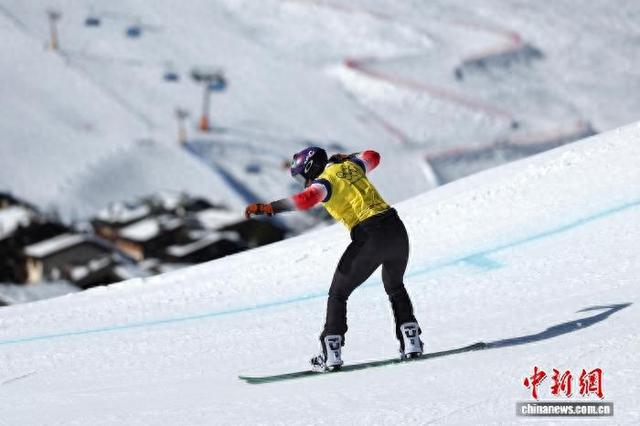
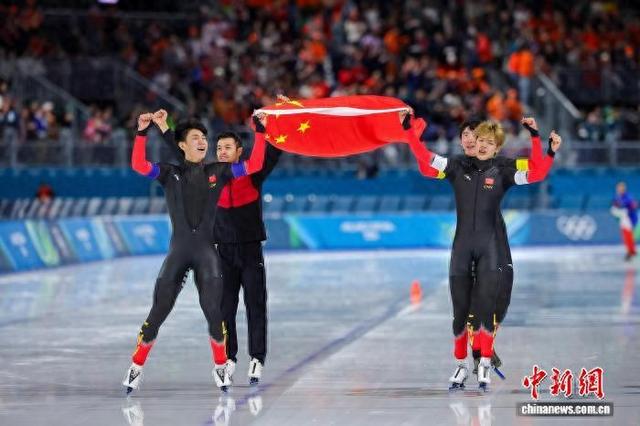
Core Insights - The article highlights the impressive performances of young athletes at the Milan Winter Olympics, showcasing their determination and spirit in various events [1]. Group 1: Notable Achievements - Swiss athlete Marco Almann, at 24 years old, won three gold medals in men's downhill, men's team all-around, and men's super-G, becoming the first "triple gold medalist" of the Milan Winter Olympics [2]. - Chinese speed skater Liu Hanbin, at 19, achieved a personal best by finishing 17th in the men's 5000m and won a bronze medal in the men's team pursuit, marking China's first medal in this event at the Winter Olympics [2][4]. - Kazakh skater Mikhail Sadolov, at 21, won his country's first gold medal in figure skating with a career-high score of 291.58 points [4]. Group 2: Overcoming Challenges - Chinese ski jumper Zeng Ping, despite facing injuries, achieved 15th and 21st places in her events, setting new bests for China in those categories [5]. - 22-year-old Pang Chuyuan also battled injuries but secured Olympic qualification and achieved a 26th place finish in women's snowboard cross, the best result for China in this event [5]. - Young athletes like Ren Zhongshuo and Yang Ya expressed their determination to improve and learn from their experiences, despite not advancing in their respective competitions [6]. Group 3: Future Aspirations - Athletes like Yang Jingru, at 19, demonstrated resilience despite not qualifying for the semifinals, expressing confidence in future competitions [6]. - The article emphasizes the potential of these young athletes, suggesting that their experiences at the Olympics will contribute to their growth and future successes in sports [6].
好事成双 一日两金
Xin Lang Cai Jing· 2026-02-19 07:37
Group 1 - The core point of the news is that Chinese athlete Su Yiming won the gold medal in men's snowboard slopestyle at the Winter Olympics, scoring 82.41 points, making him the first Chinese athlete to win two gold medals in snowboarding [2] - In the women's freestyle skiing aerials final, veteran athlete Xu Mengtao, aged 36, defended her title with a score of 112.90 points, becoming the first athlete in Olympic history to win consecutive gold medals in this event [4]