英伟达Blackwell架构AI GPU

Search documents
AMD(AMD.US)信仰拉满 但业绩展望追不上OpenAI大单带来的想象空间
智通财经网· 2025-11-05 00:33
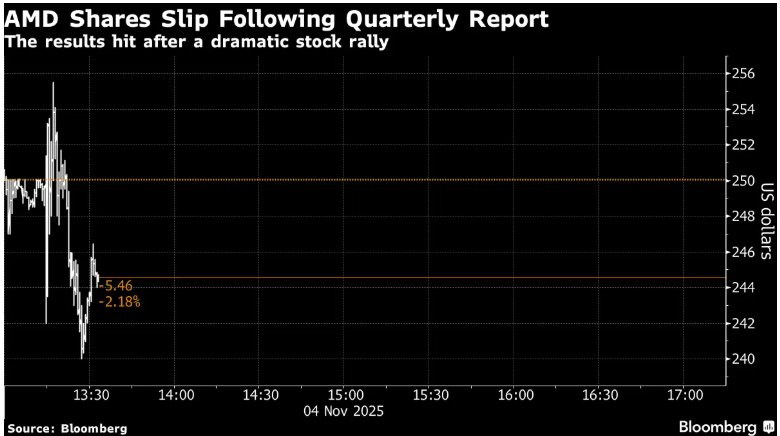
Core Insights - AMD is positioned as a significant competitor to Nvidia in the AI GPU market, with expectations of capturing a substantial share of Nvidia's market dominance [1][10] - Recent partnerships with OpenAI and Oracle have heightened market optimism regarding AMD's growth potential and valuation [2][11] - Despite strong Q3 performance, AMD's forward guidance has not met market expectations, leading to a decline in stock price post-earnings report [3][6] Financial Performance - AMD's Q3 revenue increased by 36% year-over-year to $9.25 billion, surpassing Wall Street's average expectation of $8.7 billion [6] - The company reported a significant operating profit increase of 75% to $1.27 billion, with adjusted earnings per share of $1.20, exceeding analyst expectations [6][7] - Q4 revenue guidance is set at $9.6 billion, with a gross margin expectation of 54.5%, aligning with analyst forecasts but falling short of some higher predictions [2][3] Market Position and Strategy - AMD's data center business, which competes directly with Nvidia's offerings, saw a 22% revenue increase to $4.3 billion, outperforming analyst expectations [6][8] - The company is also gaining market share in the PC and gaming sectors, with a 73% revenue increase in related business segments [6][7] - AMD's strategic partnerships are aimed at enhancing its AI GPU offerings and expanding its market presence against competitors like Nvidia and Intel [8][11] Future Outlook - AMD's CEO expressed optimism about significant revenue growth from AI-related businesses, projecting "hundreds of billions" in annual revenue by 2027 [7] - The collaboration with OpenAI includes a multi-year supply agreement for 6GW of AI GPU capacity, indicating strong future demand for AMD's products [11][12] - The performance leap of the MI450 GPU, featuring advanced specifications, positions AMD to compete effectively in the high-performance AI market [12]


博通(AVGO.US)带着OpenAI百亿美元大单重磅宣告:AI ASIC黄金时代到来
智通财经网· 2025-09-05 09:54
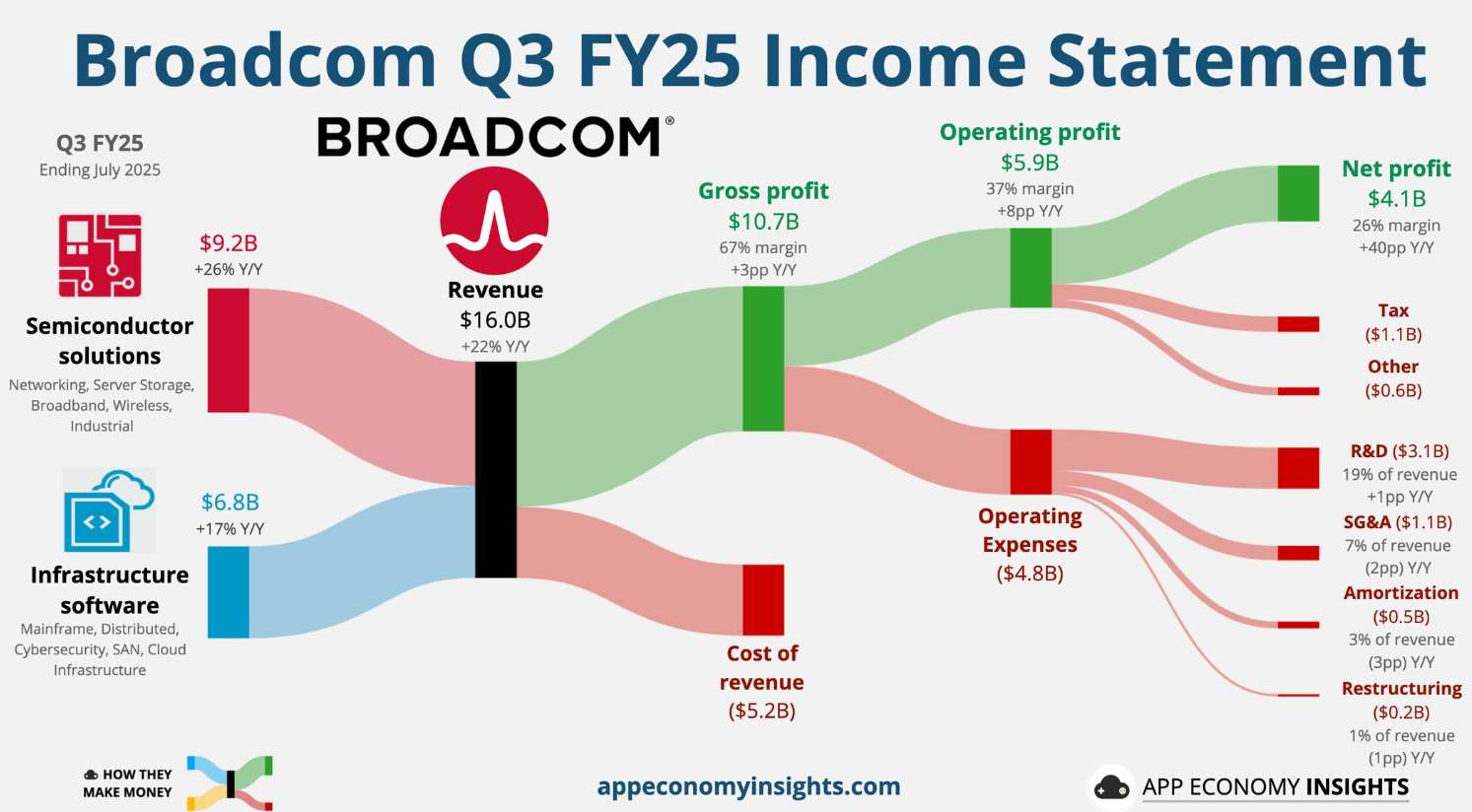
Core Insights - OpenAI is collaborating with Broadcom to develop its first custom AI ASIC chip, which will initially be used internally rather than sold to external clients [1][2][3] - OpenAI's CEO, Sam Altman, indicated plans to invest trillions of dollars in AI infrastructure, including chips and data centers, emphasizing the long-term importance of AI [2] - Broadcom's recent performance and future outlook highlight a surge in demand for AI ASICs, with a significant order from OpenAI exceeding $10 billion [4][7] Company Developments - OpenAI is finalizing the design architecture for its AI ASIC in collaboration with Broadcom, with plans to have it manufactured by TSMC [3] - Broadcom's CEO announced that AI-related revenue growth is expected to be stronger than previously anticipated, with a projected growth rate of 50% to 60% for fiscal year 2026 [4] - Broadcom's semiconductor revenue related to AI infrastructure reached approximately $5.2 billion, a year-over-year increase of 63% [5] Market Trends - The demand for AI ASICs is expected to continue growing, following the trend set by major tech companies like Google and Amazon [3][8] - Broadcom's strong earnings have revitalized investor confidence in the AI sector, leading to a significant increase in its stock price, which has more than doubled since April [5][7] - The AI ASIC market is anticipated to expand rapidly, potentially matching or exceeding the growth of AI GPU demand in the coming years [8][14] Analyst Sentiment - Analysts are optimistic about Broadcom's stock performance, with several firms raising their target prices significantly following the company's strong earnings report [15] - The overall sentiment in the market is bullish regarding AI infrastructure investments, driven by the increasing reliance on custom AI chips [14][15]



博通(AVGO.US) 带着OpenAI百亿美元大单重磅宣告:AI ASIC黄金时代到来
Zhi Tong Cai Jing· 2025-09-05 08:30
Core Insights - OpenAI is collaborating with Broadcom to develop its first custom AI ASIC chip, which will initially be used internally rather than offered to external clients [1][2][3] - OpenAI's CEO, Sam Altman, indicated plans to invest trillions of dollars in AI infrastructure, including chips and data centers, emphasizing the long-term importance of AI [2] - Broadcom's recent performance and outlook highlight a surge in demand for AI ASICs, with expectations of significant revenue growth from AI-related orders [4][5][7] Group 1: OpenAI and ASIC Development - OpenAI plans to finalize the design architecture for its AI ASIC in the coming months, with manufacturing to be handled by TSMC [3] - The move to develop custom AI chips aligns OpenAI with other tech giants like Google and Amazon, who have also created ASICs for handling large AI workloads [3][8] - OpenAI's strategy aims to diversify its AI computing resources and reduce reliance on NVIDIA GPUs [2][3] Group 2: Broadcom's Performance and Market Outlook - Broadcom's CEO announced over $10 billion in AI infrastructure orders from a new large-scale client, identified as OpenAI, leading to an upgraded revenue growth forecast for AI-related sales [4][5] - The company expects AI-related revenue growth to exceed previous estimates, with projections of a 50% to 60% increase for fiscal year 2026 [4][5] - Broadcom's stock has seen significant gains, outperforming NVIDIA, as investor sentiment towards AI infrastructure remains strong [5][7] Group 3: Industry Trends and Competitive Landscape - The demand for AI ASICs is expected to grow significantly, with Broadcom positioned as a leader in this space, benefiting from partnerships with major tech companies [3][8] - The performance of Google's latest TPU chip, developed with Broadcom's involvement, demonstrates the competitive advancements in AI ASIC technology [9] - Analysts predict that the market share for AI ASICs will expand, potentially balancing the dominance currently held by NVIDIA in the AI chip sector [8][14]
“AI信仰”引爆看涨狂潮! 软银股价涨势如虹 狂飙13%至历史新高
智通财经网· 2025-08-08 02:47
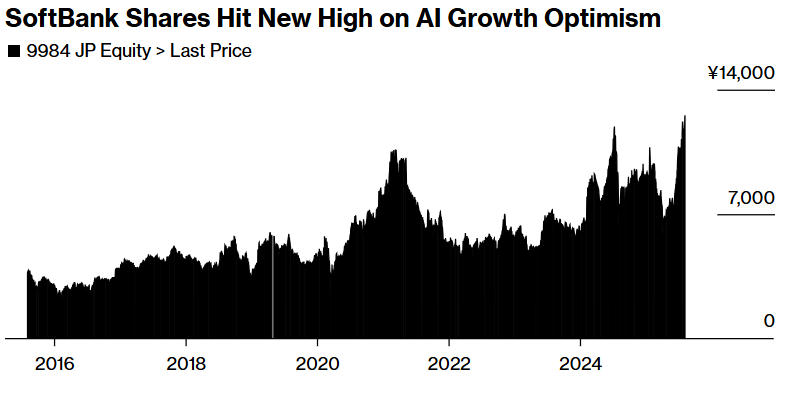
Core Viewpoint - SoftBank Group Corp. has achieved a significant turnaround by returning to profitability in the latest quarter, leading to a surge in its stock price to a historical high in the Japanese market, reflecting investor confidence in its AI-related investments, particularly in Nvidia and TSMC [1][2][5] Investment Performance - SoftBank's Vision Fund has seen a rebound in investment value, aided by the sale of its stake in T-Mobile US Inc. for $4.8 billion and a recent $3 billion stock sale, which supports its aggressive AI investment strategy [1][5] - The company's stock price increased by as much as 13%, marking the largest gain in four months, and its American Depositary Receipts (ADRs) rose over 5%, nearing the historical peak set in 2021 [2][5] AI Investment Strategy - SoftBank has significantly increased its holdings in Nvidia to approximately $3 billion, more than doubling its previous investment, and has also acquired shares in TSMC and Oracle, benefiting from the rising demand for AI infrastructure [5][8] - The company is focusing on AI infrastructure investments, with plans to invest up to $30 billion in OpenAI and a $6.5 billion acquisition of Ampere Computing, as part of its broader strategy to establish a $1 trillion AI manufacturing center in Arizona [9][10] Market Outlook - Analysts predict that the ongoing demand for AI computing power will continue to drive stock prices for companies like Nvidia and TSMC, with a potential global investment wave in AI infrastructure reaching $2 trillion [7][8] - SoftBank's recent financial results showed a net profit of 421.82 billion yen (approximately $2.9 billion), significantly exceeding analyst expectations, driven by the recovery in technology valuations and strong returns from its portfolio companies [6][8] Challenges and Future Plans - Despite the positive outlook, SoftBank's stock buyback plan has been curtailed, with only about 3.3 trillion yen of the planned 5 trillion yen executed, which may limit future upside potential [2][5] - The company faces scrutiny regarding its ability to manage large-scale financing needs amid rising interest rates in Japan, which could impact its stock valuation relative to its net asset value [9][10]