
莲花荟

Search documents
北京多家商业项目年末冲刺开业
Bei Jing Shang Bao· 2025-12-21 15:55
Core Viewpoint - The Beijing commercial market is experiencing a wave of openings by the end of 2025, with new projects enhancing consumer offerings and responding to market demand, particularly in the context of the upcoming holiday shopping season [1][4]. Group 1: New Openings and Market Dynamics - The Zhongguancun Daluocheng East District has officially opened, complementing the West District, and features over 60 first stores, including brands like COACH and gaga [3][5]. - The upcoming openings in Tongzhou District, such as Lianhua Hui and Wanli, aim to capitalize on the year-end consumption peak, with Wanli set to officially open on December 26 [3][4]. - The new commercial projects are strategically timed to attract consumers during the New Year and Spring Festival, which are critical periods for achieving annual sales targets [4][6]. Group 2: Differentiated Positioning - Despite their proximity in opening dates, the new projects in Tongzhou and Zhongguancun have distinct market positions, targeting different consumer segments [5][6]. - Zhongguancun Daluocheng East District aims to fill gaps in brand offerings in a tech-rich area, while Wanli focuses on leveraging tourist traffic from nearby Universal Studios [5][6]. - Lianhua Hui's transformation into a "neighborhood lifestyle space" retains its supermarket roots while expanding into dining and entertainment, catering to community needs [5][6]. Group 3: Supply and Consumer Engagement - The concentration of new commercial openings enriches market supply, prompting businesses to innovate in order to maintain consumer interest and ensure sustainable operations [7][8]. - Key strategies for new projects include event-driven marketing, creating unique attractions, and continuously refreshing tenant mixes based on sales data and consumer feedback [7][8]. - The integration of online and offline shopping experiences is increasingly important, with projects encouraged to utilize data analytics for targeted marketing and enhanced consumer experiences [8].

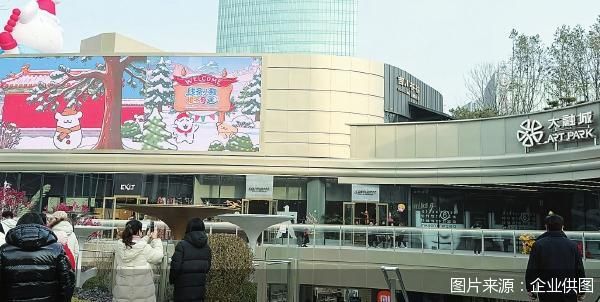
通州卜蜂莲花变身“莲花荟” 将于12月25日入市
Bei Jing Shang Bao· 2025-11-20 06:58
Core Viewpoint - Beijing Bubang Lianhua has announced the reopening of its upgraded Tongzhou store as "Lianhua Hui" on December 25, featuring a new concept that integrates shopping, dining, entertainment, and services [1] Group 1: Store Features - The new Lianhua Hui spans approximately 18,300 square meters, designed to create a "neighborhood living space" and a "culinary landmark" [1] - The store includes five core segments: boutique retail, food court, cultural entertainment, children's playground, and lifestyle services [1] Group 2: Brand and Product Strategy - Multiple first-store brands will be introduced in Tongzhou, enhancing the shopping experience [1] - The core supermarket, Bubang Lianhua, has planned to offer 10,742 product items, incorporating more first-tier brands and specialty selected products, achieving an 80% overlap in product structure with the competitor, Pang Donglai [1]
老地标新生 泰国“莲花”系再“闯”通州商业
Bei Jing Shang Bao· 2025-10-22 15:38
Core Insights - The transformation of Tongzhou Lianhua Hui from a traditional supermarket to a community commercial complex is underway, aiming to meet local consumer demands and inject new vitality into the Tongzhou business district [1][2] Group 1: Project Overview - The Lianhua Hui project has completed exterior updates and has a merchant signing rate of approximately 90%, featuring various business types such as fast food, children's entertainment, and cinemas [2] - The project covers an area of about 18,300 square meters and aims to create a modern commercial complex that aligns with community needs through spatial restructuring and business reorganization [2][3] Group 2: Market Context - The renovation of Lianhua Hui reflects the broader evolution of commercial development in Tongzhou, which has seen over 3,000 enterprises relocate to the area, enhancing diverse consumer demands [3] - The commercial landscape in Tongzhou is shifting from traditional supermarkets and hypermarkets to shopping centers, community malls, and themed streets, indicating a transition from single-function to multi-functional commercial spaces [3] Group 3: Industry Trends - The shift from traditional supermarkets to community malls is driven by consumer demand for richer shopping experiences and better service quality, making community commercial complexes more appealing [4][5] - The "supermarket+" community complex model is gaining traction as it offers a one-stop lifestyle experience, allowing for quick adjustments to consumer needs and fostering local brand influence [5]