
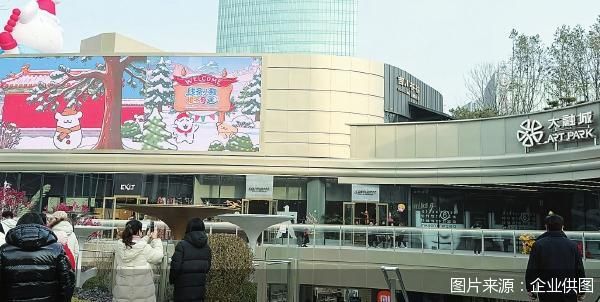
中关村大融城

Search documents
2026年北京零售物业市场预计超50万平方米新增供应入市
Bei Jing Shang Bao· 2026-01-14 08:25
Group 1 - The core viewpoint of the articles highlights the transformation of Beijing's retail property market, with a significant focus on urban renewal projects as the main supply source for 2025 [1][2] - In 2025, a total of 534,000 square meters of new retail property supply is expected in Beijing, all from urban renewal projects, indicating a shift towards "old for new" strategies [1] - The fourth quarter of 2025 will see the entry of two major urban renewal projects, Zhongguancun Dalu City and Longfu Temple, contributing 294,000 square meters to the market [1] Group 2 - The restaurant sector remains the largest segment in the retail market, but its growth is slowing, with its share decreasing from 49% at the beginning of the year to 42% by the fourth quarter [2] - There is a notable increase in the share of local quality dining and tea-baking, while fast-food and low-experience models are losing demand [2] - The retail sector, particularly fashion and accessories, has shown a recovery trend throughout the year, with a significant rise in the share of local and young designer brands [2] Group 3 - The average rent for first-floor shopping centers in Beijing decreased by 1% year-on-year to 30 yuan per square meter per day by the end of the fourth quarter, with an annual cumulative decline of 2.4% [3] - Secondary business districts like Zhongguancun and Wangjing are experiencing significant rent pressure due to new project impacts and insufficient local demand [3] - Core business districts maintain stable rental rates and occupancy due to brand upgrades and refreshed experiences, while projects with unclear positioning face pressure for clearance or renovation [3]
北京多家商业项目年末冲刺开业
Bei Jing Shang Bao· 2025-12-21 15:55
Core Viewpoint - The Beijing commercial market is experiencing a wave of openings by the end of 2025, with new projects enhancing consumer offerings and responding to market demand, particularly in the context of the upcoming holiday shopping season [1][4]. Group 1: New Openings and Market Dynamics - The Zhongguancun Daluocheng East District has officially opened, complementing the West District, and features over 60 first stores, including brands like COACH and gaga [3][5]. - The upcoming openings in Tongzhou District, such as Lianhua Hui and Wanli, aim to capitalize on the year-end consumption peak, with Wanli set to officially open on December 26 [3][4]. - The new commercial projects are strategically timed to attract consumers during the New Year and Spring Festival, which are critical periods for achieving annual sales targets [4][6]. Group 2: Differentiated Positioning - Despite their proximity in opening dates, the new projects in Tongzhou and Zhongguancun have distinct market positions, targeting different consumer segments [5][6]. - Zhongguancun Daluocheng East District aims to fill gaps in brand offerings in a tech-rich area, while Wanli focuses on leveraging tourist traffic from nearby Universal Studios [5][6]. - Lianhua Hui's transformation into a "neighborhood lifestyle space" retains its supermarket roots while expanding into dining and entertainment, catering to community needs [5][6]. Group 3: Supply and Consumer Engagement - The concentration of new commercial openings enriches market supply, prompting businesses to innovate in order to maintain consumer interest and ensure sustainable operations [7][8]. - Key strategies for new projects include event-driven marketing, creating unique attractions, and continuously refreshing tenant mixes based on sales data and consumer feedback [7][8]. - The integration of online and offline shopping experiences is increasingly important, with projects encouraged to utilize data analytics for targeted marketing and enhanced consumer experiences [8].

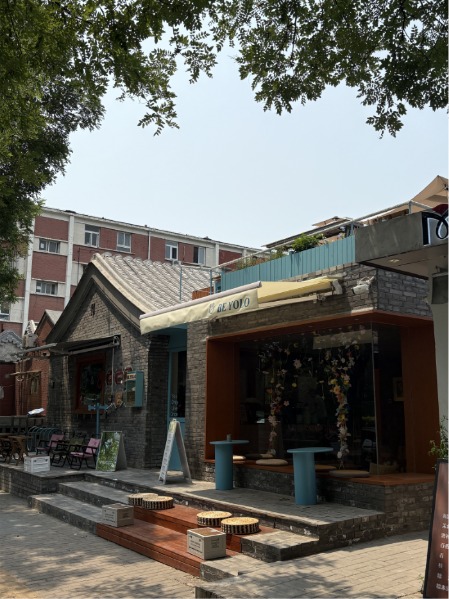
北京“四合院商场”爆火 胡同成年轻人“溜达圣地” 老居民与新业态如何共生
Hua Xia Shi Bao· 2025-07-08 09:56
Core Insights - The development of commercial real estate is shifting from "functional consumption" to "scenario consumption," reflecting a change in consumer preferences towards emotional and experiential spending [1][6]. Group 1: Urban Renewal and Commercial Projects - Two major urban renewal commercial projects were launched in Beijing in the first half of the year, with a total area of 240,000 square meters [2]. - The Zhonghai Dajixiang project, featuring traditional courtyard-style architecture, has become a top commercial destination in Beijing, achieving high occupancy rates [2][3]. - The overall opening area of commercial projects in the northern Beijing region reached 430,000 square meters, contributing to new commercial vitality [2]. Group 2: Cultural and Community Integration - The urban renewal strategy emphasizes "preserving the old while renewing," focusing on protecting cultural heritage and integrating commercial activities within historical contexts [2][5]. - The "micro-renewal" concept is being applied in certain neighborhoods, preserving traditional structures while introducing modern commercial elements [4][5]. - The integration of local cultural symbols into commercial experiences aims to create sustainable community development through resident participation and cultural preservation [5]. Group 3: Consumer Trends and Market Outlook - The rise of IP and emotional consumption is becoming a driving force in the commercial sector, with collectibles and experiential products gaining popularity among consumers [6]. - The second half of the year is expected to see over 390,000 square meters of retail properties opening in secondary business districts in Beijing, indicating ongoing growth in the market [8]. - Government initiatives are promoting the development of fashion and technology sectors to stimulate consumer activity and enhance the shopping experience [8].

北京海淀加力实施城市更新行动(聚力攻坚 协同发力·政策落地进行时)
Ren Min Ri Bao· 2025-05-10 21:30
Group 1 - The recent trial opening of Zhongguancun Dalu City attracted 45,000 visitors on its first day, with total consumption reaching 5 million yuan across 83 dining establishments [1] - Haidian District has initiated 251 urban renewal projects with a total investment exceeding 100 billion yuan, covering an area of approximately 14.358 million square meters [1] - Urban renewal is seen as a key driver for enhancing consumer potential and promoting industrial upgrades [1] Group 2 - The updated Dinghao Building now hosts over 30 technology companies with a total valuation exceeding 50 billion yuan, showcasing a successful "tenglong huan niao" (upgrading and replacing) strategy [2] - The urban renewal efforts aim to improve the sense of gain, happiness, and safety for the residents [2] - The overall investment in urban renewal in Beijing is projected to reach 73.4 billion yuan in 2024, marking a 67% year-on-year increase [2] Group 3 - Beijing's Housing and Urban-Rural Development Committee plans to accelerate impactful urban renewal projects, with 53 tasks outlined for 2025 [3] - A total of 2,511 urban renewal projects have been implemented, with an estimated total investment of around 490 billion yuan [3] - The third batch of urban renewal projects is expected to be announced by mid-year [3]