蓄电系统

Search documents
中国蓄电池厂商相继在美建厂,减轻关税负担
日经中文网· 2026-02-08 00:33
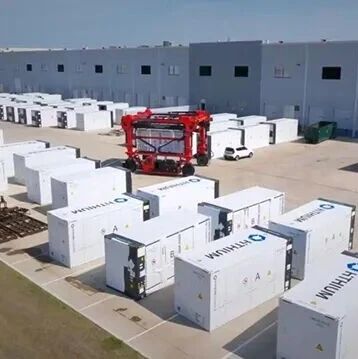
Core Viewpoint - Chinese battery companies are shifting from exporting products to local production in the U.S. to mitigate tariff-related cost increases and capitalize on the growing demand for battery systems in data centers [2][4]. Group 1: Market Dynamics - Chinese battery manufacturers are increasingly establishing factories in the U.S., with companies like Xiamen Hicharge Energy and Horizon Robotics announcing new production lines in Texas and Tennessee, respectively, with capacities of 10 GWh and 7 GWh [4]. - The intensifying competition in the Chinese market has prompted these companies to target the U.S. market, which presents greater growth opportunities [4]. Group 2: Regulatory Environment - The U.S. government, under the Biden administration, announced a plan to impose tariffs of up to 25% on Chinese-made batteries starting January 2026, which has influenced Chinese companies to localize production [4]. - The OBBB Act, passed in July 2025, aims to strengthen restrictions on companies controlled by the government, indicating potential future challenges for Chinese firms operating in the U.S. [5]. Group 3: Demand Drivers - The demand for batteries in the U.S. is being driven by significant investments in data center equipment by large tech companies, fueled by the AI boom [5].

日美发布4千亿美元对美投资清单 聚焦AI电力
日经中文网· 2025-10-29 03:16
Core Viewpoint - The U.S. and Japan have announced a joint investment initiative totaling approximately $400 billion, focusing on four key sectors: nuclear power generation, AI power development, strengthening AI infrastructure, and critical minerals [2][5]. Group 1: Investment Areas - The joint investment initiative highlights four primary sectors for collaboration: nuclear power generation, AI power development, strengthening AI infrastructure, and critical minerals [2]. - Eight Japanese companies have expressed interest in participating in the projects outlined in the joint investment initiative [2]. Group 2: Key Participants - Notable Japanese corporate leaders, including Masayoshi Son from SoftBank, attended a signing ceremony for the investment projects [4]. - Other participating companies include Hitachi, Panasonic, Mitsubishi Electric, and Toshiba, indicating a strong interest from major players in the Japanese market [4]. Group 3: Project Details - The largest project under consideration involves the construction of new nuclear reactors, with a potential scale of up to $1 trillion, leveraging Japan's expertise in reactor construction and component manufacturing [5][6]. - The collaboration includes the establishment of small modular reactors (SMRs) by GE Vernova and Hitachi, with a project scale also reaching up to $1 trillion [5]. Group 4: Energy Demand and AI - The increasing demand for electricity driven by generative AI is a significant factor in this collaboration, with predictions indicating that U.S. data center electricity consumption could quadruple by 2030 [6]. - The partnership aims to enhance the electricity infrastructure necessary to support major tech companies like OpenAI and Google, positioning Japan to develop a second major industry following automotive [6]. Group 5: Future Participation - The Japanese Minister of Economy, Trade and Industry indicated that the companies listed in the joint initiative are not yet confirmed participants, and others may join in the future [7].