电子元件

Search documents
【风口研报】一季度业绩同比增长近2000%,分析师认为行业的集体涨价并未全部体现,叠加公司在新兴下游的拓展,有望塑造第二增长曲线
财联社· 2026-03-31 13:49
Core Viewpoint - The article emphasizes the tracking of companies with positive earnings expectations during key reporting periods, highlighting significant growth opportunities and industry trends [1] Group 1: Earnings Growth - In the first quarter, the industry experienced a nearly 2000% year-on-year earnings growth, with analysts believing that collective price increases have not yet been fully reflected [1] - The expansion into emerging downstream sectors such as AIPCB and aerospace is expected to create a second growth curve for the company [1] Group 2: AI and Data Center Opportunities - ByteDance is entering a year of large-scale delivery for its AI computing center, with analysts strongly calling for the company due to its advantages in special optical fiber production for data centers [1] - The company is anticipated to significantly benefit from the domestic demand exceeding 5 billion yuan [1]


欧姆龙,出售电子元件业务
半导体行业观察· 2026-03-31 02:23
Core Viewpoint - Omron announced the sale of its core electronic components business to the Carlyle Group for an estimated value of 81 billion yen, aiming to create a better growth environment for its Device and Module Solutions Business (DMB) while focusing on expanding its 13 key business areas centered around industrial automation and data services [1][2]. Summary by Sections Business Sale Details - The transaction involves the acquisition of DMB by Omron's subsidiary through a merger, with the effective date set for July 1, 2026. The shares will be transferred to a special purpose company established by Carlyle on October 1, 2026, and the acquiring company will be renamed "Aratas" [2]. - Post-acquisition, Omron plans to invest in the special purpose company to maintain a 5% stake, ensuring continued sales collaboration opportunities with the new independent company [2]. Historical Context and Market Dynamics - DMB, established in 1933, has evolved from producing medical timers to a wide range of high-quality components that support various industries, including automation systems [1]. - Despite the anticipated rapid growth in the DMB market, particularly in the electric vehicle relay sector, increased competition from new entrants, especially local Chinese competitors, has prompted Omron to seek a sustainable business operation model [1]. Strategic Focus - The sale allows Omron to concentrate its investments on expanding its core business areas and accelerating the restructuring of its business portfolio as outlined in the "SF Mid-term Roadmap Phase 2" [2].
国海证券晨会纪要-20260331
Guohai Securities· 2026-03-31 01:41
Group 1 - Huawei held a spring product launch event, officially launching the Leap A10, a pure electric small SUV priced between 65,800 to 86,800 yuan, aiming to penetrate the competitive market segment with advanced driving technology [5][4] - The automotive sector in A-shares outperformed the Shanghai Composite Index during the week of March 23-27, 2026, with the automotive index declining only 0.4% compared to the overall market [4] - The report indicates a positive outlook for the automotive industry in 2026, driven by the high-end upgrade of domestic brands and the acceleration of intelligent technology integration [6] Group 2 - Credit bond ETF size increased to 544.66 billion yuan as of March 27, 2026, marking a month-on-month increase of 21.97 billion yuan, with the Sci-Tech bond ETF ending a 10-week contraction [9][10] - The report highlights a shift in the credit bond ETF holdings structure, with a preference for mid to long-term securities during the recent expansion phase [10] - The report anticipates that the current low premium levels of Sci-Tech bond ETFs may rise if market preferences shift positively [11] Group 3 - Sanhuan Group reported a 22.1% year-on-year increase in revenue for 2025, reaching 9.007 billion yuan, and a 19.5% increase in net profit, amounting to 2.618 billion yuan [11][13] - The company’s electronic components business saw a significant revenue increase of 43.95% year-on-year, driven by strong demand in the MLCC product segment [13][14] - The report emphasizes the potential of the SOFC market, with the company positioned to benefit from the growing applications of solid oxide fuel cells [15][16] Group 4 - Siwei achieved a revenue of 9.031 billion yuan in 2025, reflecting a 51.32% year-on-year growth, with net profit soaring by 154.94% to 1.001 billion yuan [20][21] - The company’s revenue growth was driven by four key sectors, including smart security, smartphones, automotive electronics, and AI applications, with automotive electronics experiencing a remarkable 113.02% increase [21][23] - Siwei is focusing on building a comprehensive product matrix centered around AI, enhancing its competitive edge in the market [23] Group 5 - Great Wall Motors reported total revenue of 222.8 billion yuan in 2025, a 10.2% increase year-on-year, but net profit fell by 22.1% to 9.87 billion yuan [25][26] - The company is set to launch the V9X, a luxury six-seat SUV, in the second quarter of 2026, which features advanced technology and a competitive performance profile [27] - Great Wall Motors aims to achieve overseas sales of 600,000 vehicles in 2026, reflecting a 40.4% year-on-year increase in early 2026 sales [28][29] Group 6 - Huai Bei Mining reported a revenue of 41.1 billion yuan in 2025, a 37% decline year-on-year, with net profit dropping by 69% to 1.5 billion yuan [30][31] - The company’s coal production decreased by 15.4% year-on-year, while the average selling price of coal fell by 26.7% [32] - The report anticipates a potential recovery in 2026, with expectations of increased production and pricing in the coal sector [30] Group 7 - G-bits achieved a revenue of 6.205 billion yuan in 2025, a 67.89% increase year-on-year, with net profit rising by 89.82% to 1.794 billion yuan [37][38] - The company plans to distribute a cash dividend of 7 yuan per share, reflecting a strong commitment to shareholder returns [36] - G-bits' self-developed games launched in 2025 significantly contributed to revenue growth, indicating a robust pipeline for future releases [37][39] Group 8 - HuiLiang Technology, a leader in AI and programmatic advertising, processes over 300 billion ad requests daily and has a strong presence in over 250 countries [41][42] - The report forecasts a significant growth trajectory for the programmatic advertising market, with a projected CAGR of 20.5% from 2025 to 2030 [42] - HuiLiang's competitive advantages stem from its advanced bidding strategies and a robust operational model that enhances profitability [43][44]
外资巨头集体加仓A股
21世纪经济报道· 2026-03-30 12:54
Core Viewpoint - The investment strategies of foreign institutional investors (QFII) are becoming clearer for the fourth quarter of 2025, with a significant focus on high-end manufacturing and hard technology sectors, indicating a preference for industry leaders with performance certainty and safety margins [1][3][12] Group 1: QFII Investment Trends - Over 700 A-share companies have released their 2025 annual reports, with more than 120 companies having QFII among their top ten shareholders, involving around 24 foreign institutions [1] - More than 80% of these companies saw new QFII positions or increased holdings in the fourth quarter of last year, while about 10% experienced reductions [1][3] - QFII's new heavy positions include at least 90 stocks, primarily in small to mid-cap companies across technology, new energy, and consumer sectors [3][6] Group 2: Notable QFII Holdings - Companies with over 10 million shares held by QFII include Jingliang Holdings, Sanhuan Group, Fenglin Group, Yunda Co., Baosheng Co., Moen Electric, and Hengbang Co. [3][4] - Jingliang Holdings received new heavy positions from four foreign institutions, totaling approximately 12.51 million shares, while Sanhuan Group was newly held by Morgan Stanley with over 14.52 million shares [3][4] - Yunda Co. and Baosheng Co. also saw significant new holdings from foreign institutions, with Yunda Co. having around 12.76 million shares held by the Kuwait government investment authority and Macau Financial Management Bureau [4][5] Group 3: Performance of QFII Holdings - Stocks such as Saiwei Electronics, Yanjing Co., Zhongxing Junye, and Baosheng Co. have shown substantial price increases since the fourth quarter of last year, with gains of 84.5%, 172.1%, 52.8%, and 27.3% respectively [7] - QFII has reduced holdings in sectors like electrical equipment, hardware, and biomedicine, often for profit-taking reasons [7][8] Group 4: Institutional Preferences - There are notable differences in the holding preferences between Western investment banks and Middle Eastern sovereign funds, with the latter showing a tendency for long-term holdings and periodic trading [8][9] - For instance, the Abu Dhabi Investment Authority has consistently increased its stake in Baofeng Energy over four consecutive quarters [8] Group 5: Long-term Investment Logic - QFII's investment logic remains stable, focusing on companies with steady performance, good cash flow, and long-term growth potential, adapting to China's economic transformation [12][13] - The shift from traditional blue-chip stocks to niche manufacturing reflects international capital's recognition of China's industrial upgrade trends [13][17]

瑞声科技:关注AI驱动端侧创新及WLG光学-20260323
HTSC· 2026-03-23 04:30
Investment Rating - The report maintains an investment rating of "Buy" for the company [1] Core Views - The company achieved a revenue of 31.82 billion CNY in 2025, representing a year-over-year increase of 16%, which was below Bloomberg's expectations by 4.8%. The gross margin remained stable at 22.1%, while the net profit attributable to shareholders reached 2.57 billion CNY, up 40% year-over-year, aligning with Bloomberg's expectations [1] - The rapid profit growth is attributed to several factors, including a significant increase in revenue from thermal products, which saw a year-over-year growth of 411% to 1.67 billion CNY. This growth also positively impacted the revenue from electromagnetic transmission and precision structural components, which increased by 21% year-over-year [1] - The optical business continues to improve profitability, driven by a higher proportion of high-end products and the ongoing growth of the WLG glass-plastic hybrid lens business, with the optical gross margin increasing by 5.0 percentage points year-over-year to 11.5% [1] - The sensor and semiconductor revenue reached 1.57 billion CNY, reflecting a year-over-year increase of 103%, benefiting from the increased market share of high signal-to-noise ratio microphones in major customer models [1] - Looking ahead to 2026, the company is expected to continue gaining market share by focusing on AI-driven innovations and actively entering new terminal forms such as robotics and XR [1] Summary by Sections Acoustic and Automotive Acoustic - The acoustic business generated a total revenue of 8.35 billion CNY, with a year-over-year growth of 2%. The gross margin decreased by 2.6 percentage points to 27.6%, primarily due to the evolution of product forms towards integrated antenna brackets and other peripheral components [2] - Automotive acoustic revenue reached 4.12 billion CNY, up 16% year-over-year, with the Zeekr 9X model featuring the Naim brand's full-stack acoustic system now in mass production. The company expects the brand system penetration rate to exceed 10% in FY2026 [2] Optical - The optical business achieved a revenue of 5.73 billion CNY, reflecting a year-over-year increase of 15%, with the gross margin improving by 5.0 percentage points to 11.5% [3] - The company shipped nearly 15 million units of 7P plastic and 1G6P hybrid lenses, marking a milestone breakthrough in WLG applications, with multiple flagship series from clients adopting the 1G6P lens and micro-prism [3] - The management expects the average selling price (ASP) of plastic lenses to increase by 5%-10% in 2026, with gross margins projected to rise from over 30% to above 35% [3] Electromagnetic Transmission / Precision Structural Components / Sensors - Revenue from electromagnetic transmission and precision structural components reached 11.77 billion CNY, up 21% year-over-year. The company has made significant strides in thermal management, with high-end models adopting VC heat spreaders and plans to enter the liquid cooling market for data centers [4] - In the XR segment, the company has integrated Dispelix and secured multiple top-tier clients for optical engines and waveguides, with the optical value per pair of glasses estimated at 100-200 USD, expected to enter mass production in 2026 [4] - The company is also collaborating with major clients to develop portable AI devices, with a unit value exceeding that of smartphones, anticipated to hit the market by the end of this year or in the first half of 2027 [4] Profit Forecast and Valuation - The target price has been adjusted to 42 HKD, maintaining the "Buy" rating. The net profit forecasts for 2026 and 2027 have been raised by 14% and 19% to 3.01 billion CNY and 3.49 billion CNY, respectively, with a new forecast for 2028 set at 4.06 billion CNY [5] - The company is assigned a PE ratio of 14.6x for 2026E, compared to the comparable company average of 24.9x [5]
瑞声科技(02018):关注AI驱动端侧创新及WLG光学
HTSC· 2026-03-23 02:57
Investment Rating - The report maintains a "Buy" rating for the company with a target price of HKD 42.00 [1][5] Core Insights - The company reported a revenue of CNY 31.82 billion for 2025, representing a year-on-year increase of 16%, which was 4.8% below Bloomberg's expectations. The gross margin remained stable at 22.1%, while the net profit attributable to shareholders was CNY 2.51 billion, reflecting a 40% year-on-year increase, in line with expectations [1] - Key growth drivers include significant revenue growth in thermal products, which saw a 411% year-on-year increase to CNY 1.67 billion, and improvements in optical profitability due to a higher proportion of high-end products and growth in WLG (Wafer Level Glass) lens business [1] - The company is expected to continue gaining market share in 2026, particularly in AI-driven edge innovations and new terminal forms such as robotics and XR (Extended Reality) [1] Summary by Sections Acoustic and Automotive Acoustic - The acoustic business generated revenue of CNY 8.35 billion, up 2% year-on-year, with a gross margin of 27.6%, down 2.6 percentage points. This decline is attributed to the evolution of product forms towards integrated antenna brackets and other components [2] - Automotive acoustic revenue reached CNY 4.12 billion, a 16% year-on-year increase, with the Zeekr 9X model featuring the Naim brand's full-stack acoustic system now in mass production. The company anticipates that brand system penetration may exceed 10% in FY2026 [2] Optical - The optical business achieved revenue of CNY 5.73 billion, a 15% year-on-year increase, with a gross margin of 11.5%, up 5.0 percentage points. This marks five consecutive half-year increases in gross margin [3] - The company has made significant progress with WLG applications, with nearly 15 million units shipped, and expects ASP (Average Selling Price) for plastic lenses to increase by 5%-10% in 2026 [3] Electromagnetic Actuation / Precision Components / Sensors - Revenue from electromagnetic actuation and precision components was CNY 11.77 billion, up 21% year-on-year. The company is expanding into high-value areas such as liquid cooling and XR hardware [4] - The company is also developing portable AI devices in collaboration with major clients, with expected market entry by the end of 2026 or early 2027 [4] Profit Forecast and Valuation - The report adjusts the net profit forecast for 2026 and 2027 upwards by 14% and 19% to CNY 3.01 billion and CNY 3.49 billion, respectively, and introduces a 2028 net profit forecast of CNY 4.06 billion [5] - The target price is adjusted to HKD 42.00, reflecting a PE ratio of 14.6x for 2026, compared to a comparable company average of 24.9x [5]
社保基金最新持仓出炉
财联社· 2026-03-20 16:07
Core Viewpoint - The article discusses the recent adjustments in stock holdings by social security funds and institutional investors, highlighting the sectors and companies that have seen increased or decreased investments due to changing market dynamics and demand for AI-related technologies. Group 1: Institutional Investment Trends - Social security funds have recently increased their holdings in companies benefiting from rising demand for AI computing power, such as Nanya New Materials and Jiemai Technology [2][5] - A total of 13 new stocks have been added to the top ten shareholders by social security funds, with significant investments in Kelong Pharmaceutical, Puxin Technology, and Tianhua New Energy, each exceeding 300 million yuan in market value [2][8] - The funds have also shown a mixed approach, with some stocks like New Industry in the medical device sector being reduced, while others like Jiemai Technology have seen increased holdings [7][9] Group 2: Specific Stock Movements - Nanya New Materials, a key player in the PCB industry, has seen social security funds become its ninth-largest shareholder with 1.93 million shares [5] - Jiemai Technology, involved in MLCC packaging materials, has been increased by social security funds to 4.77 million shares, reflecting a 30% increase in stock price recently [5] - Southeast Network Framework and Qingniao Fire Protection have also attracted new investments from social security funds, indicating a broader interest in sectors like construction and safety [6] Group 3: Sector Performance and Adjustments - The medical device sector, represented by New Industry, has experienced a reduction in holdings by social security funds, continuing a trend from the previous quarter [7] - The consumer electronics sector, particularly Electric Connection Technology, has also seen a slight reduction in holdings, attributed to anticipated profit declines due to external pressures [7] - The article notes that social security funds have diversified their investments across various sectors, including cyclical resources, chemicals, pharmaceuticals, and real estate, with a total of 23 stocks involved in these adjustments [8][9]






电容器,迎来颠覆性技术
半导体行业观察· 2026-03-18 00:50
Core Viewpoint - A new type of polymer capacitor developed by a research team from Pennsylvania State University shows promise in addressing the challenges of miniaturizing capacitors while maintaining high energy storage capabilities, operating at temperatures up to 250°C and storing energy approximately four times that of traditional polymer capacitors [2][3]. Group 1: Capacitor Technology - The new polymer capacitor can operate at temperatures up to 250°C, significantly higher than the typical 100°C limit of advanced polymer capacitors, reducing the need for bulky cooling systems in high-power electronic devices [2]. - Capacitors are crucial in various applications, including electric vehicles, aerospace electronics, power grid infrastructure, and AI data centers, yet their size reduction has not kept pace with that of transistors [2]. - In some power electronic systems, capacitors can occupy 30% to 40% of the total volume, highlighting the importance of developing smaller capacitors [2]. Group 2: Material Composition - The research team combined two commercially available engineering plastics: polyetherimide (PEI) and polybenzimidazole (PBPDA), which self-assemble into nanoscale structures that enhance energy storage capabilities [3]. - The new polymer dielectric material exhibits an exceptionally high dielectric constant of 13.5, compared to the typical dielectric constant of around 4 for most polymer dielectric materials [3]. - The unique properties of the new material allow it to maintain performance even at high temperatures, making it suitable for capacitors in extreme environments [3]. Group 3: Production and Commercialization Challenges - Manufacturing devices with this new material requires only about one-fourth of the material compared to traditional methods, keeping costs low while allowing for smaller and lighter components [4]. - The transition from laboratory methods to commercial production may face challenges, particularly in producing long dielectric films required for industrial capacitors [5]. - The industrial sector prefers extrusion molding processes for their cost-effectiveness and ease of control, but scaling up production while maintaining structural integrity and performance could be complex [5].
2025年中国一体成型电感行业概览从算力基建到电动化浪潮,一体成型电感重塑高端应用边界(精华版)
Tou Bao Yan Jiu Yuan· 2026-03-16 15:10
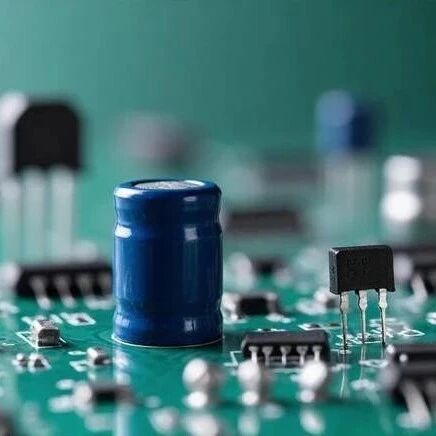
Investment Rating - The report indicates that the integrated inductor industry is currently in a "golden development period" characterized by simultaneous growth in both volume and price [2]. Core Insights - The demand for integrated inductors is being driven by strong growth in AI servers, automotive electronics, and high-end consumer electronics, leading to a significant increase in market volume [2]. - The product structure is evolving towards high current, high frequency, and miniaturization, which is pushing up the average price of integrated inductors [2]. - Chinese manufacturers, represented by companies like MPS and SLL, are accelerating their entry into the high-end supply chain, achieving mass production in AI servers and 800V electric drive systems, thus speeding up the process of domestic substitution [2]. - Advanced manufacturing techniques such as copper-iron co-sintering are emerging as important directions for the next generation of high power density inductors, although they are still in the early stages of development [2]. Summary by Sections Industry Overview - The integrated inductor industry is experiencing a significant transformation, with a focus on high-performance applications in AI servers, new energy vehicles, and 5G technology [2][5]. - The market for integrated inductors is expected to expand rapidly, driven by the increasing demand for high-performance, compact inductors in these sectors [5]. Material Selection - Metal magnetic powder cores are the mainstream choice for soft magnetic materials in integrated inductors, accounting for 60%-70% of the raw material cost [19][26]. - The performance characteristics of metal magnetic powder cores, such as high saturation magnetic induction and good high-frequency properties, make them suitable for high power density applications [19][26]. Manufacturing Processes - The main manufacturing processes for integrated inductors include cold pressing and hot pressing, with copper-iron co-sintering being a promising but niche technique [3][39]. - Cold pressing is currently the most mature and efficient manufacturing method, achieving a high level of automation and low production costs [31][34]. - Hot pressing, particularly the two-step method, is becoming the mainstream choice for mid-to-high-end applications due to its advantages in performance and reliability [36][38]. Market Segmentation - The market for integrated inductors in 5G smartphones is projected to grow significantly, with a compound annual growth rate (CAGR) of 21.06% from 2021 to 2024 [52]. - The integrated inductor market for new energy vehicles is expected to see explosive growth, with a CAGR of 149.95% from 2021 to 2024, driven by increasing vehicle sales and penetration rates [59]. - The AI server market is also experiencing rapid growth, with a projected CAGR of 50.49% from 2021 to 2024, fueled by the expansion of AI computing infrastructure [68].
深南电路:把握AI算力升级、存储市场需求增长机遇-20260315
CAITONG SECURITIES· 2026-03-15 07:25
Investment Rating - The investment rating for the company is "Accumulate" (maintained) [2] Core Views - The company achieved a revenue of 23.65 billion yuan in 2025, representing a year-on-year growth of 32.05%, with a net profit of 3.28 billion yuan, up 74.47% year-on-year [8] - The AI PCB business has become the core growth engine, with revenue from printed circuit boards reaching 14.36 billion yuan, a 36.84% increase year-on-year, accounting for 60.73% of total revenue [8] - The packaging substrate business also saw significant growth, with revenue of 4.15 billion yuan, a 30.80% increase year-on-year, driven by demand for AI-related chips [8] - The company is expected to achieve revenues of 32.94 billion yuan, 43.36 billion yuan, and 52.77 billion yuan for the years 2026, 2027, and 2028 respectively, with corresponding net profits of 5.89 billion yuan, 8.76 billion yuan, and 11.54 billion yuan [8] Financial Performance - The company reported a gross margin of 35.53% for its PCB business, an increase of 3.91 percentage points year-on-year [8] - The projected earnings per share (EPS) for 2026 is 8.65 yuan, with a price-to-earnings (PE) ratio of 28.9 [7][9] - The return on equity (ROE) is expected to reach 29.3% in 2026, increasing to 38.1% by 2028 [7][9] Market Performance - The company's stock price closed at 250.23 yuan on March 13, 2026, with a circulating share capital of 6.65 billion shares [2] - The company has shown a market performance of -26% over the last 12 months compared to the CSI 300 index [4]