
小型模块化反应堆(SMR)

Search documents
海外政策周聚焦:特殊时期的访美,日本在中东问题上的困局
Western Securities· 2026-03-28 15:06
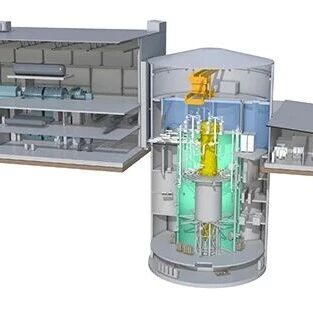
Investment and Economic Relations - Japanese Prime Minister Fumio Kishida's visit to the U.S. from March 18 to 22 resulted in the announcement of a second batch of investment projects totaling $73 billion, representing 20% of the $550 billion investment framework[1] - Japan's total investment in the U.S. has reached $109 billion, focusing on energy, electricity, and mineral projects, aligning with former President Trump's support for traditional energy[1] - Key projects include the construction of small modular reactors by GE and Hitachi in Tennessee and Alabama, and natural gas power facilities in Texas and Pennsylvania[1] Trade Relations and Economic Dependencies - Japan is progressing rapidly in trade agreements with the U.S., with American exports to Japan accounting for 18% of Japan's total exports in 2025, heavily reliant on automotive and semiconductor industries[2] - Japan's economic interests are intertwined with U.S. security alliances, making it difficult for Japan to adopt a confrontational stance against the U.S. in trade matters[2] Geopolitical Risks and Market Implications - Japan's energy security is precarious, with over 94% of its oil imports coming from the Middle East, leading to a complicated diplomatic relationship with Iran[3] - Optimistic scenarios suggest that if the Strait of Hormuz reopens, Japanese stocks could rise, particularly in the automotive and export manufacturing sectors, with potential yen appreciation[3] - Conversely, if Middle Eastern tensions persist, Japan could face heightened inflation risks, a widening trade deficit, and significant yen depreciation, leading to a bearish outlook for the stock market[3] Risk Factors - The report highlights the potential for geopolitical risks to exceed expectations, which could further complicate Japan's economic landscape[4]
中金 • 全球研究 | 日本对美投资第二弹与日美稀土合作
中金点睛· 2026-03-22 23:35
Core Viewpoint - Japan announced the second phase of its investment in the U.S., totaling approximately $73 billion, which includes funding for small modular reactors and two natural gas power projects, as part of a broader $550 billion investment framework [1][3]. Investment Details - The second phase includes three main projects: small modular reactors (SMR) with a maximum investment of $40 billion and two natural gas power projects with a combined maximum investment of $33 billion [3][4]. - The first phase of investment was $36 billion, making the total investment from both phases $109 billion [3]. Project Breakdown - **Small Modular Reactors**: GE Vernova and Hitachi will construct SMRs in Tennessee and Alabama, which are expected to provide stable power supply for AI data centers and enhance Japan's energy security [4]. - **Natural Gas Power Projects**: Investments of up to $17 billion in Pennsylvania and $16 billion in Texas will support the construction of natural gas facilities to meet the growing electricity demand from AI data centers [4]. Future Potential Projects - Future projects under consideration include infrastructure to increase U.S. crude oil production, large nuclear power plants, advanced display panel factories, copper smelting facilities, and large-scale energy storage projects [5]. Rare Earth Cooperation - Japan and the U.S. are collaborating on rare earth projects, with Mitsubishi Materials exploring investments in U.S. rare earth projects and enhancing recycling and refining capabilities [6]. - The cooperation includes four projects aimed at strengthening the critical mineral supply chain, with a focus on rare earths and copper mining [6]. Broader Strategic Context - The investment initiatives are part of a broader strategy to enhance energy security and economic competitiveness between Japan and the U.S., with ongoing discussions about energy supply stability and procurement diversification [7]. - The projects are expected to have limited short-term impacts on Japanese and U.S. stock markets, but may exert some downward pressure on the yen due to the scale of investments [7][8].


日本承诺千亿美元对美投资,领先亚欧
日经中文网· 2026-03-20 08:01
Core Viewpoint - Japan is actively pursuing investment opportunities in the U.S. despite uncertainties following the U.S. Supreme Court ruling that deemed reciprocal tariffs invalid. Japan's commitment to invest over $1 trillion in the U.S. is significant compared to other countries, highlighting its strategic alliance with the U.S. as a core aspect of its foreign and defense policy [1][11]. Group 1: Japan's Investment Commitments - Japan has announced a total of $1.09 billion in investments towards U.S. projects, including $730 million for new nuclear power plants and gas-fired power generation [3][5]. - The total investment commitment from Japan represents 20% of the $5.5 trillion investment amount outlined in the tariff agreement [5]. - Japan's investment projects include six announced initiatives, with the first batch involving $360 million in gas-fired power plants and synthetic diamond manufacturing [5][7]. Group 2: Comparisons with Other Regions - The European Union has proposed a $6 trillion investment but has not yet detailed specific projects, leading to frustration from the U.S. [8]. - South Korea has begun negotiations for its first batch of projects, focusing on liquefied natural gas (LNG) and nuclear power plants, but faces challenges due to currency fluctuations [6][7]. - Taiwan's investment focus is primarily on TSMC, with a total commitment of $2.5 trillion [7]. Group 3: Challenges and Concerns - Japanese banks express concerns about the feasibility of rapidly committing large sums to U.S. projects, with executives indicating difficulties in phased funding [11]. - There are worries about profitability, particularly regarding the small modular reactors, which may struggle to reduce construction costs without mass production [11]. - The Japanese government is cautious due to past experiences with public-private partnerships that resulted in significant losses in overseas infrastructure projects [11].
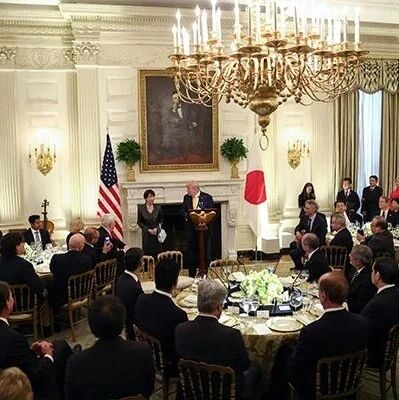
日本第二轮对美投资3项目达成协议,金额超730亿美元
日经中文网· 2026-03-20 08:01
Core Viewpoint - The US and Japan have reached an agreement to advance three energy-related projects, including next-generation small modular reactors (SMRs), with a total investment of up to $73 billion (over 11 trillion yen) [2][4]. Group 1: Investment Projects - The agreement includes a maximum investment of $40 billion for the construction of small modular reactors by GE Vernova and Hitachi in Tennessee and Alabama [4]. - An additional investment of up to $17 billion will be made in Pennsylvania for natural gas power facilities to meet the rising electricity demand from AI data centers, and up to $16 billion in Texas for similar facilities [4]. - The natural gas power facilities will be constructed in conjunction with AI data centers, with contracts for power procurement from data center operators [4]. Group 2: Future Projects and Discussions - The three projects are currently in the pre-decision stage, with ongoing discussions between the US and Japan to push for final decisions [5]. - Future candidate projects include infrastructure development aimed at increasing oil production in Alaska and the construction of large nuclear reactors [5]. - Other potential projects under discussion involve advanced display factories operated by Japan Display (JDI), copper smelting facilities by Falcon Copper, and large battery projects for data centers, although these are not included in the current plan due to supply chain and profitability considerations [5]. Group 3: Previous Investment Round - In February, the US and Japan announced a first-round investment plan totaling $36 billion, which includes natural gas power generation, the construction of oil shipping ports, and projects related to synthetic diamonds [5].
高市早苗在日美会谈后的发言全文
日经中文网· 2026-03-20 02:24
Group 1 - The core viewpoint of the article emphasizes the importance of stabilizing the situation in Iran and ensuring energy supply security, with Japan and the U.S. committed to expanding U.S. energy production [2][4] - Japan and the U.S. confirmed their ongoing close communication to achieve peace and stability in the Middle East, particularly regarding the safety of navigation in the Strait of Hormuz [4][5] - Japan expressed a desire to initiate joint projects with the U.S. for oil procurement, highlighting the need for diversification of energy sources to ensure stability for Japan and Asia [4][5] Group 2 - The article discusses strategic investment initiatives in the energy sector, including the construction of small modular reactors (SMRs), in response to the rapid growth in international electricity demand [5] - Japan and the U.S. agreed to collaborate closely on various issues related to China and North Korea, with Trump expressing full support for resolving the abduction issue concerning North Korea [5][6] - The article highlights the importance of the Japan-U.S. alliance in maximizing Japan's national interests amid increasing global uncertainties, with a focus on enhancing cooperation in economic security and defense [5][6]
欧洲承认犯了重大错误,中国机会来了?
虎嗅APP· 2026-03-14 13:37
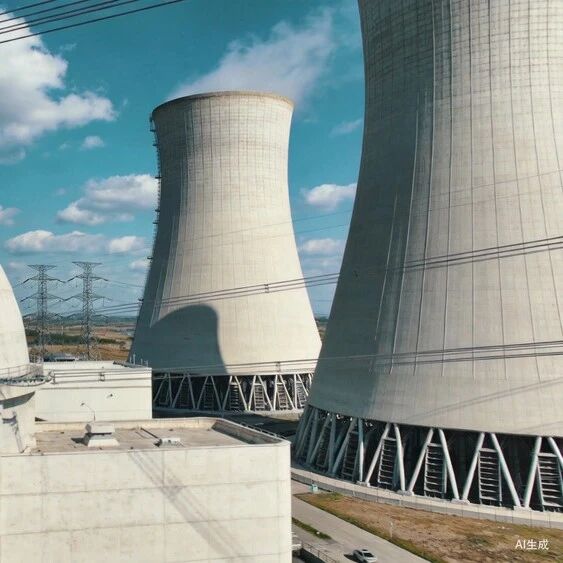
Core Viewpoint - The article discusses the significant shift in global nuclear energy dynamics, highlighting China's growing role as a nuclear power exporter and the strategic errors made by Europe in reducing its reliance on nuclear energy [4][8]. Group 1: Global Nuclear Energy Landscape - China announced its commitment to the "Triple Nuclear Energy Declaration" at the second nuclear energy summit in Paris, aiming to triple global nuclear power capacity by 2050 compared to 2020 levels [4]. - European leaders, including Ursula von der Leyen and German Chancellor Merz, acknowledged the strategic error of reducing nuclear energy reliance, indicating a dramatic shift in Europe's energy policy [8][9]. - Over the past decade, Europe, particularly Germany, has moved from a strong anti-nuclear stance to recognizing the importance of nuclear energy, while China has advanced its nuclear technology and expanded its export capabilities [10][11]. Group 2: China's Nuclear Export Strategy - China has become a significant player in the global nuclear market, with a focus on exporting its "Hualong One" technology, exemplified by projects in Pakistan and other countries [15][36]. - The total contract value for the Karachi K-2 and K-3 projects in Pakistan is approximately $9.6 billion, marking one of China's highest-value exports [15]. - China's nuclear power capacity reached 113 million kilowatts by the end of 2024, positioning it among the top nuclear power countries globally [33][34]. Group 3: Competitive Landscape in Nuclear Energy - The nuclear export market is characterized by major players like Russia, France, and the U.S., each with distinct strategies and competitive advantages [23][24]. - Russia's Rosatom offers a comprehensive service model, including financing options that appeal to countries seeking to develop their nuclear capabilities [24]. - France maintains a strong nuclear industry with advanced technology, but faces challenges related to project management and cost overruns [28]. Group 4: Future Prospects and Challenges - China's nuclear exports are supported by a combination of competitive pricing, financing options, and the ability to provide integrated energy solutions, including desalination and hydrogen production [39][40]. - The article suggests that while China's nuclear power stations are currently competitively priced, there is potential for higher pricing as new technologies and standards are developed [47]. - The global demand for nuclear energy is expected to rise, driven by the need for clean energy solutions and the push for energy independence in developing countries [48][51].
中国 SMR 小堆监管拟定规则,安全发展锚定方向
Huafu Securities· 2026-03-07 13:09
Investment Rating - The industry rating is "Outperform the Market," indicating that the overall return of the industry is expected to exceed the market benchmark index by more than 5% over the next 6 months [13]. Core Insights - The report highlights the development of regulatory technical policies for small modular reactors (SMR) in China, focusing on safety and guiding safety design and assessment work [3][4]. - The ecological environment department has organized the compilation of a draft technical policy for the nuclear safety regulation of small modular reactors, which aims to clarify important safety issues and establish a regulatory stance [3][4]. - The policy outlines 11 core issues related to safety goals and defense-in-depth applications, emphasizing the need to utilize inherent safety features and reliable design measures to eliminate events that could lead to significant radioactive releases [4]. - The report suggests that SMR could be a key solution to meet the growing energy demands of artificial intelligence, with major tech companies showing continued interest in developing tailored energy solutions for data centers [5]. Company Summaries - **Jingye Intelligent**: Established a subsidiary focused on SMR, targeting power supply for AI data centers [5]. - **Jia Dian Co., Ltd.**: Their main helium fan is the only power device in the primary loop of fourth-generation high-temperature gas-cooled reactors, and their subsidiary has leading products in the nuclear power sector [5]. - **Guoguang Electric**: Provides key components for the ITER project, focusing on filter and cladding systems [5]. - **Lanshi Heavy Industry**: Covers the entire nuclear energy supply chain, including upstream nuclear fuel systems, midstream nuclear power plant equipment, and downstream spent fuel processing [5]. - **Kexin Electromechanical**: Manufactures high-temperature gas-cooled reactor products and has developed domestic alternatives for new fuel transport containers [5]. - **Haili Heavy Industry**: Services various reactor types, including third and fourth-generation reactors and thermonuclear fusion reactors (ITER) [5]. - **Jiangsu Shentong**: Secured over 90% of orders for nuclear-grade butterfly valves and nuclear-grade ball valves for new nuclear power projects in China [5].
AI算力的终极瓶颈,竟然是电?能源缺口的破局之路在这里(附报告)
材料汇· 2026-03-06 11:58
Core Insights - The core argument of the article is that the rapid growth of AI computing power is hitting an invisible energy ceiling, with electricity demand outpacing supply, particularly for data centers, which are projected to require significant additional power by 2030 [1][20]. Group 1: AI Energy Demand and Supply Gap - AI computing power is experiencing exponential growth, with single server power consumption rising from 5-15 kW to 50-100 kW, leading to a projected electricity demand of 100 GW in the U.S. by 2030, of which 50 GW will be for data centers [20][21]. - The U.S. is expected to face a stable power supply gap of 78 GW by 2030, with only 22 GW of new stable power supply projected to be available [19][20]. - The mismatch in construction timelines, where data centers can be built in 18 months but power facilities take over 5 years, exacerbates the energy supply issue [20]. Group 2: Nuclear Power as a Solution - Major tech companies like Meta, Microsoft, Google, and Amazon are investing heavily in nuclear power, signing contracts worth a total of $74.5 billion to secure stable, zero-carbon energy for their operations [2][27]. - The shift towards nuclear power is driven by the need for a reliable energy source that can meet the continuous demands of AI data centers, as renewable sources like wind and solar cannot provide the necessary stability [20][27]. - The nuclear power sector is experiencing a renaissance, with a projected increase in global nuclear capacity from 377 GW in 2024 to between 561 GW and 992 GW by 2050, representing growth rates of 48.8% to 163.1% [7][13]. Group 3: Market Dynamics and Future Projections - The average age of existing nuclear reactors is over 30 years, leading to hidden demand for new installations to replace aging units, suggesting that actual demand may exceed current forecasts by over 30% [8]. - The global nuclear power market is expected to see a compound annual growth rate (CAGR) of over 20% for small modular reactors (SMRs), with a projected capacity of 300 GW by 2050 [69]. - The transition from traditional nuclear power to SMRs and advanced reactors is seen as a revolutionary change, addressing previous challenges such as high investment costs and long construction times [66][67]. Group 4: Technological and Material Innovations - The demand for advanced materials in the nuclear sector is expected to grow significantly, driven by the need for higher performance materials in next-generation reactors [9][30]. - The development of nuclear fusion technology is also highlighted as a long-term goal, with significant implications for energy supply and material requirements [75][76]. - The nuclear industry is moving towards a more decentralized model with SMRs, which can be deployed closer to energy demand centers, reducing the need for extensive grid infrastructure [66][69].





中金 | AI“探电”(十三):破解海外数据中心“寻电”之局
中金点睛· 2026-03-06 00:00
Core Insights - The article highlights the challenges faced by overseas data centers in securing reliable electricity supply, with some regions in Europe and the US experiencing wait times of up to 7 years for grid access [1][4] - The ability of the power grid is becoming a decisive factor for developers in site selection, leading to increased interest in regions with sufficient grid capacity, such as Northern and Southern Europe, as well as emerging markets [1][25] - Chinese manufacturers are positioned to capitalize on the growing demand for power solutions as overseas supply and demand imbalances become more pronounced [1] Power Supply Side - Gas turbines are emerging as the mainstream solution for on-site power supply, with global orders expected to rise significantly by 2025, while supply from leading overseas manufacturers is constrained [2][31] - The global power cycle is seeing a surge in transformer exports from China, driven by the need for specialized substations and high-voltage connections due to the increasing scale of AIDC [2][4] - Various power generation technologies, including SOFC, SMR, and geothermal systems, are being explored, with a focus on combining on-site generation with grid supply for enhanced reliability [2][29] Grid Side - The US power grid is facing significant challenges in capacity expansion, with a projected shortfall of dispatchable power by 2035 if no new units are added [10][12] - The approval process for new transmission projects in the US is slow, with many projects still in early stages, leading to a supply-demand mismatch [14][16] - In Europe, while there is strong top-level coordination, the increasing congestion in the grid is prompting efforts to streamline project approvals and accelerate implementation [16][24] Data Center Side - The article discusses the impact of AIDC clusters on grid stability, noting that their high-frequency and short-duration load changes can lead to significant risks for the power grid [20][21] - Developers are increasingly prioritizing power availability in site selection, with 84% of surveyed developers citing it as a top consideration, reflecting a shift from previous priorities like proximity to fiber optics [4][25] - Emerging markets in Southeast Asia and the Middle East are attracting major cloud providers due to favorable policies and resource availability, with Malaysia and Saudi Arabia being highlighted as key growth areas [28][29] On-Site Power Generation - The trend towards on-site power generation is gaining traction, with policies in the US and parts of Europe encouraging data centers to have their own power generation capabilities [29][31] - The article notes that gas turbines are expected to dominate on-site power solutions, but supply chain constraints may limit delivery timelines [31][32] - A hybrid model combining on-site generation with grid supply is seen as a viable direction for future power solutions, balancing reliability and cost [32][33]
海外核电专题报告:从基荷能源到科技引擎,AI巨头的战略押注与投资逻辑重构
Southwest Securities· 2026-03-05 08:28
Investment Rating - The report does not explicitly state an investment rating for the nuclear power industry, but it suggests a positive outlook based on the revival and growth potential of the sector. Core Insights - The global nuclear power industry is entering a new development opportunity driven by energy security, low-carbon transition, and the demand for AI computing power. Nuclear power is being reassessed for its strategic value as a stable and efficient clean baseload energy source [3][5]. - As of the end of 2024, there are 417 operational nuclear reactors across 31 countries, with a total installed capacity of 377 GW. The International Atomic Energy Agency (IAEA) forecasts that global nuclear capacity will reach between 561 GW (low estimate) and 992 GW (high estimate) by 2050, representing increases of 48.8% and 163.1% respectively compared to 2024 [3][5][6]. - The latest technological focus in nuclear power is on fourth-generation nuclear systems and small modular reactors (SMRs), with significant advancements being made in these areas [3][62]. Summary by Sections 1. Nuclear Power Revival and Demand - The nuclear power industry is experiencing a revival due to urgent climate change needs, energy security considerations, and the explosive growth of AI data centers, which significantly increase electricity demand [5][16]. - The IAEA predicts that by 2050, global nuclear capacity could reach between 561 GW and 992 GW, marking substantial growth from 2024 levels [5][6]. 2. Nuclear Power vs Other Energy Sources - Nuclear power is recognized for its ability to provide stable, continuous electricity, making it a crucial baseload power source in the transition to a cleaner energy system [37][42]. - Compared to coal, nuclear power has a significantly lower carbon footprint, with lifecycle emissions being only about 1% of coal's [42][43]. 3. Nuclear Power Technology Updates - The report highlights the evolution of nuclear technology through four generations, with current advancements focusing on third-generation deployment and fourth-generation demonstration breakthroughs [3][62]. - SMRs are gaining attention for their safety, modular construction, and lower costs, making them attractive to major tech companies [48][49]. 4. Nuclear Power Industry Chain - The report suggests focusing on stable revenue operators in the nuclear sector, such as CEG and China General Nuclear Power, while also identifying high-growth opportunities in companies involved with SMRs and nuclear fuel [3][22]. - The nuclear power sector is expected to see significant investment, with estimates of around $74.5 billion in orders related to nuclear power projects in the U.S. alone [22][23]. 5. Investment Logic - The report emphasizes the importance of nuclear power in meeting the growing electricity demand from AI data centers and the strategic shift towards energy independence in various countries [22][26]. - Countries are increasingly recognizing the need for resilient power systems, with policies being enacted to support nuclear power development [26][27].