
蓄电池

Search documents
中国蓄电池厂商相继在美建厂,减轻关税负担
日经中文网· 2026-02-08 00:33
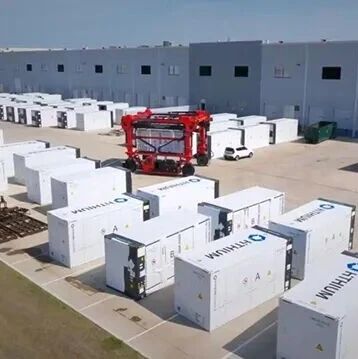
Core Viewpoint - Chinese battery companies are shifting from exporting products to local production in the U.S. to mitigate tariff-related cost increases and capitalize on the growing demand for battery systems in data centers [2][4]. Group 1: Market Dynamics - Chinese battery manufacturers are increasingly establishing factories in the U.S., with companies like Xiamen Hicharge Energy and Horizon Robotics announcing new production lines in Texas and Tennessee, respectively, with capacities of 10 GWh and 7 GWh [4]. - The intensifying competition in the Chinese market has prompted these companies to target the U.S. market, which presents greater growth opportunities [4]. Group 2: Regulatory Environment - The U.S. government, under the Biden administration, announced a plan to impose tariffs of up to 25% on Chinese-made batteries starting January 2026, which has influenced Chinese companies to localize production [4]. - The OBBB Act, passed in July 2025, aims to strengthen restrictions on companies controlled by the government, indicating potential future challenges for Chinese firms operating in the U.S. [5]. Group 3: Demand Drivers - The demand for batteries in the U.S. is being driven by significant investments in data center equipment by large tech companies, fueled by the AI boom [5].

亿欧智库:中国蓄电池行业出海国别机会洞察报告
Sou Hu Cai Jing· 2026-01-08 14:43
Group 1 - The report highlights the explosive growth in global electrification and energy storage demand, providing significant development opportunities for the battery industry, particularly for lithium-ion batteries from China [1][9]. - China's lithium-ion battery industry exhibits three major development characteristics: green compliance with environmental standards, deepening global layout through technology and management system exports, and accelerated vertical integration among leading companies [1][2]. - Key export markets for Chinese lithium-ion batteries include Vietnam, the United States, and India, with notable high-frequency and high-value purchasers emerging in these regions [2][21][23]. Group 2 - Each core export country has established clear import regulations and certification thresholds, necessitating compliance with local standards and testing procedures for Chinese manufacturers [2][28]. - Despite facing multiple challenges, the industry is transitioning towards a dual-driven model of technological upgrades and compliance, aiming to enhance global competitiveness [2][31]. - The report indicates that from 2020 to 2025, the overall export value of Chinese batteries is expected to rise significantly, with a projected growth rate of 24.22% by 2025 compared to the same period [14]. Group 3 - The report outlines the procurement situation in Vietnam, where approximately 2,000 purchasers engaged in transactions, resulting in a total transaction value of $5.19 billion [18]. - In the U.S. market, 847 purchasers participated in transactions, with a total transaction value of $5.41 billion, indicating strong demand [21]. - India's market saw around 1,000 purchasers involved in transactions, with a total transaction value of $3.4 billion, reflecting robust market activity [23]. Group 4 - The report emphasizes the need for Chinese companies to adapt to increasing compliance requirements and local market conditions, which are becoming critical for maintaining export competitiveness [28][31]. - The industry is witnessing a shift from price competition to a focus on technology and compliance, driven by rising regulatory standards in key markets [31][32]. - The challenges faced by the industry include supply chain constraints, technological iteration pressures, and heightened compliance thresholds, necessitating a strategic focus on local adaptation and technological innovation [32][33].
最新报告:中国猛追,5年内韩国十大产业全线失守
Guan Cha Zhe Wang· 2025-11-18 00:34
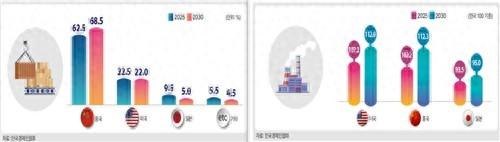
Core Insights - The report from the Korea Economic Association indicates that half of South Korea's top ten export industries have been surpassed by China in terms of competitiveness, with a prediction that all ten industries may lose their competitive edge within five years [1][2]. Industry Competitiveness - A survey of 200 South Korean companies revealed that 62.5% identified China as their biggest competitor, significantly higher than the 22.5% who chose the United States and 9.5% who chose Japan. This perception is expected to increase, with 68.5% anticipating China as the main competitor by 2030 [1][2]. - The competitiveness levels, with South Korean companies using a standard of 100, are perceived as follows: the United States at 107.2, China at 102.2, and Japan at 93.5. By 2030, these levels are projected to be 112.9 for the U.S., 112.3 for China, and 95 for Japan, indicating a significant shift in competitiveness [2][4]. Sector Analysis - In specific sectors, South Korean companies believe that Chinese firms lead in steel (112.7), general machinery (108.5), batteries (108.4), displays (106.4), and automotive parts (102.4). However, South Korea still maintains an edge in semiconductors (99.3), electronics and electrical machinery (99), shipbuilding (96.7), petrochemicals (96.5), and biopharmaceuticals (89.2) [2][4]. - The report highlights that China has advantages in price competitiveness, production capacity, and government support, while the U.S. excels in branding, skilled talent, and core technologies. Currently, South Korea only leads in brand competitiveness, which is expected to be overtaken in five years [4][6].
2025年9月中国蓄电池进出口数量分别为1.04亿个和4.57亿个
Chan Ye Xin Xi Wang· 2025-11-07 03:21
Core Insights - The report by Zhiyan Consulting highlights the competitive landscape and development potential of the lithium-ion battery industry in China from 2025 to 2031 [1] Import and Export Data - In September 2025, China imported 104 million batteries, marking a year-on-year increase of 38.9%, with an import value of $235 million, which represents a slight decline of 0.2% year-on-year [1] - In the same month, China exported 457 million batteries, showing a year-on-year growth of 14.3%, with an export value of $7.354 billion, reflecting a significant increase of 32.1% year-on-year [1] Industry Analysis - Zhiyan Consulting is recognized as a leading industry consulting firm in China, specializing in in-depth industry research reports, business plans, feasibility studies, and customized services [1] - The firm emphasizes its commitment to providing comprehensive industry solutions to empower investment decisions through professional insights and market acumen [1]

【头条评论】 中国产业转移的三大格局与未来挑战
Zheng Quan Shi Bao Wang· 2025-11-04 02:44
Core Insights - The article discusses the trends of industrial transfer in China over the past 15 years, highlighting three main patterns of relocation for enterprises. Group 1: Intra-Provincial Migration - A significant trend is the migration of manufacturing enterprises from Shenzhen to surrounding cities within Guangdong Province, with nearly 70% of Shenzhen's manufacturing firms relocating to nearby cities [1] - This intra-provincial migration is closely linked to regional economic collaboration, achieving industrial upgrades through supply chain extension and resource integration, particularly in the electronics information sector [1] Group 2: Inter-Provincial Migration - The second trend involves the transfer of industries to other provinces, driven by the "streamline administration and delegate power" policy, which has reduced over 1,000 administrative approval items, thereby lowering operational costs for businesses [2] - The "dual circulation" development pattern promotes the flow of industrial factors and regional cooperation, leading to a significant increase in projects and investments in central and western regions, such as Henan and Sichuan, forming clusters in electronics and new materials [2] - The migration reflects a shift from "cost-driven" to "cluster collaboration," with traditional manufacturing accelerating inward migration while core industries steadily transfer, restructuring the national spatial layout [2] Group 3: Overseas Expansion - The article outlines three phases of Chinese enterprises' overseas expansion: 1. From 2010 to 2017, labor-intensive industries led the way, primarily targeting ASEAN countries [3] 2. From 2018 to 2023, there was an acceleration in equipment manufacturing exports due to trade tensions, with growth rates of 10-20% in machinery and electrical equipment sectors [3] 3. From 2024 onwards, a focus on global capacity layout, particularly in automotive and battery sectors, with a growth rate of around 30% in overseas factory establishment [3] - The overseas expansion has transitioned from labor-intensive to equipment manufacturing leadership, with investment focus shifting from Latin America and Europe to ASEAN, particularly Thailand and Vietnam [3] Group 4: Challenges and Opportunities - Despite the successful industrial transfer, companies face challenges such as insufficient innovation conversion, talent supply imbalance, and increased supply chain uncertainties due to geopolitical conflicts and tariff barriers [4] - The resilience of domestic industrial chains has improved, aided by logistics cost reductions through initiatives like the China-Europe Railway Express [4] - Companies are expected to enhance their ability to seize opportunities and address challenges in both domestic and international markets, supported by government leadership and entrepreneurial spirit [4]
【头条评论】中国产业转移的三大格局与未来挑战
Zheng Quan Shi Bao· 2025-11-03 17:57
Core Insights - The article discusses the trends of industrial transfer in China over the past 15 years, highlighting three main patterns of relocation for enterprises [1][2][3][4]. Group 1: Domestic Industrial Transfer Patterns - The first pattern is the migration of manufacturing enterprises to nearby cities within the same province, particularly from Shenzhen to cities like Dongguan, Zhongshan, Foshan, and Jiangmen, with nearly 70% of Shenzhen's manufacturing firms relocating to these areas [1]. - The second pattern involves transferring to other provinces, driven by the "streamlining administration and delegating power" policy, which has reduced over 1,000 administrative approvals, thereby lowering operational costs for businesses. This has led to a significant increase in projects and investments in central and western regions, forming industrial clusters in areas like Henan and Sichuan [2]. - The third pattern is characterized by the overseas expansion of Chinese enterprises, which has evolved through three stages: initial labor-intensive exports to ASEAN countries, followed by accelerated equipment manufacturing exports due to trade tensions, and currently focusing on global capacity layout in sectors like automotive and battery manufacturing [3]. Group 2: Factors Driving Industrial Transfer - Two main factors are driving domestic industrial transfer: cost factors, including high industrial land costs in eastern regions (2-3 times higher in Shenzhen compared to western regions), labor cost differences of 30%-40%, and tax incentives in the west; and the elevation of industrial levels, where the focus has shifted from low-end production to regional optimization of the industrial chain [3]. - The article notes that the domestic industrial transfer has transitioned from "cost-driven" to "cluster collaboration," with a clear division of labor where eastern regions focus on high-end manufacturing and R&D, while central and western regions handle mid-stage production and component supply [2][3]. Group 3: Challenges and Future Outlook - Despite the positive trends, Chinese enterprises face challenges such as insufficient innovation conversion, talent supply imbalances (e.g., a 50,000 talent gap in Xi'an's semiconductor sector), and increased supply chain uncertainties due to geopolitical conflicts and tariff barriers [4]. - The article concludes that Chinese enterprises are improving their ability to seize opportunities and respond to challenges in both domestic and international markets, with expectations for continued optimization of industrial layouts under strong government leadership and entrepreneurial spirit [4].
“钱都给美国了,韩国制造业空心化怎么办?”
Sou Hu Cai Jing· 2025-11-02 16:10
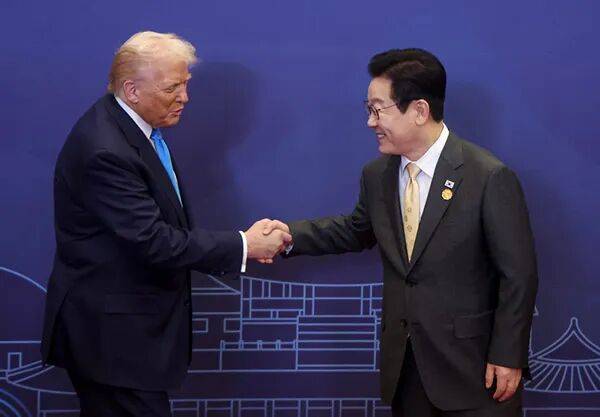
Core Viewpoint - The recent trade agreement between South Korea and the United States involves a commitment of $350 billion in investments, with South Korea agreeing to invest $200 billion in cash and $150 billion in shipbuilding cooperation, raising concerns about potential domestic investment decline and manufacturing hollowing out in South Korea [1][6]. Investment Commitments - South Korea will invest $200 billion in cash over several years, with an annual cap of $20 billion [1][6]. - The remaining $150 billion will be allocated for shipbuilding cooperation, including guarantees, investments by South Korean companies, and ship financing [1]. Economic Concerns - Economic experts express concerns that the significant outflow of capital to the U.S. could diminish South Korea's domestic investment capacity, leading to risks of manufacturing hollowing out and negative impacts on local economies and employment [1][4]. - The investment in the U.S. is viewed as fundamentally different from investments in China, as it aims to enter local markets under high tariff conditions, reducing the potential for domestic investment complementarity [1]. Manufacturing Sector Insights - In 2022, South Korea's top ten manufacturing sectors had a total investment of 114 trillion KRW (approximately 566.5 billion RMB), accounting for 4% of the country's GDP and 42% of all industry equipment investments [1]. - The investment in the top ten manufacturing sectors is projected to reach 119 trillion KRW (approximately 591.4 billion RMB) in 2023, reflecting a 7% growth [2]. Regional Economic Impact - Analysts warn that reduced domestic investment and a shift of manufacturing infrastructure to the U.S. could lead to economic downturns in regions reliant on manufacturing, resulting in job losses and negative effects on small businesses [4][5]. - A report estimates that if the U.S. imposes a 15% tariff on South Korean goods, the annual export value from Gyeongsangnam-do to the U.S. could decrease by approximately 499 billion KRW (around 2.5 billion RMB) [5]. Government Measures and Recommendations - The South Korean government is implementing multiple safeguards in the investment plan to limit financial risks and protect the foreign exchange market, ensuring that only commercially viable projects receive funding [6]. - Experts suggest that South Korea should attract foreign investments and enhance the competitiveness of its service sector to mitigate the impacts of increased investments in the U.S. [6]. Public Sentiment - A recent poll indicates that 80.1% of South Koreans view the $350 billion investment demand from the U.S. as unfair, with only 12.4% considering it acceptable [7].
韩媒担忧:对美投资大幅提高,韩国国内制造业可能空心化
Guan Cha Zhe Wang· 2025-11-02 11:06
Group 1 - The core point of the article is that South Korea and the United States have reached a trade agreement involving a significant investment commitment from South Korea, which raises concerns about potential negative impacts on the domestic economy and manufacturing sector in South Korea [1][4][5]. Group 2 - South Korea has committed to a total investment of $350 billion in the U.S., with $200 billion to be invested in cash over several years, and $150 billion allocated for shipbuilding cooperation [1][6]. - The investment plan includes a cap of $20 billion per year, which is intended to minimize market impact and ensure that only commercially viable projects receive funding [6][5]. - Economic experts express concerns that the large outflow of capital to the U.S. could lead to a decrease in domestic investment capacity, potentially resulting in the "hollowing out" of South Korea's manufacturing sector [1][4][5]. Group 3 - The investment in the U.S. is seen as fundamentally different from investments in China, as it is primarily aimed at market entry rather than complementing domestic investments [1][4]. - In 2022, South Korea's top ten manufacturing sectors had a total investment of 114 trillion won (approximately 566.5 billion RMB), accounting for 4% of the country's GDP and 42% of all industry equipment investments [1][2]. - Projections indicate that the investment in the top ten manufacturing sectors will increase to 119 trillion won (approximately 591.4 billion RMB) in 2023, reflecting a growth of 7% [2]. Group 4 - Analysts warn that the increased investment in the U.S. could lead to a contraction in domestic investment, negatively affecting local economies and employment, particularly in regions reliant on manufacturing [4][5]. - A report from the Gyeongnam Research Institute estimates that a 15% tariff on South Korean goods by the U.S. could reduce annual exports from Gyeongsangnam-do by approximately 499 billion won (around 2.5 billion RMB) [5]. - The Bank of Korea has indicated that U.S. tariff policies could lead to decreased exports and production, with potential declines in manufacturing growth rates in regions heavily dependent on manufacturing [5][6]. Group 5 - The South Korean government is implementing multiple safeguards in the investment plan to limit financial risks and protect the foreign exchange market [6]. - There is a call for South Korea to attract foreign investments and enhance the competitiveness of its service sector to mitigate the impacts of increased U.S. investments [6][7]. - Public sentiment in South Korea is largely against the U.S. investment demands, with a poll indicating that 80.1% of respondents view the $350 billion investment requirement as unfair [7].
2025年8月中国蓄电池进出口数量分别为0.86亿个和4.97亿个
Chan Ye Xin Xi Wang· 2025-10-27 02:57
Core Insights - The report by Zhiyan Consulting highlights the competitive landscape and development potential of the lithium-ion battery industry in China from 2025 to 2031 [1] Import and Export Data - In August 2025, China imported 86 million lithium batteries, marking a year-on-year increase of 35.1%, with an import value of 253 million USD, up 20.4% [1] - In the same month, China exported 497 million lithium batteries, reflecting a year-on-year growth of 14.3%, with an export value of 7.415 billion USD, increasing by 21.8% [1] Industry Analysis - Zhiyan Consulting is recognized as a leading industry consulting firm in China, specializing in in-depth industry research reports, business plans, feasibility studies, and customized services [1] - The firm emphasizes its professional approach, quality services, and keen market insights to provide comprehensive industry solutions that empower investment decisions [1]

2025年6月中国蓄电池进出口数量分别为0.8亿个和4.56亿个
Chan Ye Xin Xi Wang· 2025-08-28 01:20
Core Insights - The report by Zhiyan Consulting forecasts the competitive strategy and market demand for the lead-acid battery industry in China from 2025 to 2031 [1] Import and Export Data - In June 2025, China imported 80 million lead-acid batteries, representing a year-on-year increase of 16.3%, with an import value of $217 million, which is a decrease of 9.1% compared to the previous year [1] - In the same month, China exported 456 million lead-acid batteries, showing a year-on-year growth of 13.1%, with an export value of $6.859 billion, marking an increase of 26.6% year-on-year [1] Industry Analysis - Zhiyan Consulting is recognized as a leading industry consulting firm in China, specializing in in-depth industry research reports, business plans, feasibility studies, and customized services [1] - The firm emphasizes its professional approach, quality services, and keen market insights to provide comprehensive industry solutions that empower investment decisions [1]
