
蓝气球

Search documents
十年深耕铸口碑,重装开业启崭新征程
Qi Lu Wan Bao· 2026-01-19 11:09
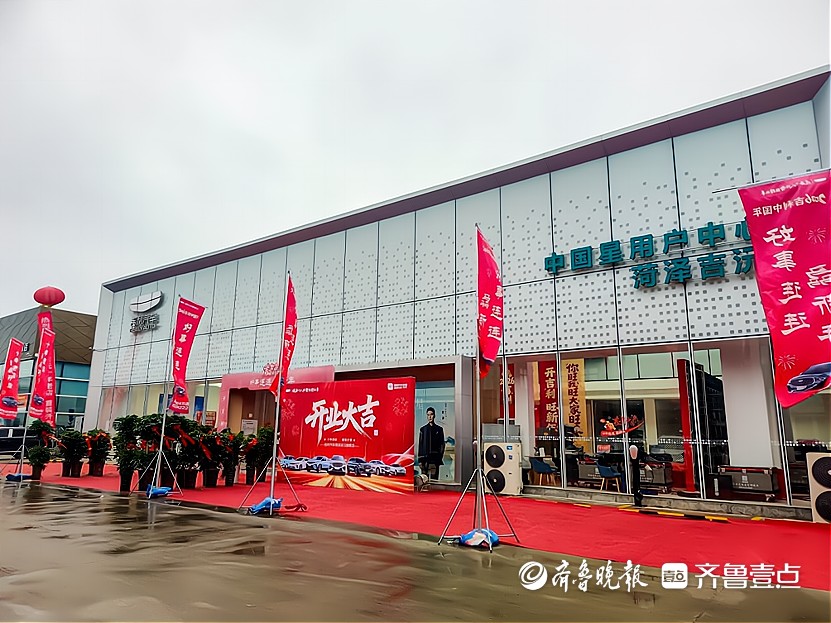
Core Viewpoint - The celebration of the 10th anniversary of Heze Jiyuan Geely 4S store marks a significant milestone, showcasing a blend of brand heritage and technological renewal through a comprehensive upgrade to the Geely global 4.0 standard [1][15]. Group 1: Anniversary Celebration - The "Ten-Year Old Store, Grand Reopening" event was lively, with guests including Geely representatives, old and new car owners, partners, and local media gathering to witness this important moment [3]. - The atmosphere at the opening ceremony was vibrant, filled with drums, flowers, and a red carpet, highlighting the unique sense of occasion with Geely brand elements [11]. Group 2: Store Development and Philosophy - Since its establishment, the store has adhered to Geely's core mission of "Happy Life, Geely Accompany," focusing on customer-centric and quality-based business principles [5]. - Over the past decade, the store has built a strong reputation among Heze consumers, becoming a reliable partner for many families in their journeys [7]. Group 3: Upgrade and Service Enhancement - The store underwent a comprehensive upgrade to align with Geely's 4.0 brand strategy, enhancing the showroom layout, service systems, and overall customer experience [9]. - The upgraded store features popular models such as the Xingyue L, BinYue, and others, and offers a one-stop service system for purchasing, maintenance, rescue, and trade-in [9]. Group 4: Future Commitment - The store's leadership emphasized that the reopening is a new starting point for service upgrades and a commitment to Geely's mission of creating quality vehicles for everyone [15]. - The store aims to continue deepening its understanding of Heze consumers' travel needs, enhancing product experiences, and innovating service models to provide high-quality travel solutions [17].


601777 三季度扣非净利下跌超650% 利润全靠政府补贴?
Di Yi Cai Jing· 2025-10-30 15:43
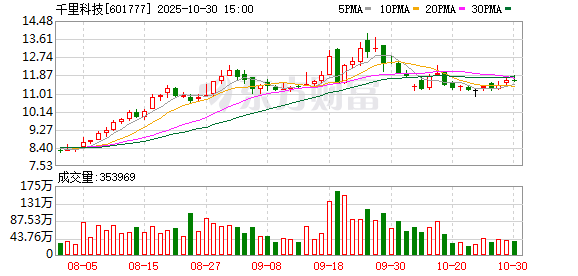
Core Insights - Q3 2025 financial results show significant revenue growth for the company, driven by increased sales in the automotive and motorcycle sectors [2][3] - The company reported a net profit increase primarily due to government subsidies and foreign exchange gains, despite a substantial loss when excluding non-recurring items [3][4] - The company is undergoing a transformation towards an "AI + vehicle" strategy, with plans for a Hong Kong IPO, although its new business segments have yet to generate revenue [4] Financial Performance - Q3 revenue reached 2.762 billion yuan, a year-on-year increase of 51.2% [2] - Net profit attributable to shareholders was approximately 22.11 million yuan, up 60.75% year-on-year [2] - For the first three quarters, total revenue was 6.946 billion yuan, a 44.27% increase year-on-year, with a net profit of about 53.28 million yuan, reflecting a 33.37% growth [2] Business Segments - The growth in revenue is attributed to the sales of the company's automotive business, particularly the micro electric vehicle "Blue Balloon" and the A0-level fuel SUV "Rui Lan X3 PRO" [3] - The "Blue Balloon" model sold over 3,000 units in September, while the "Rui Lan X3 PRO" had sales exceeding 5,700 units in July and August, but dropped to 2,381 units in September [3] - Despite increased sales, the company reported a sales profit margin of -2% in Q3 [3] Government Support and R&D - The company received 87.59 million yuan in government subsidies during Q3, which significantly contributed to the net profit [3] - Excluding non-recurring gains, the company faced a net loss of 42.41 million yuan, primarily due to increased advertising expenses and R&D costs for a new intelligent vehicle cockpit operating system [3] Strategic Transformation - The company, originally known as Lifan Automotive, has undergone a transformation after judicial restructuring and the introduction of new stakeholders [4] - In September, the company announced its strategic focus on three main business areas: intelligent driving, intelligent cockpit, and Robotaxi services [4] - The company plans to list on the Hong Kong Stock Exchange, although its new business segments have not yet generated any revenue [4]

601777,三季度扣非净利下跌超650%,利润全靠政府补贴?
Di Yi Cai Jing· 2025-10-30 15:33
Core Viewpoint - Q3 2025 financial results of Qianli Technology show significant revenue growth driven by automotive and motorcycle sales, but profitability remains a concern due to high costs and low margins [1][2] Financial Performance - Q3 revenue reached 2.762 billion yuan, a year-on-year increase of 51.2% [1] - Net profit attributable to shareholders was approximately 22.11 million yuan, up 60.75% year-on-year [1] - Non-recurring net profit showed a loss of 42.41 million yuan, a year-on-year decline of 657% [1][2] - For the first three quarters, total revenue was 6.946 billion yuan, a 44.27% increase year-on-year [1] - Net profit attributable to shareholders for the first three quarters was nearly 53.28 million yuan, a 33.37% increase year-on-year [1] Business Segments - Growth in revenue is primarily attributed to increased sales in the automotive and motorcycle sectors [1] - Key automotive products include the micro electric vehicle "Blue Balloon" and the A0-level fuel SUV "Ruilan X3 PRO," both priced under 60,000 yuan [1] - The "Blue Balloon" achieved over 3,000 units sold in September after its launch, while "Ruilan X3 PRO" sales exceeded 5,700 units in July and August but dropped to 2,381 units in September [1] Profitability Challenges - The sales profit margin for Q3 was -2%, indicating challenges in profitability despite revenue growth [1] - The increase in net profit was largely due to government subsidies and foreign exchange gains, with government subsidies amounting to 87.59 million yuan [2] - Excluding non-recurring gains, the company reported a net loss of 42.41 million yuan, primarily due to increased advertising expenses and R&D costs for a new smart vehicle cockpit operating system [2] Strategic Developments - Qianli Technology, originally Lifan Automotive, underwent a transformation after judicial restructuring and is now focusing on an "AI + Vehicle" strategy [2] - The company announced three main business directions: intelligent driving, intelligent cockpit, and Robotaxi services, which are capital-intensive [2] - Plans for an IPO in Hong Kong were initiated in mid-October, with high market valuations based on future potential in the new business areas, which have yet to generate revenue [2]
李书福“豪赌”印奇
第一财经· 2025-10-19 11:38
Core Viewpoint - Qianli Technology (601777.SH) has made significant moves recently, including a 1.342 billion yuan investment from Mercedes-Benz, support from Geely's chairman Li Shufu, and an application for listing on the Hong Kong Stock Exchange, marking its emergence in the market [3][4]. Group 1: Company Transformation - Qianli Technology has undergone a transformation from "ST Lifan," which faced judicial restructuring due to debt issues, to "Lifan Technology" after Geely's investment, and finally to "Qianli Technology" under the leadership of AI entrepreneur Yin Qi, resulting in nearly a twofold increase in market value within a year [3][4][8]. - The company’s main business remains in automotive and motorcycle manufacturing, with its new ventures in intelligent driving and Robotaxi not yet contributing any revenue [3][8]. Group 2: Financial Dependency on Geely - Qianli Technology heavily relies on Geely, with 33.2% of its revenue coming from Geely-related entities and 29.7% of its procurement from them [6][7]. - The automotive segment, primarily through the joint venture with Geely, accounts for 62.71% of total revenue, while motorcycles contribute over 30% [7][8]. Group 3: Challenges in Intelligent Driving Sector - The intelligent driving sector is highly competitive, with major players like Huawei and Momenta dominating the market, raising questions about Qianli Technology's ability to compete effectively [3][11]. - Qianli Technology faces three critical challenges: leveraging AI expertise to improve Geely's previously criticized intelligent driving solutions, ensuring Geely's continued support amidst competition, and overcoming the limitations of being closely tied to Geely while trying to attract other clients [11][12]. Group 4: Financial Pressures and R&D Investments - Qianli Technology's R&D expenses are projected to rise significantly, from 90 million yuan in 2022 to 410 million yuan in 2024, indicating substantial financial pressure as it invests heavily in new technologies [12][13]. - The company reported a total revenue of 4.184 billion yuan in the first half of 2025, a 40% increase year-on-year, but faced a dramatic decline in net profit due to increased R&D costs and asset impairment losses [12][13].

李书福“豪赌”印奇
Di Yi Cai Jing· 2025-10-19 10:17
Core Viewpoint - Qianli Technology (千里科技) has gained significant attention in the market due to its recent developments, including a substantial investment from Mercedes-Benz and a planned listing on the Hong Kong Stock Exchange, despite its high valuation and ongoing challenges in the smart driving sector [1][2]. Group 1: Company Transformation - Qianli Technology has undergone a transformation from "ST Lifan," which faced judicial restructuring, to "Lifan Technology" after the acquisition by Geely, and finally to "Qianli Technology" under the leadership of AI entrepreneur Yin Qi [1][4]. - The company’s market value has nearly doubled within a year after Yin Qi's involvement, driven by concepts like smart driving and "AI + car" [1]. Group 2: Financial Performance - As of the first half of this year, Qianli Technology's main business remains in automotive and motorcycle sectors, with smart driving and Robotaxi services not yet contributing any revenue [4][8]. - In the first half of this year, 33.2% of Qianli Technology's revenue came from Geely, while 29.7% of its procurement was from Geely [3][4]. - The automotive segment accounted for 62.71% of total revenue, while the motorcycle segment contributed over 30% [4]. Group 3: Strategic Partnerships - Qianli Technology heavily relies on Geely as both its largest supplier and customer, with expectations to provide smart driving solutions to Geely's affiliated companies [3][4]. - The integration of Geely's smart driving business into Qianli Technology indicates a significant strategic alignment, with Geely's chairman expressing strong support for Yin Qi [5][6]. Group 4: Industry Challenges - The smart driving industry is highly competitive, with major players like Huawei and Momenta dominating the market, raising questions about Qianli Technology's ability to compete effectively [1][7]. - The company faces challenges in leveraging its AI expertise to deliver competitive smart driving solutions, especially given Geely's past criticisms of its smart driving capabilities [7]. Group 5: Financial Pressures - Qianli Technology's R&D expenses are projected to increase significantly, with amounts of 0.9 billion, 2.1 billion, and 4.1 billion for the years 2022, 2023, and 2024 respectively, indicating a growing financial burden [8]. - The company reported a total revenue of 41.84 billion with a year-on-year growth of 40% for the first half of 2025, but faced a significant drop in net profit due to increased R&D costs and asset impairment losses [8][9].