
虎头蜂

Search documents
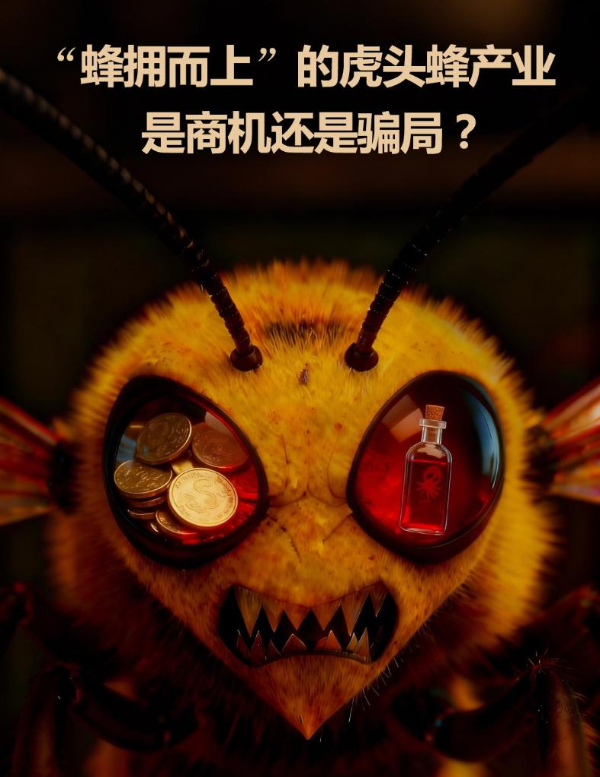
焦点丨“蜂拥而上”的虎头蜂产业,是商机还是骗局
Xin Hua Wang· 2025-11-25 09:00
Core Viewpoint - The rapid growth of the hornet farming industry, driven by exaggerated online promotions and high profit margins, poses significant risks due to a lack of regulation and oversight [1][20][32]. Group 1: Industry Growth and Risks - The hornet farming industry has seen a surge in interest, with promotional claims such as "cost 500, sell for 5000" and "teaching and training included" attracting many farmers [1][18]. - The industry is characterized by chaotic growth and insufficient regulatory frameworks, leading to potential dangers for both farmers and surrounding communities [1][20]. - Incidents of severe attacks by hornets have been reported, including the tragic deaths of two children in Yunnan and multiple injuries in Sichuan, highlighting the risks associated with hornet farming [3][18]. Group 2: Lack of Regulation - Hornet farming operates in a regulatory gray area, as hornets are not included in the National Bee Genetic Resource Variety Catalog, making it difficult for agricultural authorities to intervene [20][23]. - Local regulations have been issued to prohibit the farming of dangerous hornet species, but illegal farming persists, often going unchecked until incidents occur [23][25]. - Online platforms lack oversight, with some vendors promoting hornet products with dubious health claims and selling unregulated items [25][27]. Group 3: Ecological Impact - Hornets primarily feed on insects, including bees, which can lead to significant ecological disruptions, such as the loss of bee colonies and damage to local flora [29][30]. - The ecological role of hornets as natural predators of harmful insects is acknowledged, suggesting a need for balanced management rather than outright prohibition [40]. Group 4: Recommendations for Regulation - There is an urgent need for the establishment of scientific farming standards and regulatory frameworks to ensure safe hornet farming practices [32][33]. - Authorities should conduct village inspections and provide education on the risks associated with hornet farming, while also promoting safe farming techniques [33][40].

“杀人蜂”竟遭滥养!有人赚得盆满钵满……记者调查
Yang Shi Wang· 2025-11-16 19:24
Core Viewpoint - The article highlights the illegal sale and breeding of the aggressive and venomous Asian giant hornet (commonly known as "killer bee") in China, despite regulations prohibiting its farming due to its dangerous nature [1] Group 1: Industry Overview - The Asian giant hornet, scientifically known as Vespa mandarinia, is predominantly found in southern regions of China and is known for its strong aggressiveness and potent venom [1] - There are clear prohibitions against the farming of the Asian giant hornet in many areas of China, indicating a regulatory stance against its cultivation [1] Group 2: Market Activities - Some merchants on online platforms are promoting the Asian giant hornet as a medicinal product, leading to a surge in its illegal sale [1] - There are reports of individuals engaging in large-scale breeding of the Asian giant hornet for profit, exploiting its perceived medicinal properties [1]
财经调查丨6666元包教包会!“杀人蜂”养殖已成灰色产业链
Sou Hu Cai Jing· 2025-11-16 12:48
Core Viewpoint - The article highlights the rapid growth and potential risks associated with the breeding and sale of hornets, particularly the aggressive species known as "killer hornets," in China, emphasizing the economic opportunities and ecological threats involved [1]. Company Overview - Huang's Bee Industry Co., located in Longling County, Yunnan Province, is one of the earliest companies in China to breed and sell various types of hornets and provide training on hornet breeding techniques [1]. - The company charges a tuition fee of 6,666 yuan for training, which includes the purchase of queen bees and hives at discounted prices for students [1]. Industry Insights - The market for hornet pupae is significant, with the highest sales occurring in the Yunnan, Guizhou, and Sichuan provinces, where up to 20 tons can be sold in a single day [1]. - The breeding of hornets, particularly the aggressive "killer hornet" species known as the Seven Mile Hornet, poses serious risks to public safety and biodiversity, as these hornets are known for their extreme aggression and ability to attack in swarms [1]. Ecological Impact - The unregulated breeding of hornets has led to an increase in incidents of harm to humans and has caused significant damage to local biodiversity and ecological environments [1]. - The Seven Mile Hornet, recognized for its high production of pupae, is being bred in Sichuan, raising concerns about the potential for large-scale farming of this dangerous species [1].