虚拟拍摄

Search documents
虚拟拍摄落地最大的难点,是人
3 6 Ke· 2025-12-22 03:13
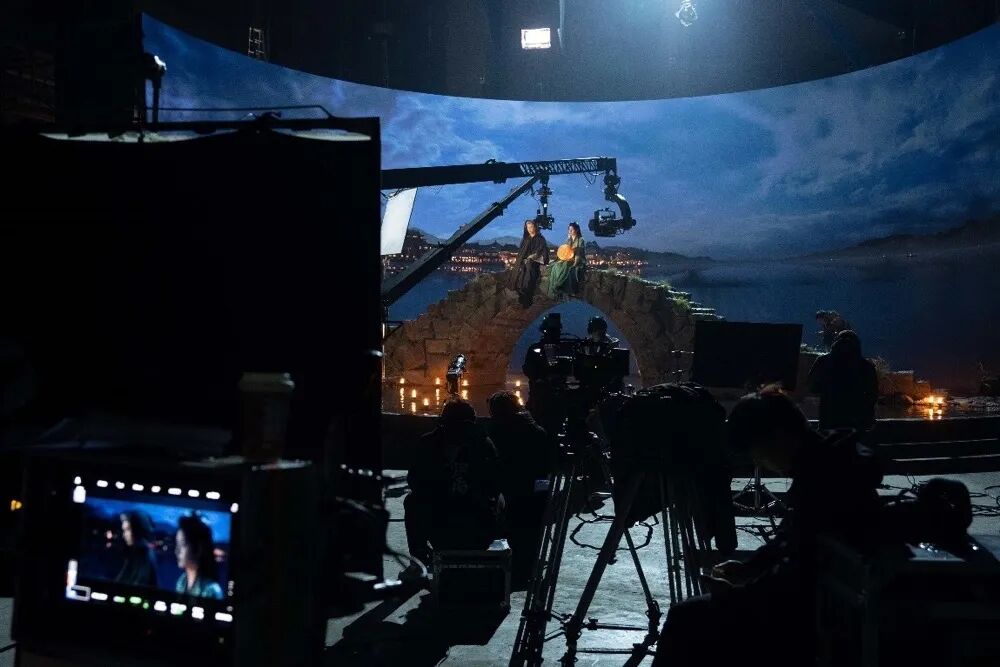
Core Insights - The virtual filming technology is gaining traction in the industry, with companies like iQIYI showcasing its practical value and significant cost savings of over 40% compared to traditional setups [1] - The adoption of virtual filming is not limited to iQIYI; other major platforms like Tencent Video, Youku, and Mango TV are also investing heavily in this technology, indicating a growing trend in the industry [1][5] - Despite advancements in hardware and technology, the biggest challenge facing the industry is the severe shortage of skilled professionals who understand the new virtual filming processes [4][7] Group 1: Industry Trends - iQIYI reported a 125% year-on-year increase in virtual production projects, successfully engaging in the production of popular series and even feature films [1] - Major platforms are investing in state-of-the-art virtual studios and technologies, with Tencent Video planning to complete testing of its new virtual studio by the end of the year [1][5] - The industry is witnessing a shift towards virtual filming, with companies enhancing their technical capabilities and reducing costs, but the lack of trained personnel remains a significant barrier [1][4] Group 2: Challenges in Implementation - The introduction of virtual filming requires a complete overhaul of traditional filmmaking processes, necessitating new talent who can manage the integration of creative and technical teams from the project's inception [2][4] - There is a notable gap in understanding the new workflows among traditional production teams, leading to potential confusion and inefficiencies during filming [4][8] - The industry lacks clear cost expectations for virtual filming, making smaller production companies hesitant to invest in this new technology due to fears of high costs without guaranteed returns [4] Group 3: Talent Shortage - The industry is facing a critical shortage of professionals who can navigate the complexities of virtual filming, including producers who understand both creative and technical aspects [5][13] - Successful implementation of virtual filming requires a comprehensive talent system that includes CG producers, rendering engineers, and directors who can adapt to new creative processes [13] - The transition to virtual filming is not merely about acquiring technology but also about cultivating a workforce that can effectively utilize these advancements [13]




八强高校选手角逐AI电竞锦标赛
Nan Fang Du Shi Bao· 2025-10-19 23:15
Core Insights - The second AI Visual Creative Competition (VACAT) was held from October 17 to 19 in Longgang District, Shenzhen, showcasing the latest breakthroughs in AI visual technology and aiming to establish itself as the "Oscar" of the AI visual creative field [2][4]. Group 1: Competition Overview - The competition received over 4,600 submissions globally, marking a 36.8% increase from the previous year, with 235 entries making it to the final round [3]. - The event featured various categories including AI art posters, AI visual art films, AI commercial creative films, AI animation narrative films, and AI real narrative films, with awards announced on the opening day [3]. - The participation of prestigious institutions like Beijing Film Academy and the International Student Media Arts Festival highlights the event's professional recognition [3]. Group 2: Quality and Scope of Participation - The competition demonstrated significant improvements in three areas: stronger ecological links, higher quality of submissions, and broader participation [4]. - The quality of entries was noted for its production precision, artistic completion, and visual expression, standing out among similar national events [4]. - The event attracted a diverse range of creators and teams, enhancing its global appeal [4]. Group 3: AI Visual Technology Workshop - An AI Visual Technology Workshop was held during the competition, featuring 22 experts from leading global fields to discuss the latest advancements in AI visual technology [5]. - The workshop aimed to explore innovative applications of AI in artistic creation, showcasing a high level of international collaboration [5]. Group 4: AI Competition Day - The "AI Competition Day" on October 19 served as the climax of the event, testing participants' creativity, technical skills, and adaptability through intensive competitions [6]. - The day included a global AI video vendor team competition and a dual-track event focusing on university and professional teams, highlighting the capabilities of AI video tools [6]. Group 5: Industry Collaboration Opportunities - The event provided a platform for companies in the AI visual creative industry to seek collaborations, with various AI application products showcased [6][7]. - Companies like Yedu Culture Media and Lian Dan Technology expressed interest in transitioning to AI and VR technologies, aiming to find technical partners for content production [7]. Group 6: Publication of the Blue Book - The first "Blue Book on AI Visual Creative Applications" was released during the competition, aiming to fill the gap in systematic research and provide industry guidelines [8]. - The Blue Book outlines the current state, core issues, and future trends of AI in the visual creative field, serving as a comprehensive industry guide [9]. Group 7: Challenges in the AI Visual Industry - Despite rapid development, the AI visual industry faces challenges such as high cognitive costs for creators, who need a blend of industry knowledge and systematic methods [9]. - The Blue Book includes practical content from real-world applications, providing creators with actionable references to enhance their creative efficiency [9].