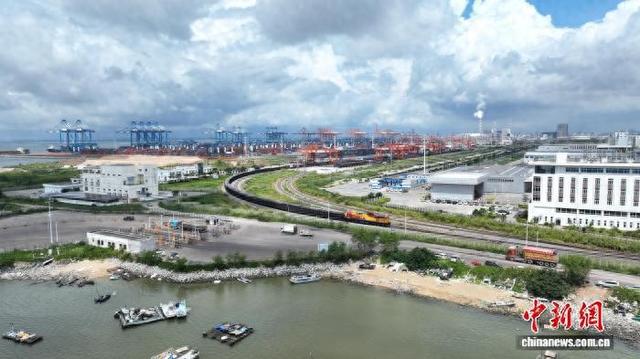
西部陆海新通道班列运输服务

Search documents
新通道班列里的“年味儿”
Xin Hua Wang· 2026-02-09 11:31
Core Viewpoint - The Western Land-Sea New Corridor freight trains are increasingly facilitating the transport of seasonal goods, including imported food items from ASEAN countries to China, enhancing the variety of New Year products available in the market [1][2][7]. Group 1: Transportation and Logistics - The Western Land-Sea New Corridor freight trains have become a vital link between China's southwestern regions and ASEAN countries, with increased frequency of operations during the New Year season [1]. - The logistics advantages of the China-Vietnam freight trains, including stable daily operations and controllable transit times, have led to a significant increase in food exports to Vietnam [2][7]. - The railway department has optimized cross-border freight services to ensure smooth transportation during the Spring Festival, including upgrading the Qinzhou railway hub from a single to a double track to enhance efficiency [5][7]. Group 2: Market Trends and Consumer Behavior - There has been a noticeable increase in the variety of imported goods in the Chinese New Year market, with products like durians, mangosteens, and curry sauces from ASEAN countries becoming popular choices among consumers [2]. - Consumers in Nanning are increasingly selective in their New Year purchases, moving from bulk buying to carefully choosing high-quality products, including those from Thailand [5]. - The Western Land-Sea New Corridor has expanded its transportation categories to over 1,300 types of goods, reaching 75 cities across 18 provinces and connecting to 584 ports worldwide [7].

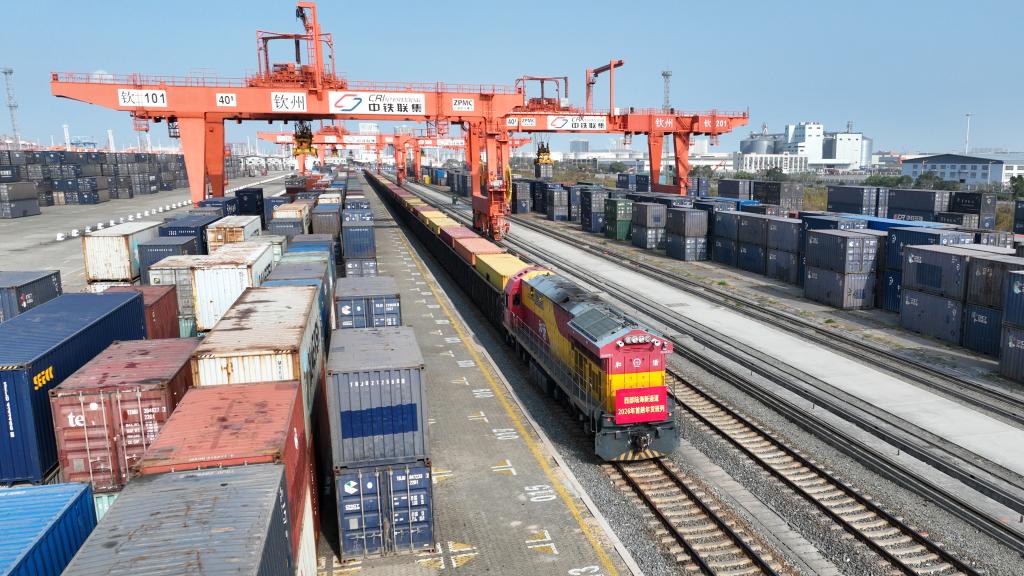
2026年首趟西部陆海新通道年货班列从钦州启程
Guang Xi Ri Bao· 2026-02-01 02:46
Core Insights - The Western Land-Sea New Corridor has commenced its first New Year goods train from Guangxi, transporting ASEAN food products to western regions of China, enhancing the availability of imported goods for the upcoming Spring Festival [1][2] - The corridor has expanded its transportation categories to over 1,300 types of goods, covering 18 provinces and reaching 584 ports in 127 countries and regions, significantly enriching the domestic New Year goods market [1] Group 1 - The first New Year goods train from Guangxi is expected to arrive in Chongqing within 48 hours, carrying various imported food items such as cherries, durians, and frozen seafood [1] - The Guangxi Coastal Railway Company has established a regular communication mechanism to streamline the logistics process, ensuring efficient loading and transportation of goods [1] - The Western Land-Sea New Corridor has seen a 9% year-on-year increase in cargo transported, totaling 114,000 TEUs since January 2026 [2] Group 2 - Key infrastructure upgrades at the Qinzhou area have enhanced the railway hub from a single track to a double track, significantly improving transportation efficiency for New Year goods [2] - The establishment of a dedicated transport team and regular coordination meetings aims to resolve logistical challenges, ensuring a smooth and efficient operation of the corridor [1][2]
2025年西部陆海新通道班列发运量再创新高
Guang Xi Ri Bao· 2026-01-07 04:53
Core Insights - The Western Land-Sea New Corridor has achieved a significant milestone in 2025, with container shipments reaching 1.425 million TEUs, marking a year-on-year increase of 47.6% and surpassing one million TEUs for the first time [1][2] Group 1: Shipment Growth - The corridor's shipment from western regions to ports like Beibu Gulf and Zhanjiang has reached 701,000 TEUs, a year-on-year increase of 40.4% [1] - Shipments from ports to western regions have totaled 724,000 TEUs, reflecting a year-on-year growth of 55.3% [1] Group 2: Logistics Efficiency - The company has implemented the "one order system" for iron-sea intermodal projects, reducing logistics costs and completing a volume of 13,600 TEUs [2] - The corridor has established regular connections with China-Europe and China-Central Asia trains, enhancing the international logistics network [2] Group 3: Long-term Growth - Over the past five years, the Western Land-Sea New Corridor has cumulatively shipped 4.652 million TEUs, with a 122.3% increase in 2025 compared to 2021, indicating sustained high growth [2]
2025年西部陆海新通道班列发运货物142.5万标箱
Xin Hua She· 2026-01-07 01:15
Core Insights - The Western Land-Sea New Corridor freight trains achieved a record shipment of 1.425 million TEUs in 2025, marking a year-on-year increase of 47.6% and surpassing the one million TEU milestone for the first time [1] Group 1: Shipment Data - In 2025, the freight trains shipped 701,000 TEUs from western regions such as Sichuan, Chongqing, and Yunnan to ports like Beibu Gulf and Zhanjiang, reflecting a year-on-year growth of 40.4% [1] - The shipments from ports to western regions reached 724,000 TEUs, showing a significant year-on-year increase of 55.3% [1] Group 2: Infrastructure Development - The number of scheduled freight train routes in the Western Land-Sea New Corridor has expanded to 44, an increase of 21 routes compared to the end of 2024, enhancing the network to meet rising transportation demands [1] - Key infrastructure projects, including the Huangbai Railway and the expansion of the Nanfang Railway, are underway to further boost freight capacity in the corridor [1] Group 3: International Connectivity - The corridor has established regular connections with China-Europe and China-Central Asia freight trains, facilitating various international logistics routes, including the "Beibu Gulf Port - Chengdu - Poland, Germany" and "UAE - Qinzhou - Lanzhou" freight services [1] - This development supports the dual prosperity of "domestic goods going abroad" and "foreign goods entering China," creating an efficient channel for international trade [1]
新闻分析:超500万标箱!西部陆海新通道班列向上向好之“势”从何而来
Xin Hua Wang· 2025-12-02 13:21
Core Viewpoint - The Western Land-Sea New Corridor has achieved significant milestones, with over 5 million TEUs shipped since its inception in 2017, reflecting strong growth momentum and development vitality [1][3]. Group 1: Development and Growth - The corridor has seen a rapid increase in shipping volume, with the time taken to reach each million TEUs decreasing significantly, from over 4 years for the first million to just 240 days for the fifth million [1]. - The average annual growth rate of import and export volume along the corridor has reached 16.9% since 2019 [3]. - In 2023, the corridor has shipped over 130,000 TEUs, with a notable increase in both inbound and outbound shipments, each exceeding a 50% year-on-year growth [8]. Group 2: Infrastructure and Connectivity - The number of scheduled train routes has expanded from 2 in 2019 to 26 by 2025, enhancing connectivity between southwestern cities and various ports [4]. - Continuous investment in infrastructure, including the expansion of ports and the development of multimodal transport networks, has significantly improved logistics capabilities [4][6]. - The establishment of an integrated rail-sea transport operation platform has enhanced real-time resource sharing between ports and rail systems, improving logistics efficiency [8]. Group 3: Economic Impact and Trade Relations - The corridor plays a crucial role in facilitating trade between China and ASEAN, with China maintaining its position as ASEAN's largest trading partner for 16 consecutive years [5]. - The economic growth in the western region and the deepening trade relations with ASEAN are fundamental drivers for the corridor's transition from growth to strong growth [5]. - The total import and export volume through the corridor reached 611.5 billion yuan in the first three quarters of the year, marking a 19.3% increase and contributing 3.4 percentage points to the western region's foreign trade growth [8]. Group 4: Future Prospects - The corridor is expected to further enhance its role in empowering industrial development, aiming to become a cross-regional domestic and international economic corridor [9].
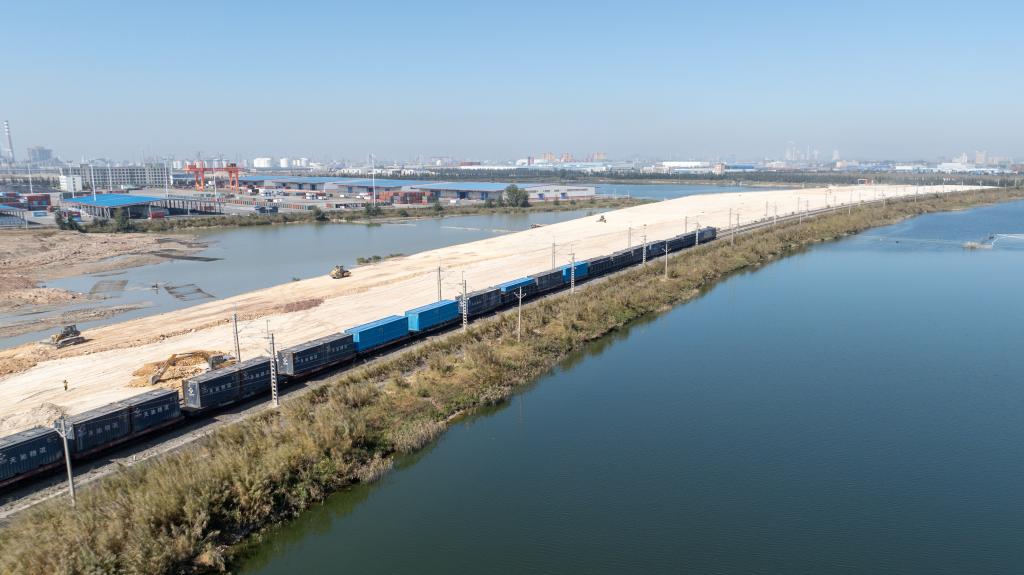
西部陆海新通道班列累计发送货物超500万标箱
Xin Hua Wang· 2025-11-30 08:05
Core Insights - The Western Land-Sea New Corridor has achieved a cumulative shipment of over 5 million TEUs, reaching 5.03 million TEUs, with over 1.3 million TEUs shipped this year, marking a year-on-year increase of 55.3% [1][2] Group 1 - The corridor connects the Silk Road Economic Belt in the north and the 21st Century Maritime Silk Road in the south, playing a crucial strategic role in regional coordinated development [1] - Since its elevation to a national strategy in August 2019, the corridor has shown strong growth momentum [1] - The time taken to reach the first million TEUs was over 4 years, while the fifth million TEUs was achieved in just over 240 days, indicating a significant acceleration in growth [2] Group 2 - The corridor's service coverage has expanded, with the number of scheduled train routes increasing from 2 in 2019 to 26 by 2025, linking southwestern cities like Chengdu, Chongqing, and Guiyang with ports such as Fangchenggang, Qinzhou, and Zhanjiang [2] - There has been a notable increase in imports of goods like pulp, spodumene, and rubber from countries such as Thailand, Mozambique, and Indonesia, alongside significant exports of generator sets from Chongqing and auto parts from Guangxi [2] - The corridor has established a stable logistics artery for southwestern China, with a total import and export value of 611.5 billion yuan in the first three quarters, contributing to a 3.4 percentage point increase in foreign trade growth in the western region [2]
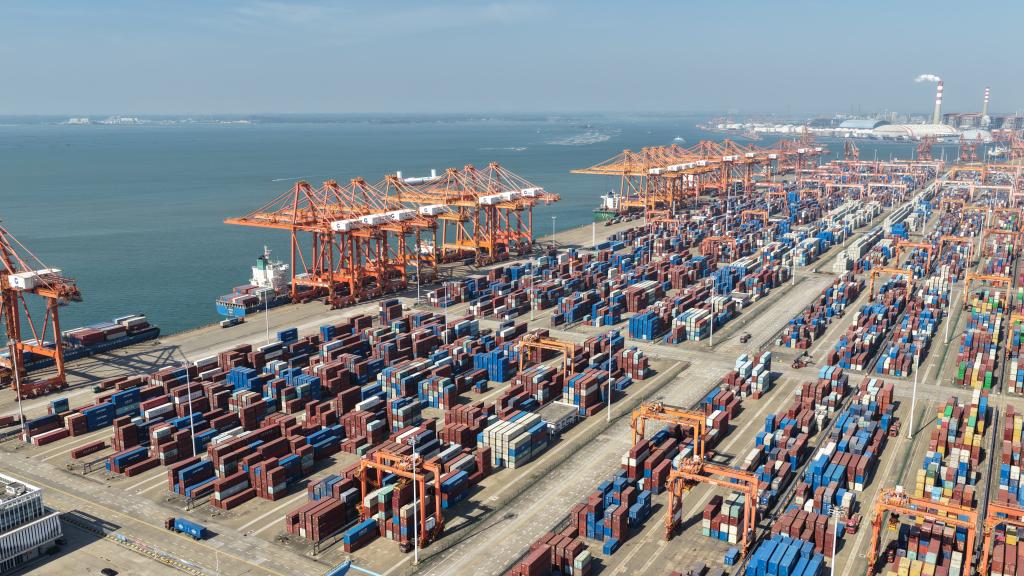
累计突破120万标箱!
中国能源报· 2025-11-05 11:33
Core Viewpoint - The Western Land-Sea New Corridor has significantly increased its cargo transportation capacity, reaching a total of 1.214 million TEUs this year, marking a year-on-year growth of 63.2% [1][3]. Group 1: Transportation and Logistics - The Western Land-Sea New Corridor serves as a vital logistics channel connecting China's western inland with global markets, facilitating the export of Chinese manufactured goods and the import of global resources [3]. - The corridor has enabled the transportation of various products, including electric vehicles from Chongqing to the Middle East and agricultural products from ASEAN countries to China, showcasing its role in international trade [3]. - The cargo volume at Qinzhou Port East Station has reached 7.164 million tons this year, reflecting an 18.7% increase, with significant growth in bulk commodities like coal and bauxite [4]. Group 2: Infrastructure and Capacity Enhancement - To meet the rising transportation demand, the Nanning Railway Bureau has implemented key capacity enhancement projects, doubling the container handling capacity at Qinzhou Railway Container Center Station [4]. - The Nanning Railway Company has optimized transportation organization by ensuring stable container supply and reducing waiting times through better coordination between Qinzhou Port and Qinzhou Port East Station [6]. Group 3: Overall Impact and Development - Since the start of the 14th Five-Year Plan, the Western Land-Sea New Corridor has sent a total of 4.441 million TEUs, playing a crucial role in promoting regional coordinated development and deepening foreign trade [8].
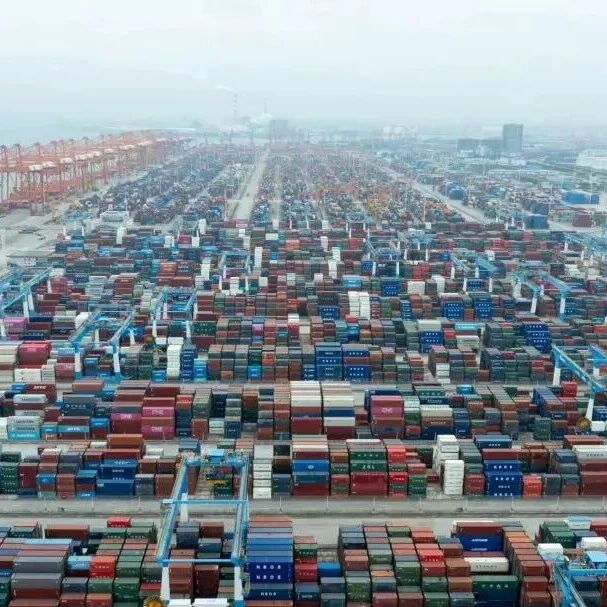
今年前8个月重庆经西部陆海新通道运输货物超20万标箱
Xin Hua Wang· 2025-09-28 23:57
Core Insights - The demand for transportation via the Western Land-Sea New Corridor has been robust this year, with significant growth in both the number of containers transported and their value Group 1: Transportation Demand - From January to August this year, the Western Land-Sea New Corridor transported a total of 215,800 TEUs, representing a year-on-year increase of 30% [1] - The total value of goods transported through this corridor reached 39.291 billion yuan, marking a year-on-year growth of 26% [1]
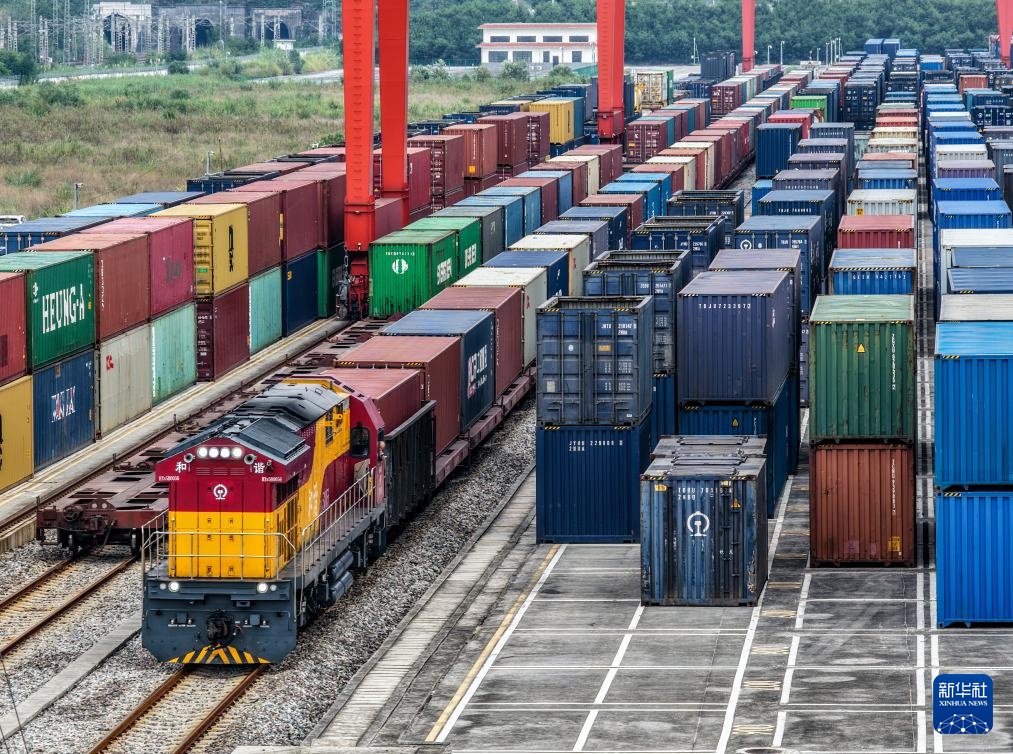
西部陆海新通道蝶变升级,年内发送集装箱货物突破100万标箱
Hua Xia Shi Bao· 2025-09-06 04:48
Core Viewpoint - The "14th Five-Year Plan" aims to establish a high-quality Western Land-Sea New Corridor by 2025, enhancing economic, efficient, convenient, green, and safe transportation in the region [2]. Group 1: Performance and Achievements - As of September 4, 2023, the Western Land-Sea New Corridor has sent over 1 million TEUs (Twenty-foot Equivalent Units) of container cargo, reaching 1,001,455 TEUs, a year-on-year increase of 72.5% [3]. - The railway department has made significant progress in constructing the main corridor, with the East Line completing electrification, the Central Line opening the Gui-Nan High-Speed Railway ahead of schedule, and the West Line advancing the Huang-Bai Railway [3]. - The total cargo throughput at Qinzhou Port East Station reached 10.572 million tons, a year-on-year increase of 29.7%, with a notable rise in automobile exports [6]. Group 2: Transportation Demand and Cargo Structure - The Western Land-Sea New Corridor has seen strong transportation demand, with container cargo shipments in both upstream and downstream directions increasing by 74.7% and 70.2% respectively [7]. - The cargo structure has diversified, including bulk commodities like coal and minerals, as well as chemical products, agricultural products, and machinery [7]. - Since the launch of the corridor in 2017, a total of 4.7 million TEUs have been sent, maintaining an annual growth rate in double digits [7]. Group 3: Infrastructure and Technological Advancements - The railway department has organized stable train flows and increased the number of scheduled train lines to 24, enhancing the efficiency of the transportation network [9]. - Efforts are being made to integrate smart technologies in port operations, with significant advancements in automated and digital management systems, improving operational efficiency by over 30% [10]. - The construction of smart ports along the China-Vietnam border is underway, aiming for 24/7 automated customs clearance [10].
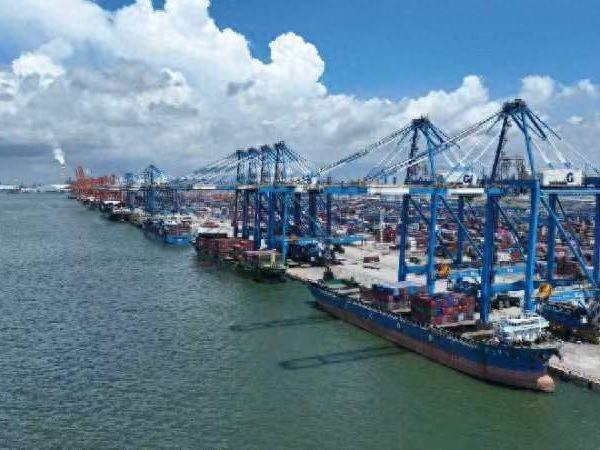
西部陆海新通道班列首次实现年度发送量突破百万标箱
Zhong Guo Xin Wen Wang· 2025-09-05 14:25
Core Insights - The Western Land-Sea New Corridor has achieved a significant milestone, with container shipments surpassing 1 million TEUs for the first time, reaching 1,001,455 TEUs, representing a year-on-year growth of 72.5% [1] Group 1: Shipment Growth and Structure - The shipment volume from cities such as Chengdu, Guiyang, Chongqing, Liuzhou, and Nanning to the Beibu Gulf and Zhanjiang Port has shown notable increases, particularly in chemicals, machinery parts, and stone materials [1] - The cargo structure has diversified, including bulk commodities like coal and ore, as well as chemical products, agricultural products, and electromechanical products [1] Group 2: Operational Expansion - The railway department has increased the frequency of scheduled trains, expanding the coverage of the corridor to a total of 24 routes, with 14 routes originating from Beibu Gulf and Zhanjiang ports [3] - The Qinhai Port East Station has reported a total cargo throughput of 10.572 million tons, marking a year-on-year increase of 29.7% [3] - From January to June, 21,000 vehicles were exported through Qinhai Port, reflecting a year-on-year growth of 27.72% [3] Group 3: Historical Context and Future Outlook - Since the launch of the Western Land-Sea New Corridor in 2017, a cumulative total of 4.7 million TEUs have been shipped, maintaining a double-digit annual growth rate [3] - The network has evolved from a single route to a comprehensive logistics network connecting major provinces in Western China [3]