
质子重离子治疗

Search documents
国家医保局谢章澍:医保赋能健康新质生产力
Xin Lang Cai Jing· 2026-02-03 19:47
Core Viewpoint - The National Medical Insurance Administration is transforming its role from traditional fund management to a strategic hub that connects public health needs with pharmaceutical industry development, emphasizing dual functions of "social security + innovation empowerment" [1][2]. Group 1: Fund Support and Expenditure - During the 14th Five-Year Plan period, the total expenditure of the medical insurance fund is projected to reach 13 trillion yuan, with an average annual growth of 10%, providing stable financial support for innovation [2]. - The adjustment cycle for the medical insurance catalog has been compressed from 8 years to 1 year, focusing on new drugs launched within the last 5 years, with 98% of new effective drugs expected to be included in the catalog by 2024 [2]. - Over the past 8 years, more than 900 new drugs have been added, with 80% of new drugs being included in the payment scope within 2 years of their market launch, driving drug sales exceeding 600 billion yuan [2]. Group 2: Price Governance and Innovation Support - The establishment of the first national drug price registration network aims to achieve low drug prices through centralized procurement and catalog negotiations, while also supporting the application of innovative technologies such as surgical robots and digital customized imaging [2]. - The medical insurance department has proactively focused on the development of cutting-edge medical technologies, with the support process for brain-computer interface technology serving as a typical example [2][3]. - In March 2025, the medical insurance department established pricing and charging standards for brain-computer interfaces, addressing payment challenges for technology applications [2]. Group 3: Future Outlook and Strategic Initiatives - The medical insurance department is also incorporating a range of new technologies and drugs, such as remote operations, proton heavy ion therapy, and CAR-T tumor treatment, into its support framework, ensuring that the public benefits from innovative outcomes [3]. - The department is actively building international platforms to promote Chinese pharmaceutical innovations globally, while real-world comprehensive value evaluation serves as crucial evidence for medical insurance decision-making [3]. - Looking ahead to the 15th Five-Year Plan, the medical insurance department will continue to deepen its dual-driven strategy of "policy guidance" and "value evaluation," optimizing payment policies for innovative technologies like brain-computer interfaces [3].
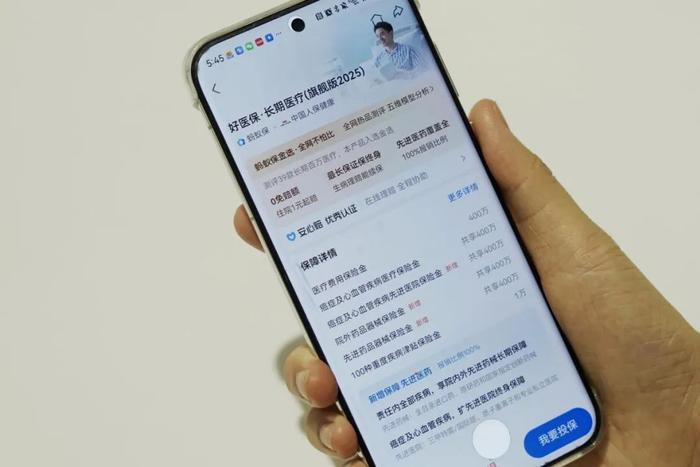
“看得起病用不起药”?高端医疗普惠化“好医保”给出新解法
Zhong Guo Jing Ying Bao· 2025-06-20 13:26
Core Viewpoint - The article highlights the significant gap in accessibility to advanced medical treatments, particularly for cancer patients, despite improvements in basic medical insurance coverage and the introduction of commercial health insurance as a supplementary option [1][6]. Group 1: Accessibility of Advanced Medical Treatments - Advanced treatments like proton and heavy ion therapy are financially burdensome, with costs reaching approximately 380,000 yuan for patients, which is often unaffordable without insurance [1][5]. - The limited number of hospitals offering such advanced treatments (only about 10 nationwide) exacerbates the accessibility issue [5][6]. - Commercial health insurance is becoming a crucial safety net for families facing high medical costs, with products like "Good Medical Insurance" covering advanced treatments [6][7]. Group 2: Commercial Health Insurance Developments - The recent upgrade of the "Good Medical Insurance" series includes coverage for advanced hospitals and a wide range of innovative drugs, aiming to enhance accessibility to high-quality medical services [3][8]. - The upgraded insurance products cover over 1,500 advanced medical devices and drugs, with a zero deductible policy, allowing for full reimbursement of eligible expenses [9][11]. - The insurance aims to provide a three-tiered protection system: comprehensive basic medication, advanced medical devices for all diseases, and reduced financial burden for serious illnesses [7][9]. Group 3: Market and Policy Implications - The article emphasizes the need for policy guidance and market exploration to ensure that commercial health insurance effectively complements basic medical insurance and addresses the high costs of new drugs and treatments [2][6]. - The anticipated growth in the market for innovative drugs, projected to reach 162 billion yuan in sales by 2024, indicates a significant opportunity for commercial health insurance to expand its role [7][12]. - The upgrade of "Good Medical Insurance" reflects a broader trend towards making high-end medical services more accessible to the general public, aligning with national health improvement goals [11][12].

高科技”抗癌带来天价诊费,如何让尖端治疗方式更“落地
Xin Jing Bao· 2025-06-18 02:53
Core Viewpoint - The article discusses the emerging field of proton and heavy ion therapy as a cutting-edge cancer treatment, highlighting its advantages over traditional radiation therapy, while also addressing the challenges of high costs and limited accessibility for patients [1][2][3]. Group 1: Treatment Overview - Proton and heavy ion therapy utilizes charged particles to target and destroy tumor cells, offering benefits such as reduced side effects and higher tumor control rates compared to conventional radiation therapy [1][3]. - Clinical studies indicate that particle therapy has a five-year overall survival rate of nearly 70% for patients, with specific rates of 92.9% for nasopharyngeal cancer and 70.3% for early-stage non-small cell lung cancer [1][2]. Group 2: Accessibility and Costs - The treatment costs approximately 300,000 yuan per course, which is not covered by health insurance, making it unaffordable for many patients [2][6]. - Only a few thousand patients receive proton and heavy ion therapy annually in China, compared to over 4 million new cancer cases each year, indicating a significant gap in treatment availability [2][6]. Group 3: Technological Development - China has made rapid advancements in proton and heavy ion therapy since the establishment of its first treatment center in 2015, with ongoing efforts to expand the number of treatment facilities [8][9]. - The high cost of equipment and treatment, along with the complexity of the therapy process, limits the number of patients that can be treated each year, with estimates of 1,000 to 1,500 cases annually per facility [10][11]. Group 4: Insurance and Financial Solutions - Approximately 60% of patients self-fund their treatment, while commercial health insurance covers nearly 40% of the costs, highlighting the financial burden on families [15][16]. - Initiatives like the "Shanghai Health Insurance" program include proton and heavy ion therapy, assisting patients with insurance claims and improving treatment accessibility [16][17].