超薄平嵌冰箱

Search documents
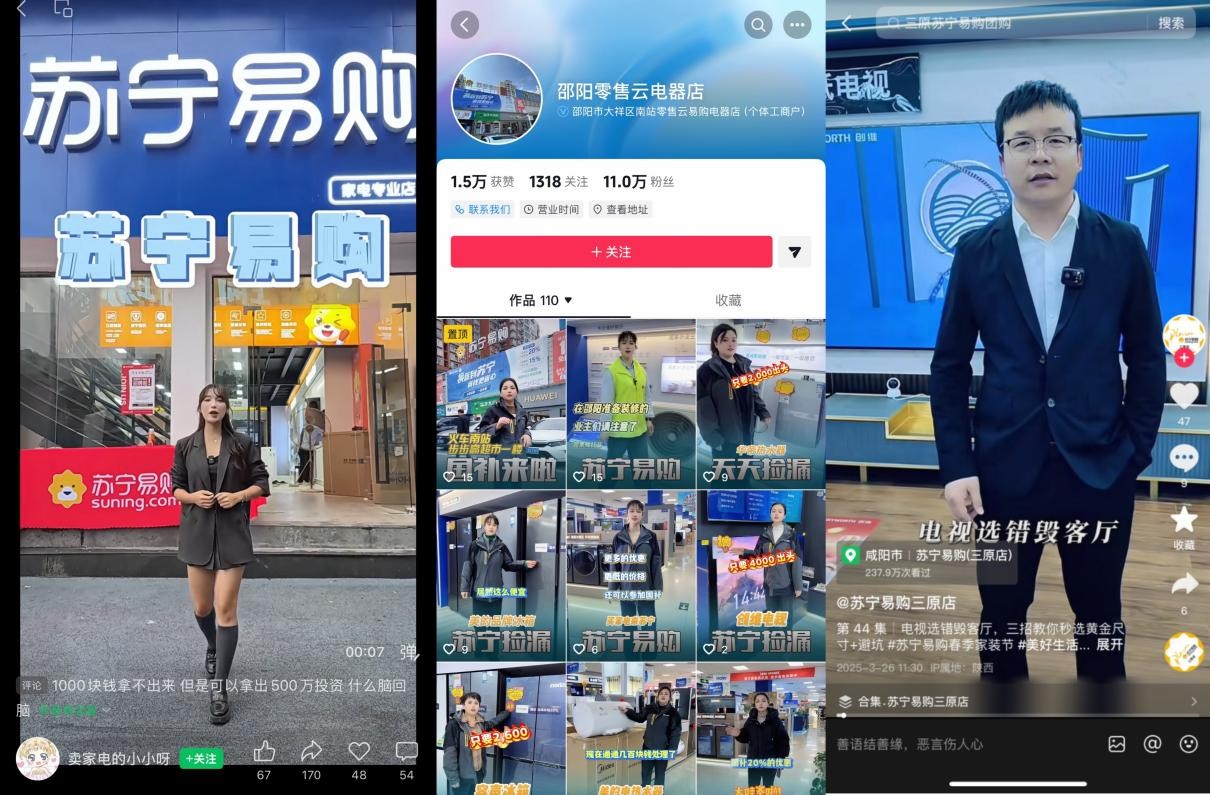
单场50万销售!苏宁零售云赋能县镇老板破圈
Zhong Jin Zai Xian· 2025-12-01 03:04
Core Insights - The transformation of local retail owners into key opinion leaders (KOLs) in the home appliance sector is driven by the trust established through personal recommendations and digital tools provided by Suning's retail cloud [1][6] - Suning's retail cloud has successfully addressed the challenges of product selection and supply stability for local merchants by collaborating with over 100 mainstream brands, offering a competitive product lineup [2][6] Group 1 - Local retail owners leverage personal trust and digital content to enhance customer engagement and drive sales, exemplified by a successful group purchase facilitated by a local store owner [1] - The retail cloud enables owners to access the latest products and training on their features, which enhances their credibility and sales performance, as demonstrated by a store owner achieving 500,000 in sales from a single event [2] - Digital tools provided by the retail cloud, such as AI scripts and targeted local promotions, help store owners effectively convert online traffic into in-store customers, leading to significant exposure and customer engagement [4][6] Group 2 - The retail cloud fosters a collaborative learning environment among over 10,000 stores, sharing successful operational strategies to improve efficiency and performance [6] - By combining supply chain capabilities with digitalization, the retail cloud empowers local store owners to not only sell products but also to play a crucial role in upgrading local consumption and energizing the lower-tier market [6]


行业聚焦:全球超薄平嵌冰箱市场头部企业份额调研(附Top10 厂商名单)
QYResearch· 2025-09-22 04:13
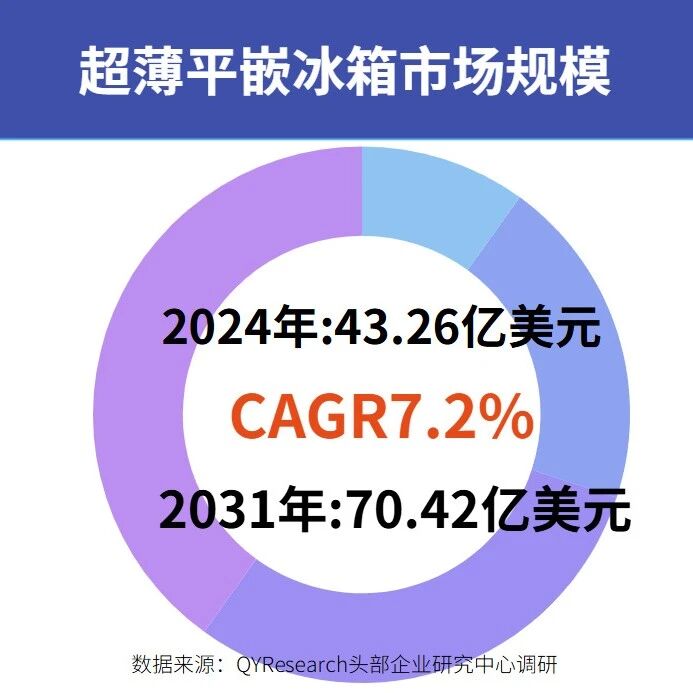
Core Viewpoint - The ultra-thin built-in refrigerator market is experiencing steady growth driven by the increasing demand from modern urban households, luxury apartments, and high-end kitchen renovations that prioritize space efficiency and seamless aesthetics [3]. Market Overview - The global ultra-thin built-in refrigerator market is projected to reach USD 4.326 billion in 2024 and is expected to grow to USD 7.042 billion by 2031, with a compound annual growth rate (CAGR) of 7.2% from 2025 to 2031 [3]. Industry Development Trends - The core trend is seamless integration to meet the needs of modern "integrated kitchens," with designs becoming thinner (typically not exceeding 60 cm in depth) and matching standard cabinet sizes [7]. - There is a growing emphasis on energy efficiency and precise cooling, with manufacturers adopting ultra-thin compressors and optimized evaporator structures to meet top-tier energy standards [7]. - The market is shifting towards emerging regions, driven by the renovation demands of the middle class, particularly in second-tier cities in China and Southeast Asia [7]. Development Opportunities - The booming high-end and renovation market presents significant opportunities, with ultra-thin built-in refrigerators becoming key selling points in luxury real estate and high-end residential projects [8]. - Technological innovations in materials and manufacturing processes are creating differentiation opportunities, such as lightweight composite materials and 3D printing for custom components [8]. - Government policies promoting green appliances are benefiting the industry, with strict energy efficiency standards opening new channels for brands that meet or exceed these requirements [8]. Challenges - High costs and technical barriers exist due to reliance on specialized components and precision manufacturing processes, limiting price flexibility and making market entry difficult for small and medium enterprises [9]. - Intense competition and price pressure from global giants and regional brands are squeezing profit margins, particularly in the mid-range market [9]. - The need for professional on-site measurement and installation complicates the maintenance and repair processes, increasing costs and potential customer complaints [9].