
家电零售

Search documents
港股异动 | 汇通达网络(09878)收涨逾8% 与零食优选达成战略合作 打造成零售连锁头部品牌
智通财经网· 2026-03-25 08:36
Core Viewpoint - HuTongDa Network (09878) has seen a significant stock price increase following the announcement of a strategic partnership with Hunan snack chain brand "Snack Preferred" to establish a joint venture for exclusive operations in the snack retail sector [1] Group 1: Company Developments - HuTongDa Network's stock rose nearly 12% during trading, closing up 8.45% at HKD 7.7, with a trading volume of HKD 3.5469 million [1] - The strategic cooperation agreement aims to integrate resources and accelerate the development of the snack and hard discount retail markets, positioning "Snack Preferred" as a leading retail chain brand [1] - The partnership will leverage HuTongDa Network's capabilities in four key areas: platformization, ecological integration, capitalization, and AI empowerment for "Snack Preferred" [1] Group 2: Recent Acquisitions and Brand Launches - Earlier in February, HuTongDa Network completed the acquisition of a 25% stake in JinTongLing (300091.SZ), advancing its "integrated production and sales" strategy [1] - In March, HuTongDa Network showcased its integrated production and sales brand, the century-old French appliance brand THOMSON air conditioning, at AWE 2026, gaining significant attention due to its strong brand heritage and innovative capabilities [1]
2387亿!江苏首富资产一夜清零
创业家· 2026-03-23 10:15
Core Viewpoint - The article discusses the rise and fall of Suning, a major player in China's retail industry, highlighting its debt restructuring process involving a total debt of 238.7 billion yuan and the personal sacrifices made by its founder, Zhang Jindong [6][10][46]. Group 1: Rise of Suning - Suning started as a small air conditioning store in Nanjing in the 1990s and grew into a national retail giant, becoming the largest home appliance retailer in China by 2004 [18][21]. - At its peak, Suning had over 1,700 stores across more than 300 cities, achieving annual sales exceeding 150 billion yuan and competing fiercely with rivals like Gome and JD.com [25][26]. - By 2019, Suning's revenue approached 270 billion yuan, and Zhang Jindong was recognized as one of the wealthiest individuals in Jiangsu, with a net worth exceeding 100 billion yuan [26][27]. Group 2: Expansion Challenges - The shift to e-commerce in the early 2010s posed significant challenges for traditional retailers, leading Suning to diversify into real estate, finance, and sports, investing over 70 billion yuan in acquisitions [30][32]. - A notable investment was the 20 billion yuan strategic financing for Evergrande in 2017, which later became problematic due to Evergrande's debt crisis [34][35]. - As financial pressures mounted, Suning began selling off core assets at discounted prices, leading to a gradual unraveling of its business empire [40][41]. Group 3: Debt Crisis and Restructuring - By early 2025, Suning and 38 affiliated companies entered bankruptcy restructuring, with total debts of 238.73 billion yuan and liquidatable assets valued at approximately 41 billion yuan [46][48]. - The restructuring plan involved adjusting shareholder equity and establishing a bankruptcy trust to allow continued operations while gradually repaying debts [50][51]. - Zhang Jindong committed all personal assets to the restructuring trust, effectively reducing his wealth to zero until creditors are fully compensated [55][57]. Group 4: Lessons from Suning's Journey - The article emphasizes the importance of balanced growth, cautioning that rapid expansion and excessive capital leverage can lead to significant risks for businesses [61]. - Suning's story serves as a cautionary tale in the business world, illustrating the potential consequences of mismanagement and the need for sustainable growth strategies [62].



ST易购(002024) - 2026年3月22日投资者关系活动记录表
2026-03-23 01:52
Group 1: Investor Relations Activity - The event was a site visit at Suning Max Chengdu Tianfu Interchange Store on March 22, 2026 [1] - Participants included representatives from Changjiang Appliances, Wufeng Fund, Jiutai Fund, and Beijing Xinsun Capital [1] - The company ensured compliance with information disclosure regulations, maintaining the accuracy and completeness of shared information [1] Group 2: Store Insights and Market Conditions - Investors learned about the store's basic conditions, implementation of national subsidy policies, and performance across various categories [1] - Discussion included market conditions for new and old residential areas, as well as the business of renovating old neighborhoods [1] - The company highlighted marketing strategies, consumer trends, and the provision of home appliance and home decoration services [1] Group 3: Business Expansion and Product Experience - The meeting covered topics such as store expansion and strategies for penetrating lower-tier markets [1] - Investors experienced new products introduced in the store during the visit [1]
苏宁张近东,全部资产,一夜清零
盐财经· 2026-03-21 09:56
Core Viewpoint - The article discusses the unprecedented "asset zeroing" of Zhang Jindong, the founder of Suning, marking a significant event in the restructuring of large private enterprises in China, where the founder's personal assets were completely transferred to address the company's massive debt crisis [7][10][17]. Group 1: Debt Crisis Overview - Suning's total debt reached 238.71 billion yuan, with a liquidation value of 41.005 billion yuan, resulting in a mere 3.5% repayment rate for ordinary creditors [9][12]. - The court approved the restructuring plan for 38 companies under Suning, which was executed in February 2026, concluding a prolonged debt struggle [12][36]. - Zhang Jindong's personal wealth was entirely liquidated, with all assets transferred to a trust for debt repayment, leaving him with no independently disposable property [16][19]. Group 2: Business Decline and Strategic Missteps - Suning's decline was gradual, stemming from strategic missteps over many years, including excessive diversification and failed investments, which eroded cash flow [21][28]. - The company faced significant challenges from e-commerce competitors, leading to a desperate attempt to expand through acquisitions, which ultimately backfired [28][30]. - The financial crisis was exacerbated by a failed investment in Evergrande, which trapped Suning's capital and further strained its liquidity [30][31]. Group 3: Zhang Jindong's Unique Position - Zhang Jindong's case is unique as he did not separate personal and corporate liabilities, leading to his complete asset liquidation, a departure from the norm where entrepreneurs typically protect personal wealth [17][40]. - Despite the asset zeroing, Zhang retained significant control over the new Suning Group, holding key positions in the board of directors, indicating a rare separation of control and residual claims [19][39]. - His situation reflects a broader lesson for entrepreneurs about the risks of intertwining personal and corporate finances, especially in times of crisis [40][48]. Group 4: Future Prospects for Suning - Suning aims to achieve profitability through strategic initiatives, including the opening of new large-format stores and targeting younger consumers with innovative retail concepts [44][47]. - The company projected a net profit of 5 million to 7.5 million yuan for 2025, relying heavily on non-operational income from debt restructuring and asset sales [42][43]. - The challenges ahead remain significant, as Suning must navigate a rapidly changing retail landscape while managing its debt obligations [47].

2387亿!张近东资产全部清零
商业洞察· 2026-03-15 09:42
Core Viewpoint - The article discusses the downfall of Zhang Jindong and his company Suning, highlighting the accumulation of a massive debt of 238.712 billion yuan and the eventual liquidation of his personal assets to settle this debt [3][11][19]. Group 1: Debt Accumulation - The debt of 238.712 billion yuan is equivalent to 60% of Suning's peak annual revenue in 2019 and more than three times Zhang Jindong's personal wealth at that time [11]. - The debt was not accumulated overnight; it was built over ten years as Zhang expanded Suning aggressively, starting from 2011 after winning the retail battle against Gome [12]. - Zhang's strategy included heavy investments in online retail and diversification into various sectors, leading to high leverage financing, with over 180 billion yuan raised through various means from 2016 to 2020 [13]. Group 2: Personal Asset Liquidation - By 2026, Zhang Jindong had completely liquidated all personal assets, including his shares in Suning and various properties, to repay debts [7][17]. - His personal assets, including real estate and financial investments, were auctioned off, with proceeds used to fulfill debt obligations, resulting in a total asset clearance [18]. - Zhang's financial struggles began to escalate in 2020 due to the pandemic, leading to a cash flow crisis and a significant loss of over 40 billion yuan in 2021 [16]. Group 3: Lessons and Warnings - The narrative serves as a cautionary tale about the dangers of excessive leverage and uncontrolled expansion in business, emphasizing that no company is "too big to fail" [19][20]. - The article warns entrepreneurs and individuals against taking on debt beyond their capacity, highlighting the importance of financial prudence [19].

春节假期消费火热 银联“乐购新春”助力市场升温
Sou Hu Wang· 2026-02-27 06:31
Core Viewpoint - The 2026 Spring Festival holiday in China showcased strong consumer vitality, with significant participation from China UnionPay in promoting consumption and ensuring smooth payment services, aligning with national strategies to boost consumption and domestic demand [1][2]. Group 1: Policy Response - China UnionPay launched the "Happy Shopping Spring" campaign during the Spring Festival, collaborating with commercial banks to provide efficient payment services across various sectors, ensuring that fiscal subsidies effectively reach consumers [2]. - The initiative included activities like "trade-in for new" to stimulate offline consumption and introduced prize invoices as a new consumption driver, enhancing the integration of diverse consumption scenarios [2][3]. Group 2: Consumption Trends - Payment transactions during the Spring Festival reached 39.302 billion, totaling 13.12 trillion yuan, with daily transaction volume and amount increasing by 37.45% and 19.26% year-on-year, respectively [3]. - There was a notable shift back to offline consumption, driven by trade-in activities and promotional offers, which significantly boosted foot traffic in physical stores [3][4]. - AI home appliances emerged as popular purchases during the festival, reflecting a shift towards smarter living, supported by government subsidies and increased consumer willingness to spend [4]. - The return of young people to their hometowns during the Spring Festival highlighted the consumption potential in lower-tier markets, with significant growth in sales of large appliances [4]. Group 3: Innovation in Consumption - The rise of "ticket root economy" during the Spring Festival activated diverse consumption potentials, with various cultural and tourism activities being promoted through partnerships with local governments [5][6]. - The introduction of prize invoices became a hot topic among consumers, with a pilot program covering 84 cities, enhancing consumer engagement and stimulating spending [6]. - New consumption initiatives, such as the "Play and Earn Spring Festival" campaign, successfully engaged millions of users and drove substantial transaction volumes during the holiday period [6].
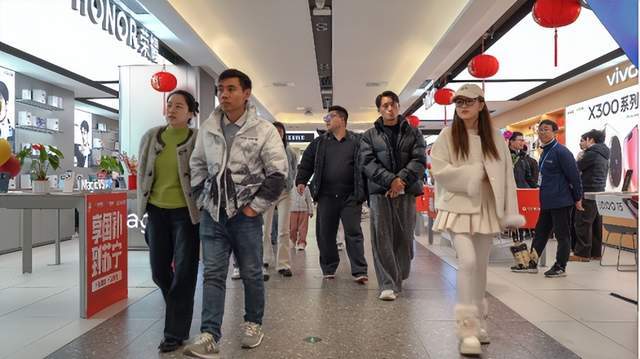
智能、悦己、减负!苏宁易购发布2026年春节消费洞察
Sou Hu Cai Jing· 2026-02-25 07:35
Core Insights - The new round of national subsidy policies, combined with the peak consumption season during the Spring Festival, has significantly boosted the home appliance and 3C product market [1] Group 1: Consumer Trends - From February 15 to 23, foot traffic in stores nationwide increased by 78%, with sales of first-level energy/water-efficient appliances accounting for 92.8% of total sales [1] - Sales of wearable devices such as smartwatches and smart glasses surged by 62% compared to previous periods, indicating a shift towards smart, trendy, and scenario-based consumption [1] - Young consumers are becoming the main drivers of growth in home appliance consumption, seeking comprehensive solutions that cater to specific life scenarios rather than just basic functionality [3] Group 2: Smart Home Appliances - AI-integrated home appliances are becoming the top choice for Spring Festival purchases, with consumers prioritizing smart features that enhance convenience and efficiency [3][5] - Smart refrigerators with independent temperature control and self-cleaning features are gaining popularity, reflecting a willingness to invest in higher-priced, more functional products [3] - The sales proportion of smart home appliances has reached 55% this year, transitioning from optional to essential items for consumers [5] Group 3: Emotional and Experiential Consumption - Products that provide emotional value and enhance life experiences, such as high-end smartphones and smart imaging devices, are emerging as new growth points in the market [5] - Over 70% of sales in mid-to-high-end smartphones are priced above 3000 yuan, indicating a trend towards "self-gratifying" consumption among younger generations [5] - Young consumers are increasingly bringing technology back to their hometowns, driving demand for smart home appliances in rural areas [6] Group 4: Market Growth in Rural Areas - The trend of young consumers returning home for the Spring Festival has led to increased demand for smart appliances like washing machines and smart ovens in rural markets [6] - Sales of large-capacity refrigerators and washing-drying sets grew by 95%, while sales of robotic vacuum cleaners and smart ovens increased by 67% during the holiday period [6] - The ongoing penetration of retail channels like Suning is facilitating the transition of rural households from basic to smart appliances [6]
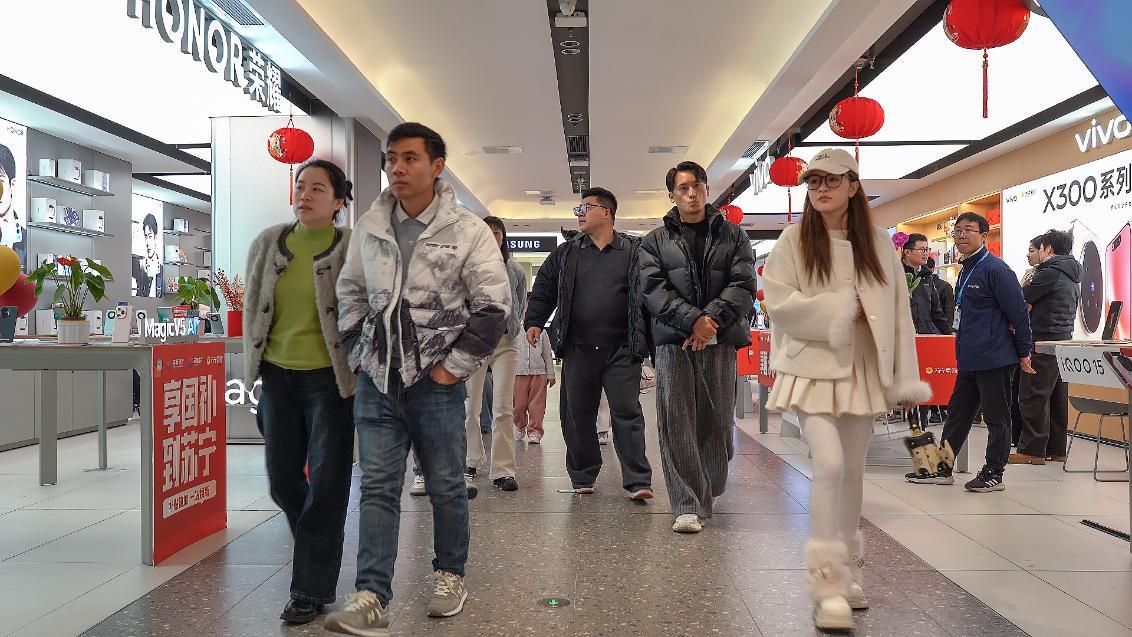
国补点燃春节焕新潮!苏宁易购客流、智能穿戴增长78%、62%
Huan Qiu Wang· 2026-02-24 03:44
Core Insights - The new round of national subsidy policies, combined with the peak consumption season during the Spring Festival, has significantly boosted the home appliance and 3C product market in China [1] Group 1: Consumer Trends - From February 15 to 23, nationwide store traffic increased by 78%, with sales of first-level energy/water-efficient appliances rising to 92.8% [1] - Sales of wearable devices such as smartwatches and smart glasses surged by 62% [1] - Young consumers are driving new demands for home appliances, focusing on solutions that cater to specific life scenarios rather than just basic functionality [3] Group 2: Smart Home Appliances - AI-integrated home appliances have become the top choice for Spring Festival purchases, with consumers prioritizing smart features for convenience and efficiency [3][5] - Smart appliances like temperature-adjusting refrigerators and washing machines that recognize fabric types have become the most popular items in stores [5] - The sales proportion of smart home appliances reached 55% this year, indicating a shift from optional to essential purchases [5] Group 3: Market Dynamics - Young consumers returning home for the Spring Festival are introducing advanced technology to their families, leading to increased demand for smart home products in rural areas [7] - Significant growth was observed in large-capacity refrigerators and washing machine-dryer sets, with increases of 95% and 153% respectively [7] - The trend of "technology feedback" from young consumers is accelerating the transition of rural households from basic to smart appliances [7]
苏宁易购发布2026年春节消费洞察:全国门店客流环比增长78%
Xin Lang Cai Jing· 2026-02-24 02:54
Core Insights - Su Ning Yi Gou's Spring Festival consumption insights indicate a significant increase in consumer activity, with a 78% week-on-week growth in store foot traffic from February 15 to 23 [1][3] - The sales of energy-efficient and water-efficient appliances reached 92.8%, while wearable devices like smartwatches and smart glasses saw a 62% increase in sales [1][3] - The trend in home appliance consumption is shifting towards smart, trendy, and scenario-based products, driven by younger consumers seeking comprehensive solutions for specific life scenarios [1][3] Consumer Behavior Trends - The new generation of young consumers is becoming the main driver of growth in home appliance sales, with new demands emerging around gatherings, household chores, and tech gifts [1][3] - Products that provide emotional value and enhance the sense of occasion, referred to as "atmospheric" appliances, are gaining popularity during the Spring Festival, marking a new growth point in the market [1][3] Regional Insights - Major cities such as Beijing, Nanjing, Shanghai, Chengdu, and Guangzhou are identified as having the highest demand for appliance upgrades [1][3] County-Level Consumption - Young people returning home for the Spring Festival are bringing technology back to rural areas, leading to significant upgrades in county-level home appliance consumption [2][4] - Notable growth in specific categories includes large-capacity refrigerators and laundry-drying sets, which saw a 95% year-on-year increase, and robotic cleaning devices, which grew by 153% [2][4]
政策精准落地 春节消费活力释放
Zhong Guo Zheng Quan Bao· 2026-02-23 20:17
Group 1 - The tourism market in China experienced significant growth during the Spring Festival, with various regions reporting high visitor numbers and increased hotel occupancy rates [2][3] - Hubei Province reported that its A-level tourist attractions received 20.71 million visitors during the holiday, with star-rated hotels achieving an average occupancy rate of 64.56%, showing a notable increase compared to previous years [2] - The introduction of various Spring Festival themed activities across different regions has attracted tourists, with Guangdong and Fuzhou leading in innovative experiences and events [2] Group 2 - The "Lucky Invoice" initiative, launched in 50 cities, aims to stimulate consumer spending by offering cash rewards for submitted invoices, with a total prize pool of 10 billion yuan during the Spring Festival [3][4] - In Chengdu, nearly 700,000 participants engaged in the "Lucky Invoice" program, submitting over 2.6 million invoices and receiving more than 13 million yuan in prizes [4] - The demand for green and smart consumer products surged during the holiday, with sales of smart wearables and AI-integrated home appliances increasing significantly, indicating a shift in consumer preferences towards technology-driven solutions [4][5]