越南火龙果

Search documents
湖南怀化国际陆港重启中越铁路冷链班列 将打造“湘越鲜通道”
Zhong Guo Xin Wen Wang· 2026-01-27 03:56
Core Viewpoint - The resumption of the cold chain train service between Vietnam and Huaihua marks a significant step in enhancing cross-border logistics and improving the efficiency of fresh fruit transportation from ASEAN to China [1][2] Group 1: Cold Chain Train Resumption - A cold chain train carrying 130 tons of Vietnamese dragon fruit departed from Ho Chi Minh City and arrived at Huaihua International Land Port in 6 days, significantly shortening the transportation cycle [1] - The cargo value of this shipment is approximately 750,000 RMB, and the successful operation of this test train has received high recognition from customers [1] - The second test train is scheduled to depart on January 28, indicating a commitment to regular service [1] Group 2: Logistics and Market Expansion - Huaihua International Land Port is positioned as an important logistics hub for Hunan to connect with ASEAN, continuously optimizing cross-border cold chain transportation services [1] - The establishment of the "Xiangyue Fresh Channel" aims to achieve regular and stable operation of cold chain transportation between Huaihua and Ho Chi Minh City [1] - The implementation of the "conditional release" facilitation measures by Huaihua Customs and Pingxiang Customs is expected to improve port clearance efficiency by 20%, enhancing the import fruit transportation channel for consumers in Hunan and the central region [1] Group 3: Future Developments - The regular operation of the cold chain train service is expected to effectively reduce logistics costs and improve transportation efficiency, allowing more high-quality ASEAN fruits to enter the Chinese market [2] - Huaihua International Land Port plans to deepen logistics cooperation with ASEAN countries, continuously enrich import categories, and enhance service capabilities [2] - The goal is to establish Huaihua as a distribution center for agricultural products and a cold chain logistics hub facing ASEAN [2]
洪九果品退市启示:水果分销商死于现金流
Jing Ji Guan Cha Wang· 2026-01-04 08:40
Core Viewpoint - Hongjiu Fruit, known as the "first fruit stock," officially delisted from H-shares on December 30, 2025, less than four years after its IPO, due to multiple crises including financial reporting issues, executive investigations, and pressure from its business model [1][2]. Company Overview - Established in 2002, Hongjiu Fruit focuses on high-end imported and high-quality domestic fruits, with a product range that includes Thai longan, mangosteen, durian, Vietnamese dragon fruit, Chilean cherries, and domestic varieties like yellow peaches and kiwis [2]. - The company completed several rounds of financing from 2016 to 2020, including investments from Alibaba, and went public on September 5, 2022, with an IPO price of HKD 40 per share, achieving a market capitalization of nearly HKD 19 billion on its first trading day [2]. Financial Performance - In 2022, Hongjiu Fruit reported annual revenue of CNY 15.081 billion, a year-on-year increase of 46.7%, and a net profit of CNY 1.452 billion, up 397.95% [2]. - By the first three quarters of 2023, the company generated approximately CNY 13.427 billion in revenue, reflecting a year-on-year growth of 26.4% [5]. Delisting Process - The delisting process began when Hongjiu Fruit failed to publish its 2023 annual results and 2024 interim results, leading to a suspension of trading on March 20, 2024 [3]. - The Hong Kong Stock Exchange's listing committee decided to cancel its listing status on October 3, 2025, after the company could not meet the resumption guidelines [3]. Audit Concerns - KPMG raised concerns regarding the company's prepayment balance of approximately CNY 4.47 billion as of the end of 2023, with CNY 3.42 billion paid to several new suppliers in Q4 2023, some of whom had registered capital below the prepayment amount [4]. Executive Investigations - Several executives, including the chairman and board members, were investigated for loan fraud and issuing false VAT invoices, leading to restrictions on the company's operations [6]. - As of May 20, 2025, some executives remained detained, while others were allowed to continue participating in company operations [6]. Business Model Challenges - The company's business model, characterized by high prepayments and long accounts receivable periods, has created significant cash flow pressures [8]. - The traditional B2B distribution model requires intermediaries to prepay for goods while waiting for downstream payments, which can lead to cash flow issues [8]. Industry Competition - The fruit distribution industry is facing increasing competition, with a shift towards "direct sourcing and direct shipping" models that compress intermediaries, leading to declining prices for high-end fruits [9]. - Competitors like Baiguoyuan have also faced challenges, with a reported revenue decline of 9.8% in 2024 and significant store closures [9]. - The high-end fruit market is undergoing significant changes, with prices for premium fruits like durian and cherries decreasing by an average of 15% annually from 2020 to 2025, and domestic fruit replacement rates rising to 60% [9].
从海外农场到中国餐桌 外资“看家好物”紧跟中国消费需求收获机遇
Yang Shi Wang· 2025-07-27 06:24
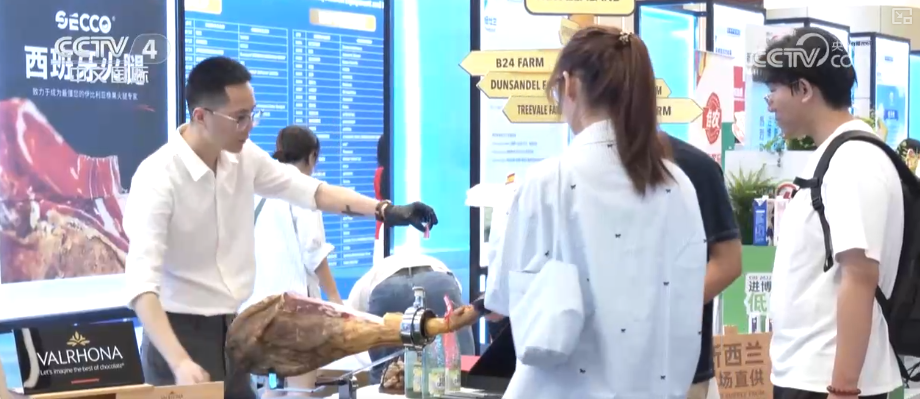
Group 1 - The upcoming 8th China International Import Expo (CIIE) is set to take place in November, with a focus on expanding imports and meeting domestic consumption demands [1] - Over 60 food exhibitors showcased their products at a pre-expo supply and demand matching event, aiming to capture more sales opportunities [1] - A New Zealand dairy company has significantly increased its market share in China by continuously introducing new products, with plans to launch three new products globally in China by 2025 [1] Group 2 - A fruit and vegetable company is both a contributor to and a beneficiary of China's consumption upgrade, launching products like Philippine black diamond pineapples and Mexican organic bananas in China [3] - The same company plans to introduce Costa Rican volcanic bananas and pineapples, as well as Peruvian organic blueberries in China by 2025 [6] - China's expanding international trade relationships are reflected in the increasing variety of imported fruits available, including coconuts from Thailand and kiwis from New Zealand [8] Group 3 - China is actively expanding imports from countries involved in the Belt and Road Initiative, signing 32 access documents for agricultural products in the first half of the year [11] - The initiative allows global companies and products to tap into the vast Chinese consumer market, stimulating new consumption vitality [11]