红提

Search documents
洪九果品退市启示:水果分销商死于现金流
Jing Ji Guan Cha Wang· 2026-01-04 08:40
Core Viewpoint - Hongjiu Fruit, known as the "first fruit stock," officially delisted from H-shares on December 30, 2025, less than four years after its IPO, due to multiple crises including financial reporting issues, executive investigations, and pressure from its business model [1][2]. Company Overview - Established in 2002, Hongjiu Fruit focuses on high-end imported and high-quality domestic fruits, with a product range that includes Thai longan, mangosteen, durian, Vietnamese dragon fruit, Chilean cherries, and domestic varieties like yellow peaches and kiwis [2]. - The company completed several rounds of financing from 2016 to 2020, including investments from Alibaba, and went public on September 5, 2022, with an IPO price of HKD 40 per share, achieving a market capitalization of nearly HKD 19 billion on its first trading day [2]. Financial Performance - In 2022, Hongjiu Fruit reported annual revenue of CNY 15.081 billion, a year-on-year increase of 46.7%, and a net profit of CNY 1.452 billion, up 397.95% [2]. - By the first three quarters of 2023, the company generated approximately CNY 13.427 billion in revenue, reflecting a year-on-year growth of 26.4% [5]. Delisting Process - The delisting process began when Hongjiu Fruit failed to publish its 2023 annual results and 2024 interim results, leading to a suspension of trading on March 20, 2024 [3]. - The Hong Kong Stock Exchange's listing committee decided to cancel its listing status on October 3, 2025, after the company could not meet the resumption guidelines [3]. Audit Concerns - KPMG raised concerns regarding the company's prepayment balance of approximately CNY 4.47 billion as of the end of 2023, with CNY 3.42 billion paid to several new suppliers in Q4 2023, some of whom had registered capital below the prepayment amount [4]. Executive Investigations - Several executives, including the chairman and board members, were investigated for loan fraud and issuing false VAT invoices, leading to restrictions on the company's operations [6]. - As of May 20, 2025, some executives remained detained, while others were allowed to continue participating in company operations [6]. Business Model Challenges - The company's business model, characterized by high prepayments and long accounts receivable periods, has created significant cash flow pressures [8]. - The traditional B2B distribution model requires intermediaries to prepay for goods while waiting for downstream payments, which can lead to cash flow issues [8]. Industry Competition - The fruit distribution industry is facing increasing competition, with a shift towards "direct sourcing and direct shipping" models that compress intermediaries, leading to declining prices for high-end fruits [9]. - Competitors like Baiguoyuan have also faced challenges, with a reported revenue decline of 9.8% in 2024 and significant store closures [9]. - The high-end fruit market is undergoing significant changes, with prices for premium fruits like durian and cherries decreasing by an average of 15% annually from 2020 to 2025, and domestic fruit replacement rates rising to 60% [9].
组织向下扎根 产业拔节生长(前沿观察·农村党建调研行)
Ren Min Ri Bao· 2025-12-08 22:10
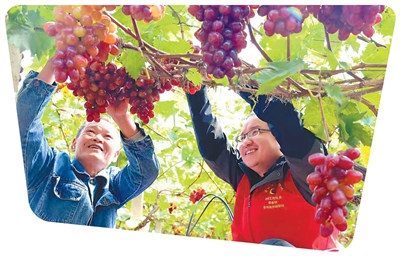
Core Insights - The article highlights the successful transformation of impoverished villages in Guangxi, China, through effective party organization and community collaboration, leading to significant economic growth and improved livelihoods for local farmers [5][11]. Group 1: Economic Development through Agriculture - The collective economic income of Xintian Village exceeded 100,000 yuan in just a few years due to targeted initiatives by the local party organization [5]. - The establishment of the Wanfeng Cooperative in Jiantang Town organized over 120 scattered farmers into a cohesive unit, enhancing productivity and profitability in grape farming [7]. - The introduction of high-quality varieties and standardized management practices has significantly improved grape quality, leading to increased sales through e-commerce platforms [7][11]. Group 2: Community Empowerment and Training - Over 500 local leaders have been trained in the past five years, with more than 100 new party members developed among them, fostering a culture of mutual support and knowledge sharing [11]. - The implementation of a "party organization + cooperative + base" model has facilitated the integration of resources and expertise, resulting in better agricultural practices and higher yields [7][8]. Group 3: Infrastructure and Support Services - The "enterprise whistle-blowing" mechanism has been effective in addressing challenges faced by local businesses, such as land and utility issues, thereby supporting their growth [12]. - The establishment of a 1.7 million mu rice-fish co-culture base has been a significant step in enhancing local economic development and providing employment opportunities [12]. Group 4: Diversification and Market Expansion - The integration of tourism and agriculture has created new revenue streams for farmers, with initiatives like grape picking tours and product markets attracting visitors [13]. - The county has seen a surge in online sales, with over 3.2 billion yuan in transactions in the first half of the year, showcasing the effectiveness of e-commerce in promoting local products [13].

广西资源:粤桂协作“云”赶集 大山好物跨山行
Zhong Guo Jin Rong Xin Xi Wang· 2025-08-10 06:54
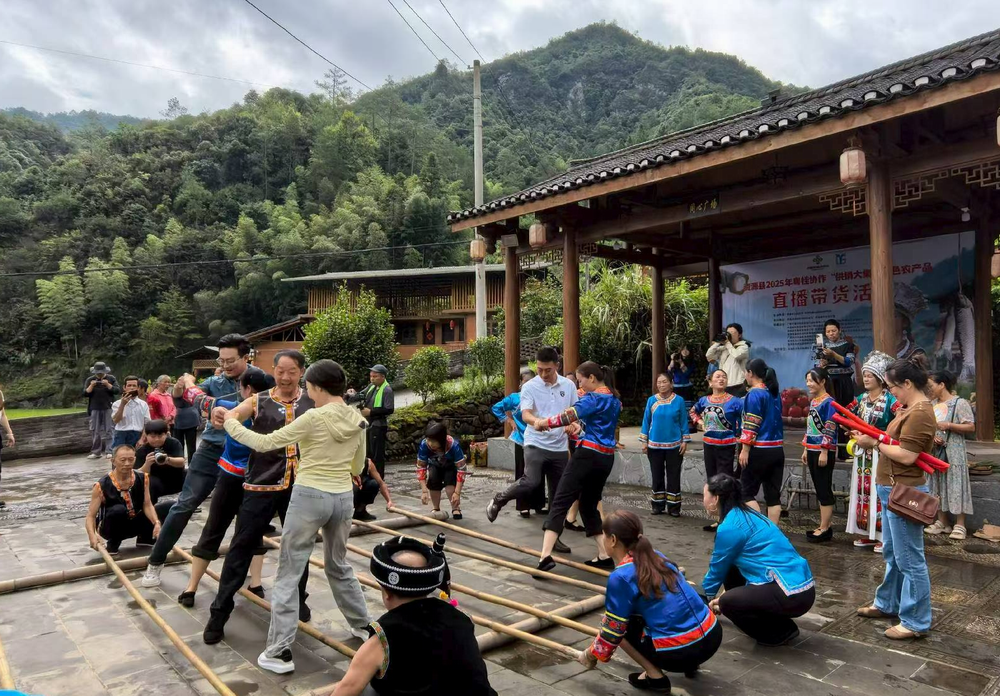
Core Viewpoint - The event held in Guangxi's Resource County aimed to promote local agricultural products through live streaming and cultural activities, enhancing brand awareness and sales channels for unique products [1][4]. Group 1: Event Overview - The "Supply and Marketing Fair" live streaming event took place on August 8, 2025, in the Shishandi Scenic Area, showcasing Resource County's specialty agricultural products [1]. - Local officials, including the Deputy Secretary of the Resource County Committee, participated in endorsing the products, while local village hosts provided detailed product introductions through online presentations [1]. Group 2: Cultural Activities - The event featured traditional ethnic minority performances, including the bamboo pole dance, which engaged both local residents and tourists, highlighting the cultural richness of the region [1][5]. Group 3: Sales and Partnerships - Following the event, a shipment of agricultural products worth 30,000 yuan (approximately 4,500 USD) and weighing 5 tons was sent directly to Shenzhen [4]. - A procurement agreement worth 10 million yuan (approximately 1.5 million USD) was signed between Shenzhen's Kaiwei Yuan Catering Group and local agricultural companies, facilitating the entry of Resource County's quality products into the Greater Bay Area [4]. Group 4: Future Plans - Resource County plans to continue leveraging the "Supply and Marketing Fair + Live Streaming" model to expand sales channels for local products, with a focus on training and supporting local "new farmers" [7]. - The county aims to innovate in live streaming formats and content, contributing to the sales of local specialty products and the rural revitalization initiative [7].