
跨境收款服务

Search documents
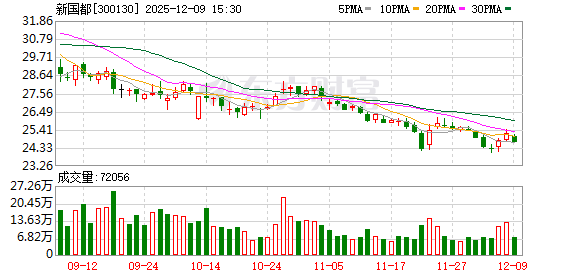
【看新股】新国都港股 IPO:聚焦支付科技生态,营收下滑盈利波动
Xin Hua Cai Jing· 2025-12-10 00:11
Core Viewpoint - New Guodu is planning to list on the Hong Kong Stock Exchange to expand its overseas payment market and increase investment in technology research and development [2][3] Group 1: Financial Performance - The company has experienced a continuous decline in revenue, with a 3.2% year-on-year decrease in the first half of 2025, and a net profit drop of 38.7% [2][8] - Revenue decreased from 43.15 billion RMB in 2022 to 31.46 billion RMB in 2024, with a significant 17% year-on-year decline in 2024 [8] - The gross profit margin fell from 38.6% in 2024 to 33.7% in the first half of 2025, with a notable drop in the gross margin of core acquiring and value-added services from 37.7% to 27.0% [8] Group 2: Business Structure and Product Diversification - The company has shifted its business structure, with the revenue share of electronic payment products increasing from 22.8% in 2022 to 35.2% in the first half of 2025, while the share of acquiring and value-added services decreased from 70.9% to 61.9% [4][5] - New Guodu offers a diversified range of payment products and services, including payment terminals, domestic and international acquiring, cross-border payment services, and various value-added services [4] Group 3: Market Expansion and Strategy - The company aims to expand its overseas market presence, with overseas revenue accounting for 35.6% in the first half of 2025, facilitated by obtaining licenses in Luxembourg and Hong Kong [7] - The funds raised from the IPO will be used to establish localized sales and operational networks, enhance independent research and innovation capabilities, and promote the intelligent transformation of its production system [13] Group 4: Shareholder Structure and Market Capitalization - New Guodu has a market capitalization exceeding 140 billion RMB and has maintained a consistent dividend payout since its listing in 2010, totaling over 1.3 billion RMB in dividends [10] - The founder, Liu Xiang, is the largest shareholder with a 24.32% stake, followed by family members [10]


跨境电商换轨,卖家走向精细化运营
2 1 Shi Ji Jing Ji Bao Dao· 2025-08-19 11:08
Core Insights - Cross-border e-commerce sellers are transitioning from a supplier role to independent brand operators, focusing on high-value, consumer-centric niche categories [1][3] - The scale of China's cross-border e-commerce industry has expanded nearly 50% over the past five years, with a projected import and export value of approximately 2.71 trillion yuan in 2024, reflecting a 14% year-on-year growth [1][2] - Small and medium-sized enterprises (SMEs) dominate the cross-border e-commerce landscape, with over half of the sellers earning less than $3 million annually [2][3] Market Trends - Interest-based e-commerce and digital products are emerging as significant growth areas, with digital product transaction volumes for SMEs increasing over 140% year-on-year [3][4] - The primary markets for Chinese cross-border e-commerce are North America and Western Europe, which together account for 49% of exports, while Southeast Asia shows strong demand for beauty and maternal products [2][6] Challenges and Opportunities - Sellers are increasingly aware of brand value and are building independent channels, with 81% of U.S. sellers planning to explore emerging markets [6][7] - The Southeast Asian e-commerce market is projected to grow from $184 billion in 2024 to $410 billion by 2030, with a compound annual growth rate of 14% [6][7] - High return rates and compliance risks are common challenges, with overseas buyers expecting high service standards and transparency in logistics [7][8] Strategic Initiatives - PayPal is enhancing its services for Chinese SMEs, including a "4-hour" cross-border payment solution to improve cash flow efficiency [4][6] - Localized strategies are essential for market entry, such as adapting to local languages and payment preferences in regions like Southeast Asia and Germany [6][7]