路灯充电桩

Search documents
微软下架「炉石」等多款游戏;华为云:华为算力效能超英伟达芯片 3 倍;马斯克回应特斯拉机器人打拳:并非遥控 | 极客早知道
Sou Hu Cai Jing· 2025-10-05 10:23
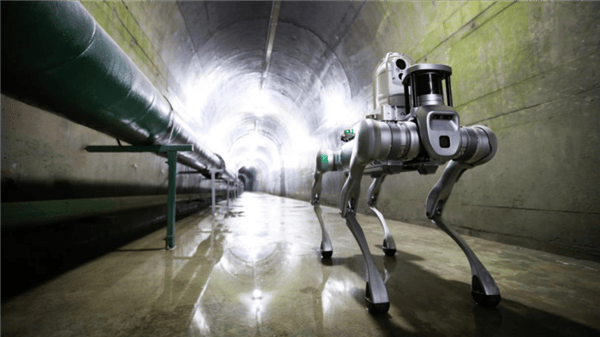
Group 1 - Microsoft has urgently removed multiple games, including "Hearthstone," due to a security vulnerability in the Unity game engine affecting versions 2017.1 and above [1] - Unity has not found any instances of the vulnerability being exploited, and no users have been affected, but developers are advised to update their games and applications immediately [1] Group 2 - The Three Gorges Group announced that the Xiluodu Hydropower Station, the world's fourth-largest and China's third-largest, has achieved full coverage of robotic corridor inspections [3] - The hydropower station is located on the Jinsha River and features a complex underground chamber system, with inspection previously taking two employees two days to complete [3] - Since 2021, the station has been developing unmanned inspection technology, now utilizing four rail-type, three crawler-type, and one quadruped inspection robot [3] Group 3 - Fujitsu announced an expansion of its strategic partnership with NVIDIA to build an integrated AI infrastructure aimed at enhancing enterprise competitiveness [4] - The collaboration will focus on developing industry-specific AI platforms for healthcare, manufacturing, and robotics, integrating Fujitsu's CPU series with NVIDIA's AI computing infrastructure [4] Group 4 - Huawei's cloud services have reportedly achieved three times the computing efficiency of NVIDIA's H20 chip, emphasizing the importance of quality computing results over chip manufacturing processes [4] - Huawei's Ascend cloud services support various third-party models, aiming to enhance performance across all large models [5] Group 5 - Elon Musk confirmed that Tesla's humanoid robot, Optimus, is AI-driven rather than remote-controlled, showcasing its capabilities in a recent video [7] - Tesla's Full Self-Driving (FSD) version 14 has been delayed again due to a last-minute bug, marking the second postponement for this version [7] - The FSD version 14 will not be available for Tesla vehicles equipped with HW3 hardware, which will remain on version 12.6.4 [7] Group 6 - OpenAI has reached a valuation of $500 billion, surpassing SpaceX and becoming the most valuable private company globally, following a recent employee stock transfer transaction [8] - This valuation reflects the strong market interest in the AI sector, with significant investments from firms like SoftBank [8] Group 7 - OpenAI plans to monetize its new AI video generation application, Sora, by allowing copyright holders to control character usage and share in the generated revenue [9] - The application is currently available only in the U.S. and Canada, with a video length limit of 10 seconds, and has already sparked controversy among major film companies regarding copyright policies [9] Group 8 - Zeekr has unveiled the interior of its revamped Zeekr 001, featuring luxury elements typically found in high-end vehicles, such as a "starry sky" ceiling and advanced driver assistance systems [11] - The vehicle supports rapid charging technology, allowing for a significant charge in just seven minutes, comparable to refueling a gasoline vehicle [11] Group 9 - HP has launched the ZGX Nano G1n AI workstation, designed for AI development, featuring compact dimensions and advanced specifications, including NVIDIA's Grace Blackwell chip [13] - The workstation supports high-speed connectivity and runs on NVIDIA's DGX OS, equipped with tools for model evaluation and local model services [13] Group 10 - A research team from Pennsylvania State University has proposed converting streetlights into electric vehicle charging stations, demonstrating lower costs and environmental benefits compared to traditional charging stations [14][15] - The pilot project in Kansas City showed that utilizing existing electrical infrastructure for charging is more efficient and faster than commercial charging stations [15]




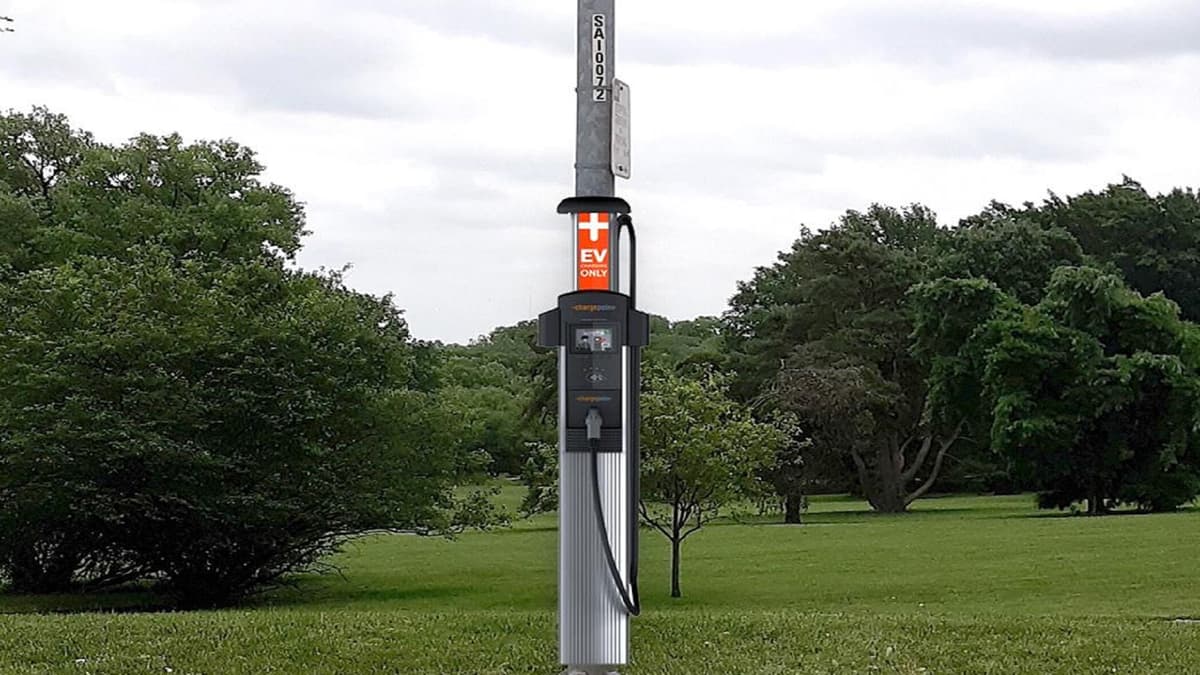
美国团队将路灯改造成电动汽车充电桩,成本远低于商业用桩且更环保
Xin Lang Cai Jing· 2025-10-05 00:53
Core Insights - Electric vehicles are seen as a solution to reduce costs and emissions, but urban residents face significant challenges due to insufficient charging infrastructure, particularly those living in apartments without garages [1][2] - A research team from Pennsylvania State University has proposed converting ordinary streetlights into electric vehicle charging stations as a practical solution [1][3] Group 1: Project Implementation - The team conducted a pilot project in Kansas City, Missouri, modifying 23 streetlights, which proved to be more cost-effective, environmentally friendly, and convenient compared to traditional charging stations [2][3] - The project is supported by the U.S. Department of Energy and involves collaboration with the Kansas City government, energy agencies, and the National Renewable Energy Laboratory [2][3] Group 2: Scalability and Accessibility - The core goal of the project is scalability, aiming for the system to be effective not just in one city but to be rapidly adopted across communities nationwide to promote electric vehicle adoption [4] - The research team emphasized fairness, ensuring that different communities can equally benefit from this infrastructure [6] Group 3: Technical Advantages - The demand forecasting considered land use, traffic flow, and surrounding facilities, utilizing AI for modeling, which enhances the project's effectiveness [6] - The pilot streetlight charging stations demonstrated advantages such as lower installation costs due to existing electrical infrastructure and faster charging speeds compared to commercial charging stations [6] Group 4: Environmental Impact - The model contributes to environmental benefits by allowing vehicles to charge while parked on the street, reducing gasoline consumption and greenhouse gas emissions [6] - The research team plans to further optimize the model by incorporating socioeconomic data and weather factors to improve forecasting and promotion [6] Group 5: Publication - The research findings have been published in the journal "Urban Planning and Development" [7]
2025从实验室到真实场景:以创新融资生态推动气候技术初创企业的“关键突
Sou Hu Cai Jing· 2025-09-05 06:14
Core Insights - The report focuses on the "critical breakthrough" phase for climate tech startups, emphasizing the need for innovative financing ecosystems to support their transition from laboratory to commercialization [1][2] - Climate technology is essential for achieving climate goals, with startups playing a crucial role in deploying cutting-edge low-carbon technologies [1][2] - There is a significant gap in the number and scale of climate tech companies globally and in China, with a need to cultivate numerous unicorns and decacorns by 2030 [1][2] Group 1: Challenges in Financing - Global macroeconomic headwinds have led to a 40% decline in climate sector investments in 2023, with a preference for light-asset projects over heavy-asset climate technologies [2][34] - The characteristics of climate technology, such as high upfront investment, long cycles, and low returns, make it difficult to attract traditional investors [2][34] - In China, structural barriers exist, including a lack of effective policy coverage for early-stage startups and a disconnect between existing policies and the needs of these companies [2][49] Group 2: Proposed Solutions - Short-term solutions (1-3 years) include improving fiscal mechanisms, innovating financial tools, and enhancing the role of corporate venture capital (CVC) [2][14] - Long-term solutions (3-10 years) focus on developing impact capital, establishing unified technology assessment standards, and creating a systematic support ecosystem [2][14] - Collaboration among policymakers, investors, and enterprises is essential to build a resilient financing ecosystem that helps climate tech startups overcome the "critical breakthrough" phase [2][14]