气候科技

Search documents
英国宣布与沙特达成64亿英镑一揽子贸易投资协议
Shang Wu Bu Wang Zhan· 2025-11-13 03:15
Group 1 - The UK Treasury Secretary, Reeves, led the largest-ever business delegation to Saudi Arabia, resulting in a £6.4 billion trade and investment agreement [1] - The agreement aims to deepen trade and investment cooperation between the UK and Gulf countries, emphasizing a modern economic alliance for the next decade [1] - Reeves highlighted the importance of collaboration with trusted partners amidst a challenging global economic landscape [1] Group 2 - The agreement includes up to £5 billion in financing support from the UK Export Finance (UKEF) for Saudi projects, facilitating procurement from UK companies [2] - Saudi cybersecurity company Cipher will invest £37 million to establish its European headquarters in London [2] - Saudi investors and a consortium will invest £75 million in the UK digital bank Vemi [2] - The UK-Bahrain joint venture investment company Aberdeen Investcorp will advance infrastructure investments in the Gulf region [2] - UK climate tech company Levidian will collaborate with UAE energy firm Kanoo Energy on regional decarbonization projects [2] - The Saudi entertainment project Six Flags Qiddiya City will award over £90 million in contracts to UK exporters with UKEF support [2] - Barclays will establish a regional headquarters in Riyadh, while HSBC Saudi Arabia will relocate to the King Abdullah Financial District [2] - Riyadh Air launched a new route from Riyadh to London on October 26 [2] - The University of Strathclyde became the first European university to establish a physical campus at Princess Nourah bint Abdulrahman University in Saudi Arabia [2] - UK data and AI company Quantexa will introduce the "Quantexa AI Decision Intelligence Platform" to the Gulf region [2] - The launch of the "Saudi–British Women's Network" project aims to promote collaboration and exchange between women from both countries [2]
气候科技投资成为新风口 专家:中国领跑全球气候科技投资
Zheng Quan Shi Bao Wang· 2025-11-09 06:29
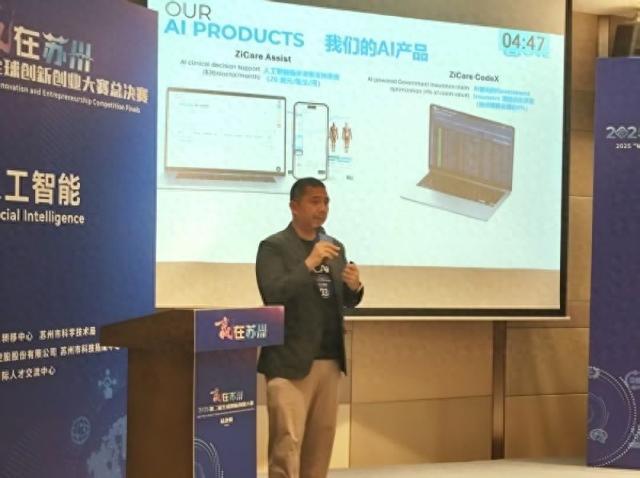
Group 1 - Climate technology investment has evolved from a niche environmental theme to a mainstream investment sector, becoming the second fastest-growing area after high technology, with over 800 specific technology tracks across 60+ industries [1] - Asia contributes 40% to the growth of climate technology investment, with China emerging as a core engine of green economic growth due to its manufacturing advantages in climate and green technologies [1] - As of mid-2023, global climate technology investment reached $205 billion, with a year-on-year growth rate of approximately 7%, positioning China as a leader in this field [1] Group 2 - The investment landscape in climate technology includes five main types of investors: broad climate investment funds, thematic funds focused on specific areas like carbon capture, impact investment funds, deep technology investment funds, and traditional general partners exploring climate investments [1] - The global landscape is undergoing profound changes, with sustainable development becoming a common pursuit, and new productive forces driving industrial upgrades [2] - Wuxi has established itself as a testing ground for the integration of capital, industry, and sustainable development, focusing on future industries such as carbon neutrality, hydrogen energy, and energy storage [2][3]
汇聚全球顶级LP!「2025亚太母基金财富论坛」第二批重磅嘉宾名单揭晓
FOFWEEKLY· 2025-10-17 04:01
Group 1 - The article highlights the shift in the global economic landscape, emphasizing the increasing strategic positioning of foreign capital in China, with many international institutions raising their growth forecasts for the Chinese economy [1] - There has been a significant rebound in private equity merger and acquisition activities in the Asia-Pacific region since 2024, indicating a potential surge in transaction activity in 2025, driven by corporate investors [1] - Long-term capital from sovereign wealth funds in the Middle East and family offices in Southeast Asia is increasingly investing in key sectors in China, such as technology manufacturing, energy transition, and consumption upgrades [1] Group 2 - The Asia Pacific Fortune Forum 2025 (APFOF 2025) will be held in Sydney, Australia, from November 12 to 14, focusing on enhancing economic cooperation in the Asia-Pacific region and promoting efficient global capital flow [2] - The forum will gather over 500 foreign LPs, global business and political leaders, and quality innovative projects from various regions, including Australia, the US, Europe, and Asia [2] Group 3 - The confirmed attendees include prominent figures such as the Australian Federal Minister for Justice, the head of the Australian Trade Commission, and investment directors from major financial institutions, indicating a high-profile gathering [9][10][12] - The forum will cover various sectors, including healthcare, technology, clean energy, and agriculture, showcasing innovative companies and investment opportunities [41][49][59] Group 4 - The event is organized by APFOF and co-organized by FOFWEEKLY and Shiny Fund, which focus on private equity and fund management, aiming to create a bridge for global capital markets [67][68] - The forum will feature a limited number of VIP attendees, with specific pricing for participation, indicating an exclusive networking opportunity [70][72]


2025从实验室到真实场景:以创新融资生态推动气候技术初创企业的“关键突
Sou Hu Cai Jing· 2025-09-05 06:14
Core Insights - The report focuses on the "critical breakthrough" phase for climate tech startups, emphasizing the need for innovative financing ecosystems to support their transition from laboratory to commercialization [1][2] - Climate technology is essential for achieving climate goals, with startups playing a crucial role in deploying cutting-edge low-carbon technologies [1][2] - There is a significant gap in the number and scale of climate tech companies globally and in China, with a need to cultivate numerous unicorns and decacorns by 2030 [1][2] Group 1: Challenges in Financing - Global macroeconomic headwinds have led to a 40% decline in climate sector investments in 2023, with a preference for light-asset projects over heavy-asset climate technologies [2][34] - The characteristics of climate technology, such as high upfront investment, long cycles, and low returns, make it difficult to attract traditional investors [2][34] - In China, structural barriers exist, including a lack of effective policy coverage for early-stage startups and a disconnect between existing policies and the needs of these companies [2][49] Group 2: Proposed Solutions - Short-term solutions (1-3 years) include improving fiscal mechanisms, innovating financial tools, and enhancing the role of corporate venture capital (CVC) [2][14] - Long-term solutions (3-10 years) focus on developing impact capital, establishing unified technology assessment standards, and creating a systematic support ecosystem [2][14] - Collaboration among policymakers, investors, and enterprises is essential to build a resilient financing ecosystem that helps climate tech startups overcome the "critical breakthrough" phase [2][14]

特朗普2.0政策冲击,欧洲资本加码国防和AI等领域
Feng Huang Wang· 2025-08-19 22:53
Group 1: European Tech Ecosystem Transformation - The second term of President Trump is inadvertently revitalizing the European tech ecosystem, driven by protectionist U.S. economic policies and unreliable support for Ukraine, leading to increased investment in European defense startups [1] - European investors and entrepreneurs are embracing "technological sovereignty," focusing on key areas such as artificial intelligence (AI) and climate technology, with a shift in funding priorities towards strengthening critical technologies in Europe [1][2] Group 2: Defense Technology Investment Surge - Defense technology has become a core focus for investors globally, particularly in Europe, with European defense startups raising a record $2.4 billion last year and $2.11 billion so far this year [2] - The uncertainty surrounding the Trump administration's stance on Ukraine and NATO has prompted Europe to seek military and economic independence, inspiring a new generation of entrepreneurs to engage in essential sectors like energy and defense [3] Group 3: Shift in Investment Philosophy - Historically, defense technology financing was limited due to ESG (Environmental, Social, and Governance) restrictions, but this is changing as limited partners (LPs) are removing these constraints to allow more freedom in investing in defense-related technologies [3] - European government leaders, including President Macron and Prime Minister Starmer, are committing billions to national AI projects, emphasizing "AI sovereignty" amid rising trade tensions with the U.S. [4][5] Group 4: Climate Technology Opportunities - The reduction of funding for clean energy projects in the U.S. is driving many climate tech startups to look towards Europe as a haven for innovation and government support [6] - European entrepreneurs and venture capitalists are seizing a "historic opportunity" to establish a coherent identity and strategy in global tech competition, positioning Europe as a refuge for technology, science, and progress [6]
“我们希望把中国的科技带去印尼”!印尼龙头企业来华参赛借机寻找合作者|外资看中国
Hua Xia Shi Bao· 2025-07-11 10:31
Core Viewpoint - Indonesian companies Zi.Care and GreenTeams are seeking partnerships with top Chinese innovative enterprises to facilitate their entry into the Indonesian market, highlighting the potential for collaboration between Chinese technology and local industries [2][3][4]. Group 1: Company Overview - Zi.Care is a leading health technology company in Indonesia, providing the only AI-driven electronic medical record system that meets Level 7 standards, having processed over 8 million patient records [3]. - GreenTeams is the largest climate technology company in Indonesia, specializing in air quality monitoring and offering end-to-end solutions, including hardware and AI-driven software [4]. Group 2: Market Opportunities - Indonesia, as Southeast Asia's largest economy with a population of approximately 281 million, presents significant opportunities for Chinese companies, especially in sectors where local products are often more expensive due to Western monopolies [5][6]. - The acceptance of Chinese products in Indonesia is gradually increasing, particularly due to their competitive pricing compared to Western brands, which can be significantly higher [6]. Group 3: Strategic Partnerships - Both Zi.Care and GreenTeams emphasize the importance of strong government relationships in Indonesia, which can serve as a differentiating advantage in navigating local regulations and policies [3][4]. - Collaborating with local companies like Zi.Care and GreenTeams can provide Chinese hardware and software providers with a bridge to enter the Indonesian market more effectively [6]. Group 4: Economic Context - Indonesia's GDP is projected to reach $1.37 trillion in 2024, with a year-on-year growth of 5.03%, indicating a robust economic environment for potential investments [5]. - The bilateral trade between China and Indonesia is substantial, reaching $147.8 billion in 2024, primarily focused on infrastructure, minerals, and machinery [5]. Group 5: Event Context - The 2025 "Win in Suzhou" Global Innovation and Entrepreneurship Competition serves as a platform for international projects, including those from Indonesia, to seek investment and partnerships [7].