车路云一体化应用

Search documents
车路云“基础设施分级”标准拟上半年发布、多地集中披露新进展
Xin Lang Cai Jing· 2026-01-21 10:25
Core Insights - The "Vehicle-Road-Cloud Integration" pilot projects and related standardization efforts are accelerating across multiple regions in China as they approach 2026 [1][3][6] Group 1: Standardization and Policy Initiatives - A formal standard document titled "Technical Requirements for Graded Intelligent Roadside Infrastructure (Urban Roads)" is expected to be released in the first half of this year, aiming to unify infrastructure grading across pilot cities [3][8] - Various regions, including Sichuan and Qingdao, are emphasizing the advancement of "Vehicle-Road-Cloud Integration" initiatives to expedite their transition to large-scale commercial applications [3][8] Group 2: Project Developments - The Jinan Public Resources Trading Center has announced a public tender for the "Vehicle-Road-Cloud Integration" pilot project, with a budget of approximately 93.93 million yuan, covering intelligent roadside infrastructure and city-level service management platforms [4][9] - Other provinces such as Guangdong, Hubei, and Zhejiang have also reported recent advancements in "Vehicle-Road-Cloud Integration" pilot projects [4][10] Group 3: Progress and Achievements - China has established 17 national-level testing demonstration zones, issued over 10,300 testing demonstration licenses, and accumulated testing mileage exceeding 200 million kilometers [4][10] - The country has built 7 vehicle networking pilot areas and 16 dual-intelligence pilot cities, supporting 20 cities in "Vehicle-Road-Cloud Integration" applications, with over 35,000 kilometers of testing roads opened and more than 11,000 intelligent roadside units deployed [4][10] Group 4: Competitive Landscape - While foreign entities hold significant advantages in foundational algorithms, high-end chips, and single-vehicle intelligence, China possesses unique strengths in application algorithm iteration, industrialization speed, and comprehensive industry chain integrity in the context of "Vehicle-Road-Cloud Integration" [5][10]


在线统一挂号、车路云一体化——数字经济标杆应用正改变百姓生活
Xin Hua Wang· 2025-07-05 23:58
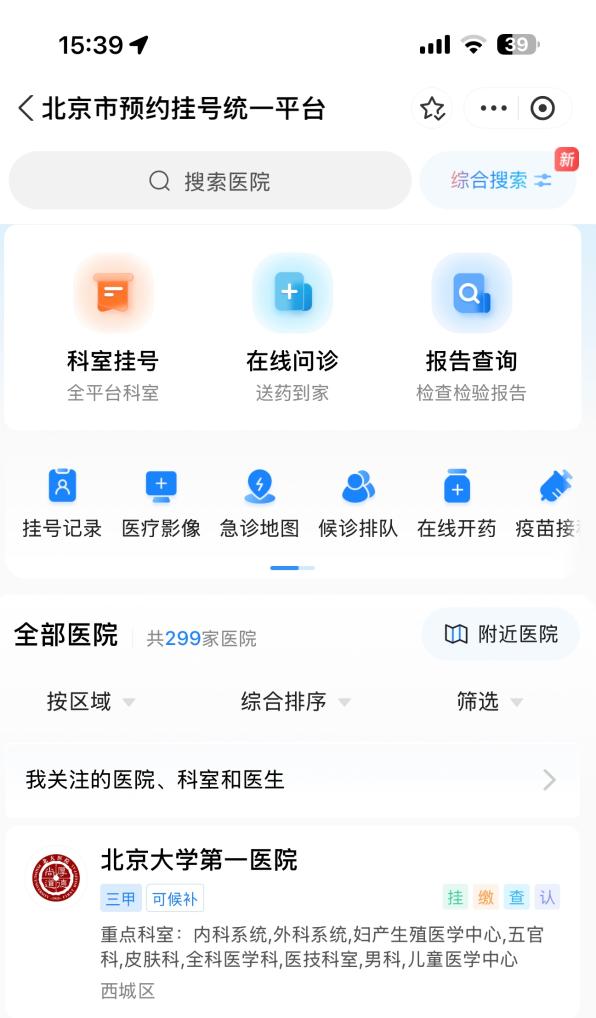
Core Insights - The article highlights the transformation of healthcare and transportation services in Beijing through digital technology, improving user experience and operational efficiency [1][4]. Healthcare Sector - The Beijing appointment registration platform allows users to easily book appointments at 299 hospitals, check imaging reports online, and conduct follow-up consultations [1]. - Since its launch, the platform has served over 20 million users and provided 150 million outpatient services, with a 25% increase in primary care visits and a 20% reduction in idle appointment slots [4]. - The implementation of an AI model to combat scalping has led to the banning of 70,000 accounts, a 10% decrease in patient complaints, and a satisfaction rate exceeding 95% [4]. Transportation Sector - The article describes the integration of autonomous vehicles in Beijing's demonstration area, supported by a "vehicle-road-cloud" application that enhances the safety and efficiency of transportation [4]. - Smart traffic lights equipped with sensors can adjust their timing based on real-time traffic data, optimizing traffic flow and increasing vehicle speed [5]. - Over 1,000 smart intersections exist in the demonstration area, with the information control platform optimizing traffic light timing up to 35,000 times daily, resulting in improved road capacity [5]. Recognition and Future Outlook - Both the healthcare appointment platform and the vehicle-road-cloud application were recognized as "Top Ten Benchmark Applications" at the 2025 Global Digital Economy Conference, emphasizing their technological leadership and human-centered approach [5].