
车载传感器

Search documents
四方光电:嘉善产业园产能利用率处于良好水平
Zheng Quan Ri Bao Wang· 2026-02-12 13:12
Core Viewpoint - The company has completed the capacity layout of its Jiashan Industrial Park and is currently in a stable operational phase, with capital expenditures executed as planned [1] Group 1: Production Capacity and Operations - The Jiashan Industrial Park is primarily responsible for the production of key products such as automotive sensors, refrigerant leak monitoring sensors, and ultrasonic gas meters [1] - The capacity utilization rate is at a good level, effectively supporting order delivery for related businesses [1] Group 2: Future Strategies - The company plans to continue leveraging lean production, process optimization, and efficiency improvements to enhance the manufacturing advantages of the Jiashan base [1] - These measures are aimed at supporting overall cost reduction and efficiency enhancement, as well as stable customer delivery by 2026 [1]

实益达获高新技术企业认证,股价震荡与板块持平
Jing Ji Guan Cha Wang· 2026-02-12 04:53
Group 1 - The core point of the article is that Shiyida's subsidiary, Shenzhen Shiyida Intelligent Technology Co., Ltd., has obtained a high-tech enterprise certificate, which will allow the company to enjoy a 15% corporate income tax rate for the next three years, positively impacting long-term development [1] - The company indicated that this certification will not have a significant impact on the 2025 performance forecast [1] - Investors have suggested that the company expand into semiconductor packaging equipment, automotive sensors, and AI hardware to address competitive pressures in the automotive electronics sector [1] Group 2 - In the past week, Shiyida's stock price fluctuated between a decrease of 0.42% and a volatility of 5.97% [2] - The closing price on February 11 was 9.51 yuan, a slight decrease from 9.60 yuan on February 5, with a trend of shrinking trading volume [2] - The technical analysis indicates that the stock price is in a consolidation phase, with short-term performance aligning with the electronic sector [2]

中国汽车配件出口水涨船高
Zhong Guo Qi Che Bao Wang· 2026-02-09 07:59
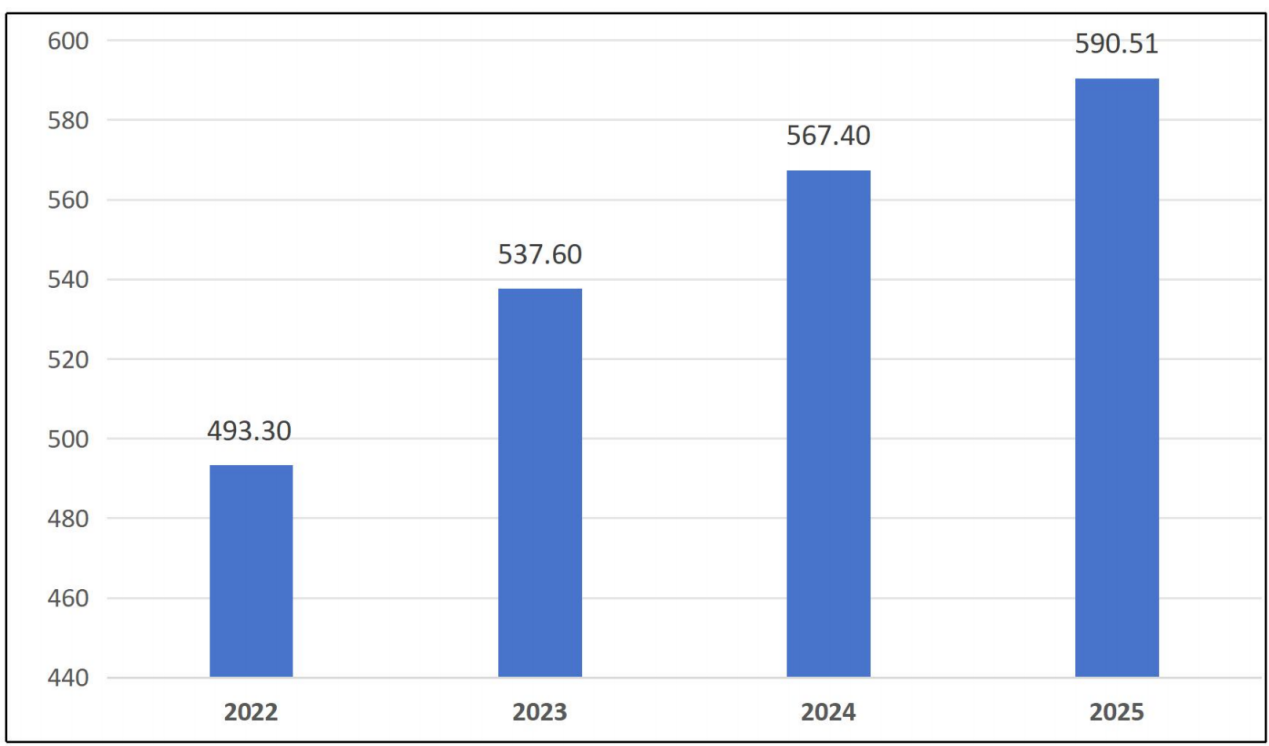
Core Insights - China has become the world's largest automobile exporter for three consecutive years, with a significant increase in auto parts exports driven by complete vehicle exports [1][2] - By 2025, China's total auto parts export is projected to reach $59.051 billion, marking a year-on-year growth of 4.07% [2] - The export structure is characterized by a "three-horsepower" model, with auto parts, complete vehicles, and home appliances contributing equally to China's manufacturing exports [2] Export Growth and Market Dynamics - The total export value of auto parts is expected to rise from $49.33 billion in 2022 to $59.051 billion in 2025, with a notable increase in categories such as body parts, braking systems, and wheel systems [2] - Emerging markets like Russia, Mexico, Malaysia, and Southeast Asian countries are becoming key growth areas, with significant increases in exports to these regions [1][6][7][8] Competitive Advantages - China's auto parts industry benefits from scale effects in major industrial clusters like the Yangtze River Delta and Pearl River Delta, with a 40% reduction in mold development cycles compared to international peers [2] - The resilience of the supply chain has improved, with overseas warehouse networks covering 52 countries and a localization rate of over 90% for key components [2] Globalization and Strategic Investments - Leading companies are accelerating their global expansion by investing in factories in Mexico to leverage its position as a North American supply chain hub, thereby avoiding trade barriers [3] - By 2025, engine components are expected to account for 29% of China's auto parts exports to Mexico [3] Emerging Market Characteristics - Russia's auto parts imports involve around 1,000 buyers and 2,000 suppliers, with a transaction volume of approximately $600 million in 2025 [6] - Mexico's auto parts imports are projected to involve 2,000 buyers and 5,000 suppliers, with a transaction volume of about $10.93 billion [7] - Malaysia's auto parts imports are expected to involve 8,000 buyers and suppliers, with a transaction volume of around $3.91 billion [8] High-Value Product Trends - The report anticipates that global electric vehicle sales will exceed 25 million units by 2025, driving the market for core electric vehicle components to $180 billion [13] - The demand for maintenance parts in markets like Russia and Malaysia is projected to account for 40% of the total, providing significant growth opportunities for China's economical parts exports [13] E-commerce Growth - Cross-border e-commerce is emerging as a new growth point for auto parts exports, with online penetration in the European and American markets increasing from 6%-7% to over 10% post-pandemic [13][14] - The shift towards high-value electric vehicle components is becoming a priority for Chinese companies to capture market opportunities [14]

专访中金公司彭虎:前沿科技积极落地,看好国产AI加速创新
Nan Fang Du Shi Bao· 2026-01-13 05:25
Group 1: Low Altitude Economy - The low altitude economy is driven by the increasing public safety governance needs and expectations for efficient social management, highlighted by recent low altitude safety incidents [3] - The number of registered drones in China reached 2.213 million by the end of 2024, a year-on-year increase of 74.7%, with 2.726 million registered by June 2025, amplifying potential risks to critical infrastructure [3] Group 2: Automotive Intelligence - The penetration rate of passenger cars equipped with L2 (including L2+) level ADAS reached 57.94% from January to September 2025, an increase of 28.54 percentage points compared to the entire year of 2022, with a peak monthly penetration rate of 62.05% in September 2025 [4] - The demand for higher-level autonomous driving increases the need for onboard perception and data processing capabilities, with the shipment of laser radars exceeding 1.84 million units in the first nine months of 2025, a year-on-year increase of 86%, achieving a penetration rate of 11.47% [5] Group 3: AI and Robotics - The AI sector is transitioning from a technology race to widespread implementation, becoming a core force in reshaping production and life, with a focus on building a modern infrastructure system [6] - The robot industry saw significant breakthroughs in 2025, with new products being tested across various sectors, leading to a surge in investment [7] - The demand for various sensors, main control processors, and high-end microcontrollers in robotics is expected to grow, driven by the need for high-precision environmental modeling and real-time intelligent decision-making [8]


数读CES 2026:全球科技巨头集结,中国军团强势突围
Mei Ri Jing Ji Xin Wen· 2026-01-07 09:09
Core Insights - The 2026 International Consumer Electronics Show (CES 2026) will take place from January 6 to 9, 2026, in Las Vegas, showcasing cutting-edge technology from thousands of global tech companies [2] - Chinese robotics companies are participating in unprecedented numbers, presenting a comprehensive landscape of domestic robotics industry, including key sensors, dexterous hands, computing platforms, and robot bodies [2] Exhibition Overview - CES 2026 will be held at the Las Vegas Convention Center (LVCC), spanning 12 official venues across three main campuses, each accommodating different themes and types of exhibitors [3] - The central and largest exhibition area includes multiple halls showcasing mainstream electronic products, major brand exhibits, autonomous driving, smart devices, and enterprise solutions [3] Key Themes and Trends - Six core battlefields identified at CES 2026 include: - AI + Smart Hardware: AI terminal devices, smart assistants, home robots, AI chips, multimodal applications, and AIGC + hardware integration [8] - Robotics: Home cleaning robots, food delivery robots, factory automation robots, and AI-driven humanoid robot concepts [8] - Electric Vehicles & Autonomous Driving: Smart cockpits, autonomous driving systems, lidar, new energy vehicles, and onboard sensors [8] - Smart Home & IoT: Home appliances, smart security, and family connectivity, with a focus on the popularization of the Matter protocol [8] - Digital Health: AI health monitoring, wearable medical devices, and aging technology [9] Participation Statistics - The participation of exhibitors from key countries highlights a concentration in ten main battlefields, with China leading in smart home applications (396 exhibitors), followed by the US (299), South Korea (65), and Japan (11) [10] - In AI, the US has 250 exhibitors, while China has 132, indicating a strong presence in this sector [10] - Robotics remains a significant highlight at CES, with Chinese companies showcasing their advancements in this field [10]

日韩企业加码布局中国汽车产业链,AI技术助力
Di Yi Cai Jing· 2025-11-06 14:45
Core Insights - China continues to attract Japanese and South Korean companies to invest in its automotive industry, particularly in electric vehicles, connected cars, and autonomous driving technologies [1][2] Group 1: Sony's Innovations - Sony showcased the world's first transparent connected vehicle warning system at the China International Import Expo, developed in collaboration with local universities [1][3] - The transparent warning system utilizes semantic transmission technology to provide a "transparent" visual experience, allowing drivers to see pedestrians or vehicles obscured by obstacles in real-time [3] - Sony's in-car audio business has seen a tenfold growth in China over the past five years, while its in-car sensor business has grown thirtyfold since entering the market in 2015 [4] Group 2: Other Companies' Contributions - Asahi Kasei presented innovative electrolyte technology for lithium iron phosphate batteries, which maintains stable performance in extreme temperatures and supports thicker electrode designs to enhance electric vehicle range [6] - Samsung displayed a smart cockpit featuring OLED displays and demonstrated autonomous driving solutions, with products already integrated into some Chinese new energy vehicle brands [6] Group 3: Future Prospects - Sony's in-car audio business is beginning to engage with autonomous shuttle companies, indicating a strategic move towards future mobility solutions [7] - Sony aims to increase the supply of "bare chips" in its sensor business to over 50% next year, addressing packaging capacity constraints [7]

汽车行业新动向:透视后市场趋势、发展挑战与未来展望
Sou Hu Cai Jing· 2025-10-26 20:11
Group 1 - The automotive aftermarket is experiencing unprecedented growth opportunities due to the continuous increase in vehicle ownership in the domestic market, with services such as maintenance, repair, modification, and insurance seeing explosive demand and a market size expanding at a double-digit annual rate [2] - There is a significant shift towards refined and specialized aftermarket services driven by consumers' heightened focus on vehicle lifecycle management [2] - Technological innovations are reshaping the industry landscape, with the integration of internet platforms and physical services enabling digital services like appointment scheduling and remote diagnostics [2] Group 2 - The application of big data analytics is enhancing supply chain management for auto parts, while AI diagnostic systems are significantly improving fault detection efficiency [2] - Environmental requirements are compelling industry upgrades, with the number of new energy vehicles surpassing ten million, leading to rapid development in emerging aftermarket sectors such as battery recycling and charging facility maintenance [2] - Traditional repair enterprises are adapting by establishing dedicated workstations for new energy vehicles and training professionals in three-electric system maintenance to meet market structural changes [2] Group 3 - Breakthroughs in intelligent driving technology are bringing revolutionary changes to safety, with the widespread adoption of Advanced Driver Assistance Systems (ADAS) leading to a significant reduction in accident rates [4] - The commercialization of L4-level autonomous driving technology is extending aftermarket services into high-tech areas such as system software upgrades and sensor calibration [4] - The rise of shared mobility models is reshaping consumer habits, with new services like car-sharing and community ride-hailing generating over ten million daily uses, leading to specialized aftermarket services such as vehicle cleaning and smart lock maintenance [4] Group 4 - The transformation of traditional 4S dealerships into comprehensive mobility service providers is prompting them to expand their business boundaries in response to market changes [4] - During the industry transition, challenges such as lagging standardization and a shortage of technical talent are becoming increasingly apparent [5] - Relevant authorities are accelerating the formulation of maintenance standards for new energy vehicles, while vocational colleges are introducing programs in intelligent connected vehicle testing [5] - Companies are establishing industry-academia-research cooperation bases to expedite the cultivation of versatile talents that meet new technological requirements, ensuring sustainable development for the industry [5]

索尼高管:中国高端CIS,来势汹汹
半导体行业观察· 2025-06-16 01:56
Core Viewpoint - Sony Group's imaging and sensing solutions department (I&SS) anticipates a delay in achieving its 60% market share target for 2025 due to lower-than-expected sales from major clients and intensified competition in the high-end sector in China [1][4]. Group 1: Financial Performance - For the fiscal year 2024, I&SS expects sales to reach 1.799 trillion yen, a 12% increase year-on-year, and operating profit to hit 261.1 billion yen, a 35% increase, both setting historical records [1][4]. - The growth in sales is attributed to favorable exchange rates, improved product mix, and increased sales of mobile device sensors [5][6]. - The forecast for fiscal year 2025 includes a 9% increase in sales to 1.96 trillion yen and a 7% increase in operating profit to 280 billion yen, both projected to set new historical highs [6]. Group 2: Market Share and Strategy - Sony Semiconductor's president indicated that the market share for 2024 is expected to remain flat at 53%, with a projected increase to 56% in 2025 [1][4]. - The company aims to enhance its product offerings by balancing five functional axes: sensitivity/noise, dynamic range, resolution, readout speed, and power consumption [4]. - Despite the delay in market share goals, the company remains committed to its target of achieving 60% market share [4]. Group 3: Future Investments and Innovations - Sony plans to invest in new manufacturing processes to support the production of innovative sensors, with investments expected to be phased in starting from 2030 [6]. - The investment scale may approach that of the previous mid-term plan, which was approximately 930 billion yen for image sensors [6]. - The company is evaluating various strategies for investment execution, including fully in-house production and partnerships, while considering market expansion and necessary investments [6]. Group 4: Other Business Segments - Besides mobile device sensors, other segments such as cameras, industrial equipment, and infrastructure sensors continue to show stable profitability [7]. - The company is also assessing the growth potential of automotive sensors while aiming for long-term business growth with optimal development costs [7]. - Reports suggest that Sony is considering spinning off its semiconductor solutions subsidiary to pursue a public listing [7].
韦尔股份:汽车CIS需求高速增长-20250528
CSC SECURITIES (HK) LTD· 2025-05-28 08:23
Investment Rating - The report assigns a "Buy" rating to the company, with a target price of 155.00 CNY [1][7]. Core Insights - The company is experiencing rapid growth in the automotive CIS (Camera Image Sensor) demand, with a 15% increase in revenue and a 55% increase in net profit in Q1 2025. This growth is attributed to the optimization of the product structure and the expansion of market share in the automotive sector [7][11]. - The company plans to issue overseas listed shares (H shares) to accelerate its international strategy and enhance overseas financing capabilities. Additionally, it will change its name to "豪威集团" to better reflect its industry layout [7]. - The company is expected to benefit from the increasing demand for image sensors in wearable devices and the Internet of Things (IoT) sectors, indicating significant future growth potential [7]. Financial Summary - For the fiscal year ending December 31, 2025, the company is projected to achieve a net profit of 4.344 billion CNY, representing a year-over-year growth of 30.7%. The earnings per share (EPS) is expected to be 3.57 CNY, with a price-to-earnings (P/E) ratio of 35.5 [9][11]. - The company’s revenue is forecasted to grow from 31.271 billion CNY in 2025 to 49.424 billion CNY by 2027, with corresponding net profits of 5.574 billion CNY and 6.631 billion CNY in 2026 and 2027, respectively [9][16]. Market Position - The company holds a market share of nearly 30% in the domestic CIS market, benefiting from high-resolution, small sensor sizes, strong low-light performance, and low power consumption [11]. - The introduction of the industry’s first 12-megapixel automotive sensor by the end of 2024 is expected to further strengthen the company's competitive position [11].

韦尔股份(603501):汽车CIS需求高速增长
CSC SECURITIES (HK) LTD· 2025-05-28 07:03
Investment Rating - The report assigns a "Buy" rating to the company, with a target price of 155.00 CNY [1][7]. Core Insights - The company is experiencing rapid growth in the automotive CIS (Camera Image Sensor) demand, with a 15% increase in revenue and a 55% increase in net profit in Q1 2025. This growth is attributed to the optimization of the product structure and the expansion of market share in the automotive sector [7][11]. - The company plans to issue overseas listed shares (H shares) to accelerate its international strategy and enhance overseas financing capabilities. Additionally, it will change its name to "豪威集团" to better reflect its industry layout [7]. - The company is expected to benefit from the increasing demand for image sensors in wearable devices and the Internet of Things (IoT) sectors, indicating significant future growth potential [7]. Financial Summary - For the fiscal year ending December 31, 2025, the company is projected to achieve a net profit of 4.344 billion CNY, representing a year-over-year growth of 30.7%. The earnings per share (EPS) is expected to be 3.57 CNY, with a price-to-earnings (P/E) ratio of 35.5 [9][11]. - The company’s revenue is forecasted to grow from 31.271 billion CNY in 2025 to 49.424 billion CNY by 2027, with corresponding net profits of 5.574 billion CNY and 6.631 billion CNY in 2026 and 2027, respectively [16][11]. - The company’s gross margin for Q1 2025 was reported at 31%, showing an increase of 2.1 percentage points quarter-over-quarter and 3.1 percentage points year-over-year [11].