车载光纤通信

Search documents
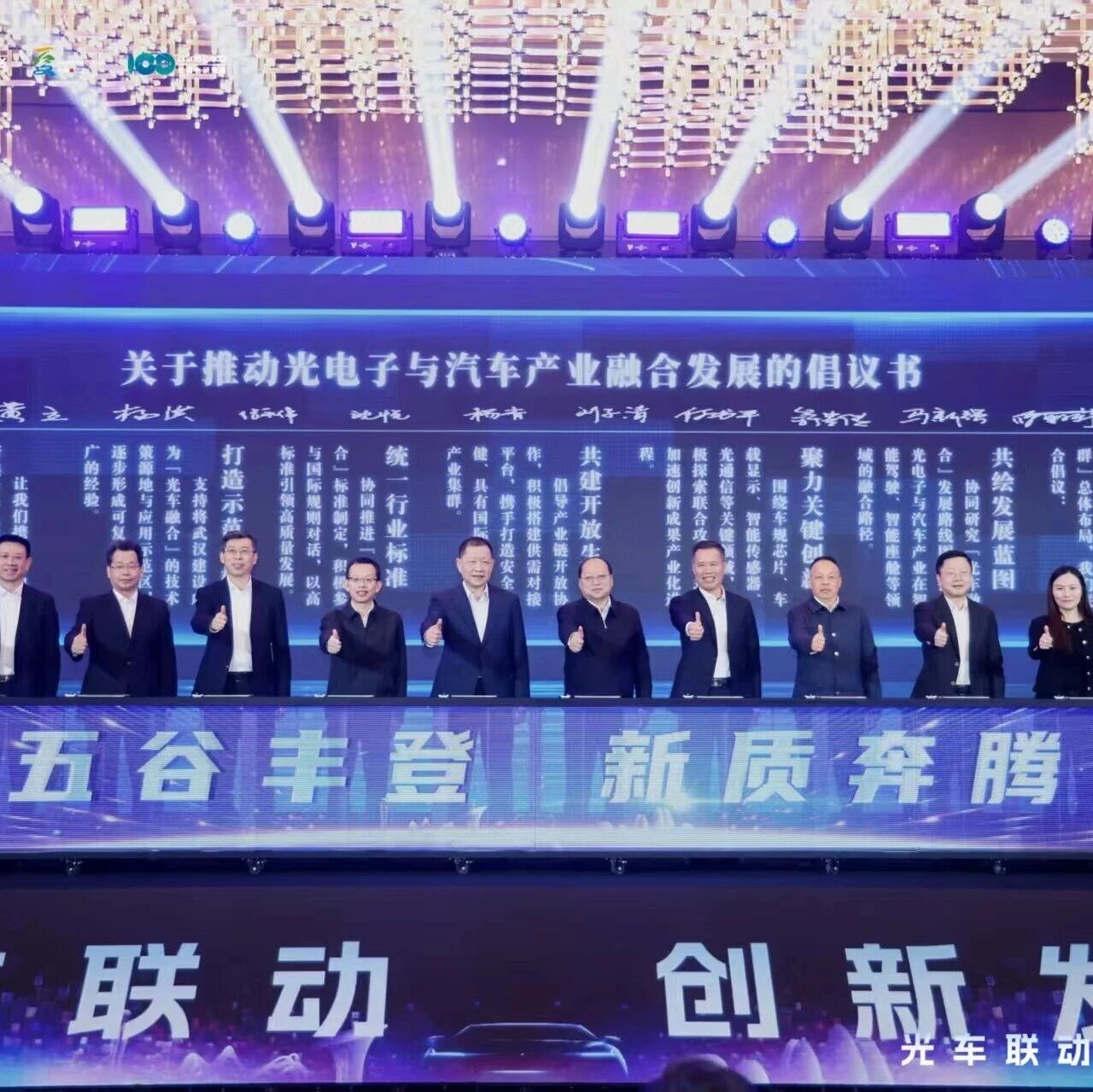
“光纤上车”爆发前夜,武汉抢占“光车融合”先机
第一财经· 2026-01-19 07:58
Core Viewpoint - The article discusses the emergence of L3-level autonomous driving and its impact on the automotive industry, particularly highlighting the integration of optical communication technology, which is expected to drive a new phase of cluster development in the sector [2][4]. Group 1: Industry Development - The automotive and optoelectronic information industries are key drivers of Wuhan's economic growth, with the city housing eight passenger car manufacturers and over 1,000 auto parts companies, achieving a total vehicle production capacity of 2.27 million units [4][5]. - By 2025, the scale of Wuhan's optoelectronic information industry is projected to reach approximately 850 billion yuan, with electronic information manufacturing contributing about 445 billion yuan and software business revenue around 405 billion yuan [5]. - The automotive industry in China is expected to surpass 10 trillion yuan in revenue by 2025, providing significant application scenarios for new technologies such as semiconductors and artificial intelligence [5][6]. Group 2: Technological Integration - The "optical-vehicle integration" initiative aims to address critical areas such as automotive-grade chips and smart sensors, establishing a collaborative research mechanism among various stakeholders [2][6]. - Companies like Wuhan Haiwei Technology and Wuhan Binary Semiconductor are leading advancements in automotive display technology and high-speed optical communication, respectively, with the latter's first domestically produced automotive-grade MCU chip set to launch this year [6][7]. - The transition from copper to optical fiber in vehicles is anticipated to enhance data transmission speed and reduce weight, with industry leaders predicting significant economic benefits from this shift [7]. Group 3: Challenges and Recommendations - The integration of communication, optoelectronics, and artificial intelligence into the automotive sector presents challenges such as technical compatibility, standardization, and supply chain barriers [7]. - To facilitate deeper integration, it is recommended to establish collaborative innovation platforms to address foundational issues in technology linkage, standard development, and certification [7].