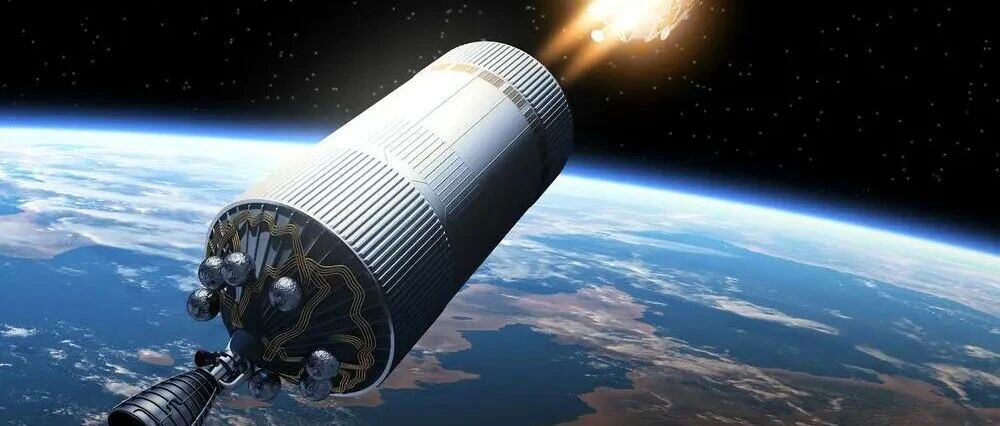
轨道数据中心卫星系统

Search documents
SpaceX100万颗卫星申请,获受理
新华网财经· 2026-02-05 09:08
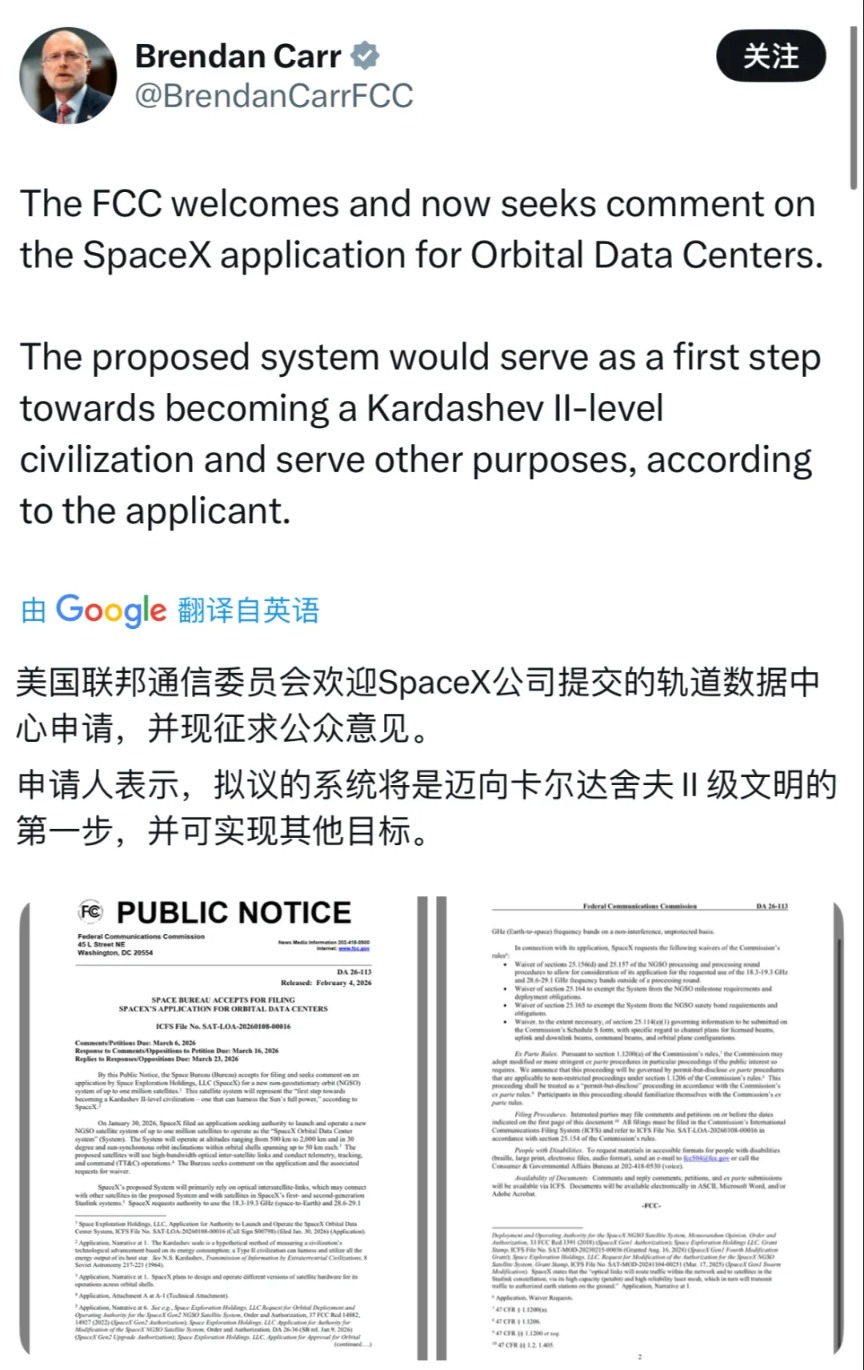
"根据申请,拟发射的卫星系统将是迈向卡尔达舍夫Ⅱ级文明的第一步,并可实现其他目标。"布伦丹·卡尔提到这一信息。 当地时间2月4日,美国联邦通信委员会(FCC)主席布伦丹·卡尔(Brendan Carr)在社交媒体平台上发文称:"FCC欢迎SpaceX公司提 交的轨道数据中心申请,并现就此征求意见。" FCC受理的这项卫星申请由SpaceX于1月30日提交,内容为"一个拥有前所未有的计算能力的卫星星座,可为先进的AI模型及其相关应用提 供支持"。这一卫星系统将最多包含100万颗卫星,建立一个环绕地球的轨道数据中心网络。 据外媒报道, 通常情况下,FCC需要数周甚至数月才能做出回应。而此次FCC仅用了几天时间就做出了决定,受理之快令外界惊讶。 布伦丹·卡尔在社交媒体上附上了受理及征求公众意见的公告。公告中再次介绍了SpaceX的申请内容、卫星系统介绍、SpaceX申请豁免的 规则等。征求意见的截止日期为2026年3月6日。 来源:上海证券报 关注" 新华网财经 "视频号 更多财经资讯等你来看 往期推荐 腾讯"元宝分10亿"活动2月1日0点正式开启,用户最高可领万元现金红 包,官方攻略发布 亚马逊官宣裁撤1.6万个 ...


SpaceX,100万颗卫星申请获受理
财联社· 2026-02-05 05:15
美国联邦通信委员会(FCC)美东时间2月4日 接受SpaceX公司提出的建造非地球静止轨道卫星系统的申请并进行公示。 美国联邦通信委员会主席布伦丹·卡尔(Brendan Carr)在社交媒体平台上发文称:"美国联邦通信委员会欢迎SpaceX公司提交的轨道数据 中心申请,并现征求公众意见。 申请人表示,拟议的系统将是迈向卡尔达舍夫 II 级文明的第一步,并可实现其他目标。"SpaceX于1月30日提交对"一个拥有前所未有的计 算能力的卫星星座,可为先进的AI模型及其相关应用提供支持"项目的申请,这一卫星系统将最多包含100万颗卫星,建立一个环绕地球的 轨道数据中心网络。 BLIC NOT Comments/Petitions Due: March 6, 2026 Response to Comments/Oppositions to Petition Due: March 16, 2026 Replies to Responses/Oppositions Due: March 23, 2026 By this Public Notice, the Space Bureau (Bureau) accepts fo ...
SpaceX100万颗卫星申请获受理
Shang Hai Zheng Quan Bao· 2026-02-05 03:47
Core Viewpoint - The FCC has accepted SpaceX's application for a satellite system aimed at creating an orbital data center, which is seen as a significant step towards advanced AI capabilities and a potential transition to a Type II Kardashev civilization [1][6]. Group 1: Application Details - SpaceX submitted the satellite application on January 30, proposing a satellite constellation with unprecedented computational power to support advanced AI models and related applications [6]. - The proposed satellite system could include up to 1 million satellites, forming a network around the Earth [6]. - The FCC's swift acceptance of the application, taking only a few days, surprised many, as such decisions typically take weeks or months [6]. Group 2: Technical Specifications - The satellite system is designed to handle explosive data growth from AI, machine learning, and edge computing, providing the necessary computational power for large-scale AI inference and data center applications for billions of users globally [9]. - Satellites will operate within a narrow orbital shell not exceeding 50 kilometers in width, at altitudes between 500 kilometers and 2000 kilometers, on a sun-synchronous orbit with a 30-degree inclination [9]. - The system will utilize nearly constant solar energy, significantly reducing operational and maintenance costs while minimizing environmental impacts compared to traditional ground data centers [9]. Group 3: Connectivity and Integration - The satellite system will rely heavily on high-bandwidth optical link communications and will be integrated with the existing Starlink satellite internet system to transmit data to ground stations [9]. Group 4: Industry Concerns - There are concerns regarding the feasibility of the plan, particularly regarding space debris and atmospheric pollution, given that SpaceX's existing Starlink constellation has already launched over 10,000 satellites [10].