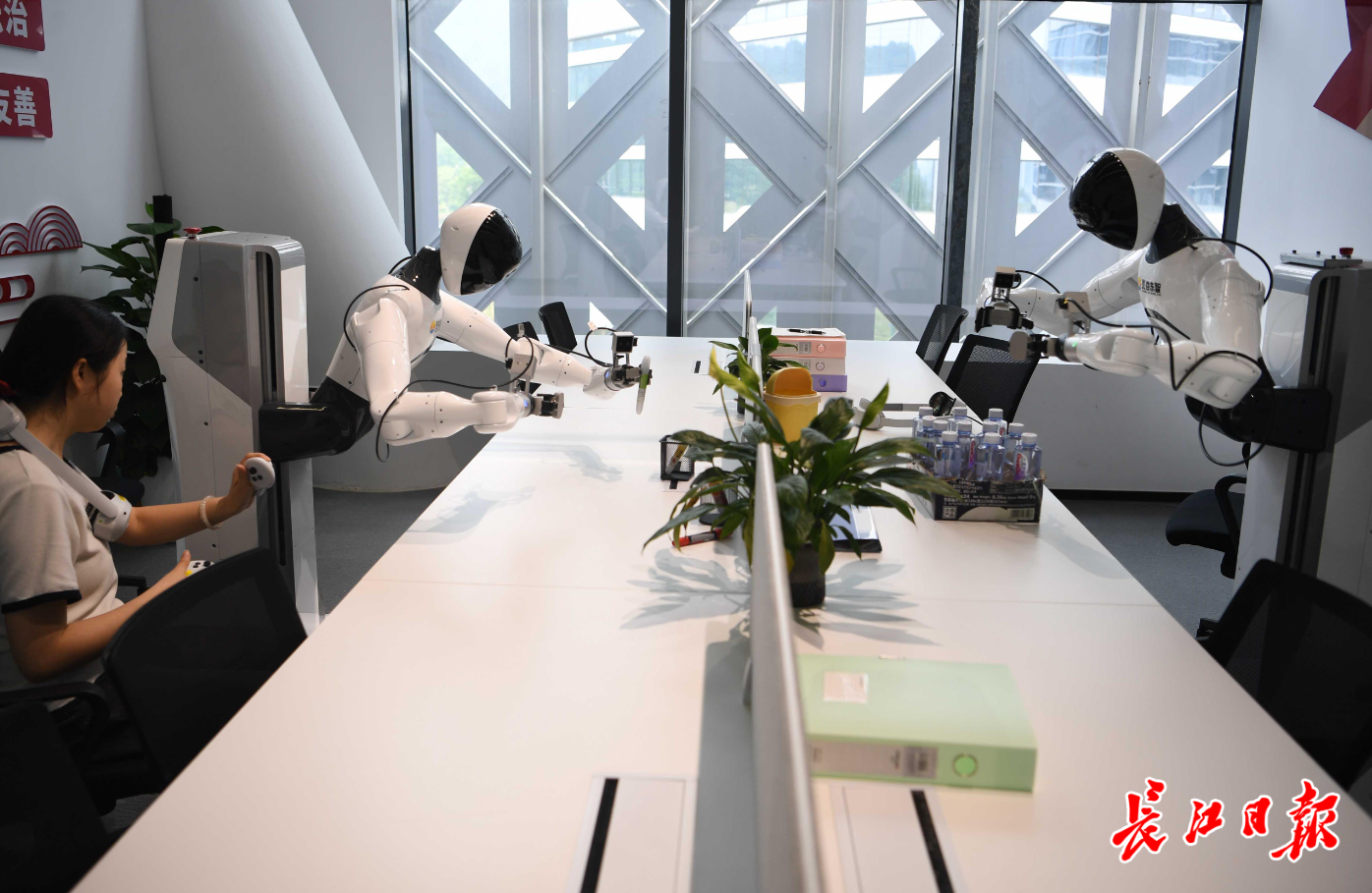
远游机器人

Search documents
全国首家人形机器人7S店亮相光谷 7万多元起售
Feng Huang Wang· 2025-11-12 05:39
Core Viewpoint - The first humanoid robot 7S store in China has opened in Optics Valley, offering a range of humanoid robots for sale, with prices starting from over 70,000 yuan to over 500,000 yuan, allowing consumers to purchase humanoid robots similarly to buying cars [1][2] Group 1: Product Offerings - The store features various humanoid robots including "Laborer" by Gelanruo, "Yuan You" by Shouzhihua, "Shennong" by Hubei Qiling, "Spirit" by Jingchu Robotics, "Photon" by Guanggu Dongzhi, and special robots from Guanggu Huahui [1][2] - The "Yuan You" robot is designed for guiding inquiries in hospitals and managing inventory in supermarkets, while the "Laborer" robot is used for factory inspections to check for temperature and sound anomalies [2] - The "Photon" robot won the first gold medal at the inaugural World Humanoid Robot Games and has a designated champion photo spot in the store [2] Group 2: Pricing and Store Concept - The store offers humanoid robots at various price points: smaller humanoid robots are generally priced under 100,000 yuan, with basic models starting from over 70,000 yuan; robots similar in height to humans but without legs are priced around 200,000 yuan; and fully functional humanoid robots with arms and legs are priced at around 500,000 yuan [2] - The 7S store model includes seven functions: Sales, Spare parts, Service, Survey, Solution, Show, and School, creating a comprehensive ecosystem for humanoid robots in both industry and daily life [2]

湖北:科技创新点燃工业经济“主引擎”
Zhong Guo Jin Rong Xin Xi Wang· 2025-08-10 10:44
Core Viewpoint - Hubei Province's high-tech manufacturing industry is experiencing significant growth, with an increase of 14.4% in added value in the first half of 2025, contributing to a 7.9% growth in industrial added value for enterprises above designated size, driven by the deep integration of technological and industrial innovation [1][5][12] Group 1: Industry Growth and Innovation - The traditional, emerging, and future industries are advancing simultaneously in Hubei, with a focus on optimizing industrial structure and enhancing the "new content" of manufacturing [3][5] - The high-tech manufacturing sector's added value accounted for 27.5% of the growth in industrial output, highlighting its critical role in the overall industrial landscape [5][11] - Hubei has launched over 10 local humanoid robot products since the implementation of the humanoid robot industry development plan in March 2024, showcasing the province's commitment to innovation [1][3] Group 2: Strategic Initiatives and Collaborations - The establishment of the "Huangshi (Wuhan) Offshore Science and Technology Park" aims to leverage resources between Wuhan and Huangshi, promoting innovation-driven development [7][8] - Hubei has identified five key industries for breakthrough development, including optoelectronic information and new energy vehicles, and is implementing a strategic plan to double the output of emerging industries [12] - The "Hundred Parks, Hundred Schools, Ten Thousand Enterprises" innovation cooperation initiative is designed to facilitate the transformation of scientific and technological achievements into practical applications [8][11] Group 3: Research and Development - The Wuhan New Energy Research Institute has launched a concept verification center to support the commercialization of new energy technologies, indicating a strong focus on R&D [8][10] - Hubei's provincial-level incubation institutions have surpassed 600, with a technical contract transaction volume of 318.77 billion yuan in the first half of the year, reflecting a 10.55% year-on-year increase [11]

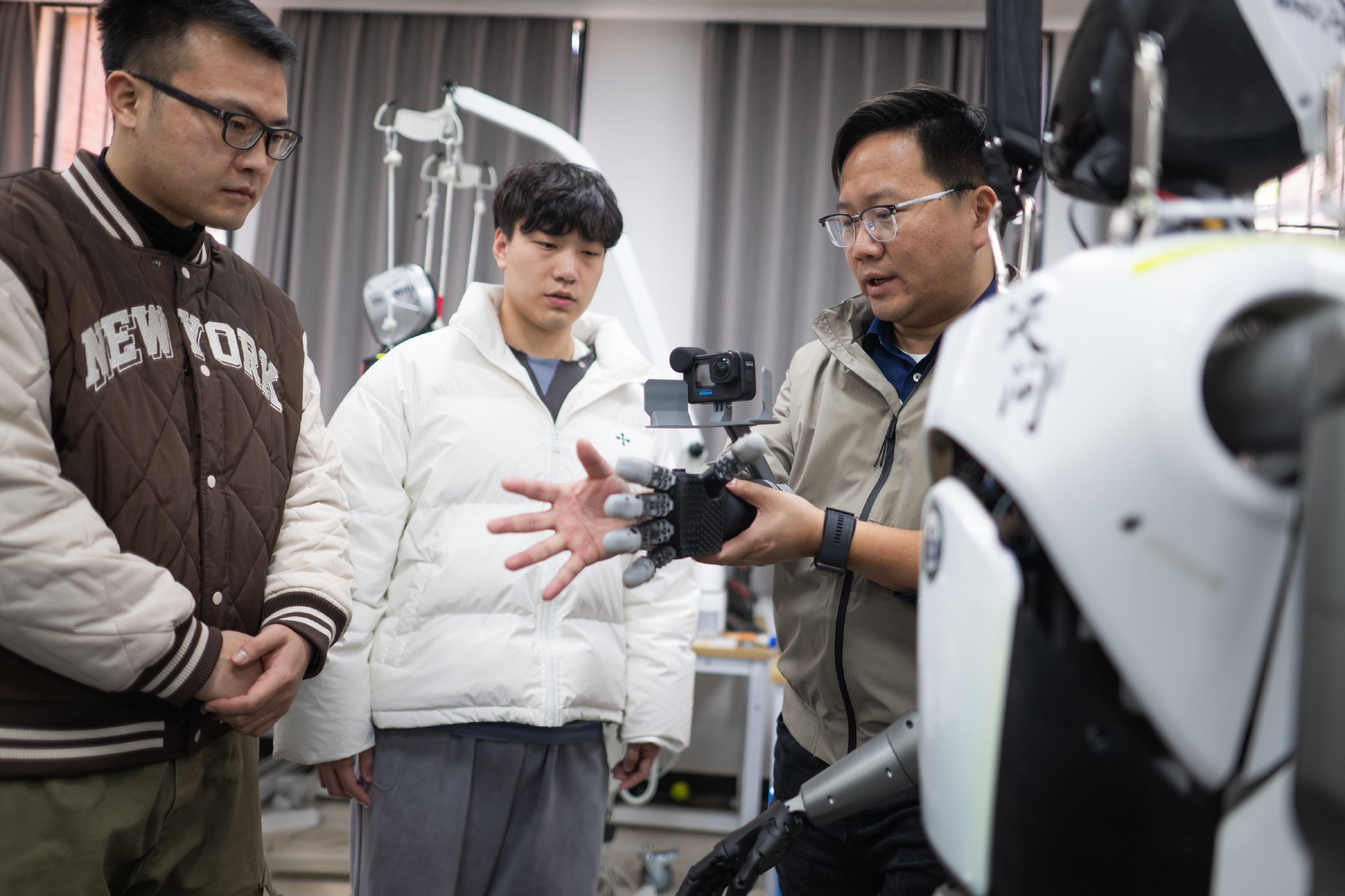
以武汉为核心串联五城,东西绵延150公里,“机器人谷”蔚然成型
Chang Jiang Ri Bao· 2025-06-23 01:08
Core Viewpoint - The human-shaped robot industry in Wuhan, Hubei, is rapidly advancing, with significant developments in technology and production capabilities, aiming to establish itself as a national benchmark city for humanoid robots [1][7][16]. Group 1: Industry Development - The "Jingchu" humanoid robot is set to be mass-produced in the third quarter of this year, following the implementation of the Hubei humanoid robot industry development plan released over a year ago [1]. - Wuhan is emerging as a key strategic hub in central China, with a clear outline of the "Robot Valley" connecting cities like Ezhou and Huangshi [1][13]. - The Hubei humanoid robot innovation center is the largest in the country, showcasing a variety of humanoid robots and applications across multiple scenarios [6][9]. Group 2: Technological Advancements - Research teams in Wuhan are focusing on overcoming key technologies related to the brain, cerebellum, perception, trunk, and limbs of humanoid robots, achieving significant breakthroughs in high-density joints and dexterous hands [8][9]. - The "Tianwen" robot, developed by a team led by an academician, features a highly reliable soft-hard coupling dexterous hand, showcasing advanced capabilities in mimicking human actions [8]. - The electronic skin developed by a local company has achieved a sensing precision of 1 gram, marking a significant advancement in tactile technology for humanoid robots [9]. Group 3: Production Capacity - The Wuhan Handzhi Innovation Technology Co., Ltd. plans to produce 1,500 humanoid robots annually after reaching full production capacity, with the "Yuanyou" robot being the first to enter mass production [12]. - Nearly 30 companies have the capability to supply products related to humanoid robots, with a network of nearly 1,000 related enterprises [12]. - Seven humanoid robot manufacturers in Wuhan are gearing up for mass production, with various applications in hospitals, schools, and restaurants [16]. Group 4: Market Potential - The humanoid robot sector is expected to become a disruptive product category, similar to smartphones and electric vehicles, with significant market opportunities emerging [12]. - The industry is leveraging Hubei's strong manufacturing base, research talent, and diverse application scenarios to create competitive advantages in various fields, including industrial, service, education, and healthcare [16][17].