遥控驾驶功能

Search documents
盘点A股研发之王比亚迪首创的新能源黑科技
2 1 Shi Ji Jing Ji Bao Dao· 2025-12-05 16:40
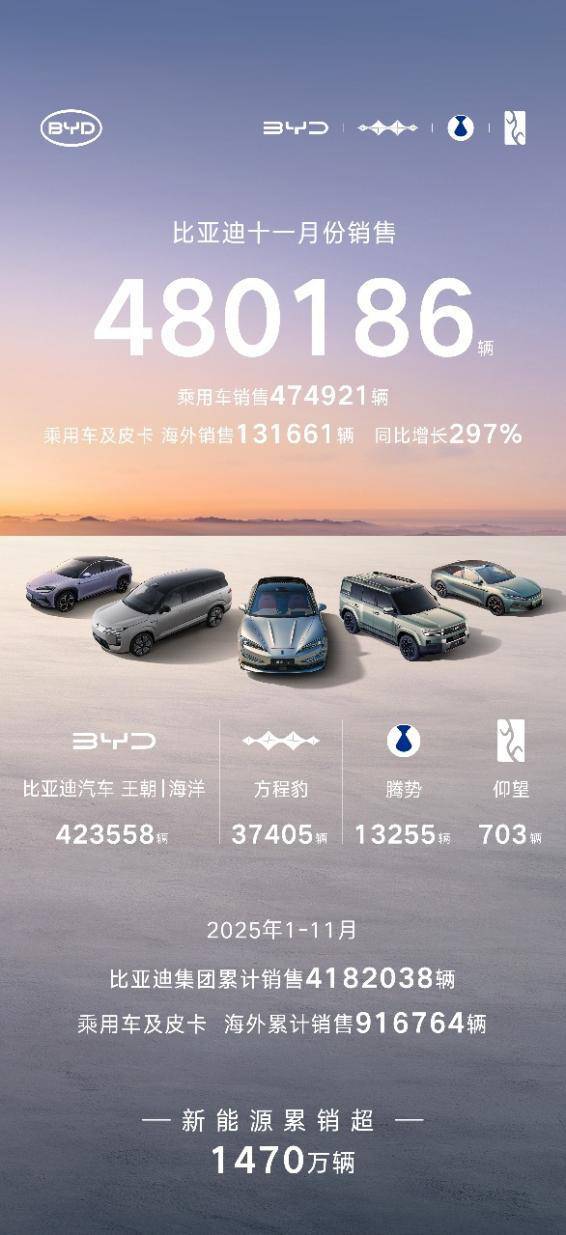
Core Insights - BYD achieved sales of over 480,000 vehicles in November 2025, with overseas sales exceeding 130,000, marking record highs for both domestic and international sales in the year [1] - Cumulatively, BYD sold over 4.18 million vehicles from January to November 2025, solidifying its position as a leader in the global electric vehicle market and making the annual sales target of 4.6 million highly attainable [1] Technological Leadership - BYD is not only a leader in electric vehicle sales but also in technology innovation, having pioneered many features that are now standard in the industry [1] - The company introduced remote vehicle control features in 2011, which are now common across many electric vehicles [1] - In 2012, BYD launched remote driving capabilities, evolving to smartphone control, which has since been adopted by other brands [1] - BYD's bidirectional charging technology (VtoL) was first introduced in 2013 and is now widely available in many electric vehicles [1] R&D Investment - From 2011 to 2024, BYD has spent over 210 billion yuan on R&D, with 13 out of 14 years seeing R&D expenditures exceed annual net profits [3] - In 2019, despite a low net profit of 1.6 billion yuan, BYD invested 8.4 billion yuan in R&D, laying the groundwork for future innovations like blade batteries and DM-i technology [3] - In the first three quarters of this year, BYD's R&D investment reached 43.75 billion yuan, a 31% increase year-on-year, significantly surpassing its net profit of 23.33 billion yuan [3] Industry Perception - A decade ago, BYD was not taken seriously by competitors, but its current market presence is undeniable, with competitors now viewing BYD as a benchmark [4] - The shift in perception from skepticism to emulation highlights BYD's role in setting industry standards [4]

从“摸着石头过河”到“被摸着过河”:细数比亚迪引领行业走向的“首创”科技
Yang Zi Wan Bao Wang· 2025-12-04 09:28
Core Viewpoint - BYD is not only a leader in electric vehicle sales but also a pioneer in electric vehicle technology, significantly influencing the industry standards and practices [3][14]. Sales Performance - In November 2025, BYD sold over 480,000 vehicles, with overseas sales exceeding 130,000, both achieving new highs for the year [1]. - Cumulatively, BYD's sales from January to November 2025 surpassed 4.18 million units, solidifying its position in the global electric vehicle market and making the annual sales target of 4.6 million units highly attainable [1]. Technological Innovations - BYD has introduced several groundbreaking technologies in the electric vehicle sector, including: - Remote vehicle control features launched in 2011, which are now standard in many electric vehicles [3]. - Remote driving capabilities introduced in 2012, evolving to smartphone control [6]. - Bidirectional inverter technology (VtoL) first launched in 2013, now widely adopted across various brands [8]. - The DM-i super hybrid technology introduced in 2021, which has set new benchmarks for fuel efficiency in the industry [10]. - Blade battery technology introduced in 2020, enhancing battery safety standards [11]. - Megawatt fast charging technology launched in early 2023, prompting competitors to develop similar platforms [12]. Research and Development Commitment - Between 2011 and 2024, BYD has consistently prioritized R&D, with 13 out of 14 years seeing R&D expenditures exceed net profits, totaling over 210 billion yuan by 2024 [13]. - In 2019, despite a low net profit of 1.6 billion yuan, BYD invested 8.4 billion yuan in R&D, laying the groundwork for future innovations [13]. - In the first three quarters of this year, BYD led A-shares in R&D investment, reaching 43.75 billion yuan, a 31% increase year-on-year, significantly surpassing its net profit of 23.33 billion yuan [15]. Industry Influence - BYD's evolution from being underestimated a decade ago to becoming a central player in the electric vehicle market reflects its significant impact on competitors, who have shifted from skepticism to emulation of BYD's innovations [14]. - The company's substantial R&D investment is comparable to the combined R&D expenditures of major competitors like Geely, SAIC, and Chery during the same period [15].