
钩藤

Search documents
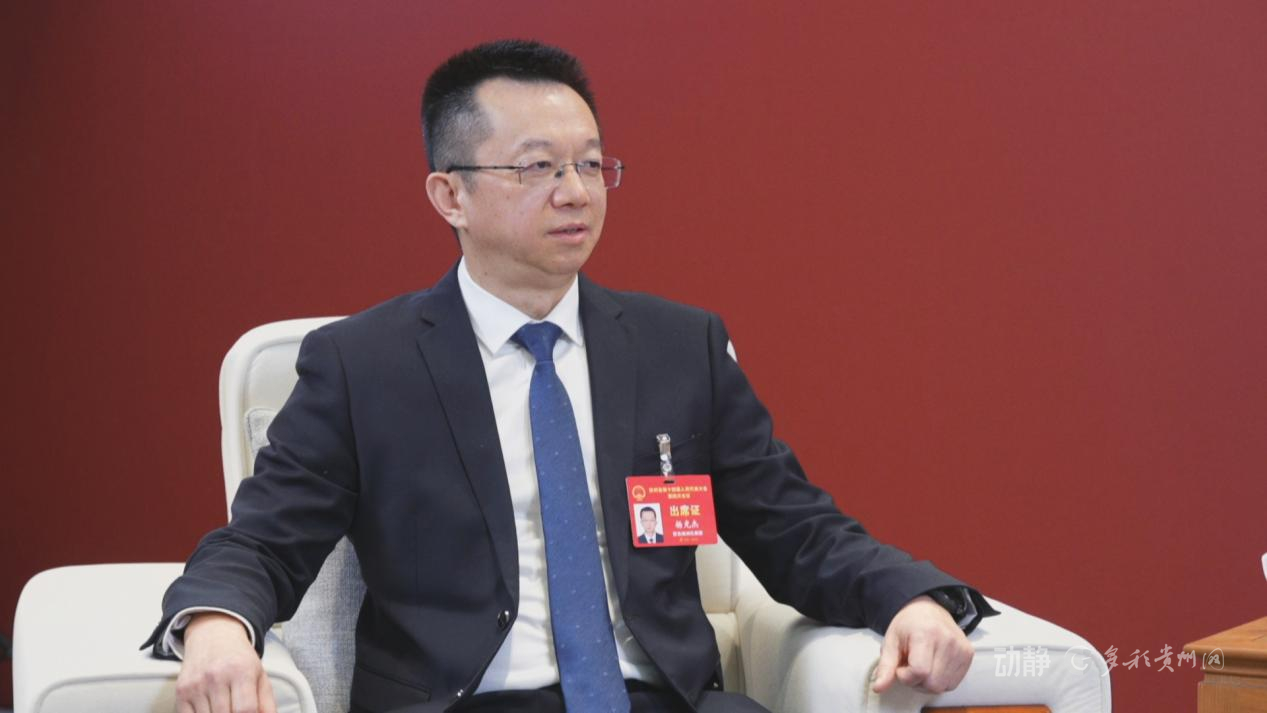
两会会客厅丨黔东南州州长杨光杰:把握好“有所为”与“有所不为”的辩证法 黔东南是能够创造并正在创造奇迹的地方
Xin Lang Cai Jing· 2026-01-30 03:09
Core Viewpoint - Guizhou Province's "14th Five-Year Plan" has led to significant economic and social development, with a focus on building a modern industrial system and leveraging local advantages for sustainable growth [1][3][9]. Economic Development - Guizhou's GDP has surpassed 150 billion yuan, with notable achievements in industrial growth, including the establishment of two 10 billion yuan industries and parks [3]. - The region has seen rapid growth in specialty agriculture, leading the province in the cultivation of various crops such as medicinal herbs and blueberries [3][4]. Cultural and Tourism Integration - The integration of culture and tourism has resulted in over 2.8 billion online views of local events, showcasing the vibrant image of Qiandongnan [4]. - The region has established the first national cultural ecological protection zone in the province, with tourist numbers exceeding 100 million and total tourism expenditure surpassing 100 billion yuan [4]. Environmental and Social Achievements - Qiandongnan has been recognized as a national model for ethnic unity and has maintained top rankings in ecological indicators such as water quality and forest coverage [6]. - The community demonstrated resilience and solidarity during natural disasters, highlighting the strength of local support systems [7]. Industrial Strategy - The region aims to develop a "4+2" industrial system focusing on deep processing of mineral resources, recycling materials, ethnic food, and medicine, while also promoting wood processing and light industry [9][11]. - In agriculture, a "5+3" system will be implemented to enhance the cultivation of medicinal herbs, oil tea, and blueberries, alongside livestock and aquaculture [9][11]. Tourism Development - The tourism strategy includes a "1+4" framework to enhance the region's appeal as a destination, leveraging its rich cultural and natural resources [11]. - The focus will be on integrating tourism with local culture, health, and agriculture to create a comprehensive tourism experience [11]. Implementation and Future Plans - The current year marks the beginning of the "15th Five-Year Plan," with an emphasis on implementing supportive policies for high-quality development and attracting major projects [12]. - The goal is to increase the number of counties with GDP exceeding 10 billion yuan to nine by the end of the "15th Five-Year Plan" [12].

“绿色存折”收益越来越多(贯彻四中全会精神一线见闻)
Ren Min Ri Bao· 2025-11-06 07:42
Core Viewpoint - The article discusses the ongoing reforms in collective forest rights in Hunan's Tongdao County, highlighting the challenges and new policies aimed at resolving long-standing issues related to land distribution and rights allocation for local farmers [2][3][4]. Group 1: Reform Initiatives - The recent policy emphasizes the need for deepening reforms in collective forest rights, with a specific focus on resolving historical issues through a five-year action plan for rights registration [3][4]. - The government aims to quantify and distribute the rights to previously undivided collective forest land by the end of the year, ensuring that farmers can access tangible benefits from their land [4]. Group 2: Economic Opportunities - The article highlights the transformation of forest land from a mere resource to an asset, with over 90,000 acres of forest rights already transferred in Tongdao County [4]. - New economic activities, such as carbon trading and the cultivation of medicinal herbs, are emerging as significant opportunities for local farmers, enhancing their income potential [4][5]. Group 3: Community Impact - The reforms are expected to invigorate local communities, with farmers expressing increased confidence in the economic viability of their forest lands, which are now viewed as "green savings accounts" [5][6]. - The article concludes with a positive outlook on the future benefits of these reforms, emphasizing the importance of continued exploration and implementation of collective forest rights reforms to maximize community gains [6].
中药饮片质量问题频出,11项国家炮制规范草案细化质量标准
Xin Jing Bao· 2025-06-19 14:19
Core Viewpoint - The National Pharmacopoeia Commission has published 11 draft standards for the processing of traditional Chinese medicine (TCM) decoction pieces, addressing quality issues that have arisen this year due to frequent non-compliance in drug inspections [1][2]. Group 1: Draft Standards for TCM Decoction Pieces - The 11 draft standards cover various TCM decoction pieces including Banbianlian, Zisuye, Beishashen, Guanghuoxiang, Yimucao, Gaoliangjiang, Shudihuang, Shichangpu, Jingjie, Qicaotan, and Qicaoshan, specifying guidelines for processing, characteristics, and storage [2]. - For example, the processing standard for Banbianlian includes removing impurities, washing, cutting, drying, and sieving, while its characteristics and storage requirements are also detailed [2]. Group 2: Quality Inspection Reports - Multiple regions have reported non-compliance in TCM decoction pieces during drug quality inspections, with notable failures in Shanxi Province where 6 batches of decoction pieces were found non-compliant, involving well-known companies [3]. - In Jiangxi Province, 18 products were reported as non-compliant, including 11 batches of TCM materials and decoction pieces, with issues related to characteristics, identification, and microbial limits [4]. Group 3: Regulatory Actions and Expert Insights - Regulatory bodies are intensifying scrutiny on TCM decoction pieces, as evidenced by significant fines imposed on companies for producing substandard products, such as Anhui Baicui Jinfang Pharmaceutical Co., which faced penalties totaling 3.11 million yuan [4]. - Experts attribute the prevalence of substandard TCM decoction pieces to various factors, including the complexity of sourcing raw materials, lack of professional knowledge among suppliers, and the challenges of standardizing production practices [5][6].