
集体林权制度改革

Search documents
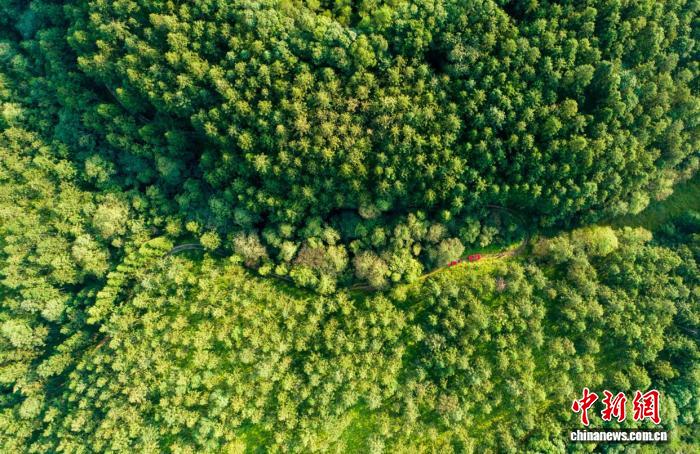
(乡村行·看振兴)福建沙县创新“生态金”模式,7.5万亩山林变“钱库”
Zhong Guo Xin Wen Wang· 2026-02-09 07:19
Core Viewpoint - Fujian Shaxian has introduced an innovative "Ecological Gold" model to transform 75,000 acres of mountain forests into financial assets, enhancing rural income and promoting ecological protection [1][3]. Group 1: Reform Model and Implementation - The "Three Reforms and Three Innovations" model aims to change management entities, improve conservation methods, and broaden revenue channels, creating "Ecological Gold, Ecological Tickets, and Ecological Loans" [3][4]. - The model has led to an increase in annual income for participating village collectives and forest farmers from 23 yuan to a maximum of 59 yuan per acre [3]. Group 2: Financial Impact and Revenue Generation - In just over four months, a village collective in Shamao Town increased its income by over 40,000 yuan through the reform [3]. - A total of 83.4 million yuan in property income has been generated from land rental and capital occupation fees across 35 villages [3]. - The development of forestry carbon credits has progressed, with 36,000 tons developed and 18,600 tons transferred, generating 279,000 yuan in revenue [3]. Group 3: Future Plans and Goals - The Shaxian Forestry Bureau plans to deepen collective forest rights reform and implement quality improvement projects on over 3,000 acres of transferred forests [4]. - The goal is to further integrate the "Three Reforms and Three Innovations" model with the "Four Libraries" pilot project to enhance the financial potential of forest resources [4].

破解林业“四难”融资困境:重庆市深化集体林权制度改革背景下的绿色金融创新路径研究 | 政策与监管
清华金融评论· 2026-02-04 09:54
Core Viewpoint - The article emphasizes the importance of integrating forest reform and financial reform in Chongqing to address the financing difficulties faced by the forestry sector, which include challenges in asset confirmation, valuation, collateralization, and financing [4][31][33]. Group 1: Financing Difficulties in Forestry - The inherent difficulties in forestry financing stem from the traditional credit system's inability to adapt to the unique characteristics of forestry assets, which include long cycles, diverse values, and complex ownership [8]. - The challenges of asset confirmation arise from unclear asset boundaries and difficulties in accurately identifying ownership, particularly in collective forest rights [9]. - Valuation issues are primarily due to the lack of standardized metrics for assessing ecological benefits, leading to significant underestimation of forest asset values [10]. - Collateralization is hindered by limited disposal channels and a lack of risk mitigation mechanisms, making financial institutions hesitant to lend against forestry assets [11]. - The culmination of these issues results in a significant financing gap, particularly affecting small and medium-sized forestry operators who struggle to access adequate funding through conventional credit channels [12]. Group 2: Systematic Solutions in Chongqing - Chongqing has adopted a systematic approach to address these financing challenges by leveraging its dual role as a pilot area for collective forest rights reform and green financial innovation [5][6]. - The city has implemented a comprehensive policy framework that includes top-level design, digital infrastructure, a financial product matrix, and a value transformation system to enhance forestry financial services [15]. - Specific policies have been developed at both the municipal and district levels to ensure effective implementation, such as asset evaluation management guidelines and collective forest rights mortgage loan business guides [16][17]. Group 3: Digital Infrastructure and Value System - The establishment of a digital platform for forest rights aims to resolve asset confirmation issues by creating a reliable database for forest land, facilitating smoother transactions and financing processes [18][19]. - Chongqing has developed a value transformation system that includes standardized valuation metrics for ecological benefits, enabling better integration of ecological value into financial assessments [20]. - Innovative financial products have been created to match the characteristics of forestry assets, including carbon credit loans and composite mortgage models that incorporate ecological product values [22][23]. Group 4: Future Directions for Integration - The article outlines future efforts to deepen the integration of forest and financial reforms, focusing on expanding the application of ecological value assessment standards and enhancing the digital forest rights platform [25][26]. - There is a commitment to developing tailored financial services that align with the specific needs of forestry projects, ensuring that financial support is both effective and sustainable [28]. - The ongoing enhancement of risk-sharing mechanisms and the introduction of long-term financing products are crucial for addressing the unique challenges of the forestry sector [29].

林权“红证”激活林下经济新动能
Xin Lang Cai Jing· 2026-02-01 23:26
Core Insights - The article highlights the success of the Forest Snow Town Ice and Snow Park in Longyan City, which attracted over 6,000 visitors during the New Year's holiday, marking it as a popular destination for family tourism and contributing positively to the local cultural tourism market [1] Group 1: Economic Development - The establishment of the first land use certificate for forest landscape utilization in the country has facilitated the transformation of ecological resources into development assets, addressing the issue of unclear property rights in the industry [1] - The certificate awarded to Longyan Jiuxi Lu Tourism Development Co., Ltd. in January 2025 signifies a breakthrough in the registration of all types of real estate for forest economy operations, allowing the company to operate under a 70-year lease while adhering to ecological protection standards [1] Group 2: Financial Impact - The clarity of property and operational rights has increased the asset valuation of Jiuxi Lu Company, enabling it to secure a credit line of 20 million yuan from Longyan Rural Commercial Bank, with an initial loan of 4 million yuan for new project development [2] - The financial support has accelerated the upgrade of the scenic area, allowing for the successful operation of unique offerings like the Forest Snow Town Ice and Snow Park, thereby enriching the supply of forest tourism products [2] Group 3: Community Benefits - The company pays over 100,000 yuan annually to the local village collective for land and timber use, creating a beneficial cycle where ecological protection, corporate development, and collective income growth coexist [2] - The issuance of the property certificate has injected strong momentum into rural tourism development in Xiaochi Town, serving as a model for high-quality development of the forest economy and providing practical experience for exploring ecological value transformation [2]

浙江稳步推进集体林权制度改革
Ren Min Ri Bao· 2026-02-01 22:16
Core Insights - The article highlights the successful implementation of collective forest rights reform in Liandu District, Lishui City, Zhejiang Province, which has led to the industrialization and scale cultivation of moss farming [1] Group 1: Economic Impact - The forest coverage rate in Liandu District exceeds 70%, and the introduction of leading enterprises has created an industrial chain for moss cultivation [1] - The innovative "cypress-moss" and "tea-moss" intercropping models have increased land utilization by over 50% [1] - Local villagers involved in planting and management have seen an average annual income increase of over 15,000 yuan [1] Group 2: Policy Framework - Zhejiang Province's forestry bureau has implemented a policy system that includes "top-level design + special policies + supporting measures" to promote forestry development [1] - The focus is on transforming ecological advantages into developmental benefits to continuously increase the income of village collectives and farmers [1]
中国林草产业总产值近11万亿元
Ren Min Ri Bao Hai Wai Ban· 2026-01-21 07:14
Core Insights - By 2025, China aims to advance collective forest rights reform and promote high-quality development of the forestry and grassland industry, targeting a total industry output value of nearly 11 trillion yuan and an import-export trade volume exceeding 180 billion USD [1][2] - The forestry sector will focus on revitalizing and effectively utilizing forest and grassland resources, with initiatives to support the healthy development of the industry, including financial support and measures to promote the under-forest economy [1] Industry Development Goals - The annual production of forest products is projected to reach over 240 million tons, with timber production expected to be 140 million cubic meters and the output value of timber processing and bamboo products estimated at 3.4 trillion yuan [1] - The central government has allocated 4.8 billion yuan for the development of the oil tea industry, with plans to plant an additional 2.82 million acres and improve 2.56 million acres of low-yield forests, bringing the total oil tea planting area to 7.5 million acres and an expected output of 1.1 million tons of tea oil [1] Employment and Economic Impact - The forestry and grassland industry is projected to directly create employment for over 60 million people, highlighting its role in income generation and job stability [1] - The industry will also support ecological tourism, with an expected annual visitor count of nearly 3 billion, further enhancing its economic contribution [1] Collective Forest Rights Reform - Multiple measures will be implemented to deepen collective forest rights reform, including ten new measures to enhance the quality and efficiency of collective forestry development and optimize management policies [2] - As of now, there are nearly 300,000 new forestry operating entities, with about 100,000 managing over 500 acres, indicating a shift towards larger-scale and intensive management practices [2] Future Directions - The forestry sector will explore new pathways for ecological product value transformation, accelerate the upgrading of the bamboo and wood industry, and promote the development of specialty industries such as woody oil and under-forest economy [2] - Continued efforts will be made to deepen collective forest rights reform, enhance financial and tax support, and establish diversified investment mechanisms to stimulate the development of the forestry and grassland industry [2]
中国林草产业总产值近十一万亿元
Ren Min Ri Bao· 2026-01-20 19:10
Core Insights - By 2025, China aims to advance collective forest rights reform and promote high-quality development of the forestry and grassland industry, targeting a total output value of nearly 11 trillion yuan and an import-export trade volume exceeding 180 billion USD in forest products [1][2] - The forestry sector will focus on revitalizing resources and supporting healthy industry development through financial initiatives and measures to enhance the under-forest economy [1] Group 1 - The annual production of forest food is projected to exceed 240 million tons by 2025 [1] - The annual timber production is expected to reach 140 million cubic meters, with the value of timber processing and bamboo products manufacturing estimated at 3.4 trillion yuan [1] - The central government has allocated 4.8 billion yuan for the development of the oil tea industry, with new planting of 2.82 million acres and a total planting area of 7.5 million acres [1] Group 2 - The collective forest rights reform will be deepened with ten measures to enhance the quality and efficiency of collective forestry development [2] - Nearly 300,000 new forestry operating entities have been established, with about 100,000 managing over 500 acres [2] - The forestry sector will explore new pathways for ecological product value transformation and promote the development of specialty industries such as woody oil and under-forest economy [2]
2025年我国完成国土绿化任务1.27亿亩(美丽中国)
Ren Min Ri Bao· 2026-01-16 03:08
Core Viewpoint - China aims to complete a national land greening task of 12.7 million acres by 2025, with significant progress in forest coverage and ecological restoration efforts [1][3]. Group 1: National Land Greening Efforts - By 2025, China will complete a national land greening task of 12.7 million acres, including afforestation of 5.345 million acres and restoration of 7.39 million acres of degraded grasslands [1]. - During the "14th Five-Year Plan" period, a total of 54.9 million acres of land were greened, with 18.5 million acres designated for afforestation [3]. Group 2: Forest Coverage and Ecological Impact - The current national forest coverage rate stands at 25.09%, with a forest stock volume of 20.988 billion cubic meters [1]. - The average annual restoration of degraded grasslands exceeds 4.6 million acres, maintaining a vegetation coverage rate of over 50% [3]. Group 3: Economic Contributions of Forestry - The total output value of the forestry and grassland industry is projected to reach nearly 11 trillion yuan by 2025, with annual forest food production exceeding 240 million tons [4]. - The timber production is estimated at 140 million cubic meters, with the value of timber processing and bamboo products reaching 3.4 trillion yuan [4]. Group 4: Collective Forest Rights Reform - Ongoing reforms in collective forest rights aim to enhance the quality and efficiency of collective forestry development, with nearly 300,000 new forestry management entities established [5]. - The government has introduced ten measures to support the reform of collective forest rights and optimize management policies [5]. Group 5: Nature Conservation Initiatives - China has established a new type of natural protected area system centered around national parks, effectively protecting 90% of terrestrial ecosystem types and 74% of key wildlife species [6]. - The "14th Five-Year Plan" period saw the establishment of five national parks, integrating over 120 natural protected areas [6]. Group 6: Future Directions in Conservation - The "15th Five-Year Plan" will focus on building a unified and efficient natural protected area system, with an emphasis on high-quality national park construction and spatial planning [7].

美丽中国|2025年我国完成国土绿化任务1.27亿亩 全国林草产业总产值近11万亿元
Ren Min Ri Bao· 2026-01-16 01:32
Group 1: National Afforestation Goals - By 2025, China aims to complete a land greening task of 12.7 million hectares, including afforestation of 5.345 million hectares and restoration of 7.39 million hectares of degraded grasslands [1][2] - The national forest coverage rate currently stands at 25.09%, with a total forest stock of 20.988 billion cubic meters [1] Group 2: Investment and Projects - In 2025, a total of 29.2 billion yuan will be allocated for central investment, implementing 337 key projects to achieve a greening task of 13 million hectares [2] - During the 14th Five-Year Plan period, China completed a total greening area of 54.9 million hectares, with an average annual restoration of over 4.6 million hectares of degraded grasslands [2] Group 3: Economic Impact of Forestry - The total output value of the national forestry and grassland industry is nearly 11 trillion yuan, with forest product import and export trade exceeding 180 billion USD [3] - The annual production of forest food reached over 24 million tons [3] Group 4: Support for Forestry Development - A notification was issued to guide financial support for high-quality forestry development, promoting the development of the under-forest economy through various measures [4] - The annual production of timber is 140 million cubic meters, with the output value of timber processing and bamboo products reaching 3.4 trillion yuan [4] Group 5: Natural Protection Areas - China has established a new type of natural protection area system centered on national parks, effectively protecting 90% of terrestrial ecosystem types and 74% of key protected wild animal populations [6][7] - The integration of over 120 natural protection areas has led to the establishment of five national parks, enhancing the protection of critical ecosystems [7]
2025年我国完成国土绿化任务1.27亿亩 全国林草产业总产值近11万亿元(美丽中国)
Ren Min Ri Bao· 2026-01-15 22:11
Group 1: National Afforestation Goals and Achievements - By 2025, China aims to complete a land greening task of 12.7 million hectares, including afforestation of 5.345 million hectares and restoration of 7.39 million hectares of degraded grasslands [1] - The national forest coverage rate currently stands at 25.09%, with a forest stock volume of 20.988 billion cubic meters, indicating a stronger foundation for green development [1] - During the "14th Five-Year Plan" period, China completed a total afforestation area of 54.9 million hectares, with an average annual restoration of over 4.6 million hectares of degraded grasslands [2] Group 2: Economic Impact and Industry Development - The total output value of the national forestry and grassland industry is nearly 11 trillion yuan, with total import and export trade of forest products exceeding 180 billion USD [2] - The annual production of forest food reached over 24 million tons, and the wood production volume is 140 million cubic meters, with the wood processing and bamboo products manufacturing output valued at 3.4 trillion yuan [3] - The forestry industry directly supports over 60 million jobs, highlighting its role in income generation and employment stability [3] Group 3: Policy and Reform Initiatives - The government is promoting collective forest rights reform and high-quality development of the forestry industry, with measures to optimize management and approval processes for public welfare forests [3] - Financial support for high-quality development in forestry has been initiated, with a focus on developing the under-forest economy through comprehensive measures [3] - The establishment of a new type of natural protected area system centered on national parks has effectively protected 90% of terrestrial ecosystem types and 74% of key protected wildlife species [5][6] Group 4: Future Directions and Strategies - The forestry sector will explore new pathways for ecological product value transformation and accelerate the upgrading of the bamboo and wood industry [4] - There is a commitment to further establish a unified and efficient new type of natural protected area system, with plans for high-quality construction of national parks [6]
2025年中国林草产业总产值近11万亿元
Zhong Guo Xin Wen Wang· 2026-01-15 15:43
Core Insights - By 2025, China's forestry and grassland industry is projected to reach a total output value of nearly 11 trillion yuan (approximately 1.54 trillion USD) [1] - The national forest coverage rate currently stands at 25.09%, with a forest stock volume of 20.988 billion cubic meters [1] - The annual production of forest food is expected to exceed 240 million tons by 2025 [1] Group 1 - The total import and export trade volume of forest products is anticipated to exceed 180 billion USD by 2025 [1] - The annual timber production is projected to be 140 million cubic meters, with the output value of timber processing and bamboo products manufacturing reaching 3.4 trillion yuan (approximately 476 billion USD) [1] - The ecological tourism sector is expected to receive nearly 3 billion visitors annually, contributing to the quality and efficiency of forest tourism and health [1] Group 2 - The forestry industry is expected to directly create employment for over 60 million people [1] - The government plans to explore new pathways for the transformation of ecological product value and accelerate the upgrading of the bamboo and wood industry [2] - Continued reforms in collective forest rights are aimed at enhancing the quality and efficiency of collective forestry development [2]