
银联全球支付网络

Search documents
隐形重器:中国支付的海外突围战
虎嗅APP· 2025-12-03 10:22
Core Viewpoint - The article discusses the fragmentation of global payment systems, highlighting the shift from a linear, standardized approach to a more diverse and localized payment landscape, where different technologies coexist and operate independently [2][3][4]. Group 1: Fragmentation of Global Payments - The current state of global payments is characterized by a lack of interoperability, leading to a situation where payment methods that work in one region fail in another, creating a "cyber waste" of electronic wallets when crossing borders [3][4]. - The article emphasizes the need for a new logic of connectivity that respects local payment systems while enabling interoperability, as demonstrated by UnionPay's approach at the recent Global Partner Conference [4][7]. Group 2: Thick Description and Cultural Sensitivity - The concept of "thick description" is introduced to explain the need for understanding the underlying motivations and contexts behind payment behaviors, moving away from a one-size-fits-all model to a more nuanced approach that respects local payment sovereignty and data security [6][7]. - UnionPay's strategy is to foster an open and inclusive payment ecosystem that allows for the coexistence of various local technologies while facilitating cross-border transactions [7][9]. Group 3: Technical Integration and Efficiency - The proposed solution for achieving interoperability is based on a "one-point access, global sharing" model, which simplifies the connection process for different payment systems, allowing for seamless transactions without the need for extensive individual integrations [14][15]. - This model not only enhances efficiency but also respects local payment habits, reducing the learning curve for users and merchants [15][17]. Group 4: Reconstructing the Payment Ecosystem - The article outlines a new "four-party model" that reflects the evolving nature of payment systems, recognizing the importance of technology platforms and their role in user engagement and transaction facilitation [19][22]. - By redistributing the rights to define payment systems, UnionPay aims to create a collaborative ecosystem where all participants contribute to the network's growth, transforming competition into mutual benefit [23][24]. Group 5: Future of Global Payments - The article concludes by suggesting that the future of global payments lies in creating a "universal interface" that connects disparate payment systems without challenging national sovereignty, thus facilitating trust and efficiency in cross-border transactions [27][28]. - This approach positions UnionPay as a foundational player in the global payment landscape, emphasizing the importance of adaptability and collaboration in an increasingly fragmented world [28][29].

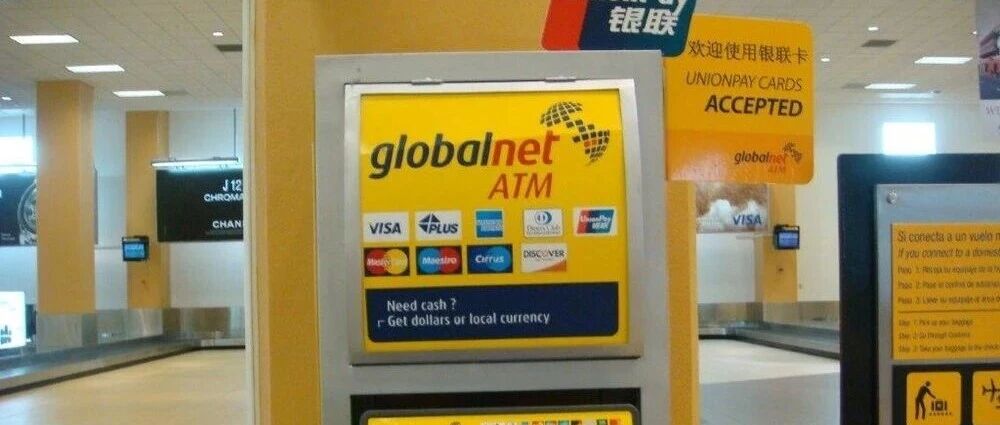
新“四方模式”领航 中国银联携手全球伙伴共建跨境支付互联新生态
Shang Hai Zheng Quan Bao· 2025-11-30 18:29
Core Viewpoint - China UnionPay is collaborating with global partners to establish a new ecosystem for cross-border payments through the innovative "new four-party model" [1][2]. Group 1: Cross-Border Payment Cooperation - On November 28, China UnionPay signed memorandums of cooperation with 11 domestic and international institutions, including Bank of China and Malaysia's PayNet, to enhance cross-border payment connectivity [1]. - The "new four-party model" aims to create a more inclusive and open payment ecosystem by integrating various stakeholders, including wallet providers and acquiring service providers, to form a comprehensive network [1][3]. Group 2: Global Payment Network Expansion - China UnionPay has established or advanced cross-border payment cooperation with approximately 50 countries and regions, expanding its global payment service network [1]. - The global acceptance network of UnionPay now covers 183 countries and regions, deeply penetrating core consumption scenarios such as travel and entertainment [3]. Group 3: Innovative Payment Solutions - The new model has received widespread recognition from global partners, facilitating access for millions of small and micro merchants to the vast purchasing power of China and the world [2]. - UnionPay's approach emphasizes collaboration with local institutions rather than attempting to replace them, focusing on mutual benefits and expanding the cross-border payment market [2][3]. Group 4: Support from Regulatory Bodies - Under the guidance of the People's Bank of China, UnionPay is responsible for the construction and operation of a unified cross-border QR code gateway, enhancing cooperation efficiency with domestic payment institutions [4]. Group 5: Positive Feedback from Partners - Partners from various countries have praised UnionPay's cross-border payment practices for fostering an interconnected ecosystem and reducing fragmentation in the global payment landscape [5]. - The emphasis on shared infrastructure and flexible collaboration models has been highlighted as a significant value by partners, facilitating rapid deployment of tools and shared global standards [5]. Group 6: Future Initiatives - At the launch event, UnionPay's leadership announced the "Open Payment Joint Initiative," which was supported by 72 domestic and international institutions, aiming to build a globally interconnected payment network [6].
中国银联与11家机构签署跨境支付合作多边备忘录
Zheng Quan Ri Bao Wang· 2025-11-28 14:04
Core Viewpoint - China UnionPay is expanding its cross-border payment network by signing multilateral memorandums of cooperation with 11 domestic and international institutions, aiming to enhance global payment connectivity and support economic recovery [1] Group 1: Cross-Border Payment Cooperation - China UnionPay has initiated cross-border payment cooperation with approximately 50 countries and regions, including Thailand, Vietnam, Laos, Indonesia, Malaysia, Cambodia, Singapore, Argentina, Brazil, and Nigeria [1] - The organization aims to create a world-class payment interconnectivity network, facilitating access for millions of small and micro businesses to global purchasing power [1] Group 2: New Payment Model - China UnionPay is introducing a new "four-party model" that incorporates wallet institutions, mobile manufacturers, acquiring service providers, and aggregating service providers to create a more inclusive and open payment ecosystem [1] - This model is designed to adapt to current development trends and transform bilateral and multilateral connections into a structured network [1]