新四方模式

Search documents
以新“四方模式”共建世界级支付互联网络 中国银联召开全球合作伙伴大会——开放支付的创新实践暨互联互通成果发布会
Jin Rong Shi Bao· 2025-12-03 03:23
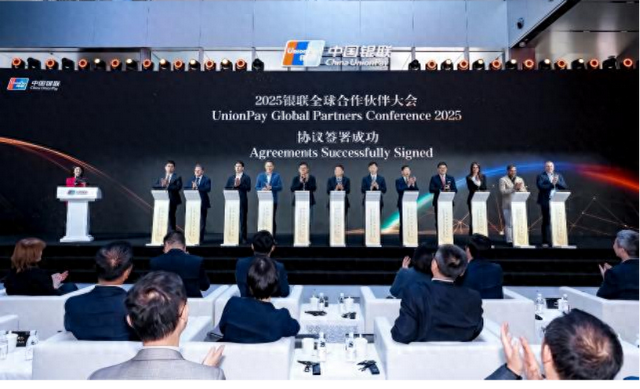
Core Insights - The signing of 11 multilateral cooperation memorandums for cross-border payment collaboration in Shanghai marks a significant step towards enhancing global payment connectivity and collaboration among various financial institutions [1][2][4] Group 1: Cross-Border Payment Cooperation - China UnionPay has established partnerships with 11 key institutions, including banks and payment networks from countries such as Malaysia, Uzbekistan, and Brazil, to facilitate cross-border payment cooperation [1] - The cooperation aims to create a new blueprint for a globally interconnected payment industry, enhancing economic fluidity and collaboration [1][2] Group 2: Global Payment Network Development - China UnionPay is expanding its cross-border payment network, having already collaborated with around 50 countries, including those in Asia and South America, to build a world-class payment interconnectivity network [2] - This network is expected to benefit millions of small and medium-sized enterprises by providing them access to global purchasing power, thereby stimulating economic recovery and growth [2][6] Group 3: New "Four-Party Model" - A new "four-party model" has been proposed by China UnionPay, incorporating wallet institutions and mobile manufacturers to create a more inclusive and open payment ecosystem [3] - The collaboration between China UnionPay and various banks, such as the Industrial and Commercial Bank of China, exemplifies successful cross-border payment initiatives, including the mutual recognition of QR code standards between China and Vietnam [3][4] Group 4: AI Integration in Payment Systems - The integration of artificial intelligence (AI) is being emphasized to enhance the efficiency and security of cross-border payments, with AI models improving transaction monitoring and fraud detection [5] - AI is expected to significantly reduce the time required to address cross-border fraud cases, enhancing overall transaction security [5] Group 5: Principles of Cooperation - The principles of mutual benefit and equality are highlighted in cross-border cooperation, with a focus on cost-saving through local currency settlement models [6] - The commitment to building a world-class payment interconnectivity network is aimed at ensuring efficient, secure, and accessible payment services for the global economy [6]
以新“四方模式” 共建世界级支付互联网络
和讯· 2025-12-02 07:57
Core Viewpoint - The signing of 11 multilateral cooperation memorandums for cross-border payment by China UnionPay and various international institutions marks a significant step towards building a world-class payment interconnected network, enhancing global economic collaboration and payment industry synergy [1][2]. Group 1: Cross-Border Payment Cooperation - China UnionPay has established cross-border payment cooperation with 11 key institutions, including banks and payment networks from countries like Malaysia, Uzbekistan, and Brazil, under a new "four-party model" [1]. - The cooperation aims to break down payment barriers, allowing millions of small and micro merchants to access vast purchasing power globally, thus revitalizing the global economy [2]. Group 2: New "Four-Party Model" - The new "four-party model" incorporates wallet institutions and mobile manufacturers, creating a more inclusive and open payment ecosystem [3]. - The collaboration between China UnionPay and the Industrial and Commercial Bank of China has led to successful projects like the mutual recognition of QR codes between China and Vietnam, exemplifying the "Belt and Road" initiative in payment [3]. Group 3: AI in Payment Practices - Artificial intelligence is being leveraged to enhance efficiency and security in cross-border payments, significantly improving transaction monitoring and fraud detection [5]. - AI technologies can reduce the processing time for identifying fraudulent transactions from 2-3 days to approximately 1 day, showcasing the potential for smarter payment solutions [5]. Group 4: Principles of Cooperation - The principles of reciprocity and equality in cross-border cooperation, such as the use of local currency settlement, help reduce transaction costs and currency fluctuation risks [6]. - The emphasis on convenience and benefits for cardholders reflects the value of mutual trust and interconnectedness at various levels, including national and industrial [6].


新“四方模式”领航 中国银联携手全球伙伴共建跨境支付互联新生态
Shang Hai Zheng Quan Bao· 2025-11-30 18:29
Core Viewpoint - China UnionPay is collaborating with global partners to establish a new ecosystem for cross-border payments through the innovative "new four-party model" [1][2]. Group 1: Cross-Border Payment Cooperation - On November 28, China UnionPay signed memorandums of cooperation with 11 domestic and international institutions, including Bank of China and Malaysia's PayNet, to enhance cross-border payment connectivity [1]. - The "new four-party model" aims to create a more inclusive and open payment ecosystem by integrating various stakeholders, including wallet providers and acquiring service providers, to form a comprehensive network [1][3]. Group 2: Global Payment Network Expansion - China UnionPay has established or advanced cross-border payment cooperation with approximately 50 countries and regions, expanding its global payment service network [1]. - The global acceptance network of UnionPay now covers 183 countries and regions, deeply penetrating core consumption scenarios such as travel and entertainment [3]. Group 3: Innovative Payment Solutions - The new model has received widespread recognition from global partners, facilitating access for millions of small and micro merchants to the vast purchasing power of China and the world [2]. - UnionPay's approach emphasizes collaboration with local institutions rather than attempting to replace them, focusing on mutual benefits and expanding the cross-border payment market [2][3]. Group 4: Support from Regulatory Bodies - Under the guidance of the People's Bank of China, UnionPay is responsible for the construction and operation of a unified cross-border QR code gateway, enhancing cooperation efficiency with domestic payment institutions [4]. Group 5: Positive Feedback from Partners - Partners from various countries have praised UnionPay's cross-border payment practices for fostering an interconnected ecosystem and reducing fragmentation in the global payment landscape [5]. - The emphasis on shared infrastructure and flexible collaboration models has been highlighted as a significant value by partners, facilitating rapid deployment of tools and shared global standards [5]. Group 6: Future Initiatives - At the launch event, UnionPay's leadership announced the "Open Payment Joint Initiative," which was supported by 72 domestic and international institutions, aiming to build a globally interconnected payment network [6].
中国银联与11家机构达成跨境支付合作
Zhong Zheng Wang· 2025-11-29 04:49
Group 1 - China UnionPay held a global partner conference on November 28, where it established cross-border payment cooperation with 11 key institutions, including Bank of China, Hong Leong Bank of Malaysia, OCBC Bank of Singapore, and Banco do Brasil [1] - The chairman of China UnionPay, Dong Junfeng, emphasized that breaking down payment barriers allows millions of small and micro businesses to access significant purchasing power globally through UnionPay's inclusive payment network, thus facilitating cross-border payments and invigorating global economic recovery [1] - China UnionPay aims to collaborate with local institutions to ensure all parties involved in account and acceptance sides can effectively contribute to expanding the cross-border payment market [1] Group 2 - The global economic and trade landscape has entered a new phase, with a consensus on building cross-border payment systems and promoting payment connectivity [2] - China UnionPay has expanded its cross-border payment cooperation from Asia to approximately 50 countries and regions worldwide, including South America and Africa, establishing a world-class payment connectivity network [2] - To adapt to current development trends, China UnionPay proposed a new inclusive and open "four-party model" by integrating wallet institutions, mobile manufacturers, acquiring service providers, and aggregating service providers into the traditional model [2]
中国银联与11家机构签署跨境支付合作多边备忘录
Zheng Quan Ri Bao Wang· 2025-11-28 14:04
Core Viewpoint - China UnionPay is expanding its cross-border payment network by signing multilateral memorandums of cooperation with 11 domestic and international institutions, aiming to enhance global payment connectivity and support economic recovery [1] Group 1: Cross-Border Payment Cooperation - China UnionPay has initiated cross-border payment cooperation with approximately 50 countries and regions, including Thailand, Vietnam, Laos, Indonesia, Malaysia, Cambodia, Singapore, Argentina, Brazil, and Nigeria [1] - The organization aims to create a world-class payment interconnectivity network, facilitating access for millions of small and micro businesses to global purchasing power [1] Group 2: New Payment Model - China UnionPay is introducing a new "four-party model" that incorporates wallet institutions, mobile manufacturers, acquiring service providers, and aggregating service providers to create a more inclusive and open payment ecosystem [1] - This model is designed to adapt to current development trends and transform bilateral and multilateral connections into a structured network [1]
中国银联举行全球合作伙伴大会 与11家机构达成跨境支付合作
Jing Ji Guan Cha Wang· 2025-11-28 13:54
Core Viewpoint - China UnionPay is expanding its global cross-border payment network by partnering with 11 key institutions from various countries, indicating a shift towards a more interconnected and collaborative global payment ecosystem [1][2] Group 1: Partnerships and Collaborations - China UnionPay has established cross-border payment collaborations with institutions including Bank of China, PayNet (Malaysia), Uzcard and HUMO (Uzbekistan), IPC (Kyrgyzstan), and others from countries like Brazil, Nepal, and Austria [1] - The partnerships aim to create a new blueprint for a collaborative payment industry under the "new four-party model," which includes various stakeholders such as card organizations, payment networks, commercial banks, and mobile manufacturers [1][2] Group 2: Global Economic Context - The current global economic landscape is evolving, with a consensus on the need for a cross-border payment system and enhanced payment interoperability [1] - China UnionPay is actively working with Asian countries like Thailand, Vietnam, and Indonesia, as well as around 50 countries in Latin America and Africa, to build a world-class payment interconnection network [1] Group 3: Technological Advancements - The chairman of China UnionPay highlighted the role of artificial intelligence in enhancing payment processes, including merchant verification and risk transaction monitoring [2][3] - AI technology has improved the efficiency of handling cross-border fraud transactions, reducing processing time from 2-3 days to approximately 1 day [3] - China UnionPay is focusing on building an AI ecosystem in collaboration with research institutions and industry partners to drive smart and efficient payment solutions [3]
以新“四方模式” 共建世界级支付互联网络
Bei Jing Qing Nian Bao· 2025-11-28 10:53
Core Insights - The signing of 11 multilateral cooperation memorandums for cross-border payments in Shanghai marks a significant step towards enhancing global payment connectivity and collaboration [1][3] - The new "four-party model" aims to create a more inclusive and open payment ecosystem, integrating various stakeholders such as wallet providers and mobile manufacturers [4][5] Group 1: Multilateral Cooperation - China UnionPay has established partnerships with 11 key institutions across different countries to facilitate cross-border payment cooperation [1] - The cooperation includes banks, payment networks, and non-bank payment institutions, aiming to create a seamless global payment network [1][3] Group 2: Global Payment Network - The initiative is part of a broader strategy to build a world-class payment interconnectivity network, benefiting millions of small and medium-sized enterprises globally [3][9] - The network aims to break down payment barriers, allowing merchants to access vast purchasing power without significant entry hurdles [3][9] Group 3: New "Four-Party Model" - The new model incorporates wallet institutions and aggregators, promoting a more inclusive approach to cross-border payments [4] - This model emphasizes collaboration with local institutions rather than attempting to replace them, focusing on mutual benefits [4][5] Group 4: AI in Payment Solutions - Artificial intelligence is being leveraged to enhance transaction efficiency and security in cross-border payments, significantly reducing the time for fraud detection and risk management [8][9] - AI technologies are being developed in collaboration with research institutions and industry partners to improve the overall payment process [9] Group 5: Open Payment Initiative - An "Open Payment Joint Initiative" was announced, emphasizing principles of openness, compatibility, and security among 72 participating institutions [7] - This initiative aims to foster a global payment network that shares value and promotes mutual growth [7]
竞夺AI入口,银联重塑支付生态|《财经》特别报道
Sou Hu Cai Jing· 2025-11-19 10:55
Core Insights - The article discusses how China UnionPay is leveraging digital intelligence to establish a new "four-party model" to enhance its market position, competitiveness, and influence in international payments, thereby providing a Chinese solution for global payment systems [2][4][41]. Group 1: Cross-Border Payment Initiatives - The launch of cross-border QR code interoperability between China and Indonesia marks a significant step in facilitating seamless payments for Chinese tourists abroad [3][4]. - China UnionPay is responsible for cross-border clearing, with Ant International providing technical support and Bank of China Hong Kong serving as the RMB settlement bank [4][38]. - The establishment of a unified gateway for cross-border QR codes, guided by the People's Bank of China, aims to enhance the efficiency and stability of cross-border payment systems [4][41]. Group 2: Strategic Goals and Market Positioning - UnionPay's new leadership has set strategic goals focused on "platformization, digital intelligence, and globalization" to address structural challenges and enhance its competitive edge [9][10]. - The company aims to integrate new market participants, such as service providers and wallet apps, into its operational framework to strengthen its new "four-party model" [8][12][33]. - UnionPay's historical mission has been to consolidate the payment market, and it is now adapting to the challenges posed by emerging payment entities [6][9]. Group 3: Technological Transformation and Innovation - The payment industry is undergoing significant structural changes, with digital technology expanding payment scenarios and new third-party payment entities entering the market [5][19]. - UnionPay is focusing on technological applications rather than pure research, aiming to leverage AI and other technologies to enhance its service offerings [16][17][25]. - The company is implementing a "cloud-management-end" system to facilitate a comprehensive upgrade of its business and operational models [26][36]. Group 4: New "Four-Party Model" Characteristics - The new "four-party model" allows for the inclusion of various industry participants, such as wallet providers and payment service providers, enhancing collaboration and competition [33][34]. - It introduces new business models that clarify the roles and profit-sharing mechanisms among participants, aiming for a more equitable distribution of benefits [34][35]. - The model accommodates diverse payment methods, including physical cards, QR codes, and mobile payments, aligning with current market demands [35][41]. Group 5: Internationalization and Global Strategy - UnionPay's internationalization strategy has evolved over 20 years, focusing on expanding its global acceptance network and enhancing its competitive position against international card organizations like Visa and Mastercard [42][47]. - The recent collaboration with Indonesia is seen as a practical example of the new "four-party model" and is expected to pave the way for further international expansion [41][42]. - UnionPay is actively participating in the development of international QR code standards and promoting its standards in neighboring countries and regions [43][44].
中国银联坚持新“四方模式” 创新探索跨境互联互通合作
2 1 Shi Ji Jing Ji Bao Dao· 2025-09-27 02:31
Core Viewpoint - The launch of the cross-border QR code unified gateway, guided by the People's Bank of China and developed by the China Payment and Clearing Association in collaboration with China UnionPay, aims to streamline cross-border QR code payments by addressing the issue of multiple connections in the industry [1][3]. Group 1: Unified Gateway and Cross-Border Payment Models - The unified gateway features a "one-point connection" interface to resolve previous issues in cross-border QR code payments [1]. - China UnionPay has introduced diverse cross-border connectivity models, including "Government to Government (G2G)" and "Network to Network (N2N)" under the guidance of the People's Bank of China [3]. - The G2G model involves central banks of two countries establishing a framework, with UnionPay acting as the external interface for business connections [3]. Group 2: Implementation and Partnerships - The G2G model has already facilitated projects in Vietnam and Indonesia, with a pilot program for cross-border QR code connectivity between China and Indonesia launched in September [3]. - In the N2N model, UnionPay directly collaborates with overseas QR code network operators, successfully implemented in markets like Malaysia, Singapore, Japan, and South Korea [5]. - In Malaysia, UnionPay partnered with PayNet to enable QR code cross-border payment connectivity, allowing Chinese tourists to use UnionPay apps at 2.5 million merchants [5]. Group 3: Expansion and Ecosystem Development - UnionPay has established partnerships in 19 countries and regions, leading to over 10 million overseas QR code acceptance merchants, with expectations to reach tens of millions by the end of the year [5]. - The company has integrated over 170 overseas QR code payment wallets into its network, covering 30 countries and regions [5]. - UnionPay is collaborating with various industry players to create a new "four-party model" for smoother participation in the cross-border payment ecosystem [7]. Group 4: Infrastructure and Standards - UnionPay's exploration of cross-border payments has evolved from "hard connectivity" to "soft connectivity" focusing on rules and standards [7]. - The company has assisted Laos in building its national payment system using UnionPay standards and technology [7]. - In Thailand, UnionPay has collaborated with other card brands to launch a local QR code payment standard, which is recommended by the central bank to local financial institutions and merchants [8]. Group 5: Future Directions - With the unified gateway now operational, UnionPay plans to continue exploring new cross-border connectivity models and collaborate with more domestic and international partners to enhance payment service interoperability [10].

中国银联坚持新“四方模式” 创新探索跨境互联互通合作
21世纪经济报道· 2025-09-27 02:21
Core Viewpoint - The launch of the cross-border QR code unified gateway aims to streamline cross-border payment processes by addressing the issue of multiple connections in the industry [1][3]. Group 1: Unified Gateway and Cross-Border Payment Models - The unified gateway, guided by the People's Bank of China and developed by the China Payment and Clearing Association in collaboration with China UnionPay, provides a "one-point connection" interface for cross-border QR code payments [1]. - China UnionPay has introduced diverse cross-border connectivity models, including Government-to-Government (G2G) and Network-to-Network (N2N) approaches, to enhance cross-border payment interoperability [3]. - The G2G model involves central banks of two countries establishing a framework, with UnionPay acting as the external interface for business connections. Projects in Vietnam and Indonesia have been successfully implemented, with cross-border QR code interoperability trials starting in September [3]. Group 2: N2N Model and International Expansion - The N2N model allows UnionPay to negotiate directly with foreign QR code network operators, successfully applied in markets like Malaysia, Singapore, Japan, and South Korea [5]. - In Malaysia, UnionPay partnered with PayNet to enable QR code cross-border payment interoperability, allowing Chinese tourists to use UnionPay's app at 2.5 million merchants [5]. - UnionPay has expanded its acceptance network to 19 countries and regions, with over 10 million overseas QR code merchants and more than 170 foreign QR code payment wallets integrated into its network [5]. Group 3: Industry Collaboration and New Payment Ecosystem - As the number of participants in cross-border payments increases, industry collaboration is essential for effective implementation of cross-border payment interoperability [7]. - UnionPay is building a new "four-party model" that includes wallet providers and payment service aggregators to facilitate smoother participation in the cross-border payment ecosystem [7][8]. - The collaboration among various industry players in the new model exemplifies the collective effort of the Chinese payment industry to expand internationally [8]. Group 4: Future Directions and Standards - With the unified gateway now operational, UnionPay plans to continue exploring new cross-border interoperability models and maintain the new "four-party model" to promote payment service connectivity [10]. - UnionPay's efforts have evolved from basic infrastructure connectivity to establishing regulatory standards, as seen in its collaboration with Laos and Thailand to develop local payment systems and standards [8].