
闪电匣Arm

Search documents
独占八成市场 中国机器人服务全球
Zhong Guo Jing Ying Bao· 2025-07-19 16:37
Group 1 - The core viewpoint of the articles highlights that in 2024, global commercial service robot shipments will exceed 100,000 units, with delivery and cleaning robots dominating the market, and Chinese manufacturers leading with an 84.7% market share [1][2][3] - The reports from IDC indicate that the global commercial service robot market is experiencing accelerated growth, particularly in the delivery and cleaning sectors, which are the main drivers of market expansion [2][3] - Chinese manufacturers are noted for their competitive advantages in product performance, intelligence, and cost control, which contribute to their dominant position in the global market [3][5] Group 2 - The leading Chinese companies in the commercial service robot market include Qianlang Intelligent, PuduTech, Gaoxian Robotics, and Yunjike Technology, with respective market shares of 22.7%, 18.7%, 12.9%, and 8.2% [3] - There is a growing trend of investment in the robotics sector, with companies like Qianlang Intelligent expanding their overseas markets, which now account for half of their total revenue [4] - The future of service robots is expected to be driven by embodied intelligence technology, enabling robots to achieve high levels of autonomy and human-robot collaboration across various industries [6][8] Group 3 - The industry is witnessing a significant trend towards humanoid robots, which are expected to capture over 60% of the commercial market share in the next five years, although challenges such as cost, technology, and safety need to be addressed [7] - The commercial service robot industry is still in its early stages of market penetration, indicating substantial growth opportunities ahead [7][8] - Chinese manufacturers benefit from a strong engineering talent pool, a robust supply chain, and abundant data from diverse application scenarios, positioning them favorably in the global market [7]

普渡机器人第10万台产品下线:全球市占率第一商用服务机器人企业探厂纪实
机器人大讲堂· 2025-06-13 15:27
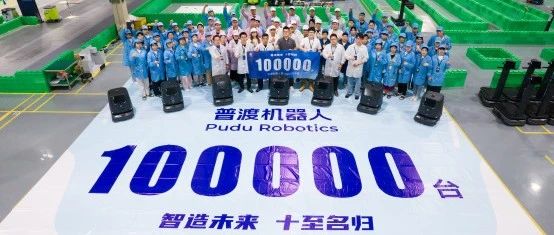
Core Viewpoint - Pudu Robotics has achieved a significant milestone by producing its 100,000th robot, marking a new stage in the commercialization of service robots globally [1][22]. Group 1: Product Matrix and Commercialization - Pudu Robotics has established a comprehensive product matrix covering service delivery, commercial cleaning, and industrial delivery, addressing common needs across ten industries [4][22]. - The latest product, the AI-powered cleaning robot PUDU CC1 Pro, represents a leap into the AI era for commercial cleaning robots [2][4]. - The company’s strong engineering capabilities and mature mass production processes have set a benchmark in the industry, enabling high-quality and stable delivery of diverse products [6][20]. Group 2: Multi-Form Factor Development - Pudu Robotics is the first in the industry to propose a future ecosystem comprising specialized, humanoid, and human-like robots, launching products like PUDU D7 and PUDU D9 [7][9]. - The introduction of the humanoid service robot Flash Arm has garnered significant attention, showcasing Pudu's ability to integrate multiple core technologies for versatile operations across various commercial scenarios [9][13]. Group 3: Global Expansion and Localization Strategy - The cat-shaped robot Bellabot has become a phenomenon in overseas markets, particularly in Japan, due to its design and interaction style, exemplifying Pudu's successful localization strategy [16][18]. - Pudu Robotics has achieved a 23% global market share, leading the industry and demonstrating its strong presence in over 60 countries, with more than 80% of revenue coming from international markets [22][23]. Group 4: Future Market Potential - The global service robot market is projected to reach $195 billion by 2035, with commercial service robots being a key growth driver [23].

以租赁代替购买,人形机器人商业化僵局能否“破冰”?
Di Yi Cai Jing· 2025-04-09 10:03
Core Insights - The robot industry is exploring rental models as a way to lower entry costs for customers, with monthly rental fees for humanoid robots potentially around 3,500 yuan, which is half the price of purchasing [1][8] - The industry faces challenges in data acquisition and the need for a robust commercial model to ensure the viability of humanoid robots in real-world applications [2][3] - Companies are focusing on bridging the gap between technology development and market acceptance to achieve sustainable profitability [9][10] Group 1: Rental Model and Market Acceptance - The rental approach is seen as a way to reduce the financial burden on potential customers, making humanoid robots more accessible [1][7] - Current market conditions indicate that many potential customers are hesitant to invest in humanoid robots due to uncertainties in return on investment [7][9] - The rental model has been validated in the service robot sector, suggesting a potential pathway for humanoid robots to gain traction in the market [9] Group 2: Data and Technological Challenges - The development of humanoid robots heavily relies on real-world, multimodal data, which is currently lacking in the industry [2][3] - Companies are investing in data collection platforms and open-source datasets to enhance the training of robotic systems [3] - The complexity of training a robot's "brain" requires significant amounts of diverse data, which poses a challenge for companies in the sector [2] Group 3: Long-term Industry Outlook - The commercialization of humanoid robots is viewed as a long-term endeavor, requiring extensive resources and time to overcome various hurdles [9][10] - Companies must successfully navigate the entire value chain from research and development to delivery and operation to remain competitive [9][10] - Balancing short-term profitability with long-term investment in technology is crucial for the survival of companies in the humanoid robot sector [10]
人形机器人行业周报:众擎完成2亿元PRE-A轮融资 普渡发布全球首款商用人形机器人ARM
Xin Lang Cai Jing· 2025-04-07 00:46
Group 1: Company Developments - Junpu Intelligent has repurchased 1.7 million shares, accounting for 0.14% of its total share capital, with an investment of 8.5164 million yuan at a price range of 4.91-5.05 yuan per share as part of its share repurchase plan initiated in August 2024, aiming to utilize 30-50 million yuan for employee stock ownership plans or equity incentives [1] - Yushu Technology launched its new generation Dex5 dexterous hand, featuring 20 degrees of freedom and 94 sensitive touch points, significantly improving flexibility and tactile feedback compared to its predecessor [2] - Zhongqing Robotics completed nearly 200 million yuan in Pre-A round financing, led by Stone Venture, to accelerate the development and global expansion of humanoid robots, with plans to launch three core products in 2024 [3] Group 2: Industry Trends - The humanoid robot industry is experiencing rapid development, with new technologies continuously emerging and the mass production process accelerating, driven by advancements such as 5G-A technology, which enhances multi-robot collaboration and deep learning capabilities [2][5] - The global humanoid robot market is projected to grow at a compound annual growth rate of 71% by 2030, with the Chinese market potentially reaching 870 billion yuan [2] - T1 robot showcased exceptional performance by winning the RoboCup German Open with a score of 9:0, highlighting advancements in motion control and decision-making capabilities in humanoid robotics [4]
普渡机器人发布全球首款商类人形具身智能服务机器人 | 投研报告
Zhong Guo Neng Yuan Wang· 2025-04-03 02:18
Market Performance - On April 1, 2025, the CSI 300 index rose by 0.01%, while the machinery sector increased by 0.34%, ranking 16th among all primary industries [2] - The 3C equipment sector saw the largest increase, up by 4.64%, whereas the industrial robots and industrial control systems sector experienced the largest decline, down by 1.02% [2] - Top three gainers included Zhongzhou Special Materials (+20.00%), Haheng Huaton (+13.73%), and Xinlai Yingcai (+10.41%); top three losers were Haiyuan Composites (-10.04%), Juliy Suojv (-10.02%), and Rifa Precision Machinery (-8.03%) [2] Company Announcements - Jinying Co. reported a revenue of 1.308 billion yuan for 2024, a decrease of 4.52% year-on-year, with a net profit of 22.3548 million yuan, down 36.73% [3] - Xianghe Industrial has repurchased 2.18% of its total share capital as of March 31, 2025 [3] - Ailong Technology has repurchased 0.9988% of its total share capital as of March 31, 2025 [3] - Ruisheng Intelligent has repurchased 0.11% of its total share capital as of March 31, 2025 [3] - Weichuang Electric has repurchased 0.4018% of its total share capital as of March 31, 2025 [3] - Jingzhida has repurchased 0.32% of its total share capital as of March 31, 2025 [4] - KJ Intelligent has repurchased 4.2938% of its total share capital as of March 31, 2025 [4] - World has repurchased 0.53% of its total share capital as of March 31, 2025 [5] - Zhichun Technology has repurchased 0.52% of its total share capital as of March 31, 2025 [6] - Yifei Laser has established a joint venture with Wuhan Industrial Innovation Development Research Institute with a registered capital of 40 million yuan, contributing 20 million yuan [8] Industry News - Pudu Robotics launched the world's first commercial humanoid embodied intelligent service robot, the Lightning Box Arm, on March 31, 2025, marking a significant step in the commercialization of humanoid service robots [10] - The Lightning Box Arm features a 7-degree-of-freedom bionic dual-arm and an 11-degree-of-freedom dexterous hand, capable of performing various tasks in commercial settings such as hotels, restaurants, and retail [10] - The robot integrates multiple technologies for enhanced operational capabilities and efficiency, showcasing advancements in navigation and obstacle avoidance [10] - The 2025 Zhongguancun Forum showcased nearly a hundred robots, highlighting innovations in AI and robotics, with robots performing various tasks such as reception and service [11][12] - The forum emphasized the rapid development of AI technology and its applications in public service and education, reflecting a vision of "human-robot coexistence" [12]