阿伏利尤单抗

Search documents
红斑狼疮新疗法有望惠及中国百万患者
Di Yi Cai Jing· 2026-02-05 07:06
近日,阿斯利康公司一款治疗系统性红斑狼疮的生物制剂阿伏利尤单抗(anifrolumab)的三期临床试验 结果显示,针对亚洲成年中重度系统性红斑狼疮患者,与安慰剂组相比,在降低疾病活动度和减少口服 糖皮质激素用量方面均显示出统计学和临床意义上的改善。 阿斯利康援引数据称,全球约有超过340万的系统性红斑狼疮患者,其中,中国的疾病负担最重,患者 人数约100万,创新药市场前景广阔。 红斑狼疮创新疗法研发壁垒高,是全球公认的药物研发"黑洞",此前,包括优时比、强生、礼来在内的 多家制药巨头都有过研发失败经历。 系统性红斑狼疮(SLE)作为一种自身免疫性疾病,目前尚无法治愈。长期以来,针对该疾病的创新疗 法也备受关注。 尽管红斑狼疮目前尚无法治愈,但该疾病可以长期控制。目前,针对狼疮肾炎的治疗主要是基于激素联 合免疫抑制剂的⽅案。口服糖皮质激素虽常用于缓解疾病症状,但长期使用会引发严重的全身性副作 用,且无法针对疾病核心发病机制进行精准干预,导致患者往往难以实现充分的疾病控制并达到缓解。 红斑狼疮创新疗法研发壁垒高,是全球公认的药物研发"黑洞",此前,包括优时比、强生、礼来在内的 多家制药巨头都有过研发失败经历。 2 ...
港大深圳医院添国家级名片
Shen Zhen Shang Bao· 2025-12-29 08:36
Core Viewpoint - Hong Kong University Shenzhen Hospital has been recognized as a "Demonstration Center for Standardized Diagnosis and Treatment of Systemic Lupus Erythematosus (SLE)" by the National Clinical Medical Research Center for Skin and Immune Diseases, marking a significant advancement in the treatment of autoimmune diseases in the Greater Bay Area [1][2] Group 1 - The hospital is the first in Shenzhen to receive this certification, highlighting its role in standardizing and collaborating on the treatment of autoimmune diseases [1] - The SLE clinic at the hospital has seen an annual patient volume of 4,000 in recent years, demonstrating its capacity and expertise in managing severe lupus cases [1] - The establishment of the national-level demonstration center is viewed as a recognition of the department's past work and a hopeful sign for future development in the field [1] Group 2 - The introduction of the "Hong Kong-Macau Drug and Device Pass" policy has allowed the hospital to successfully import the innovative drug Avelumab for adult patients with moderate to severe active SLE, providing new treatment options [1] - The director of the National Clinical Medical Research Center emphasized that the standardization of SLE treatment is crucial for improving patient survival rates and quality of life, and expressed hope that the hospital will serve as a benchmark for national lupus treatment [2] - The hospital's vice president stated that the unveiling of the center is not only a milestone for the hospital but also a response to national calls for enhancing the standardization of medical resources in the region [2]
深圳再添国家级名片,这一诊治示范中心在港大深圳医院揭牌
Nan Fang Du Shi Bao· 2025-12-25 14:00
Core Viewpoint - The establishment of the "Standardized Diagnosis and Treatment Center - Systemic Lupus Erythematosus Demonstration Center" at Hong Kong University Shenzhen Hospital marks a significant advancement in the treatment and management of systemic lupus erythematosus (SLE) in Shenzhen and the Greater Bay Area, enhancing the hospital's capabilities and recognition in this field [1][3]. Group 1: Hospital Achievements - Hong Kong University Shenzhen Hospital is the first medical institution in Shenzhen to receive the national certification as a demonstration center for SLE, one of only 11 institutions nationwide [1]. - The hospital's rheumatology and immunology department has developed a high-quality professional team and established a standardized model covering prevention, diagnosis, and treatment of SLE, serving approximately 4,000 patient visits annually in recent years [2]. Group 2: Research and Development - The department has been actively involved in building a national rheumatology data center and a standardized biobank for SLE, laying a solid foundation for clinical research and scientific transformation [2]. - The introduction of innovative drugs, such as Abatacept, through the "Hong Kong-Macau Drug and Device Pass" policy provides new treatment options for moderate to severe active SLE patients [4]. Group 3: Future Plans and Impact - The hospital aims to leverage the demonstration center's establishment to enhance the standardization of SLE treatment, improve patient survival rates and quality of life, and contribute to the national efforts in managing autoimmune diseases [5][6]. - Future initiatives include the establishment of disease assessment scales, regular standardized evaluations, and enhanced training for healthcare professionals in local hospitals to improve overall treatment capabilities [6].
匠心布局细胞治疗,阿斯利康押注的高潜力CAR-T疗法又有新进展
Zhong Guo Chan Ye Jing Ji Xin Xi Wang· 2025-06-16 06:26
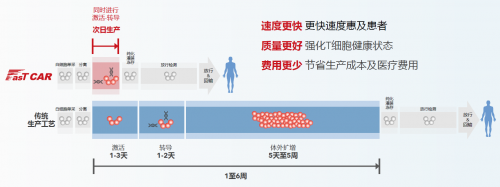
Group 1: Company Developments - AstraZeneca (AZ) showcased its dominance at the ASCO annual meeting, marking its seventh consecutive year on the main stage and has been selected for eight LBA studies since 2020, particularly excelling in lung and breast cancer while making significant strides in gastrointestinal tumors [1] - In recent years, AZ has made strategic acquisitions to enhance its position in cell therapy, including the purchase of Neogene in 2022 for TCR-T therapy, a partnership with Quell in 2023 for Treg therapy, and a $1 billion acquisition of EsoBiotec, focusing on in vivo cell therapy [1][9] - The acquisition of Gengxi Biotech is highlighted as a pivotal move for AZ in the CAR-T space, with promising data emerging from its clinical trials, particularly for AZD0120 in treating refractory systemic lupus erythematosus (rSLE) and newly diagnosed multiple myeloma (NDMM) [2][6][9] Group 2: Clinical Data and Efficacy - AZD0120 has shown positive safety and preliminary efficacy in a study involving 10 rSLE patients, with 100% of patients normalizing complement levels and 70% achieving sustained serological remission [3][5] - In NDMM, AZD0120 demonstrated a 100% overall response rate (ORR) and a 95.5% stringent complete response (sCR) rate in high-risk transplant-eligible patients, with a median follow-up of 32.3 months [6][8] - For elderly patients with NDMM, AZD0120 also achieved a 100% ORR and sCR rate, indicating its potential as a new treatment option for patients over 70 years old [7][8] Group 3: Market Potential and Future Outlook - The global market for multiple myeloma (MM) drugs is projected to reach $43.7 billion by 2028 and $52.1 billion by 2033, highlighting the significant opportunity for AZD0120 if it can secure a position in first-line treatment [8] - AZD0120 is positioned as a key asset in AZ's cell therapy portfolio, with expectations for it to drive growth beyond 2030, especially following its recent clinical successes [8][9] - The strategic focus on Shanghai as a research hub for cell therapy underlines AZ's commitment to leveraging China's innovative capabilities to enhance its global cell therapy development [9]