阿富汗松子

Search documents
从“洋年货”热销看开放中国
Ren Min Ri Bao· 2026-02-13 05:22
Core Insights - The article highlights the increasing availability of imported goods in China, particularly during the Spring Festival, showcasing China's high-level openness to the world [1][2][3] - The growth of imported products reflects a shift from novelty to regularity, facilitated by improved logistics and trade policies [2][3] Group 1: Market Dynamics - Imported goods, referred to as "洋年货," are now commonplace on Chinese dining tables, indicating a significant change in consumer behavior and preferences [1][2] - The Western Land-Sea New Corridor is enhancing connectivity, allowing global products to reach Chinese consumers more efficiently [2] - China's free trade zones are expanding, leading to reduced tariffs and improved trade facilitation, which benefits both consumers and foreign producers [2] Group 2: Economic Impact - The demand for imported goods supports local economies in exporting countries, such as the crab fishers in Kenya and cherry farmers in Chile, demonstrating a win-win development logic [2][3] - By 2025, China's import scale is projected to reach 18.48 trillion yuan, maintaining its position as the world's second-largest import market, accounting for about 10% of global imports [3] - China is committed to expanding imports and has implemented zero-tariff policies for products from the least developed countries, benefiting approximately 1.9 billion people globally [3] Group 3: Open Cooperation - The article emphasizes that the enjoyment of imported goods during family gatherings symbolizes the benefits of open cooperation and trade [3] - China's commitment to high-level openness and sharing development opportunities with the world remains steadfast, regardless of global challenges [3]
从“洋年货”热销看开放中国(和音)
Ren Min Ri Bao· 2026-02-12 23:22
Core Viewpoint - The article highlights the increasing availability of imported goods in China, particularly during the Spring Festival, showcasing China's high-level openness to the world and the integration of global products into everyday Chinese life [1][2]. Group 1: Import Trends and Logistics - The construction of the Western Land-Sea New Corridor and the operation of the China-Europe Railway Express are enhancing logistics connectivity, allowing global products to reach Chinese consumers more efficiently [2]. - The expansion of China's free trade zones and the implementation of tariff reductions and trade facilitation measures are improving the pricing and customs processes for imported goods [2]. Group 2: Economic Impact and Global Integration - The popularity of imported goods during the Spring Festival reflects a shared development logic, benefiting both Chinese consumers and producers in exporting countries [2]. - China's market, with over 1.4 billion people and 400 million middle-income individuals, remains a stable driving force for the global economy, with projections indicating that by 2025, China's import scale will reach 18.48 trillion yuan, maintaining a 10% share of global imports [3]. - China is committed to expanding imports and has implemented zero-tariff policies for products from the least developed countries, positively impacting local economies and improving livelihoods [3].
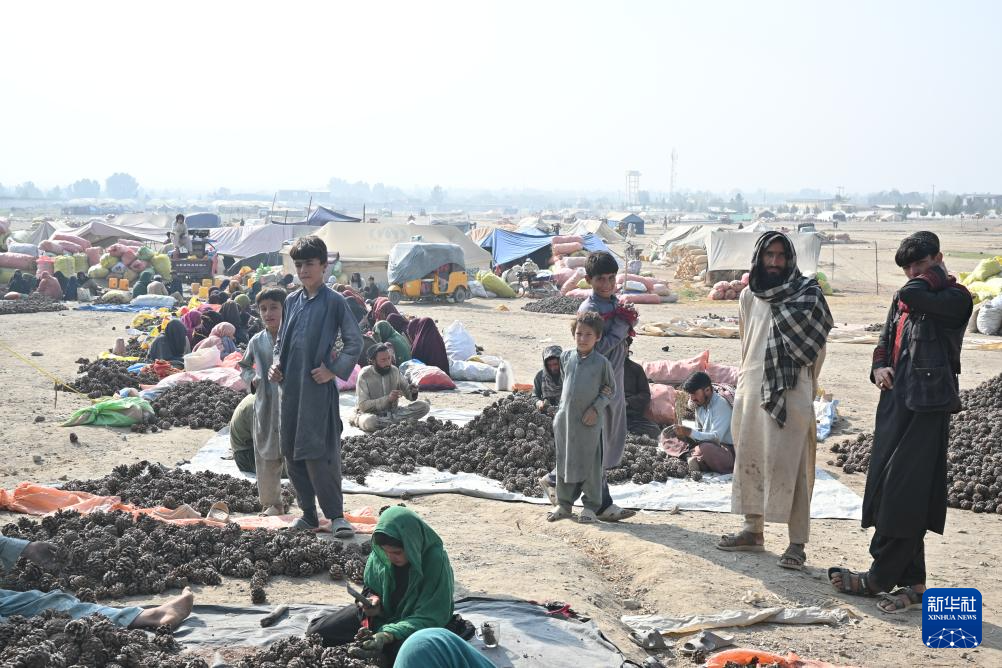
记者手记丨松香里的生计:阿富汗松子丰收后的忧虑
Xin Hua Wang· 2025-11-06 00:44
Core Viewpoint - The harvest of pine nuts in eastern Afghanistan is significant, but the international market price fluctuations are negatively impacting the income of local farmers [1][5]. Group 1: Market Dynamics - In 2021, Afghan pine nuts gained popularity at the China International Import Expo, with 120,000 bottles sold out immediately [2]. - The pine nut harvest season sees over 100,000 people involved in the collection, cleaning, processing, and packaging of pine nuts in eastern Afghanistan [2]. - The yield of pine nuts in the eastern province of Khost has increased by approximately three times compared to last year due to favorable weather conditions [5]. Group 2: Price Fluctuations - The price of pine nuts has significantly dropped, with 50 kg selling for 12,000 to 13,000 Afghanis (approximately 12,000 to 13,000 RMB) last year, but only 2,500 to 5,000 Afghanis (approximately 2,500 to 5,000 RMB) this year [5]. - The simple and rough processing methods of Afghan pine nuts have hindered their ability to increase in value and establish a strong brand presence [5]. Group 3: Local Perspectives - Local traders express concerns about the low market prices despite the increased production, indicating a disconnect between supply and pricing [5][7]. - Workers in the pine nut industry, such as laborers from Paktia province, report long working hours with low income, highlighting the economic challenges faced by families relying on this harvest [8]. - There is a strong desire among Afghan farmers for fairer trade practices, better logistics, and broader international cooperation to enhance the value of pine nuts and support local economic development [8].