共享共赢

Search documents
从“洋年货”热销看开放中国
Ren Min Ri Bao· 2026-02-13 05:22
Core Insights - The article highlights the increasing availability of imported goods in China, particularly during the Spring Festival, showcasing China's high-level openness to the world [1][2][3] - The growth of imported products reflects a shift from novelty to regularity, facilitated by improved logistics and trade policies [2][3] Group 1: Market Dynamics - Imported goods, referred to as "洋年货," are now commonplace on Chinese dining tables, indicating a significant change in consumer behavior and preferences [1][2] - The Western Land-Sea New Corridor is enhancing connectivity, allowing global products to reach Chinese consumers more efficiently [2] - China's free trade zones are expanding, leading to reduced tariffs and improved trade facilitation, which benefits both consumers and foreign producers [2] Group 2: Economic Impact - The demand for imported goods supports local economies in exporting countries, such as the crab fishers in Kenya and cherry farmers in Chile, demonstrating a win-win development logic [2][3] - By 2025, China's import scale is projected to reach 18.48 trillion yuan, maintaining its position as the world's second-largest import market, accounting for about 10% of global imports [3] - China is committed to expanding imports and has implemented zero-tariff policies for products from the least developed countries, benefiting approximately 1.9 billion people globally [3] Group 3: Open Cooperation - The article emphasizes that the enjoyment of imported goods during family gatherings symbolizes the benefits of open cooperation and trade [3] - China's commitment to high-level openness and sharing development opportunities with the world remains steadfast, regardless of global challenges [3]
和音:从“洋年货”热销看开放中国
Ren Min Ri Bao· 2026-02-13 03:05
Group 1 - The article highlights the increasing popularity of imported goods during the Chinese New Year, showcasing a diverse range of international products available to Chinese consumers, which reflects China's high-level openness to the world [1][2] - The logistics infrastructure, including the Western Land-Sea New Corridor and the China-Europe Railway Express, facilitates efficient transportation of goods from various countries to China, enhancing the availability of imported products [1] - China's free trade zones and tariff reductions contribute to a favorable environment for imports, allowing consumers to enjoy a "zero time difference" experience when purchasing foreign goods [1][2] Group 2 - The demand for imported goods during the Spring Festival supports the economies of exporting countries, creating job opportunities and boosting local industries, as seen in countries like Kenya, Chile, and Afghanistan [2] - China's market, with over 1.4 billion people and a growing middle class, remains a significant driver of global economic stability, with projections indicating that China will continue to be the world's second-largest import market by 2025 [2] - China actively promotes import expansion and offers zero-tariff treatment for products from the least developed countries, benefiting approximately 1.9 billion people globally and enhancing local economic growth [2]
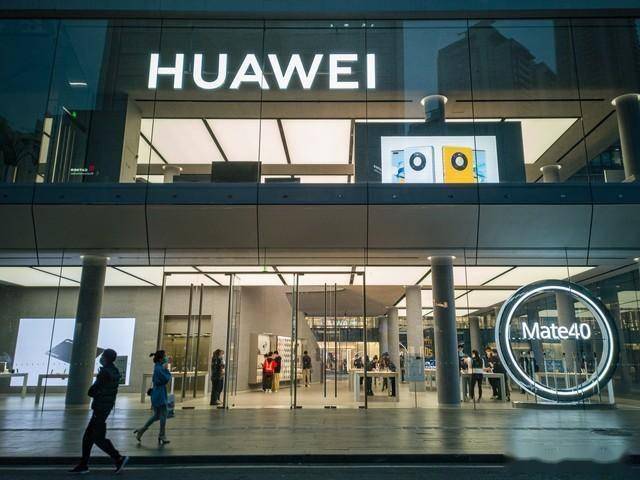
任正非:华为15万专利不做"战争武器",这格局打脸多少行业内卷?
Sou Hu Cai Jing· 2026-01-03 01:58
Core Viewpoint - Huawei's commitment to "not weaponizing patents" sets a benchmark in the technology sector amidst escalating patent disputes, emphasizing innovation as a fundamental principle rather than a competitive weapon [1][10]. Group 1: Patent Strength and Investment - As of the end of 2024, Huawei holds over 150,000 globally effective authorized patents, with over 90% being invention patents, covering critical areas such as 5G and WiFi6 [3]. - Huawei has invested over 1.2 trillion yuan in research and development over the past decade, with 179.7 billion yuan allocated for technological innovation in 2024, accounting for 20.8% of its annual revenue [3]. Group 2: Patent Philosophy and Licensing - Huawei's patent strategy revolves around "shared and win-win" principles, contrasting with companies that use patents to suppress competitors [5]. - The company has signed over 230 patent licensing agreements with major ICT firms globally, adhering to reasonable international standards for patent fees, such as charging no more than 50 yen per communication device for Japanese SMEs [5]. Group 3: Fairness and Compliance in Patent Operations - Huawei views patents as "stepping stones" for industry development rather than obstacles, advocating for fair negotiations to achieve technology sharing and mutual benefits [7]. - The company maintains a compliance framework throughout its patent operations, refusing to export technologies that could be used for manufacturing weapons of mass destruction or threaten regional peace [9]. Group 4: Industry Responsibility and Innovation Goals - Huawei's approach to patents reflects a commitment to responsible industry development, emphasizing that true technological leadership involves fostering collective growth within the industry [10]. - The ultimate goal of innovation, as stated by Huawei, is to bring the digital world to every individual, family, and organization, with patents serving as a bridge to achieve this vision [10].