雄忻高铁

Search documents
春节不“打烊”!重大项目建设加速度
Zhong Guo Zheng Quan Bao· 2026-02-21 13:53
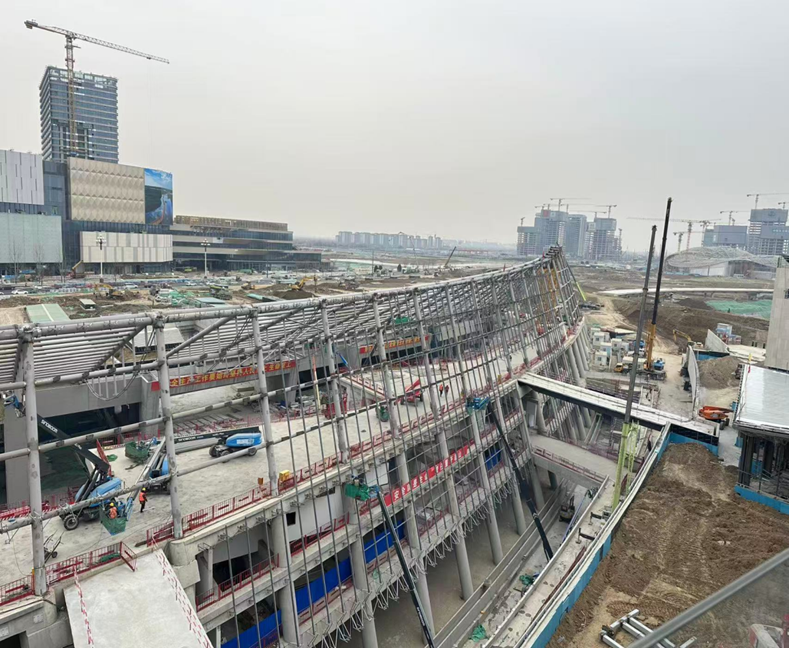
Group 1 - The core message emphasizes that central enterprises are accelerating major construction projects during the Spring Festival, showcasing dedication and commitment to achieving key milestones [1][2] - The Xiongxin High-Speed Railway is a crucial part of the national high-speed rail network and aims to complete the construction of the Xiong'an Intercity Station by April 30 [3] - The construction of the Xiamen section of the Xiamen-Jinmen Bridge is progressing rapidly, with key engineering works being carried out during the holiday [5] - The Guangdong Shiziyang Channel project is on track to complete the main tower of the world's highest double-deck suspension bridge, contributing to the development of the Guangdong-Hong Kong-Macao Greater Bay Area [7] - The Hubei Changyang Qingjiang Pumped Storage Power Station, a key project under the 14th Five-Year Plan, aims to achieve its first unit's power generation by 2029 [9] - The Shanghai East Hub project is transitioning from underground construction to above-ground structural work, with a total area of approximately 375,000 square meters [12] - The Hengqin Port project is nearing completion, which will significantly enhance customs efficiency and improve passenger experiences [14] Group 2 - Central enterprises are playing a vital role in supporting national strategies and stabilizing investments, with a projected fixed asset investment of 5.1 trillion yuan by 2025 [16] - The State Council has emphasized the need for central enterprises to expand effective investments, focusing on major projects and significant engineering initiatives [17] - Financial policies and tools are expected to accelerate infrastructure investments in key areas in the first half of 2026 [17]

为地方经济社会发展提供坚实支撑——中央企业在山西奋力创新积极作为
Xin Lang Cai Jing· 2026-02-12 03:45
Core Viewpoint - Central enterprises are playing a crucial role in supporting the high-quality development of Shanxi by leveraging their strengths in various sectors, including energy security, infrastructure, and technological innovation [1][2]. Group 1: Central Enterprises' Contributions - Central enterprises are actively collaborating with Shanxi to enhance energy security, upgrade industries, and improve transportation networks, contributing to a series of successful outcomes in the region [2]. - The Daqin Railway has achieved a normalized transportation capacity of 450 million tons per year, facilitating the supply of coal and ensuring national energy security [1][3]. Group 2: Strategic Cooperation and Development - Shanxi has positioned itself as a welcoming environment for central enterprises, encouraging investment and collaboration to drive traditional industry upgrades and foster new industries [3]. - The establishment of strategic partnerships between Shanxi and central enterprises has led to significant investments and project developments, enhancing the region's economic foundation [3]. Group 3: Infrastructure and Transportation - The Taiyuan Railway Bureau has completed the construction of the pre-fabricated box beams for the Xiongxin High-speed Railway, which will connect Shanxi with the Beijing-Tianjin-Hebei region, improving the national high-speed rail network [4]. - Central enterprises are enhancing the logistics capabilities in Shanxi, facilitating the movement of coal and manufactured goods, thereby supporting local industries [4]. Group 4: Energy Supply and Green Transition - Central enterprises are committed to ensuring energy supply while promoting a green transition in Shanxi, with significant investments in clean energy projects such as wind and solar power [6][7]. - The State Grid's construction of the Dazhou-Huailai-Tianjin South ultra-high voltage project will add 770 kilometers of clean energy transmission capacity, enhancing Shanxi's energy export capabilities [6]. Group 5: Technological Innovation and Modernization - Central enterprises are driving technological advancements in Shanxi, focusing on high-end manufacturing, digital technology, and ecological protection to support the development of a modern industrial system [8][10]. - Companies like CRRC Dalian are implementing digital transformation initiatives, achieving a system integration rate of 94% and enhancing their manufacturing capabilities [8]. Group 6: Digital Infrastructure and Rural Development - Shanxi Mobile is advancing digital rural construction by creating platforms for governance and smart agriculture, promoting e-commerce and logistics in rural areas [9]. - Central enterprises are investing in digital infrastructure, including 5G networks and computing centers, to support various sectors and enhance the region's digital economy [10].
雄忻高铁全线隧道实现全部贯通
Yang Shi Xin Wen· 2026-02-10 02:44
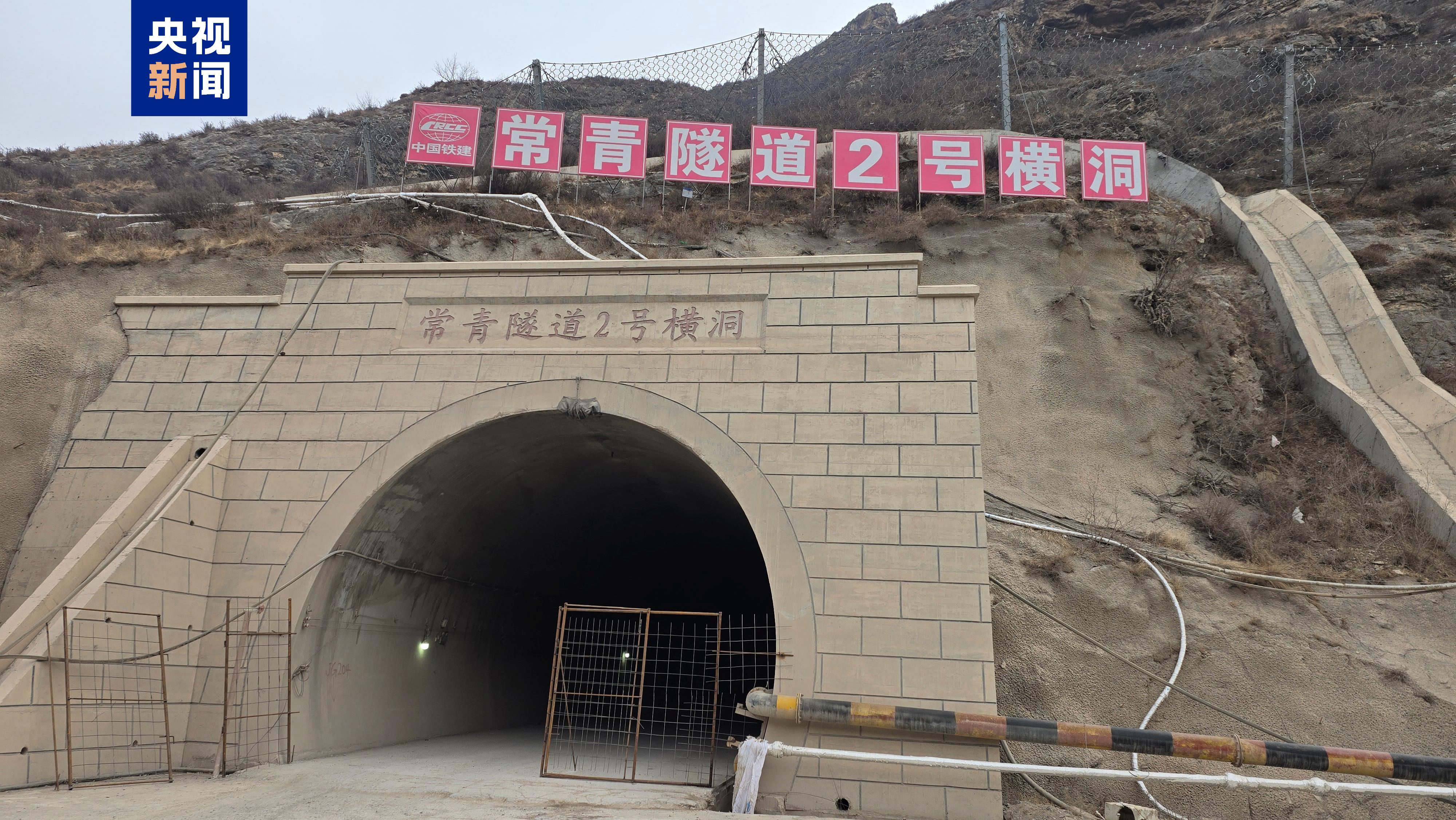
Group 1 - The Xiongxin High-Speed Railway has successfully completed the last tunnel, Changqing Tunnel, on February 10, 2026, marking the full completion of all tunnels along the line, which lays a foundation for the orderly advancement of subsequent engineering work [3][5]. - Changqing Tunnel, located in Wutai County, Xinzhou City, Shanxi Province, has a total length of 10,772 meters and a maximum burial depth of 690 meters, facing complex geological conditions and significant construction challenges [5]. - The construction team utilized advanced technologies such as water pressure blasting, digital electronic detonators, and 3D cross-section scanning, while also innovating tunnel safety early warning systems and intelligent drainage and scheduling systems to support construction under complex geological conditions [5]. Group 2 - The Xiongxin High-Speed Railway stretches approximately 342 kilometers from Xiong'an New Area in Hebei to Xinzhou in Shanxi, and is a crucial part of China's "Eight Vertical and Eight Horizontal" high-speed railway network, specifically the Beijing-Kunming corridor [9]. - This railway is the first high-speed railway in Shanxi Province designed for a speed of 350 kilometers per hour, which will enhance the national high-speed railway network layout and significantly promote economic and social development along the route [9].
雄忻高铁建设取得重大进展,正式进入铺轨施工阶段
Zhong Guo Xin Wen Wang· 2026-02-02 01:07
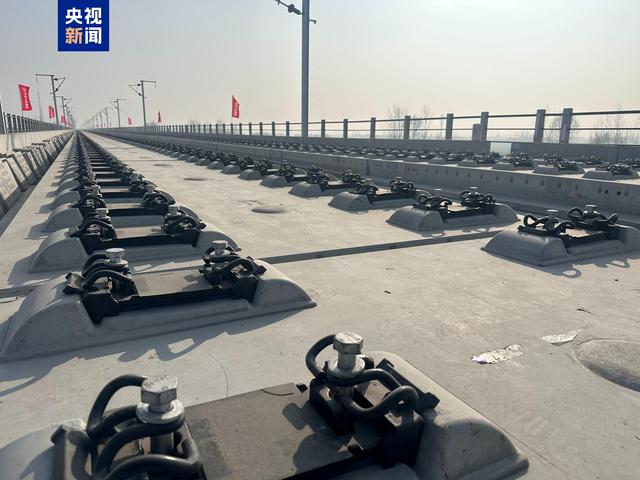
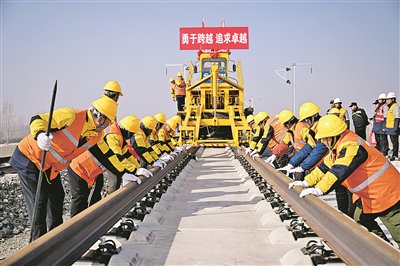
Core Insights - The Xiongxin High-Speed Railway project has made significant progress, entering the track-laying phase as of February 1, with the first pair of 500-meter long steel rails laid on the ballastless track bed [1] - This railway is a crucial part of China's "Eight Vertical and Eight Horizontal" high-speed rail network, connecting Xiong'an Station to Xinzhou West Station, with a total length of approximately 342 kilometers and a design speed of 350 kilometers per hour [1] Summary by Sections - **Construction Progress** - The track-laying construction spans across Hebei and Shanxi provinces, covering a total length of 716 kilometers and requiring the installation of 147 sets of switches [1] - The construction plan initiates with the Hebei section starting from February 1, followed by the Shanxi section [1] - **Economic and Social Impact** - Upon completion, the Xiongxin High-Speed Railway will enhance the layout of China's high-speed rail network, significantly improving transportation links between Shanxi and the Beijing-Tianjin-Hebei region [1] - The project is expected to promote economic and social development along the route and contribute to regional collaborative development, providing strong momentum for the rise of the central region [1]
雄忻高铁 进入铺轨施工阶段
Xin Lang Cai Jing· 2026-02-01 22:24
Group 1 - The core point of the article is that the construction of the Xiongxin High-Speed Railway has officially entered the track-laying phase, marking a significant milestone in the project [3] - The Xiongxin High-Speed Railway is an important part of China's "Eight Vertical and Eight Horizontal" high-speed railway network, specifically within the Beijing-Kunming corridor [3] - The railway line stretches approximately 342 kilometers from Xiong'an Station to Xinzhou West Station, with a designed speed of 350 kilometers per hour [3] Group 2 - The track-laying construction spans across Hebei and Shanxi provinces, covering a total length of 716 kilometers and requiring the installation of 147 sets of switches [3] - The construction plan indicates that the track-laying operations will commence in the Hebei section starting February 1, followed by the Shanxi section [3]
雄忻高铁全线最长隧道贯通
Ren Min Ri Bao· 2026-02-01 22:14
Core Viewpoint - The successful completion of the Wutai Mountain Tunnel marks a significant milestone for the Xiongxin High-Speed Railway, laying the groundwork for subsequent construction of the main project [1] Group 1: Project Overview - The Wutai Mountain Tunnel, located in Xinzhou City, Shanxi Province, has a total length of 14 kilometers and is a key component of the Shanxi section of the Xiongxin High-Speed Railway [1] - The Xiongxin High-Speed Railway stretches approximately 342 kilometers from Xiong'an New Area in Hebei to Xinzhou in Shanxi, forming an important part of China's "Eight Vertical and Eight Horizontal" high-speed railway network [1] Group 2: Economic and Social Impact - Once completed, the project will enhance the national high-speed railway network layout and strengthen transportation links between Shanxi and the Beijing-Tianjin-Hebei region [1] - The railway is expected to promote economic and social development along its route and facilitate regional coordinated development [1]
雄忻高铁进入铺轨施工阶段
Zhong Guo Xin Wen Wang· 2026-02-01 16:01
Core Viewpoint - The construction of the Xiongxin High-Speed Railway has officially entered the track-laying phase, marking a significant milestone in the project, which is part of China's "Eight Vertical and Eight Horizontal" high-speed railway network [1][2] Group 1: Project Overview - The Xiongxin High-Speed Railway spans approximately 342 kilometers, connecting Xiong'an Station to Xinzhou West Station, with a designed speed of 350 kilometers per hour [1] - The project features a high proportion of bridges and tunnels, accounting for 88% of the total length, which presents challenges in construction logistics and track-laying [1] Group 2: Construction Challenges - The construction faces multiple challenges, including high safety risks and technical difficulties, particularly at the junctions of Xiong'an Station and Xinzhou West Station [1] - The project team from China Railway Third Bureau is focusing on safety management and has implemented specialized training for construction personnel to enhance safety awareness [1] Group 3: Technological Integration - The use of an information system for track-laying has been introduced, allowing for real-time monitoring of equipment operations, which contributes to the safety and efficiency of the construction process [1] Group 4: Economic and Social Impact - Upon completion, the Xiongxin High-Speed Railway will enhance the national high-speed railway network, significantly improving transportation links between Shanxi and the Beijing-Tianjin-Hebei region, and will play a crucial role in promoting economic and social development along the route [2]
雄忻高铁进入铺轨施工阶段,山西与京津冀地区间交通联系更紧密
Xin Lang Cai Jing· 2026-02-01 11:05
Core Viewpoint - The construction of the Xiongxin High-speed Railway has officially entered the track-laying phase, marking a significant step in enhancing transportation connectivity between Shanxi and the Beijing-Tianjin-Hebei region [1][3]. Group 1: Project Overview - The Xiongxin High-speed Railway is a crucial part of China's "Eight Vertical and Eight Horizontal" high-speed rail network, stretching approximately 342 kilometers from Xiong'an Station to Xinzhou West Station, with a designed speed of 350 km/h [3]. - The total length of track-laying construction spans 716 kilometers, requiring the installation of 147 sets of switches [3]. Group 2: Construction Challenges - The project faces significant challenges, with 88% of the railway consisting of bridges and tunnels, and certain sections featuring continuous long slopes of 30‰, complicating the transportation and installation of track ballast [5]. - Safety risks are present during the construction at the junctions of Xiong'an Station and Xinzhou West Station [5]. Group 3: Technological Implementation - To ensure safe, high-quality, and efficient track-laying, the construction team is utilizing an information system for track laying, allowing for real-time remote monitoring of equipment such as track-laying machines and long rail transport vehicles [7]. Group 4: Economic and Social Impact - Once completed, the Xiongxin High-speed Railway will enhance the national high-speed rail network layout, significantly improving transportation links between Shanxi and the Beijing-Tianjin-Hebei region, and will play a vital role in promoting economic and social development along the route [9].
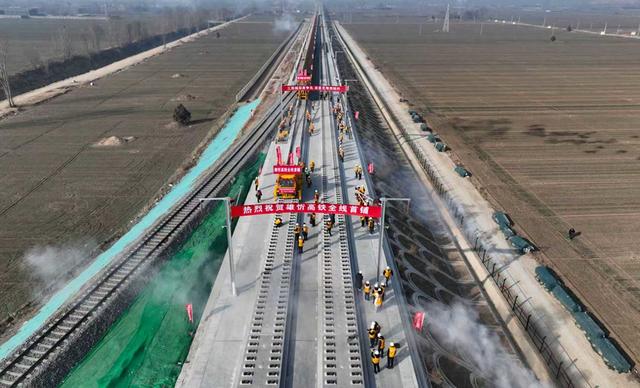
雄忻高铁建设取得重大进展 正式进入铺轨施工阶段
Zhong Guo Xin Wen Wang· 2026-02-01 06:09
Core Viewpoint - The construction of the Xiongxin High-Speed Railway has made significant progress, marking the start of the track-laying phase with the completion of the first 500-meter long steel rail [1][2]. Group 1: Project Overview - The Xiongxin High-Speed Railway is a crucial part of China's "Eight Vertical and Eight Horizontal" high-speed rail network, connecting Xiong'an Station to Xinzhu West Station, with a total length of approximately 342 kilometers and a design speed of 350 kilometers per hour [1]. - The track-laying work spans across Hebei and Shanxi provinces, covering a total length of 716 kilometers and requiring the installation of 147 sets of switches [1]. Group 2: Construction Challenges - The railway features a high proportion of bridges and tunnels, accounting for 88% of the total length, with several sections having continuous long slopes of 30‰, which complicates the transportation of long rails and locomotive braking [1]. - The construction at Xiong'an Station and Xinzhu West Station faces multiple challenges, including high safety risks, significant technical difficulties, and limited "window" operation times [1]. Group 3: Safety and Technology Measures - To ensure safe, high-quality, and efficient track-laying, the project team from China Railway Third Bureau has focused on safety production and invited technical experts from the China National Railway Beijing Bureau for specialized training [1]. - The project team has developed meticulous plans for the transportation and laying of long steel rails, implementing strict technical standards and safety quality measures, utilizing 15 locomotives, 8 rail vehicles, 4 long rail racks, and 2 track-laying vehicles [2]. - An information system for track laying has been actively applied, allowing for real-time remote monitoring of equipment operations, which enhances the safety and efficiency of the construction process [2]. Group 4: Economic Impact - Upon completion, the Xiongxin High-Speed Railway will enhance the layout of China's high-speed rail network, significantly improving transportation links between Shanxi and the Beijing-Tianjin-Hebei region, and will play a vital role in promoting economic and social development along the route [2].
新进展+1,雄忻高铁正式启动铺轨施工
Xin Lang Cai Jing· 2026-02-01 05:52
Group 1 - The construction of the Xiongxin High-speed Railway has officially entered the track-laying phase with the first pair of 500-meter long steel rails being laid on the ballastless track bed [1] - The Xiongxin High-speed Railway is a crucial part of China's "Eight Vertical and Eight Horizontal" high-speed railway network, with a total length of approximately 342 kilometers and a designed speed of 350 kilometers per hour [3] - The track-laying construction spans across Hebei and Shanxi provinces, with a total length of 716 kilometers, starting with the Hebei section followed by the Shanxi section [3] Group 2 - Upon completion, the Xiongxin High-speed Railway will enhance the layout of the high-speed railway network, strengthen transportation links between Shanxi and the Beijing-Tianjin-Hebei region, and promote economic and social development along the route [5] - The railway is expected to inject new momentum into the rise of the central region by facilitating regional coordinated development [5]