高速铁路网建设

Search documents
雄忻高铁进入铺轨施工阶段
Zhong Guo Xin Wen Wang· 2026-02-01 16:01
Core Viewpoint - The construction of the Xiongxin High-Speed Railway has officially entered the track-laying phase, marking a significant milestone in the project, which is part of China's "Eight Vertical and Eight Horizontal" high-speed railway network [1][2] Group 1: Project Overview - The Xiongxin High-Speed Railway spans approximately 342 kilometers, connecting Xiong'an Station to Xinzhou West Station, with a designed speed of 350 kilometers per hour [1] - The project features a high proportion of bridges and tunnels, accounting for 88% of the total length, which presents challenges in construction logistics and track-laying [1] Group 2: Construction Challenges - The construction faces multiple challenges, including high safety risks and technical difficulties, particularly at the junctions of Xiong'an Station and Xinzhou West Station [1] - The project team from China Railway Third Bureau is focusing on safety management and has implemented specialized training for construction personnel to enhance safety awareness [1] Group 3: Technological Integration - The use of an information system for track-laying has been introduced, allowing for real-time monitoring of equipment operations, which contributes to the safety and efficiency of the construction process [1] Group 4: Economic and Social Impact - Upon completion, the Xiongxin High-Speed Railway will enhance the national high-speed railway network, significantly improving transportation links between Shanxi and the Beijing-Tianjin-Hebei region, and will play a crucial role in promoting economic and social development along the route [2]
雄忻高铁建设取得重大进展 正式进入铺轨施工阶段
Zhong Guo Xin Wen Wang· 2026-02-01 06:09
Core Viewpoint - The construction of the Xiongxin High-Speed Railway has made significant progress, marking the start of the track-laying phase with the completion of the first 500-meter long steel rail [1][2]. Group 1: Project Overview - The Xiongxin High-Speed Railway is a crucial part of China's "Eight Vertical and Eight Horizontal" high-speed rail network, connecting Xiong'an Station to Xinzhu West Station, with a total length of approximately 342 kilometers and a design speed of 350 kilometers per hour [1]. - The track-laying work spans across Hebei and Shanxi provinces, covering a total length of 716 kilometers and requiring the installation of 147 sets of switches [1]. Group 2: Construction Challenges - The railway features a high proportion of bridges and tunnels, accounting for 88% of the total length, with several sections having continuous long slopes of 30‰, which complicates the transportation of long rails and locomotive braking [1]. - The construction at Xiong'an Station and Xinzhu West Station faces multiple challenges, including high safety risks, significant technical difficulties, and limited "window" operation times [1]. Group 3: Safety and Technology Measures - To ensure safe, high-quality, and efficient track-laying, the project team from China Railway Third Bureau has focused on safety production and invited technical experts from the China National Railway Beijing Bureau for specialized training [1]. - The project team has developed meticulous plans for the transportation and laying of long steel rails, implementing strict technical standards and safety quality measures, utilizing 15 locomotives, 8 rail vehicles, 4 long rail racks, and 2 track-laying vehicles [2]. - An information system for track laying has been actively applied, allowing for real-time remote monitoring of equipment operations, which enhances the safety and efficiency of the construction process [2]. Group 4: Economic Impact - Upon completion, the Xiongxin High-Speed Railway will enhance the layout of China's high-speed rail network, significantly improving transportation links between Shanxi and the Beijing-Tianjin-Hebei region, and will play a vital role in promoting economic and social development along the route [2].
中国高铁营业里程突破5万公里
Ren Min Ri Bao· 2025-12-26 02:05
Core Points - The total operational mileage of China's high-speed rail has surpassed 50,000 kilometers, ranking first in the world and exceeding the combined mileage of all other countries' high-speed rail systems [1] - Since the beginning of the 14th Five-Year Plan, China has completed and put into operation 12,000 kilometers of high-speed rail, representing a growth of approximately 32% compared to the end of 2020 [1] - A total of 128 counties have entered the high-speed rail era, establishing the largest and most modern high-speed railway network globally [1] Coverage and Impact - High-speed rail now covers 97% of cities with a population of over 500,000, handling 80% of China's passenger volume and 69% of passenger turnover, making it the main mode of transportation for medium and long-distance travel [1] - The new generation ticketing system, 12306, has become the largest in the world in terms of access volume and transaction scale, with a daily ticket sales capacity exceeding 20 million tickets [1]
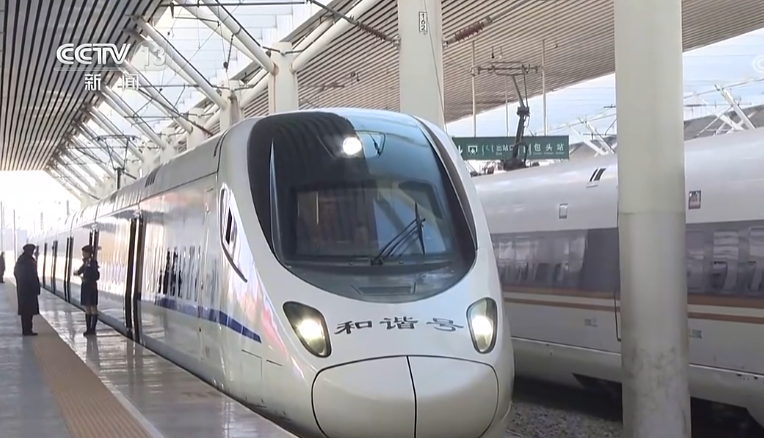
包头至银川高速铁路今天全线开通运营
Yang Shi Xin Wen Ke Hu Duan· 2025-12-23 07:29
Core Viewpoint - The opening of the Baoyin High-Speed Railway marks a significant milestone in China's "14th Five-Year Plan," completing the last segment of the "Eight Vertical and Eight Horizontal" high-speed rail network, enhancing connectivity in the region [1][5]. Group 1: Infrastructure Development - The Baoyin High-Speed Railway connects Baotou in Inner Mongolia to Yinchuan in Ningxia, passing through several cities including Bayannur, Ordos, and Wuhai, with a design speed of 250 km/h [3]. - The travel time between Baotou and Yinchuan is reduced to under 3 hours, significantly improving accessibility and fostering collaboration among cities in the Northwest [3]. Group 2: Economic and Regional Impact - The railway, along with the Beijing-Baotou Passenger Dedicated Line and the Yinchuan-Lanzhou High-Speed Railway, forms a crucial part of the national high-speed rail network, linking five provinces and regions: Beijing, Hebei, Inner Mongolia, Ningxia, and Gansu [5]. - This development is expected to promote high-quality growth in the Yellow River basin and contribute to the new pattern of development in the western region of China [5]. Group 3: Tourism and Cultural Integration - The Baoyin High-Speed Railway serves as a conduit for winter tourism, connecting various cultural and scenic resources along its route, creating a convenient travel corridor for visitors [6]. - The railway transforms independent tourist attractions into a cohesive travel experience, showcasing the unique winter landscapes and cultural heritage of Inner Mongolia [12].

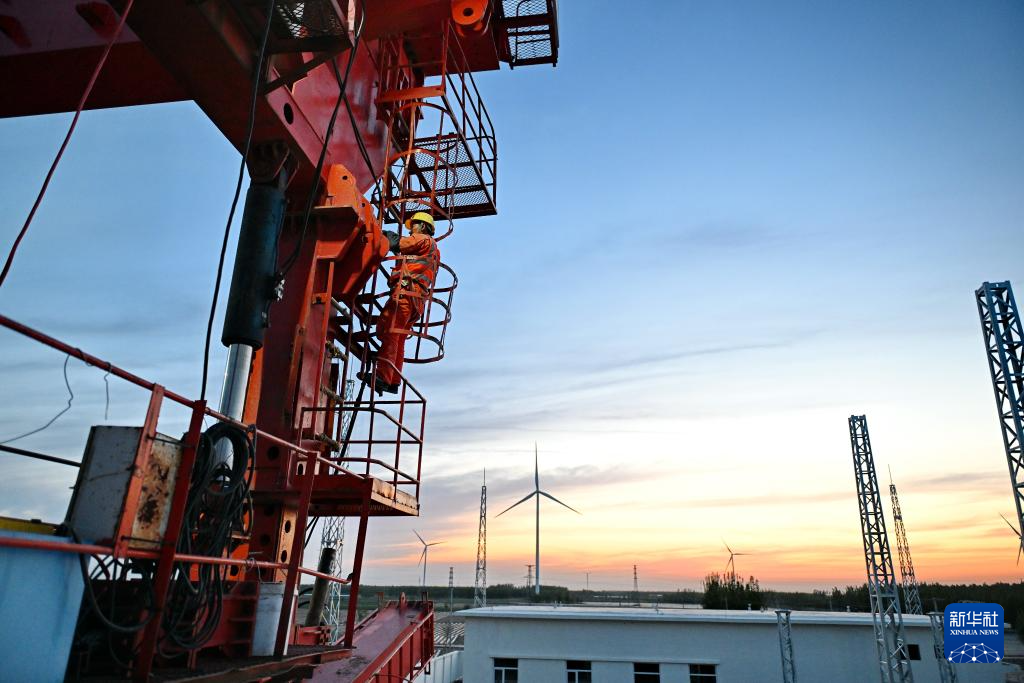
兰合铁路重难点控制性工程曲奥隧道顺利贯通
Xin Hua Wang· 2025-12-10 08:42
Core Viewpoint - The successful completion of the Qucao Tunnel marks a significant breakthrough in the construction of the Lanzhou-Hohhot Railway, laying a solid foundation for the entire line's operation [1] Group 1: Project Overview - The Qucao Tunnel, located in Gansu Province, is a single-hole double-track tunnel with a total length of 10,669 meters [1] - The tunnel faces challenging geological conditions, with over 70% of the surrounding rock classified as grade four and five, presenting high construction risks [1] Group 2: Technological Implementation - The construction team utilized BIM+GIS technology to create a three-dimensional geological model, allowing for precise monitoring of tunnel deformation and timely adjustments to support parameters [1] Group 3: Economic and Social Impact - The Lanzhou-Hohhot Railway is a crucial part of the national "Eight Vertical and Eight Horizontal" high-speed railway network, with a new main line length of 147.42 kilometers and a design speed of 200 kilometers per hour [1] - Once operational, the railway will connect with the Xining-Chengdu Railway, enhancing the regional railway network and ending the historical lack of railway access in certain areas of Gansu Province, which is expected to promote high-quality economic and social development along the route [1]
西十高铁全线隧道贯通!通车后,武汉至西安3小时可达
Chang Jiang Ri Bao· 2025-07-31 00:20
Core Viewpoint - The successful completion of the Hujia Yuan Tunnel marks a significant milestone in the construction of the Xitian High-speed Railway, indicating that all 42 tunnels along the line have been completed, thus accelerating the overall construction progress [1][3]. Group 1: Project Overview - The Xitian High-speed Railway has a total length of 255.7 kilometers, with the Shaanxi section measuring 169.4 kilometers and the Hubei section measuring 86.3 kilometers [3]. - The Hubei section includes 26.5 tunnels, with the Hujia Yuan Tunnel being the last to be completed [5]. Group 2: Construction Challenges - The project faces significant challenges due to poor surrounding rock conditions, shallow burial, and high construction risks, which require strict adherence to safety and quality standards [3][7]. - The construction team has implemented advanced support measures and utilized GIS visualization platforms to enhance process control and ensure safety during the construction [7]. Group 3: Economic and Connectivity Impact - The Xitian High-speed Railway is a crucial part of the national high-speed rail network, designed for a speed of 350 kilometers per hour, which will enhance connectivity between the Guanzhong urban agglomeration and the Yangtze River middle reaches [7]. - The railway is expected to open in June 2026, reducing travel time significantly between major cities, such as Wuhan to Xi'an in under 3 hours [10].

雄商高铁河北段架梁施工全部完成
Ren Min Wang· 2025-04-27 14:52
Core Points - The construction of the Xiongshan High-Speed Railway (雄商高铁) in Hebei has reached a significant milestone with the completion of the box girder installation for the Zaoqing Grand Bridge, marking the end of the beam-laying work for the Hebei section of the railway [2][4][6][8][10][12][14] - The Xiongshan High-Speed Railway is a crucial part of China's high-speed rail network, specifically the Beijing-Hong Kong (Taiwan) corridor, with a total length of 552 kilometers and a designed speed of 350 kilometers per hour [2][4][6][8][10][12][14] Company and Industry Insights - China Railway Twenty Bureau Group, among other units, is responsible for the construction of the Xiongshan High-Speed Railway, highlighting the involvement of major construction firms in significant infrastructure projects [2][4][6][8][10][12][14] - The completion of the beam-laying work is expected to enhance the connectivity and efficiency of the high-speed rail network in China, which is part of the broader strategy to improve transportation infrastructure [2][4][6][8][10][12][14]