
雨水花园

Search documents
衡水全方位海绵生态系统基本成形
Xin Lang Cai Jing· 2026-01-08 23:08
Core Insights - The city of Hengshui has completed 127 sponge city projects, establishing a comprehensive sponge ecological system [3][4] - The initiative aims to address water issues and enhance urban drainage and ecological livability [3] Group 1: Project Implementation - Hengshui was selected as a national demonstration city for sponge city construction in May 2023, focusing on integrating sponge city concepts into urban development [3] - A multi-level coordination mechanism has been established, including the issuance of regulations such as the "Sponge City Construction Management Regulations" to support project advancement [3] Group 2: Infrastructure Improvements - The city has implemented a combination of rainwater and sewage diversion strategies, improving drainage capacity and addressing waterlogging issues in older urban areas [3] - Key areas like Fuyang Road have been developed into linear "sponge bodies," while the region around Hengshui Lake has been transformed into a composite ecological buffer zone [3][4] Group 3: Environmental Impact - The total new rainwater storage capacity added is approximately 120.69 million cubic meters, effectively eliminating urban waterlogging areas [4] - The proportion of permeable surfaces in built-up areas has reached 43.24%, with a target of 58.11% for recycled water utilization by 2024, alleviating groundwater extraction pressure [4]

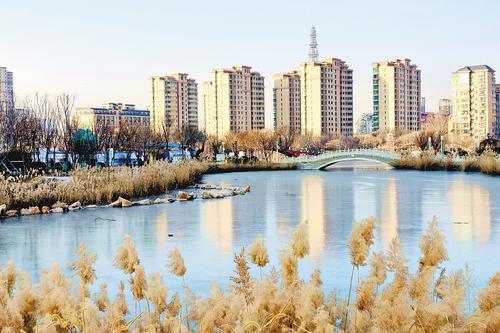
【理响中国·薪火“燃”青春】以生态系统视角重塑长三角都市圈气候韧性
Xin Lang Cai Jing· 2025-12-26 05:40
Core Viewpoint - The construction of resilient cities is a key goal for modern urban development in China, particularly in the Yangtze River Delta region, which is undergoing significant integration and high-quality development [1][4]. Group 1: Urban Resilience and Climate Challenges - Urban areas are increasingly facing severe risks from extreme weather and disasters due to global climate change, necessitating a shift from traditional engineering disaster prevention methods to ecological disaster risk reduction [2]. - The Taihu Basin exemplifies the challenges faced, with rapid urbanization leading to a 73% increase in built-up land since 1997, exacerbating flood risks and climate vulnerabilities [3]. Group 2: Integrated Understanding and Collaborative Goals - Achieving a unified understanding of ecological and climate safety across the Yangtze River Delta is essential, as ecological degradation in one area can impact the entire region through natural processes and socio-economic connections [4]. - The integration of ecological protection and disaster risk reduction goals is crucial for addressing complex climate risks in the region [4]. Group 3: Systematic Optimization and Technological Support - Systematic integration of ecological principles into urban planning and management is vital, emphasizing the need for top-level design and the incorporation of resilience and climate adaptability into spatial planning [5]. - The application of artificial intelligence (AI) in disaster risk assessment and management can enhance decision-making processes, transitioning from experience-based to data-driven approaches [6]. Group 4: Regional Collaboration and Community Engagement - Addressing multi-faceted climate risks requires coordinated planning at the metropolitan and urban cluster levels, overcoming administrative fragmentation [7]. - Public awareness and community involvement in ecological and resilience initiatives are essential for fostering a collaborative environment in urban resilience building [7].
杭州海绵城市建设将更精细、更贴合民生需求
Hang Zhou Ri Bao· 2025-10-14 02:26
Core Insights - The article highlights the successful integration of sponge city concepts with landscape design in Hangzhou, showcasing innovative projects that enhance urban resilience and aesthetics [3][4][6] Group 1: Project Overview - The project features a rainwater garden and permeable pavements, transforming functional rainwater retention facilities into attractive community spaces [4][5] - It includes a 195-ton underground rainwater storage tank capable of collecting over 2000 cubic meters of rainwater annually, supporting daily needs such as irrigation and road cleaning [5][6] Group 2: Community Engagement - Local residents expressed support for the sponge city initiatives, appreciating the aesthetic and functional benefits of the green spaces [5] - Discussions during the seminar focused on the depth of rainwater gardens, maintenance of sponge facilities, and gaining community acceptance for future projects [5][6] Group 3: Future Directions - Hangzhou aims to continue advancing sponge city projects by integrating them with landscape and community needs, striving for more visually appealing and functional designs [6]
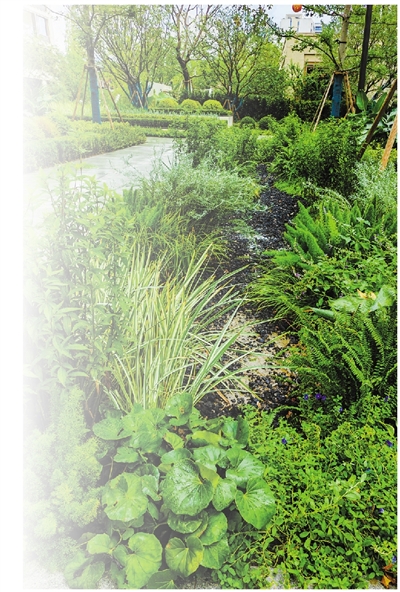
重庆完成相关建设项目2000余个 海绵城市 化雨水为资源(探访)
Ren Min Ri Bao· 2025-06-26 21:57
Core Viewpoint - Chongqing is actively implementing sponge city construction, utilizing various measures to enhance urban water management and reduce flooding risks through innovative designs and infrastructure improvements [1][2][3]. Group 1: Sponge City Construction - Chongqing has completed 2,055 sponge city projects, with 535 compliant drainage areas covering 845.8 square kilometers, accounting for 46.2% of the urban built-up area [1]. - The city employs techniques such as infiltration, retention, storage, purification, utilization, and drainage to manage rainwater effectively [1]. Group 2: Rainwater Gardens - Rainwater gardens, referred to as "sponge cells," are designed to collect, retain, and purify rainwater, contributing to groundwater recharge and landscape irrigation [2][3]. - These gardens utilize native plants that can withstand flooding and drought, enhancing their ability to retain rainwater [2]. Group 3: Infrastructure Innovations - The cloud lake in the data valley has a storage capacity of approximately 4,000 cubic meters, controlling rainwater runoff for an area of about 200,000 square meters [3]. - The integration of permeable pavements and bioretention areas along roads helps to slow down rainwater runoff and improve water quality [3]. Group 4: Sports Facilities Adaptation - The Daitianwan Sports Center has been retrofitted with a rainwater reuse system, allowing for the collection and utilization of rainwater for field maintenance and sanitation [4][5]. - Green roofs have been introduced in indoor venues to enhance rainwater retention, creating over 3,000 square meters of green space [5]. Group 5: Industrial Applications - The Chongqing Chemical Industry Co., Ltd. has implemented sponge facilities in its factory area, including 14 rainwater gardens to manage stormwater and improve the working environment [6][7]. - The integration of rainwater gardens with parking lots in Liangping District enhances both stormwater management and aesthetic appeal [7]. Group 6: Future Developments - Chongqing plans to continue its sponge city initiatives by leveraging IoT and big data technologies, aiming to create a more livable and intelligent urban environment [7]. - The city is also focused on developing a "sponge industry chain" to support local enterprises in creating suitable sponge technologies and products [7].