
透水砖

Search documents
六成建筑垃圾“变废为宝”助力城乡绿色发展
Xin Lang Cai Jing· 2026-01-12 19:03
Core Insights - The article highlights the transformation of construction waste into valuable resources through advanced processing techniques, contributing to urban green development [1][2][3] Group 1: Construction Waste Management - The city of Aral has established a comprehensive management system for construction waste, focusing on source classification, standardized disposal, and resource utilization, achieving a resource utilization rate of 60% [2] - The government-led, market-operated model enhances the efficiency of the construction waste management system, with fixed disposal points and regular monitoring to prevent illegal dumping [2] Group 2: Technological Innovation and Economic Impact - The use of recycled materials in construction products has reached approximately 40%, with a 30% reduction in production costs for aerated concrete blocks, potentially generating an additional revenue of over 15 million yuan by 2025 [3] - Effective sorting and processing of construction waste have led to the recovery of materials like wood and metal, reducing resource dependency and alleviating waste disposal pressure, thereby fostering a complete green industrial chain [3]
山东将探索建立赤泥资源数据库
Da Zhong Ri Bao· 2025-12-17 01:00
Core Viewpoint - The Shandong Provincial Department of Industry and Information Technology, along with five other departments, has issued the "Shandong Province Red Mud Comprehensive Utilization Action Plan" to promote the reduction, control, and utilization of red mud, aiming for a comprehensive utilization rate of over 18% by 2027 [1][2]. Group 1: Red Mud Management - Red mud is a key industrial waste generated during alumina production, and Shandong is a major alumina production province with significant red mud generation and storage challenges [1]. - The plan emphasizes a lifecycle management system covering "generation—transportation—utilization—disposal" with a focus on "reduction, resource utilization, and harmlessness" [1]. Group 2: Technological Advancements - The plan encourages alumina production companies to enhance technological upgrades, utilizing big data and artificial intelligence for green and intelligent transformations [1]. - Establishing intelligent production systems with functions for process optimization, dynamic scheduling, and energy consumption management is a key objective [1]. Group 3: Utilization Pathways - Shandong will optimize the "low-cost selection of metal elements from red mud + roadbed, building materials, permeable bricks, and road slope protection" model to expand the scale of existing utilization pathways [2]. - Cities like Zibo, Yantai, Liaocheng, and Binzhou are encouraged to produce various products from red mud, including sintered bricks, non-fired bricks, and permeable bricks, while also exploring its use in construction materials and chemical products [2].
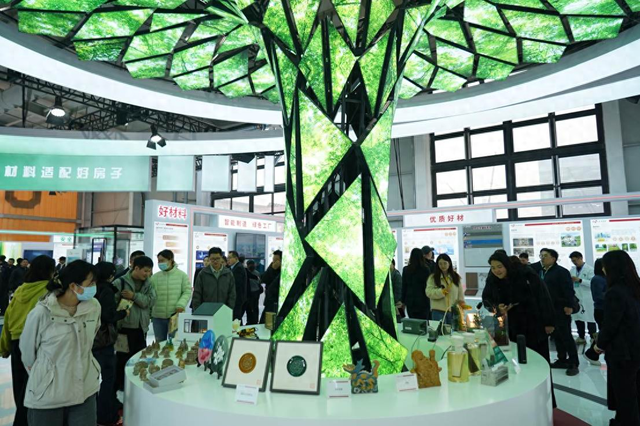
在住博会金隅展位,看见“从一粒砂到一个家”
Bei Jing Ri Bao Ke Hu Duan· 2025-11-18 08:14
Core Viewpoint - The Chinese government is promoting the construction of "safe, comfortable, green, and smart" housing, with the Ministry of Housing and Urban-Rural Development focusing on a "6633" standard for quality housing, emphasizing safety and core demands for health and practicality [1][3]. Group 1: Good Materials - Jinyu Group showcases its full-chain product offerings at the 22nd China International Housing Industry and Building Industrialization Products and Equipment Expo, emphasizing the importance of quality materials in constructing good houses [3][5]. - The company presents a matrix of high-quality materials, including low-carbon cement, high-performance concrete, and eco-friendly coatings, which are essential for building a solid foundation for good housing [3][5]. - Innovative materials such as self-healing concrete and energy-storing cement are highlighted, showcasing advancements in durability and energy efficiency [5][6]. Group 2: Good Housing - Jinyu Group illustrates how quality materials can be systematically transformed into high-quality living spaces through models that demonstrate integrated applications of good materials [6][7]. - The "age-friendly housing" model emphasizes safety, comfort, and human-centered design, adhering to the latest residential project standards to ensure every square meter is valuable [7][9]. - The design principles focus on creating a healthy and comfortable living environment, incorporating features like soundproof windows and spacious layouts to enhance the living experience [7][9]. Group 3: Good Services - Jinyu Group's service system aims to enhance asset value and create a better living experience, covering the entire lifecycle of buildings from design to maintenance [10][11]. - The company offers a comprehensive range of services, including smart operation and maintenance, community engagement, and urban renewal projects, ensuring long-term support for housing [10][11]. - The integration of innovative materials and human-centered design in the service offerings reflects Jinyu's commitment to quality and sustainability in the housing sector [11].

枣庄|让生活与美好撞个满怀 枣庄城市更新有看头
Da Zhong Ri Bao· 2025-09-28 00:47
Group 1 - The core idea of urban renewal in Zaozhuang is to drive high-quality development through spatial optimization, industrial transformation, and cultural inheritance [2][3] - The introduction of eco-friendly building materials, such as permeable bricks, has significantly improved urban infrastructure and environmental conditions, allowing the city to "breathe freely" [2][4] - The transformation of parks and public spaces reflects a shift from merely increasing greenery to enhancing the overall quality of green spaces, incorporating cultural elements and community engagement [3][4] Group 2 - The ecological brick production process involves recycling construction waste and tailings, with a capacity to process 30,000 tons of solid waste annually, producing 30 million eco-bricks [2] - The design of public spaces, such as the Tai'erzhuang District park, emphasizes all-age-friendly environments, integrating recreational and fitness facilities for families [4] - The urban renewal efforts in Zaozhuang focus on both aesthetic and functional improvements, enhancing residents' quality of life through systematic urban planning [4]
重庆完成相关建设项目2000余个 海绵城市 化雨水为资源(探访)
Ren Min Ri Bao· 2025-06-26 21:57
Core Viewpoint - Chongqing is actively implementing sponge city construction, utilizing various measures to enhance urban water management and reduce flooding risks through innovative designs and infrastructure improvements [1][2][3]. Group 1: Sponge City Construction - Chongqing has completed 2,055 sponge city projects, with 535 compliant drainage areas covering 845.8 square kilometers, accounting for 46.2% of the urban built-up area [1]. - The city employs techniques such as infiltration, retention, storage, purification, utilization, and drainage to manage rainwater effectively [1]. Group 2: Rainwater Gardens - Rainwater gardens, referred to as "sponge cells," are designed to collect, retain, and purify rainwater, contributing to groundwater recharge and landscape irrigation [2][3]. - These gardens utilize native plants that can withstand flooding and drought, enhancing their ability to retain rainwater [2]. Group 3: Infrastructure Innovations - The cloud lake in the data valley has a storage capacity of approximately 4,000 cubic meters, controlling rainwater runoff for an area of about 200,000 square meters [3]. - The integration of permeable pavements and bioretention areas along roads helps to slow down rainwater runoff and improve water quality [3]. Group 4: Sports Facilities Adaptation - The Daitianwan Sports Center has been retrofitted with a rainwater reuse system, allowing for the collection and utilization of rainwater for field maintenance and sanitation [4][5]. - Green roofs have been introduced in indoor venues to enhance rainwater retention, creating over 3,000 square meters of green space [5]. Group 5: Industrial Applications - The Chongqing Chemical Industry Co., Ltd. has implemented sponge facilities in its factory area, including 14 rainwater gardens to manage stormwater and improve the working environment [6][7]. - The integration of rainwater gardens with parking lots in Liangping District enhances both stormwater management and aesthetic appeal [7]. Group 6: Future Developments - Chongqing plans to continue its sponge city initiatives by leveraging IoT and big data technologies, aiming to create a more livable and intelligent urban environment [7]. - The city is also focused on developing a "sponge industry chain" to support local enterprises in creating suitable sponge technologies and products [7].
闽新钢铁超低排放改造进入试运行
Zhong Guo Xin Wen Wang· 2025-05-06 01:40
Core Viewpoint - Xinjiang Minxin Steel (Group) Minhang Special Steel Co., Ltd. has completed the main project of ultra-low emission transformation and is in trial operation, marking a new stage in environmental governance and providing strong momentum for regional industrial green upgrades [1][2] Group 1: Environmental Upgrades - The company has implemented an ultra-low emission control platform that meets national standards, with real-time monitoring of particulate matter and sulfur dioxide emissions [1] - An investment of 1.5 billion yuan has been made in 2024 for the ultra-low emission transformation project, which includes organized and unorganized emission control and a clean transportation system [1] - The company has established a comprehensive emission control network through the addition of 10 ultra-fine mist cannons, 2 washing machines, 26 TSP monitoring devices, and 12 air micro-stations [1][2] Group 2: Production Process Improvements - The company has replaced high-energy-consuming and high-polluting long-process steelmaking with a short-process electric arc furnace production line, achieving an annual capacity of 1 million tons [1] - In 2024, the company will invest 60 million yuan to establish Xinjiang Minxin Environmental Technology Co., Ltd., introducing a fully automated production line to process 100,000 tons of steel slag annually into new building materials [2] - The ultra-low emission transformation signifies a full-chain environmental upgrade from raw material storage to production and transportation [2] Group 3: Future Plans - The main body of the ultra-low emission project has been completed and is currently in the trial operation phase, with data collection expected to begin in two weeks for ultra-low emission acceptance [2] - The company aims to enhance environmental standards and improve site conditions, striving to create a green and garden-like factory [2]