
露地蔬菜

Search documents
中央气象台:全国农业气象周报(2026年02月23日)
Xin Lang Cai Jing· 2026-02-23 02:13
Weather Characteristics and Agricultural Impact - This week (February 15-21, 2026), temperatures in most agricultural areas across the country are 1-4°C higher than the same period in previous years, with some regions experiencing increases of 4-6°C and even over 6°C in parts of Jilin [1][6] - Precipitation varied, with snowfall in northern and northeastern regions and rainfall of 10-50mm in southern areas, while most other agricultural regions received less than 5mm or no precipitation [1][6] - Sunshine hours are close to or exceed normal levels by 30-80%, particularly in southern and southwestern regions where sunshine is significantly above normal [1][6] Agricultural Production Impact Analysis - Higher temperatures in Xinjiang and northeastern regions may negatively affect livestock and facility agriculture due to temperature fluctuations and adverse weather conditions [6] - Favorable conditions for winter wheat growth in northern regions, with adequate soil moisture from recent precipitation, supporting safe overwintering and growth in southern Huanghuai winter wheat [6] - In southern regions, good light and temperature conditions benefit the growth of oilseed rape, winter wheat, and vegetables, although some areas face challenges due to insufficient rainfall [6] Future Weather Forecast and Recommendations - The next 10 days are expected to see temperatures in northern winter wheat areas 1-3°C above normal, with precipitation beneficial for soil moisture [7][8] - Southern regions will experience increased rainfall, particularly beneficial for crop growth and early rice planting [7][8] - Recommendations include soil management practices in northern winter wheat areas and water and fertilizer management in southern regions to ensure healthy crop growth [8] Crop Growth Monitoring - Statistics on winter wheat development show various stages across provinces, with significant numbers in the overwintering and greening phases [10][11] - Oilseed rape development is also monitored, with flowering and bolting stages reported in several provinces [11]


中央气象台:全国农业气象周报(2026年02月09日)
Xin Lang Cai Jing· 2026-02-09 00:44
Weather Characteristics and Agricultural Impact Analysis - The average temperature in most agricultural areas of the country is 1-2°C higher than the same period in previous years, with some regions like southeastern Northwest, western Huanghuai, and southern Jiangnan experiencing increases of 2-4°C, and northern Xinjiang seeing increases of 4-6°C [1][5] - Precipitation is scarce in most agricultural areas, with some regions like southern Jiangsu and northern Zhejiang receiving 25-50 mm, which is 30% to 200% more than the historical average [1][5] - Sunshine hours are close to historical averages in most northern agricultural areas, while southeastern Jiangnan and central-southern Hunan see sunshine hours increase by 80% to 200% [1][5] Future Weather Impact on Agriculture - The temperature in the central and eastern regions is expected to gradually rise, with most areas being 1-3°C higher than the historical average, benefiting the growth of winter wheat, rapeseed, and economic fruit trees [5] - Cumulative precipitation in regions like southwestern Huanghuai, Jianghuai, and most of Jiangnan is expected to be 5-20 mm, with some areas receiving 25-45 mm, which will help increase soil moisture but also poses a risk of waterlogging in poorly drained fields [5] - The next ten days will see multiple rainy days in western Jiangnan and eastern Southwest regions, with precipitation in northern Xinjiang and northeastern regions expected to be 3-6 mm, which may negatively impact facility agriculture and animal husbandry [5] Recommendations for Agricultural Management - Northern winter wheat areas should enhance field management based on seedling and moisture conditions to ensure safe overwintering of wheat [6] - Southern regions should manage water and fertilizer for winter wheat, rapeseed, and open-field vegetables, while areas with excessive rainfall should clear drainage channels to mitigate waterlogging [6] - Regions like Northeast, Xinjiang, and western Jiangnan should reinforce facility greenhouses and prepare feed reserves, while southern regions should focus on clearing and maintaining irrigation facilities in preparation for spring agricultural activities [6]
农业农村部和中国气象局联合发布农业低温冻害风险提示
Zhong Guo Xin Wen Wang· 2025-12-30 08:49
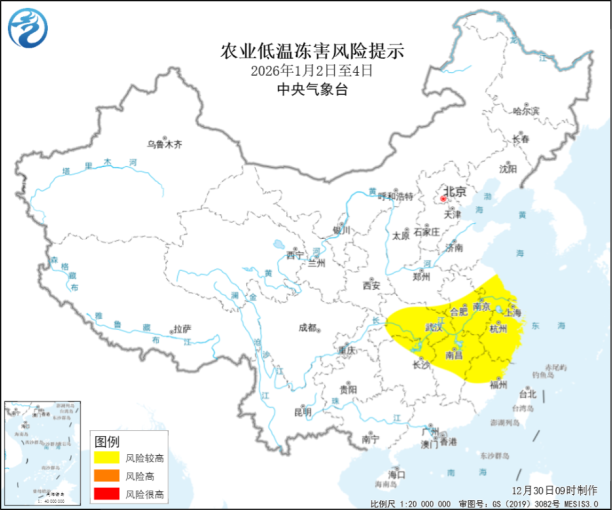
Core Viewpoint - The Ministry of Agriculture and Rural Affairs and the China Meteorological Administration issued a risk warning for agricultural low-temperature frost damage, predicting significant snowfall and temperature drops in central and eastern China from December 30, 2025, to January 2, 2026 [1]. Summary by Relevant Sections - **Weather Forecast**: A large-scale rain and snow event is expected in central and eastern China, with heavy snow and localized blizzards in regions such as Jianghan, western Huanghuai, southern Shanxi, and central and southern Shaanxi [1]. - **Temperature Changes**: A strong cold air mass will cause temperatures in the Yangtze River middle and lower reaches to drop by 6 to 8 degrees Celsius, with some areas in Zhejiang and western Hubei experiencing drops exceeding 10 degrees Celsius [1]. - **Frost Damage Risk**: The lowest temperature line is expected to move south to the central and southern regions of Jiangnan by the early morning of January 3. Areas such as southern Jiangsu, central Anhui, most of Hubei, northern Jiangxi, northern Zhejiang, and northern Fujian face a high risk of low-temperature frost damage to rapeseed, open-field vegetables, and economic fruit trees from January 2 to 4 [1]. - **Preventive Measures**: Recommendations include checking and reinforcing production facilities, harvesting mature fruits and vegetables, and implementing protective measures such as covering for warmth, emergency heating, and applying antifreeze agents to mitigate agricultural frost damage [1].
部分地区降温10℃以上,两部门发布农业低温冻害风险提示
Xin Lang Cai Jing· 2025-12-30 08:48
Core Insights - The Ministry of Agriculture and Rural Affairs and the China Meteorological Administration issued a risk warning for agricultural low-temperature frost damage, predicting significant rain and snow in central and eastern China from December 30, 2025, to January 2, 2026 [1] Summary by Categories Weather Forecast - A large-scale rain and snow event is expected in central and eastern China, with heavy snow and localized blizzards in regions such as Jianghan, western Huanghuai, southern Shanxi, and central and southern Shaanxi [1] - Temperatures in the middle and lower reaches of the Yangtze River are forecasted to drop by 6 to 8 degrees Celsius, with some areas in western Hubei experiencing temperature declines exceeding 10 degrees Celsius [1] Agricultural Impact - The lowest temperature line of 0 degrees Celsius is expected to move southward to the central and southern regions of Jiangnan by the early morning of January 3 [1] - There is a high risk of low-temperature frost damage to rapeseed, open-field vegetables, and economic fruit trees in southern Jiangsu, central and southern Anhui, most of Hubei, northern and central Jiangxi, northern Zhejiang, and northern Fujian from January 2 to 4 [1] Recommendations - It is advised to check and reinforce production facilities, harvest mature fruits and vegetables, and implement measures such as covering for insulation, emergency heating, and applying antifreeze agents to prevent agricultural low-temperature frost damage [1]
人保财险内蒙古分公司:从“保基本”到“保全链”的创新实践
Zhong Guo Jin Rong Xin Xi Wang· 2025-12-17 11:56
Core Viewpoint - The company is innovating agricultural insurance products and services in Inner Mongolia to address traditional insurance challenges and support rural revitalization through a combination of insurance and futures strategies [1][2][3][4] Group 1: Agricultural Insurance Innovations - The company has upgraded its insurance coverage from "basic protection" to "full chain protection" to address diverse risks in grassland animal husbandry and specialty planting [2] - Since 2015, the company has launched the first livestock weather index insurance in Xilin Gol League, enabling automatic compensation triggered by meteorological data, achieving rapid claims within 48 hours during droughts [2] - The company has expanded agricultural insurance coverage by introducing various innovative products, including target price insurance for potatoes and comprehensive cost insurance for staple crops [2] Group 2: "Insurance + Futures" Model - The company has developed an "insurance + futures" model to stabilize farmers' income and hedge against market price fluctuations, providing a combination of income insurance, futures price add-on insurance, and technological services [3] - In the pilot phase, this model has resulted in compensation amounts nearly double that of traditional insurance, covering both yield and price risks [3] - By 2024, the projects under this model have covered 2.87 million acres of crops and 970,000 livestock, providing risk protection exceeding 2.7 billion yuan for approximately 46,300 households [3] Group 3: Technological Empowerment - The company has established an integrated "sky-ground" intelligent service network using satellite remote sensing, drones, and artificial intelligence to enhance underwriting and claims efficiency [4] - Satellite technology monitors fire and pest risks for millions of acres of forest, while drones expedite large-scale crop loss assessments post-disaster [4] - Digital platforms facilitate easy land identification and online insurance for farmers, while AI technology helps prevent fraudulent claims by creating unique biological IDs for livestock [4]