
音视频课程

Search documents
经济日报:莫让盗版灰产阻碍教育创新
Xin Lang Cai Jing· 2025-12-21 00:07
Core Viewpoint - The education industry is facing significant challenges due to copyright infringement, particularly with audio and video course materials, which account for 79% of infringement cases. This issue predominantly affects vocational and higher education institutions [1] Group 1: Infringement Issues - Audio and video course infringement constitutes 79% of the copyright issues in the education sector [1] - Vocational education and higher education institutions are identified as the primary victims of these infringement problems [1] Group 2: Gray Market Dynamics - A complete industrial chain has emerged in the gray market, involving resource theft through cracking or leaks, recording and slicing in the middle stage, and sales through e-commerce, social media, and video platforms at the downstream [1] - This chain of operations makes infringement more covert, complicating evidence collection and increasing the costs of rights protection [1] Group 3: Impact on Education Content - The prevalence of low-cost pirated courses, exemplified by the "3.99 yuan" price point, is squeezing the development of legitimate educational content [1] - The inability of creators to receive reasonable returns on their investments threatens the healthy development of the educational content ecosystem and ultimately hinders educational innovation [1]
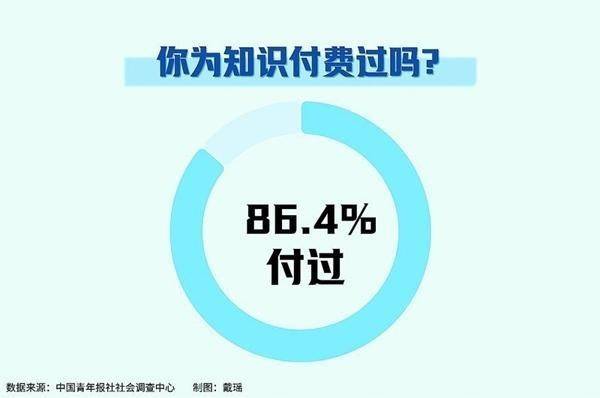
86.4%受访青年有过知识付费经历 音视频课程和订阅制会员受访青年买得最多
Sou Hu Cai Jing· 2025-11-06 02:45
Core Insights - The trend of knowledge payment is increasingly recognized by young people in China, with 86.4% of surveyed youth having experience in purchasing knowledge-based products [1][4] Group 1: Knowledge Payment Products - Audio and video courses are the most purchased knowledge payment products, with 52.2% of respondents having bought them [3] - Subscription-based memberships were purchased by 49.9% of respondents, while 40.9% bought e-books, papers, or professional reports [3] - Other popular products include online live broadcasts and series lectures (34.5%), paid Q&A and consulting (31.9%), content tipping (19.3%), and paid communities (13.5%) [3] Group 2: Spending Habits - 41.6% of respondents are willing to spend between 101-500 yuan annually on knowledge payment products, while 24.2% are willing to spend 501-1000 yuan [5] - 23.8% of respondents can accept spending 100 yuan or less, and 7.9% are willing to spend between 1001-3000 yuan [5] - A small percentage, 2.5%, are willing to spend over 3000 yuan annually [5] Group 3: Motivations for Knowledge Payment - The primary motivation for purchasing knowledge payment products is personal interest (57.3%), followed by work and academic needs (53.7%) [5] - Other reasons include professional skill enhancement (49.9%), solving specific life problems (33.9%), and supporting creators (22.6%) [5] - The rise of knowledge payment may be linked to information overload, as users seek to filter out low-quality content through paid options [5]

“出版+人工智能”将不断突破出版想象空间,创造新质生产力
Nan Fang Du Shi Bao· 2025-05-28 03:03
Core Insights - The forum on deep integration of publishing in the digital age highlighted the importance of cultural transmission and the role of publishing in building a culturally strong nation [1] - Experts from various sectors discussed new opportunities, paths, models, and ecosystems for publishing in the context of digital transformation [1] Group 1: Role of Editors and Cultural Development - Li Jingze emphasized that editors should not merely act as complex tools but should reimagine their roles to foster cultural connection and innovation in the AI era [2][3] - He identified challenges such as individual isolation and cultural dissemination dilemmas in the AI age, while also recognizing the potential for cultural development through new editing methods [2][3] Group 2: Opportunities in Educational Publishing - Liu Chao discussed the challenges and opportunities presented by generative AI in educational publishing, including disruptions in content production and traditional teaching models [4][5] - He outlined three key opportunities: reshaping knowledge value, enhancing educational services, and reconstructing industry ecology, emphasizing the need for the publishing industry to embrace new technologies [5][6] Group 3: Digital Publishing Trends - Guo Kaitian highlighted the significance of technological integration in digital publishing, showcasing Tencent's advancements in content production and user experience through AI [7] - He noted that the value of intellectual property (IP) lies in its continuous evolution and cross-industry collaboration, with successful examples like the adaptation of "Celebrating the Year" generating over 5 billion yuan in commercial value [7] Group 4: New Production Capabilities in Publishing - He Lihui discussed how AI is driving a new wave of industrial revolution in publishing, transforming it from a "small industry" to a "large industry" by simplifying complex processes and personalizing content [8][9] - She emphasized the need for a new publishing ecosystem that fosters collaboration among authors, publishers, and readers, moving from linear production to ecological construction [9] Group 5: Digital Service Innovations - Song Jishu stressed that the digital technology revolution is foundational, creating new cultural consumption scenarios and necessitating a focus on product and industry innovation rather than merely enhancing traditional publishing efficiency [10][11] - He advocated for the integration of digital services with traditional publishing, highlighting the importance of building internal technical teams and enhancing overall technical awareness within publishing organizations [11] Group 6: Technology and Cultural Integration - Yuan Yuan emphasized the need for technology to align with cultural values and ethical considerations, advocating for a balance between technological advancement and cultural integrity [12][13] - She introduced a model for intelligent text technology that enhances learning and understanding, while also addressing the importance of maintaining credibility in AI applications [13] Group 7: AI in Children's Content - Wang Kai shared insights on how AI is reshaping children's cultural dissemination, enhancing project management efficiency, and fostering collaboration with publishing entities [15] - He highlighted the potential of AI to streamline creative processes, significantly reducing project timelines and improving content creation for children's literature [15]