香粉

Search documents
决胜“十四五” 打好收官战丨从人背马驮到无人机飞——怒江草果运输变迁背后的农业现代化转型
Xin Hua Wang· 2025-12-04 12:41
Core Viewpoint - The article highlights the transformation of agricultural transportation in Nujiang, Yunnan, from traditional methods to modern drone technology, showcasing the impact of agricultural modernization on local farmers' income and efficiency [1][4]. Group 1: Transportation Transformation - The introduction of drones has significantly reduced transportation time and costs for local farmers, with delivery times decreasing from half a day to just 5 minutes [1][4]. - Transportation costs for grass fruit have dropped from over 1,000 yuan per ton to around 400 yuan, resulting in increased earnings for farmers [6][9]. - The local government has facilitated the integration of drone technology into agricultural practices, establishing standardized take-off and landing points for drones [4][9]. Group 2: Economic Impact - The area under grass fruit cultivation in Dulongjiang Township reached 83,700 acres, with an expected production of over 2,400 tons this year [6]. - The reduction in transportation costs has led to an estimated cumulative increase in farmers' income by over 400,000 yuan [6]. - The transformation has enabled local farmers to process fresh fruit into higher-value products, enhancing the overall value chain [6][9]. Group 3: Community Engagement and Future Prospects - The rise of drone technology has encouraged local youth to return to their hometowns, with new opportunities in drone operation and e-commerce [9]. - The local government plans to expand the application of drone technology beyond transportation to include agricultural protection, postal logistics, and tourism [9]. - The success of grass fruit transportation via drones serves as a model for broader economic development and rural revitalization in the region [9].


“文火慢炖” 融汇老味道与新活力
Ren Min Ri Bao Hai Wai Ban· 2025-11-17 01:42
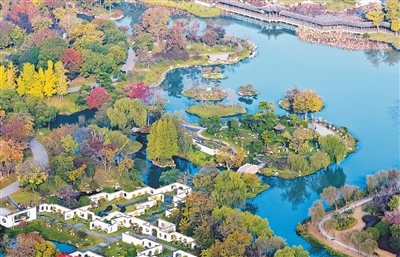
Core Viewpoint - Yangzhou, a city with over 2,500 years of history, is undergoing a cultural and urban renaissance, blending ancient heritage with modern development, while actively involving local residents in the preservation and revitalization efforts [3][4][19]. Group 1: Historical Significance - Yangzhou has a rich history dating back to the Spring and Autumn period, significantly influenced by the Grand Canal, which has shaped its cultural and economic landscape [3]. - The city is recognized as a "living museum," with strict regulations on building heights to preserve its historical skyline [5][6]. Group 2: Urban Revitalization Efforts - Recent initiatives focus on the protection and revitalization of the ancient city, emphasizing the integration of historical and modern elements [4][7]. - The renovation of historical sites, such as the reconstruction of the Wenhui Pavilion, aims to respect historical architecture while meeting contemporary needs [6][15]. Group 3: Community Involvement - Local residents are actively participating in the preservation process, providing input and engaging in restoration projects, which fosters a sense of community and shared history [11][14]. - The transformation of areas like Renfengli and Dongguan Street showcases a collaborative approach, balancing modernization with the retention of local culture and lifestyle [10][12][13]. Group 4: Cultural and Economic Impact - The revitalization of Yangzhou's ancient streets has led to a resurgence in tourism and local businesses, creating vibrant cultural hubs that attract visitors [9][17]. - The integration of traditional crafts and modern entrepreneurial ventures in areas like Pishi Street highlights the city's dynamic cultural landscape [18].