
香花油茶

Search documents
从“金不换”到“万亿金”——绿涌八桂的“两山”答卷
Huan Qiu Wang· 2026-01-05 08:09
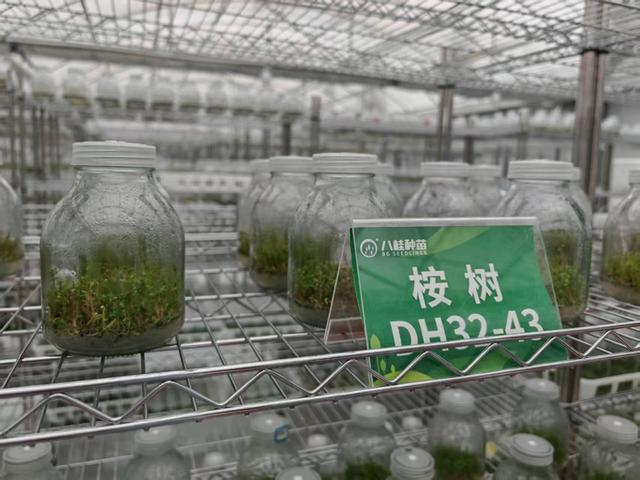
Core Insights - Guangxi has transformed its forestry sector, increasing forest coverage from 16% in 1950 to over 60% today, with annual timber production reaching 42 million cubic meters, accounting for nearly 40% of China's total timber output [1][2] - The region aims to become the first in China to exceed a forestry industry output value of 1 trillion yuan by 2024, exemplifying the concept that "green mountains and clear waters are invaluable assets" [1] - The development of the eucalyptus tree as a primary species has significantly contributed to Guangxi's forestry industry [2][4] Industry Development - Guangxi has established Asia's largest eucalyptus gene bank, preserving over 100 eucalyptus species, which supports the national eucalyptus industry [2] - The Guangxi Seedling Group has developed a full industry chain model from seed development to technical services, producing over 400 million seedlings annually [4] - The region's oil tea industry, with over 10.5 million acres planted, is projected to generate a comprehensive output value of approximately 63 billion yuan by the end of 2024 [7] Economic Impact - The development of the under-forest economy has created diverse income opportunities for rural populations, with a total output value of 2.855 billion yuan from under-forest economic activities [9][10] - The under-forest economy has benefited over 12 million forest farmers, increasing their annual income by over 4,000 yuan [10] - The introduction of the "forest ticket" system has revitalized land resources, directly benefiting around 17,000 households and generating nearly 170 million yuan [12] Technological Advancements - Guangxi has built two leading biotechnology factories for forest cultivation, producing over 400 million seedlings annually [4] - The region is transitioning from single-species forestry to mixed ecological management, enhancing ecological value and expected timber sales [14] - The wood processing industry in Guangxi has seen significant upgrades, with an annual production of over 78.79 million cubic meters of engineered wood, making it a major production base in China [17] Cultural and Ecological Integration - Guangxi's ecological initiatives are enhancing the quality of life for residents, with a focus on high-end custom furniture and sustainable practices [15][17] - The region's botanical gardens and nature reserves are promoting biodiversity and ecological education, attracting millions of visitors annually [19] - Collaborative efforts are underway to establish a national botanical garden in Nanning, showcasing biodiversity and promoting ecological civilization [19]

广西香花油茶:“花果同枝”孕育产业新篇
Yang Shi Wang· 2025-12-26 09:57
Core Viewpoint - The Guangxi oil tea industry is experiencing significant growth, driven by innovative research and development, with a focus on high-quality varieties and sustainable practices [1][2]. Group 1: Industry Development - Guangxi is a major oil tea production area in China, implementing the "Double Thousand" plan to promote high-quality development in the oil tea industry [1]. - In 2024, the total production of fresh oil tea fruit in Guangxi is expected to reach 2.753 million tons, with tea oil production at 176,400 tons, both showing significant year-on-year growth [1]. - The area under oil tea cultivation in Guangxi has surpassed 10.5 million acres, with a comprehensive output value of approximately 63 billion yuan, benefiting over 1.5 million farmers [4]. Group 2: Research and Innovation - Since 2005, Guangxi Academy of Forestry has collaborated with various institutions to develop new oil tea varieties, significantly enriching local genetic resources [2]. - The "Xianghua" oil tea variety, developed in Guangxi, exhibits strong resistance, fast growth, high oil content, and stable yields, with an average oil content of 10%, which is 3%-5% higher than ordinary varieties [1][2]. - The "Y" series and "An" series of oil tea varieties have been created to enhance fruit size and yield, with the latter expected to expand suitable planting areas northward [2]. Group 3: Technological Advancements - The "high grafting" technique using "Xianghua" oil tea as a scion has shown effectiveness, with yields reaching 300 kg per acre by the third year after grafting [4]. - A portable small vibrating harvester developed by Guangxi University of Science and Technology and Guangxi Academy of Forestry has achieved a 95% fruit harvesting rate for certain varieties, reducing costs and increasing efficiency [4]. Group 4: Economic Impact - The oil tea industry has significantly increased farmers' incomes, with one couple managing 79 acres of oil tea trees earning 306,300 yuan from tea seed sales in 2021 [4]. - The high content of beneficial components like squalene in "Xianghua" oil tea has led local companies to develop skincare and cosmetic products, further enhancing the industry's value [4].
