马赫100

Search documents
神玑单挑英伟达:蔚来拆分芯片业务,赌的是AI时代算力话语权
2 1 Shi Ji Jing Ji Bao Dao· 2026-03-02 10:56
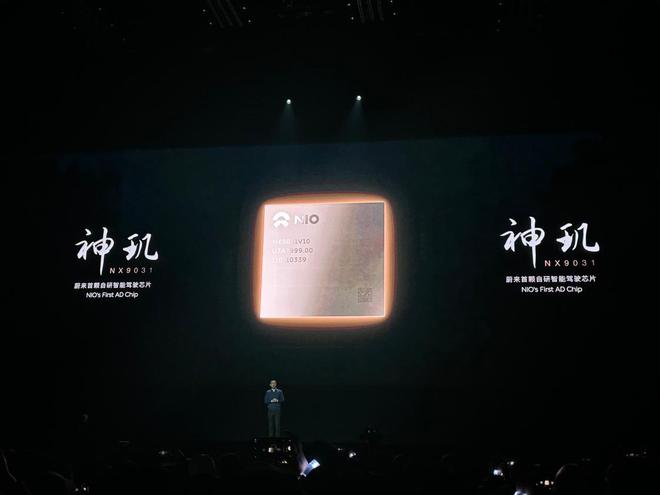
Core Viewpoint - The automotive industry's shift towards "intelligentization" is accelerating, with a focus on chip technology as a critical battleground for competitive advantage in autonomous driving and AI applications [1][4]. Group 1: NIO's Strategic Moves - NIO's subsidiary, Anhui Shenqi Technology Co., Ltd., completed its first round of equity financing, raising over 2.2 billion RMB, with a post-investment valuation nearing 10 billion RMB [3]. - The financing will support the continued research and development of high-end, competitive chip products, aiding NIO's long-term strategy in autonomous driving and embodied intelligence [3][5]. - NIO retains a 62.7% stake in Shenqi, while external investors hold 27.3%, and 10% is held by management incentive entities, allowing NIO to maintain control over core technologies [3][6]. Group 2: Technological Advancements - The Shenqi NX9031 chip is the world's first mass-produced 5nm automotive-grade high-performance driving chip, showcasing significant technological advancements [6]. - The NX9031 features over 50 billion transistors, a 32-core CPU architecture, and a self-developed ISP capable of processing 6.5G pixels per second, with a latency of less than 5ms [7]. - NIO's strategy of self-research and development in chip technology aims to reduce costs significantly, with each vehicle potentially saving 10,000 RMB by replacing multiple purchased chips with a single self-developed chip [7]. Group 3: Industry Trends and Competition - The automotive industry is undergoing a transformation where AI technology is becoming essential, shifting from an optional to a mandatory focus for companies aiming to be leaders in the sector [9]. - Major players like Xpeng and Li Auto are restructuring their organizations to enhance their AI capabilities, indicating a broader trend of traditional automakers evolving into AI technology companies [9][10]. - The competition for AI chips is intensifying, as companies recognize that the core competitiveness of vehicles is shifting from traditional components to AI-driven capabilities [10][11]. Group 4: Future Prospects - The successful financing of Shenqi reflects a revaluation of technology investments in the automotive sector, emphasizing the importance of high-barrier, long-cycle technology [12]. - The ability of Shenqi to maintain stable supply to NIO while expanding into new markets, such as embodied robotics, will be crucial for its future success [12]. - The automotive AI competition is set to escalate in 2026, with NIO positioning itself at the forefront of this evolution through its advancements in chip technology [12].


估值近百亿元!蔚来芯片子公司完成22亿元首轮融资
Zhong Guo Zheng Quan Bao· 2026-02-26 23:59
Group 1 - NIO's subsidiary, Anhui Shenqi Technology Co., Ltd., completed its first round of equity financing, raising over 2.2 billion yuan, with a post-investment valuation nearing 10 billion yuan [1] - After the financing, NIO will retain a 62.7% stake in Anhui Shenqi, while investors will hold a combined 27.3%, and the remaining 10% will be held by management incentive plan entities [1] - The financing will support Anhui Shenqi's ongoing research and development of high-end, competitive chip products, aiding NIO's long-term strategy in autonomous driving and embodied intelligence [1] Group 2 - The automotive chip is referred to as the "digital heart" and "smart brain" of vehicles, directly influencing driving intelligence levels, cabin fluidity, safety response speed, and electrification efficiency [2] - NIO decided to develop its own intelligent driving chips in 2021, aiming to achieve full self-research of core technologies from NPU to SoC [2] Group 3 - Since its production in 2024, the "Shenqi NX9031" chip has shipped over 150,000 units, all installed in NIO's own brand vehicles [3] - The cost of chips is increasingly becoming a significant portion of the overall vehicle cost, potentially becoming a core profit area [3] - Other leading automakers, including BYD, XPeng, and Li Auto, are also developing their own chips, indicating a competitive landscape in the self-research of automotive chips [3] - Following this financing, Anhui Shenqi plans to launch high-performance chips for the next generation of intelligent driving and expand into emerging businesses such as embodied robotics and agent reasoning [3]
蔚来芯片子公司获首轮22亿元融资 投后估值近百亿
Jing Ji Guan Cha Wang· 2026-02-26 12:54
Core Insights - NIO's chip subsidiary, Anhui Shenqi Technology Co., Ltd., completed its first round of equity financing, raising over 2.2 billion RMB, with a post-investment valuation nearing 10 billion RMB [2] - The financing round included multiple investors such as Hefei Guotou, Hefei Haiheng, IDG Capital, and others, indicating strong market recognition for China's self-developed chips [3] - Following the financing, NIO will retain a 62.7% controlling stake in Shenqi, while investors will hold a combined 27.3% [2] Company Developments - Shenqi Technology, established in June 2025, focuses on chip R&D, production, and technology licensing, with its core product being the Shenqi NX9031, the world's first 5nm automotive-grade smart driving chip [3] - The NX9031 chip is set to debut in NIO's flagship model ET9 in March 2025, with over 150,000 units shipped since production began in 2024 [3] - NIO plans to use the financing to support ongoing R&D and promote high-end, competitive chip products, aiming for long-term strategic positioning in autonomous driving and embodied intelligence [2][3] Industry Context - The financing of Shenqi Technology reflects a broader trend of increasing market acceptance for domestic chips in China, with potential for expanded R&D teams and chip supply to external clients [3] - Other major Chinese automakers, including BYD, Xpeng, and Li Auto, are also developing their own chips, indicating a competitive landscape for smart driving technology [4] - The current geopolitical climate and instability in the chip supply chain suggest that domestic chips are entering a critical phase for widespread adoption in the automotive sector [5]