芯片自研

Search documents
大摩闭门会-参访特斯拉超级工厂-探讨Robotaxi赛博出租车-Optimus人形机器人-能源储能-Terafab及分部加总估值法
2026-03-26 13:20
Summary of Key Points from the Conference Call Company and Industry Overview - The conference call primarily discusses Tesla's developments in the autonomous driving taxi business, the Optimus humanoid robot, energy storage solutions, and the Terrafab chip manufacturing project [1][2][3][4][5][6][7][8]. Core Insights and Arguments Autonomous Driving Taxi Business - Tesla plans to launch operations in 7 new cities by mid-2026, focusing on optimizing the Austin launch and data collection for pick-up and drop-off scenarios [1][2]. - The fleet is expected to grow by 1,000 vehicles in 2026, primarily Model Y, reaching 30,000 by 2030 and 1 million by 2035 [1][3]. - The Full Self-Driving (FSD) technology is central to the valuation, with the autonomous taxi and FSD network services contributing 85% to the target price of $415 [1][8]. - The company aims to prove the scalability of unsupervised driving technology, which will also enhance personal consumer vehicles [2][3]. Optimus Humanoid Robot - The third-generation Optimus robot's release may be delayed to Q2 2026, with mass production starting in the second half of 2026 at the Fremont factory [1][4]. - Initial sales are projected at 5,000 units in 2027, with a price range of $200,000 to $250,000, primarily targeting industrial applications [4][5]. - The cost is expected to decrease significantly as production scales up, potentially reaching $30,000 to $40,000 per unit when annual production hits 5 to 10 million units [5]. Energy Business - Tesla's energy business, primarily driven by Megapack, has a gross margin exceeding 30% and has grown by approximately 40%-50% over the past year [6]. - Despite its growth potential, profit margins are expected to compress by 300 basis points in 2026 and 200 basis points in 2027 due to competition and tariffs, stabilizing around 20% in the long term [6]. - The company is exploring localizing battery production and may build a 100 GW solar manufacturing facility in the U.S. [6]. Terrafab Chip Manufacturing Project - The Terrafab project aims to address geopolitical risks and meet the anticipated 7-10 times increase in chip demand due to the Optimus robot's production [7][8]. - The total investment for the project is estimated at $35 billion to $45 billion, with capital expenditures expected to rise significantly if the project proceeds [8]. - Tesla's capital expenditure for 2026 is projected at $20 billion, excluding Terrafab, necessitating strong automotive demand to support increased spending [8]. Other Important Insights - The autonomous taxi business is not isolated; it serves as a testing platform for FSD technology, which will eventually be applied to consumer vehicles [2]. - The company is focused on markets with favorable weather conditions for autonomous driving, which may pose challenges in more complex urban environments [4]. - The target price of $415 is composed of contributions from various business segments: core automotive ($45), energy ($40), autonomous taxi ($125), FSD services ($145), and humanoid robots ($60) [8]. - A neutral rating may change if unsupervised technology demonstrates scalability and safety, potentially supporting a stock price increase beyond $500 [8].


蔚来第二颗自研芯片,成功流片!
半导体芯闻· 2026-03-11 11:05
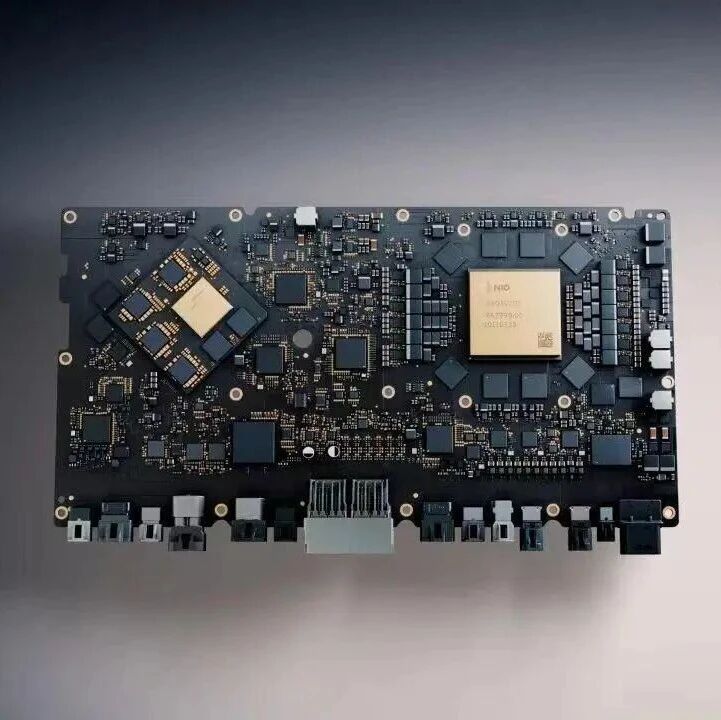
Core Insights - NIO's founder and CEO Li Bin announced the successful tape-out of the second advanced intelligent chip from its subsidiary, Shenji, which is currently in the mass production phase. This chip is designed to meet broader market demands with high cost-performance advantages and competitive performance against industry standards [1] - NIO aims to open its self-developed Shenji high-performance inference chip to more partners across various sectors, including automotive and embodied intelligence, while focusing on core technology and main business development without plans for further business spin-offs [1] - The successful financing of Shenji, the mass commercialization of the first 5nm automotive chip, and NIO's first quarterly profit have drawn significant industry attention to its chip development and profitability plans for the year [1] Financing and Market Position - In February 2026, NIO announced that its chip subsidiary, Anhui Shenji, completed its first round of equity financing, raising over 2.2 billion yuan, with a post-investment valuation nearing 10 billion yuan. This financing attracted several industry-leading investors, highlighting the technical potential of Shenji chips and providing substantial capital for future R&D and market expansion [2] - The core product, Shenji NX9031, is the world's first automotive-grade 5nm high-performance smart driving chip, with over 150,000 units shipped since its production began in 2024. It features over 50 billion transistors, a 32-core CPU architecture, and capabilities that significantly outperform competitors like NVIDIA [2] Development Timeline - NIO's journey in chip development began in 2021, establishing a research team of over 500 people. Key milestones include the launch of the "Yang Jian" lidar control chip and the Shenji NX9031 smart driving chip in 2023, with the latter achieving tape-out success in July 2024 [3] - In June 2025, NIO officially established Anhui Shenji Technology Co., Ltd., to oversee chip R&D, production, and technology licensing, further streamlining its chip business structure for market operations [3] Cost Efficiency and Profitability - Self-developed chips are seen as a crucial strategy for NIO to reduce costs and improve gross margins. Li Bin indicated that in-house chips could lower vehicle costs by at least 10,000 yuan, contrasting with the significant expenditures on NVIDIA chips [4] - NIO reported a historic quarterly profit of 1.25 billion yuan in Q4 2025, with cash reserves reaching 45.9 billion yuan, marking a significant increase. The management has outlined plans for 2026 to enhance profitability and market expansion through a multi-brand strategy [4] Strategic Outlook - The smart electric vehicle industry is entering a phase of technological competition and profitability challenges. NIO, leveraging its Shenji chip as a core asset, aims to solidify its technological moat and clarify its profitability path. With the new generation of chips entering mass production and strategic initiatives being implemented, NIO is positioned for dual breakthroughs in technology and performance, advancing towards a new stage of high-quality development [5]



独家丨理想汽车芯片部门Soc 负责人秦东离职
雷峰网· 2026-03-09 08:48
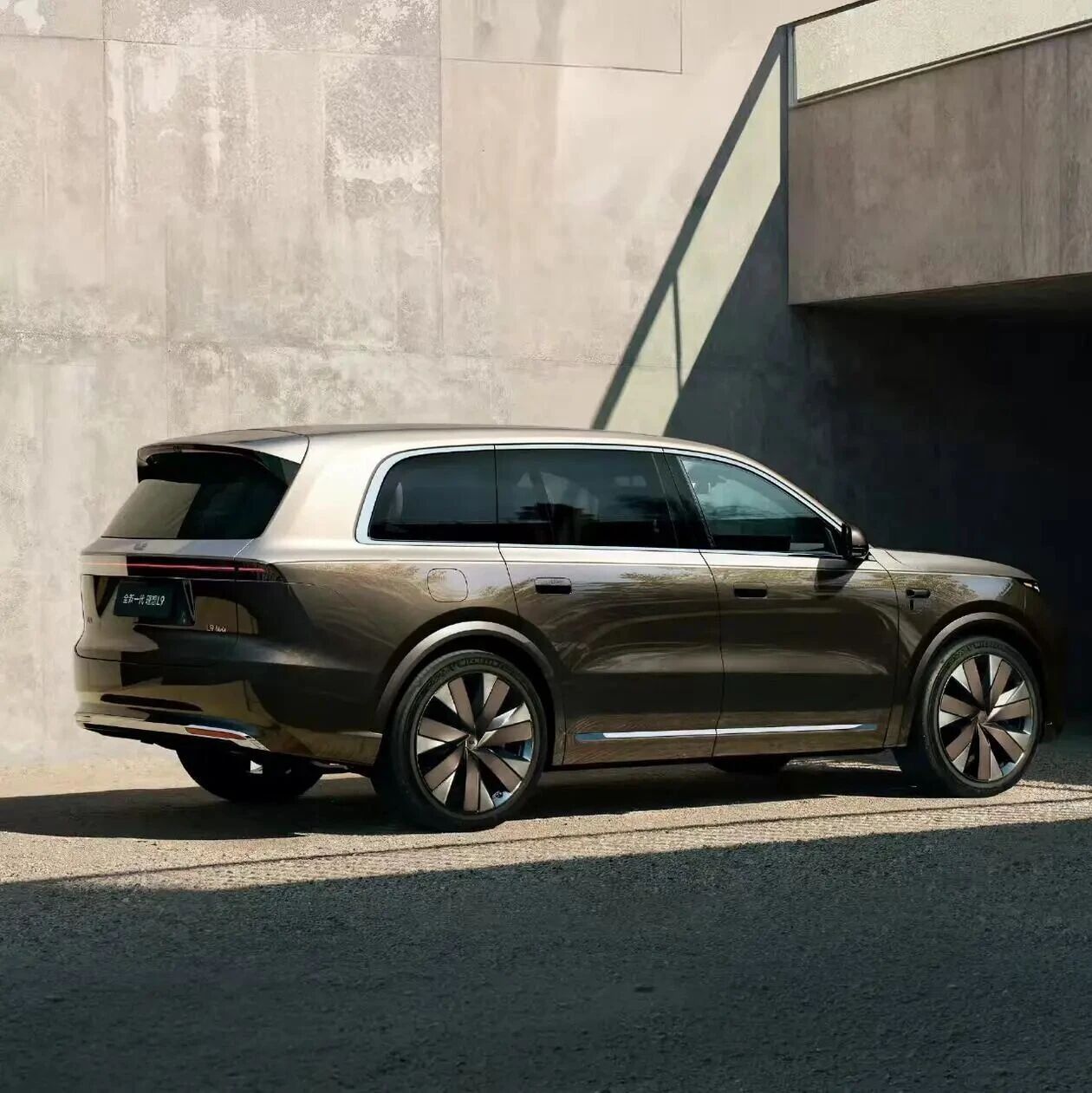
Core Viewpoint - The article discusses the recent departure of Qin Dong from Li Auto's chip department, highlighting the implications for the company's chip development strategy and the recent advancements in their chip technology [2]. Group 1: Personnel Changes - Qin Dong, previously the head of the SoC department at Li Auto, has left the company to join a startup [2]. - His departure follows a trend of significant personnel changes within Li Auto's chip department, with several senior members under his leadership also leaving [2]. Group 2: Chip Development - Qin Dong's role at Li Auto was crucial for the development of self-research chips, particularly the high-performance SoC chips aimed at enhancing autonomous driving capabilities [2]. - Li Auto has successfully developed the Mach 100 chip, a vehicle-grade chip utilizing a 5nm process, which is set to debut in the updated Li L9 model in May 2025 [2]. - The chip development initiative, codenamed "Schumacher," was launched in November 2022, indicating a strategic focus on in-house chip capabilities [2].

苹果芯片,凭啥?
半导体行业观察· 2026-03-09 01:07
Core Insights - The article discusses Apple's acquisition of Israeli AI startup Q.ai for nearly $2 billion, marking a significant move in Apple's strategy to enhance its technology capabilities, particularly in voice recognition and human-computer interaction [2][3] - Aviad Maizels, the founder of Q.ai, previously sold another company, PrimeSense, to Apple for approximately $350 million, which became foundational for Apple's Face ID technology [3][6] - The narrative highlights Apple's strategic approach to acquisitions, focusing on advanced underlying technologies rather than established brands, which has been a consistent theme in its growth and innovation strategy [10][12] Group 1: Acquisition Details - Apple's acquisition of Q.ai is its second-largest deal in history, emphasizing the importance of Maizels' technology in the company's future [3][8] - Q.ai's technology enables silent voice recognition, which could significantly enhance user interaction with devices like Vision Pro and AirPods, aligning with Apple's design philosophy of privacy and elegance [16][18] - The acquisition reflects Apple's ongoing need to diversify its product offerings beyond the iPhone, which currently accounts for nearly 60% of its revenue [18][19] Group 2: Historical Context and Strategy - The article traces Maizels' journey from military technology to founding PrimeSense, which developed a 3D sensing system that was pivotal for Microsoft's Kinect [4][5] - Apple's acquisition strategy is characterized by a focus on small-scale, technology-driven deals, contrasting with other tech giants that pursue larger, brand-focused acquisitions [11][12] - Historical lessons from Apple's reliance on external suppliers, particularly the failure of the PowerPC alliance, have shaped its commitment to in-house technology development and strategic acquisitions [14][15] Group 3: Future Implications - The integration of Q.ai's technology is expected to facilitate new product developments, such as smart glasses and enhanced wearable devices, which require innovative interaction methods [16][19] - Apple's lag in AI capabilities compared to competitors highlights the urgency of this acquisition, as it seeks to enhance its AI assistant's interaction quality through advanced human-computer communication [19][20] - The article suggests that the ecosystem of former Apple engineers, like Maizels, is creating a unique entrepreneurial environment that aligns with Apple's technological needs, potentially leading to future acquisitions [22]


独家丨蔚来芯片子公司完成首轮融资,投后估值近百亿元
雷峰网· 2026-02-27 13:52
Core Viewpoint - NIO's chip subsidiary, Anhui Shenji, is set to announce its first round of financing, with a post-investment valuation nearing 10 billion RMB, indicating strong industry interest in NIO's chip project [2]. Group 1: Company Overview - Anhui Shenji Technology Co., Ltd. was established in June 2025 to oversee chip research and development, production, and technology licensing, with a registered capital increased from 10 million to 75.29 million RMB [2]. - The chip development team at NIO has grown to over 500 members since the project was initiated in 2021 [3]. Group 2: Product Development - The Shenji NX9031 chip, launched in March 2025, is a significant breakthrough in NIO's technology strategy, being the world's first 5nm automotive-grade intelligent driving chip, boasting four times the computing power of NVIDIA's Orin-X and a memory bandwidth of 546GB/s, double that of NVIDIA's Thor-U chip [3]. - The design and development of the Shenji NX9031 took two years, with an additional year for performance testing, incorporating comprehensive safety circuits for real-time anomaly detection and self-correction [3]. Group 3: Financial Implications - NIO's self-developed chips are expected to reduce vehicle costs by at least 10,000 RMB per unit, with the company spending billions on NVIDIA chips in 2024, highlighting the cost-saving potential of their own chips [3]. - The investment in the Shenji NX9031 chip's development is comparable to the cost of building 1,000 battery swap stations, amounting to several billion RMB, which is a key factor in NIO's decision to spin off its chip business for market-oriented operations [3]. Group 4: Strategic Partnerships - Shortly after its establishment, Anhui Shenji began seeking external investment, leading to the formation of a joint venture with Aixin Yuanzhi and OmniVision in Chongqing, indicating a strategic move to develop a technology ecosystem [4][5].
蔚来芯片子公司获首轮22亿元融资 投后估值近百亿
Jing Ji Guan Cha Wang· 2026-02-26 12:54
Core Insights - NIO's chip subsidiary, Anhui Shenqi Technology Co., Ltd., completed its first round of equity financing, raising over 2.2 billion RMB, with a post-investment valuation nearing 10 billion RMB [2] - The financing round included multiple investors such as Hefei Guotou, Hefei Haiheng, IDG Capital, and others, indicating strong market recognition for China's self-developed chips [3] - Following the financing, NIO will retain a 62.7% controlling stake in Shenqi, while investors will hold a combined 27.3% [2] Company Developments - Shenqi Technology, established in June 2025, focuses on chip R&D, production, and technology licensing, with its core product being the Shenqi NX9031, the world's first 5nm automotive-grade smart driving chip [3] - The NX9031 chip is set to debut in NIO's flagship model ET9 in March 2025, with over 150,000 units shipped since production began in 2024 [3] - NIO plans to use the financing to support ongoing R&D and promote high-end, competitive chip products, aiming for long-term strategic positioning in autonomous driving and embodied intelligence [2][3] Industry Context - The financing of Shenqi Technology reflects a broader trend of increasing market acceptance for domestic chips in China, with potential for expanded R&D teams and chip supply to external clients [3] - Other major Chinese automakers, including BYD, Xpeng, and Li Auto, are also developing their own chips, indicating a competitive landscape for smart driving technology [4] - The current geopolitical climate and instability in the chip supply chain suggest that domestic chips are entering a critical phase for widespread adoption in the automotive sector [5]
合肥国投、IDG 等入股蔚来芯片子公司,蔚来芯片子公司完成超20亿元首轮融资
Xin Lang Cai Jing· 2026-02-26 10:21
Core Insights - NIO's chip subsidiary, Anhui Shenji Technology Co., Ltd., has completed its first round of financing exceeding 2 billion yuan, with a post-investment valuation nearing 10 billion yuan [1][1]. Group 1: Financing Details - The financing round attracted investments from Hefei local industrial funds, NIO Capital, IDG Capital, and a listed semiconductor company [1][1]. - Subsequent rounds of financing are already in progress [1].
字节芯片团队详情和职级薪资
Xin Lang Cai Jing· 2026-02-25 02:38
Core Insights - ByteDance's chip team has expanded to nearly 1,000 members, reflecting the company's aggressive recruitment strategy in the competitive chip industry [4][5][21] - The self-developed chip business of ByteDance has formed four core segments: AI chips, CPUs, VPUs, and DPUs, each closely tied to the company's core operations [6][22] - The salary structure at ByteDance varies by job level, with entry-level positions (2-1) offering salaries ranging from 30-50 million, while more experienced roles (2-2) can reach up to 140 million, including cash and stock options [7][23] Company Structure and Talent Acquisition - The chip hardware team has grown significantly since its inception in 2020, with key figures from various backgrounds leading different segments [4][20] - ByteDance actively recruits talent from competitors, utilizing headhunters to attract skilled professionals in a rapidly changing market [5][21] - The internal structure has evolved, with leadership changes indicating a shift in focus towards meeting increasing computational demands [5][21] Salary and Job Levels - Common job levels at ByteDance include 2-1, 2-2, 3-1, and 3-2, with specific salary ranges and structures for each level [7][22] - For level 2-1, salaries can reach up to 80 million, while level 2-2, which requires more experience, has a broader salary range of 80-140 million [7][23] - Senior positions (3-1) typically require over 10 years of experience and involve significant responsibilities in project management and technical leadership [8][24] Interview Process - The recruitment process generally consists of 3-4 technical interviews followed by an HR interview, focusing on both technical skills and soft skills [9][25] - Candidates for higher levels (2-2 and above) may undergo an additional cross-interview with department heads to ensure fit [10][26] - The HR interview assesses stability and current salary, influencing the final offer based on the candidate's performance in previous interviews [10][26]
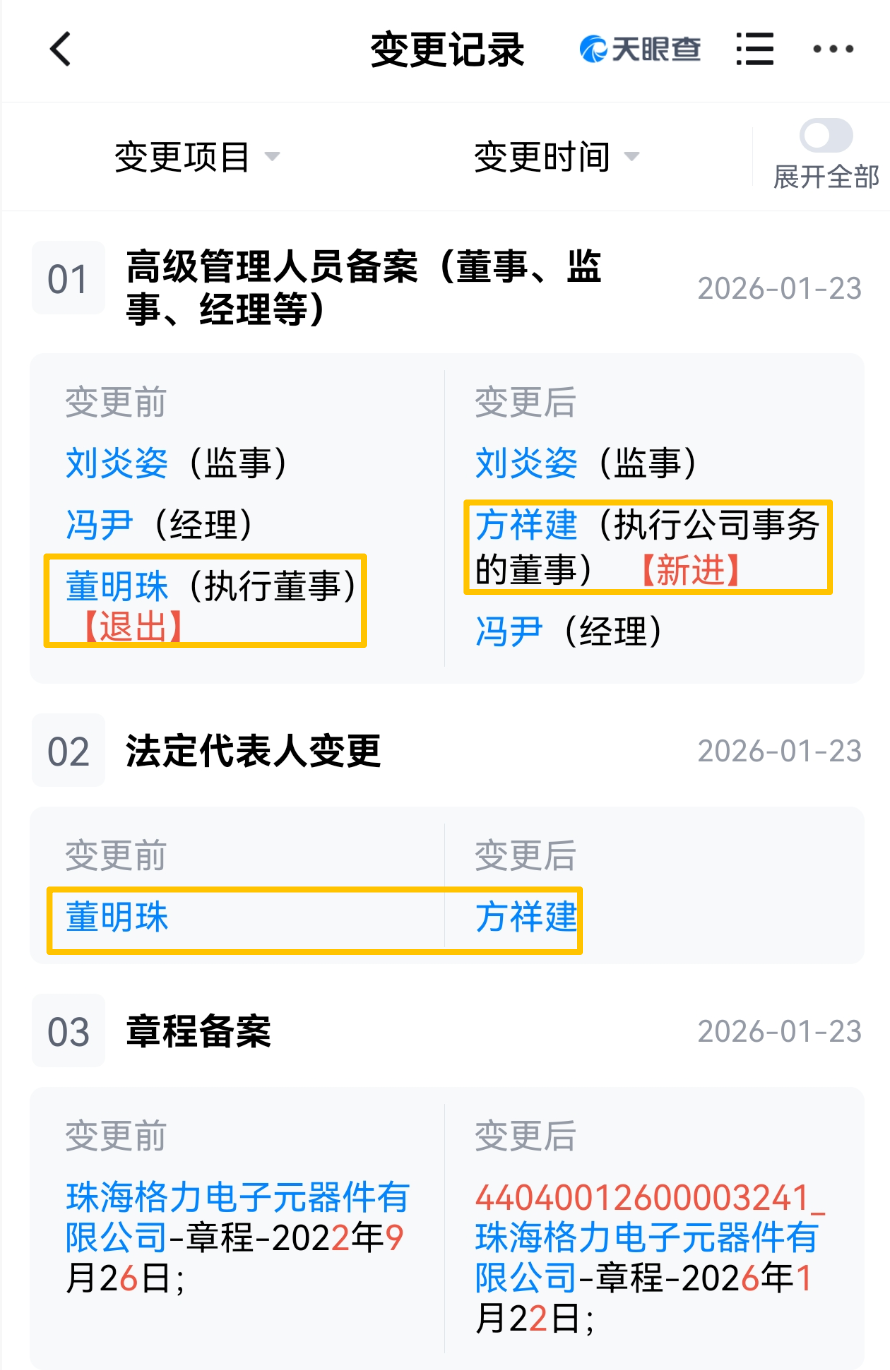
董明珠卸任!格力老将方祥建接任珠海格力电子元器件有限公司法人、执行董事
新华网财经· 2026-01-27 06:01
Core Viewpoint - Recent changes in leadership at Gree Electric Appliances, with Dong Mingzhu stepping down as the legal representative and executive director of Zhuhai Gree Electronic Components Co., Ltd., marking the first leadership change in the Gree system since the beginning of 2026 [1]. Group 1 - Fang Xiangjian has been with Gree Electric for many years and has served as Vice President since November 2021 [5]. - Zhuhai Gree Electronic Components Co., Ltd. was established in July 2022 with a registered capital of 100 million RMB, focusing on manufacturing and wholesale of electronic components [5]. - The company is wholly owned by Gree Electric Appliances [5]. Group 2 - Prior to this, Dong Mingzhu also stepped down from the legal representative and chairman positions at Zhuhai Zero Boundary Integrated Circuit Co., Ltd. in June 2025, which focuses on integrated circuit chip design and sales [7]. - Gree has been entering the chip industry since 2015, with the first phase of its chip factory planned to have an annual production capacity of 240,000 pieces [9]. - Gree's self-developed chips are significantly applied in home air conditioning products, with approximately 30% of overall self-research application, and are also used in commercial air conditioning, smart equipment, and industrial robots [9].


董明珠,有变动!
Zhong Guo Jing Ji Wang· 2026-01-27 03:51
Group 1 - The core point of the article is the recent management change at Zhuhai Gree Electronics Components Co., Ltd., where Dong Mingzhu has stepped down as the legal representative and executive director, with Fang Xiangjian taking over these roles. This marks the first change in Dong Mingzhu's position within Gree's companies since the beginning of 2026 [1] Group 2 - Fang Xiangjian has been with Gree Electric for many years and has served as the vice president since November 2021 [5] - Zhuhai Gree Electronics Components Co., Ltd. was established in July 2022 with a registered capital of 100 million RMB, focusing on manufacturing and wholesale of electronic components [5] - The company is wholly owned by Zhuhai Gree Electric Appliance Co., Ltd. [5] Group 3 - Prior to this change, Dong Mingzhu also resigned from her positions at Zhuhai Zero Boundary Integrated Circuit Co., Ltd. in June 2025, which is key to Gree's entry into the chip industry [7] - Gree has been involved in the chip sector since 2015, with the first phase of its chip factory planned to have an annual production capacity of 240,000 pieces [9] - Gree's self-developed chips are widely used in home air conditioning products, with approximately 30% of applications being self-researched, and these chips are also utilized in commercial air conditioning, smart equipment, and industrial robots [9]