骆驼户外美妆防晒喷雾

Search documents
W33化妆品市场周度新闻:多国际公司高层发生变动,韩妆市场频传出售消息-20250817
Haitong Securities International· 2025-08-17 14:05
Investment Rating - The report assigns an "Outperform" rating to multiple companies including Nike, Midea Group, JD Group, Gree Electric, Haier Smart Home, Anta Sports, and others, indicating a positive outlook for these stocks [1]. Core Insights - The cosmetics market in China reached a size of 496.267 billion yuan in the first half of 2025, reflecting a year-on-year growth of 3.6%. Online sales accounted for 53.97% of total sales, growing by 11.1%, while offline sales decreased by 4.1% [8][39]. - The Korean beauty market is experiencing significant changes, with at least seven brands or companies reported to be sold or seeking sale in 2025, with valuations reaching hundreds of millions [30][39]. - Kenvue has faced a decline in net sales for five consecutive quarters, indicating challenges within the company [11][39]. - The report highlights a trend of executive changes in major beauty companies, including Procter & Gamble and Coty, which may impact their strategic direction [21][22][39]. Summary by Sections Beauty News Highlights - The top three brands in GMV for cosmetics on Douyin from January to July 2025 were Hansu, Pechoin, and L'Oréal [9][39]. - Kenvue's net sales for Q2 2025 were reported at 27.578 billion yuan, a decline of 4% year-on-year, while its net profit saw a significant increase of 624.5% [16][39]. - The Body Shop appointed a new Chief Business and Brand Officer, Alia Sirina Hawa, to drive global business recovery [11][39]. Market Dynamics and Trends - The offline channel is undergoing a revival, becoming a key area for industry development [27][39]. - The report notes a rise in counterfeit cases within the beauty industry, with significant actions taken by law enforcement to combat this issue [33][39]. - The report emphasizes the importance of new retail channels and the ongoing transformation in consumer behavior within the beauty market [29][39].
“家电界苹果”也做美妆了
3 6 Ke· 2025-08-12 02:16
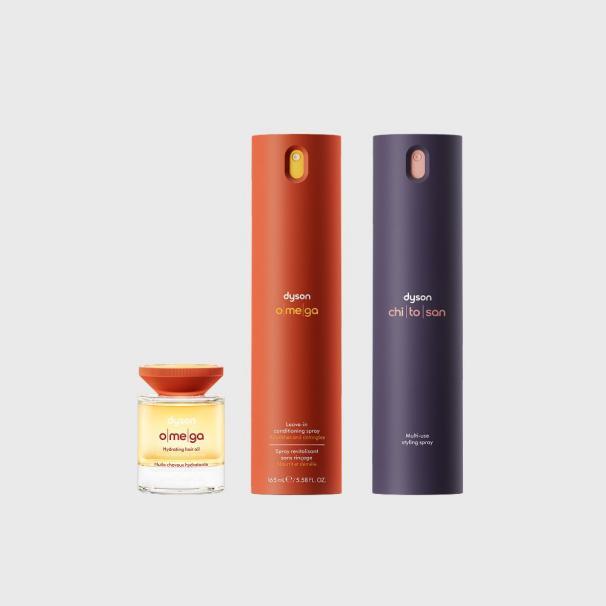
Core Viewpoint - Dyson continues to expand into the beauty industry with the launch of its new hair care product line, Dyson Omega™, which claims to be its first series using "self-cultivated" raw materials [1][2]. Group 1: Dyson's Expansion into Beauty - Dyson has previously entered the beauty market, launching its first hair care product in August last year [2]. - The company is known for its innovative home appliances and has a lesser-known identity as a major player in agriculture, owning over 36,000 acres of land in the UK [2]. - The Omega™ series emphasizes the use of sunflower seed oil and other omega-rich ingredients sourced from Dyson's own farms, highlighting a trend towards ingredient transparency in the beauty industry [4][7]. Group 2: Product Details and Market Positioning - The Omega™ series includes two products: a moisturizing hair oil priced at $54.99 (approximately 395 RMB) and a leave-in conditioning spray priced at $69.99 (approximately 503 RMB) [4]. - Dyson's founder, James Dyson, indicated that the company will continue to innovate in hair health, suggesting further investments in the beauty sector [4]. - The Chitosan™ series, launched last year, focuses on styling technology, while the Omega™ series is more about basic care and nourishment [6][7]. Group 3: Market Challenges and Competitive Landscape - Dyson's entry into the hair care market faces significant challenges due to the highly competitive landscape, with established beauty giants and emerging brands vying for market share [8][9]. - The global hair care market has become saturated, and consumer demands for natural and effective products are increasing [8]. - The success of Dyson's beauty products remains uncertain, as evidenced by the mixed reception of the Chitosan™ series in the Chinese market [8][9]. Group 4: Broader Industry Trends - The trend of cross-industry expansion into beauty is not limited to Dyson; other companies are also entering the market, leveraging existing technology and brand recognition [10][11]. - Companies are exploring various entry strategies, including direct product launches and acquisitions, to establish a foothold in the beauty sector [11].