
高性能精量播种机

Search documents
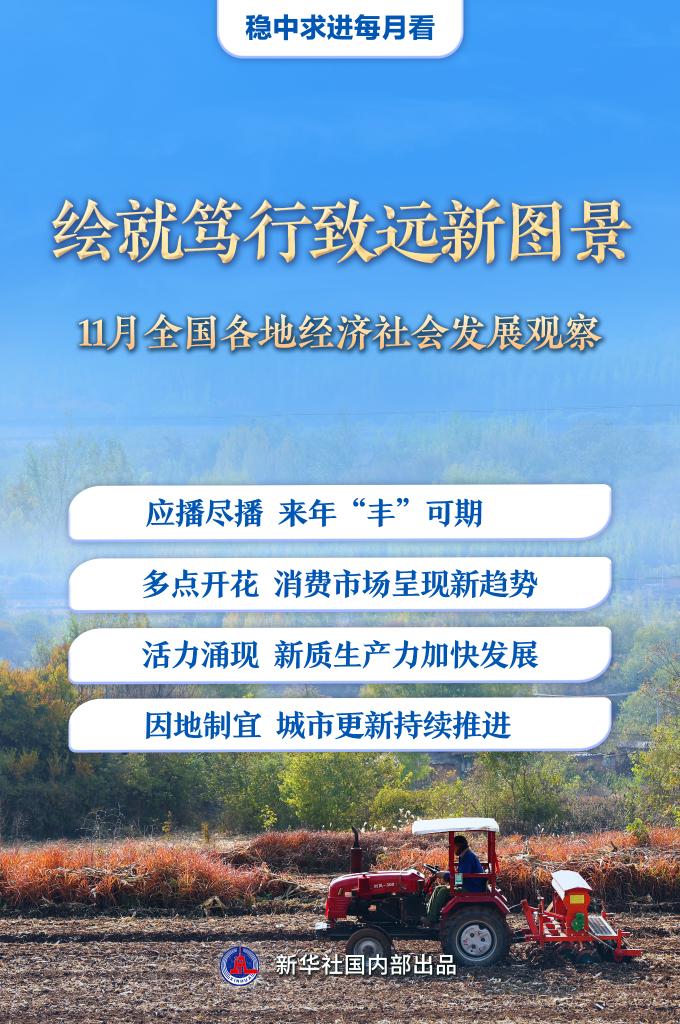
绘就笃行致远新图景——11月全国各地经济社会发展观察
Xin Hua Wang· 2025-11-30 23:43
Group 1: Agricultural Development - The importance of timely agricultural practices is emphasized, particularly in the context of winter wheat planting, which is crucial for next year's summer grain production [5][8] - As of November 20, over 95% of the national winter wheat planting has been completed, with various regions adopting advanced agricultural technologies to enhance planting quality and efficiency [8] - Local governments are actively promoting agricultural innovations, such as mechanized planting and organic fertilizers, to mitigate the impact of adverse weather conditions on grain production [7][8] Group 2: Consumer Market Trends - The consumer market is evolving towards personalization, quality, and scenario-based consumption, driven by technological empowerment and innovative supply-demand matching [11][14] - The implementation of new policies and technologies is fostering a dynamic ecosystem for consumption, with over 1,200 scenario projects launched in Hefei to enhance consumer experiences [13][14] - Major e-commerce platforms are leveraging AI and algorithm optimization to improve consumer engagement and support small businesses, reflecting a trend towards more efficient market operations [14] Group 3: New Productive Forces - New productive forces are identified as a core engine for developing competitive advantages and seizing future opportunities, with a focus on integrating technological and industrial innovations [16][19] - The World Internet Conference showcased significant advancements in AI and flexible production technologies, highlighting China's rapid innovation in various sectors [18] - Local initiatives are promoting the fusion of manufacturing and service industries, with significant new products and technologies being introduced at major trade events [18][19] Group 4: Urban Renewal - Urban renewal is recognized as a systematic project that requires a people-centered approach, with ongoing efforts to enhance living conditions in cities [21][25] - Nationwide, over 240,000 old urban communities have been renovated during the 14th Five-Year Plan, focusing on infrastructure improvements and community amenities [24] - Local governments are implementing tailored urban renewal strategies, addressing specific challenges and enhancing urban functionality through innovative planning and execution [24][25]

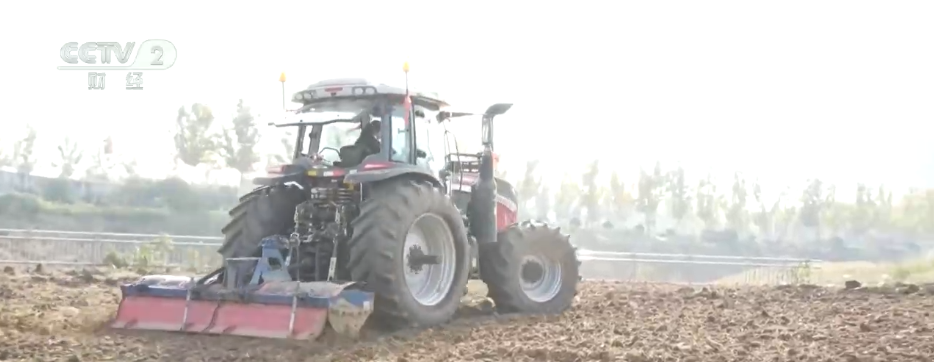
从“经验驱动”到“数据驱动” 智能农机“唱主角”让秋播有“底气”
Yang Shi Wang· 2025-11-10 08:33
Group 1 - The current winter wheat sowing period is critical in Anhui, with Hefei City organizing personnel and machinery for rapid sowing, achieving over half of the planned 280,000 acres [1][5] - A new "three-in-one" intelligent agricultural machine that integrates tilling, sowing, and pressing with advanced technologies like Beidou navigation is being promoted to modernize wheat planting from traditional to data-driven methods [3] - The county plans to utilize over 2,000 agricultural machines and 117 agricultural technicians to provide comprehensive technical guidance throughout the sowing process, ensuring timely resolution of agricultural production challenges [5] Group 2 - In Shandong's Pingdu City, 2,600 acres of winter wheat are being sown using high-performance precision sowing machines equipped with Beidou navigation, ensuring quality control while adopting a strategy to compensate for late sowing [7] - As soil moisture conditions improve, 1.476 million acres of winter wheat are being sown, with local departments issuing guidelines for late sowing and promoting key techniques for better seedling development [9] - Nationally, over 60% of winter wheat has been sown as of November 8, with significant progress in the Huang-Huai-Hai region, where sowing has been delayed by nearly a month compared to last year [11][13]
秋收见闻:山东新农人以“智”为犁 耕作农业新图景
Zhong Guo Xin Wen Wang· 2025-09-29 09:48
Core Insights - The article highlights the transformation of agriculture in Shandong, China, driven by the adoption of smart farming technologies and equipment, leading to increased efficiency and productivity in crop production [1][10]. Group 1: Smart Farming Practices - Farmers like Wang Wei have transitioned from traditional farming methods to technology-driven practices, utilizing smart agricultural machinery to manage large areas of land effectively [1]. - The use of drones for crop protection has significantly improved operational efficiency, allowing a small team to cover the work equivalent to that of 20 traditional farmers [1]. - The introduction of precision farming tools, such as laser leveling machines and patented seeders, has resulted in a 10% increase in crop yields compared to traditional methods [1]. Group 2: Training and Skill Development - Agricultural training programs are being established to cultivate skilled drone operators, with over 100 trainees certified this year alone [2]. - The training covers the entire process from assembly to practical operation, ensuring that new operators are job-ready immediately after certification [2]. Group 3: Irrigation and Resource Management - The implementation of small-flow drip irrigation systems has proven to be cost-effective, with a reduction in water and fertilizer usage by over 40%, while also increasing crop yields [5]. - Farmers report significant improvements in crop production, with an average increase of 50 jin (25 kg) per mu (0.067 hectares) for wheat after adopting drip irrigation [5]. Group 4: Comprehensive Agricultural Services - Agricultural cooperatives are expanding their services to include storage, processing, and drying facilities, addressing challenges faced by large-scale grain producers [6][7]. - The establishment of integrated agricultural service bases allows for a one-stop solution for farmers, enhancing productivity across 70,000 mu (approximately 4,666 hectares) of farmland [7]. Group 5: Automation in Crop Production - The use of automated systems in smart greenhouses is revolutionizing crop management, allowing for precise control of water and nutrient delivery based on real-time plant needs [8]. - This automation not only increases efficiency but also reduces reliance on traditional farming knowledge, leading to better resource utilization and higher quality produce [8].
